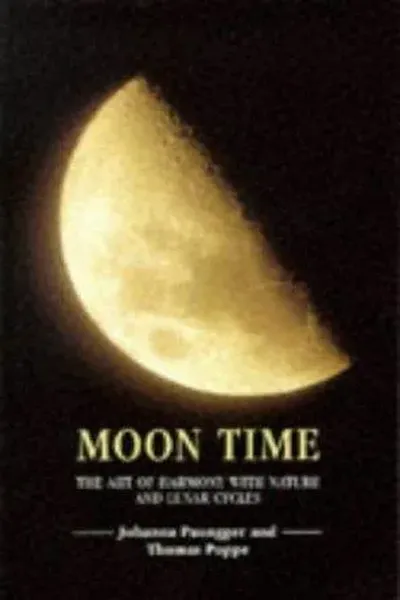
Moon time

 83
83

Moon time
Johanna Paungger and Thomas Poppe's Moon Time offers a thorough catalog of lunar influences, a compelling alternative to purely scientific agrarianism. The book's strength lies in its exhaustive detail, presenting a calendar-like structure that connects specific lunar positions to observable outcomes in gardening and human affairs. Its limitation, however, is the sheer volume of information, which can feel overwhelming without a clear conceptual framework to bind it all. The section detailing the 'Waning Crescent' phase for specific root vegetables, for instance, is precise but requires significant commitment to fully integrate into practice. Ultimately, Moon Time serves as a dense almanac for the dedicated practitioner, less a narrative and more a detailed reference manual.
📝 Description
83
### What It Is Moon Time is a detailed exploration of lunar cycles and their influence on human life, agriculture, and natural phenomena. Published by Johanna Paungger and Thomas Poppe, the work draws on traditional wisdom and empirical observation to present a comprehensive guide to working with the moon's rhythms.
### Who It's For This book is intended for anyone interested in understanding the subtle yet powerful connections between lunar phases and daily life. It appeals to gardeners seeking optimal planting times, individuals interested in natural health and well-being, and those drawn to esoteric studies and the cyclical nature of existence.
### Historical Context The original publication in 1996 placed Moon Time within a resurgence of interest in natural living and esoteric knowledge. While not directly a product of the New Age movement, it shares a thematic resonance with its emphasis on returning to older, nature-based wisdom. The work emerged when academic and popular discourse was increasingly re-examining pre-industrial agricultural practices and folk traditions.
### Key Concepts Central to Moon Time is the detailed mapping of the moon's influence across its various phases and zodiacal transits. The book outlines specific periods for planting, harvesting, and other activities, correlating them with the moon's position. It also addresses the moon's impact on human health, emotional states, and even childbirth, presenting these as observable patterns rather than mere superstition.
💡 Why Read This Book?
• Gain practical, cyclical gardening insights tied directly to lunar phases and their specific effects on plant growth, as detailed in the book's day-by-day almanac format. • Understand how the moon's position through the zodiac is presented as influencing specific bodily functions and emotional states, offering a traditional perspective on personal well-being. • Explore the historical connection between lunar cycles and agricultural practices predating modern scientific calendars, providing context for traditional farming methods discussed from 1996 onwards.
⭐ Reader Reviews
Honest opinions from readers who have explored this book.
❓ Frequently Asked Questions
What is the primary focus of Moon Time by Paungger and Poppe?
The primary focus of Moon Time is the detailed examination of lunar cycles and their perceived influence on agriculture, gardening, and various aspects of human life, as first published in 1996.
Does Moon Time provide specific recommendations for planting?
Yes, the book offers specific recommendations for planting and harvesting based on the moon's phase and its position in the zodiac, correlating these with optimal growth for different types of plants.
Who are Johanna Paungger and Thomas Poppe?
Johanna Paungger and Thomas Poppe are the authors of Moon Time, a work that compiles traditional knowledge about lunar influences on natural cycles and human activities.
What historical traditions does Moon Time draw upon?
Moon Time draws upon ancient traditions and empirical observations related to lunar cycles, predating modern scientific agriculture, to inform its guidance.
Is Moon Time suitable for beginners in gardening?
While comprehensive, Moon Time's detailed approach may be best suited for gardeners with some experience or those deeply interested in traditional, lunar-based methods of cultivation.
When was Moon Time first published?
Moon Time was first published in 1996, contributing to a growing interest in natural and cyclical living.
🔮 Key Themes & Symbolism
Lunar Phases and Agriculture
The core of Moon Time lies in correlating the moon's phases—new moon, waxing crescent, first quarter, waxing gibbous, full moon, waning gibbous, third quarter, and waning crescent—with optimal times for planting, cultivating, and harvesting specific crops. Paungger and Poppe detail how the gravitational pull and light cycles of the moon are understood to affect seed germination, root development, and fruit production, offering a traditional, nature-aligned approach to agriculture.
Zodiacal Transits and Influence
Beyond mere phases, the book meticulously maps the moon's transit through the twelve signs of the zodiac. Each zodiacal position is associated with particular influences on plant growth (e.g., fire signs for fruits, earth signs for roots) and even on human physiology and emotional states. This layered approach provides a complex system for understanding the subtle energies at play throughout the lunar month.
Human Cycles and Well-being
Moon Time extends its analysis to the impact of lunar cycles on human health, mood, and vitality. It suggests correlations between specific lunar phases and periods of increased or decreased energy, receptivity, and physical well-being. This aspect connects the macrocosm of celestial movements to the microcosm of the individual human organism, advocating for alignment with natural rhythms.
Traditional Wisdom vs. Modern Science
The work positions itself as a compilation and validation of long-held folk wisdom and empirical observations regarding lunar influences, often presented in contrast to purely mechanistic scientific viewpoints. It champions a return to understanding nature's cycles as a fundamental principle for living in harmony with the environment, a perspective gaining traction since its 1996 publication.
💬 Memorable Quotes
“The moon influences plant growth.”
— This central tenet, explored extensively throughout the book, posits that the moon's phases and zodiacal positions have a direct, observable effect on the vitality and yield of crops, guiding agricultural practices.
“The waning crescent is ideal for root vegetables.”
— This specific recommendation highlights the book's practical application, suggesting that during this particular lunar phase, conditions are optimal for the development of subterranean crops.
“Human health follows lunar rhythms.”
— This concept suggests that our physical and emotional well-being is subtly interconnected with the moon's cycle, advocating for a more attuned and less regimented approach to personal care.
“Observe nature's cycles for guidance.”
— An overarching principle of the book, this encourages readers to look beyond conventional methods and seek wisdom in the ancient, observable patterns of the natural world, particularly those governed by the moon.
“Planting decisions are informed by lunar transits.”
— This emphasizes the detailed, predictive nature of the book's guidance, showing how specific agricultural actions should be timed based on the moon's precise celestial path through the zodiac.
🌙 Esoteric Significance
Tradition
Moon Time draws heavily on folk traditions and agrarian wisdom, which, while not a formal esoteric lineage like Hermeticism or Kabbalah, shares common ground with practices that seek to align human activity with celestial and natural cycles. It echoes the macrocosm-microcosm principle found in many esoteric schools, suggesting that the patterns observed in the heavens are reflected in earthly phenomena and human physiology.
Symbolism
The primary symbols are the Moon itself, representing cycles, intuition, the feminine principle, and the subconscious, and the Zodiac, which acts as a framework for understanding the specific qualities and influences associated with the Moon's journey. The phases of the Moon (new, waxing, full, waning) are potent symbols of growth, culmination, decline, and renewal, mirroring life processes.
Modern Relevance
Contemporary practitioners of organic gardening, permaculture, and biodynamic farming often reference or are influenced by the principles outlined in Moon Time. Its emphasis on working with natural cycles resonates with modern ecological awareness and a desire for more sustainable, intuitive approaches to food production and personal well-being, finding echoes in practices that prioritize holistic systems over fragmented, mechanistic ones.
👥 Who Should Read This Book
• Dedicated gardeners and smallholders seeking to optimize crop yields and health by understanding traditional lunar planting calendars. • Individuals interested in comparative studies of agricultural history and folk wisdom, particularly those examining pre-modern methods of natural observation. • Students of esoteric principles focusing on celestial influences and their perceived impact on biological and human systems, offering a practical, detailed application.
📜 Historical Context
Published in 1996, Johanna Paungger and Thomas Poppe's Moon Time emerged during a period of renewed interest in natural living, sustainable agriculture, and esoteric wisdom, echoing themes prevalent in the broader New Age movement without necessarily aligning with its specific doctrines. The work taps into a deep wellspring of pre-industrial agricultural knowledge and folk traditions that had been largely sidelined by the Green Revolution and modern scientific farming techniques. It presented a counter-narrative to purely empirical, mechanistic approaches to cultivation, drawing comparisons to the cyclical calendars and observances of ancient cultures. While figures like Rudolph Steiner had already explored biodynamic agriculture with lunar considerations, Moon Time offered a more accessible, almanac-style compilation for a wider audience seeking practical guidance rooted in natural rhythms.
📔 Journal Prompts
The Moon's influence on root vegetables during the waning crescent phase.
Personal observations of mood shifts correlating with the New Moon.
The impact of the Full Moon on nocturnal plant growth.
Connecting zodiacal transits to specific human bodily rhythms.
Reconciling lunar gardening advice with established scientific agricultural principles.
🗂️ Glossary
Lunar Phases
The different stages of the moon's illuminated portion as seen from Earth, from New Moon to Full Moon and back, each with distinct perceived influences on agriculture and life.
Zodiacal Transits
The moon's passage through the twelve signs of the zodiac (Aries, Taurus, Gemini, etc.), with each sign believed to impart specific qualities and influences on earthly matters.
Waning Crescent
The final phase of the moon cycle, occurring after the Third Quarter and before the New Moon, characterized by a diminishing sliver of light, often associated with harvesting root crops.
Waxing Gibbous
The phase of the moon after the First Quarter and before the Full Moon, where more than half of the moon is illuminated and growing larger, often linked to fruit development.
Earth Signs (Zodiac)
The zodiac signs of Taurus, Virgo, and Capricorn, traditionally associated with grounded, physical, and material manifestations, including the growth of root vegetables.
Fire Signs (Zodiac)
The zodiac signs of Aries, Leo, and Sagittarius, traditionally linked to dynamic, energetic, and expansive influences, often associated with the growth of fruits and above-ground parts of plants.
Folk Wisdom
Traditional knowledge and beliefs passed down through generations, often based on empirical observation of natural phenomena, as compiled in Moon Time.