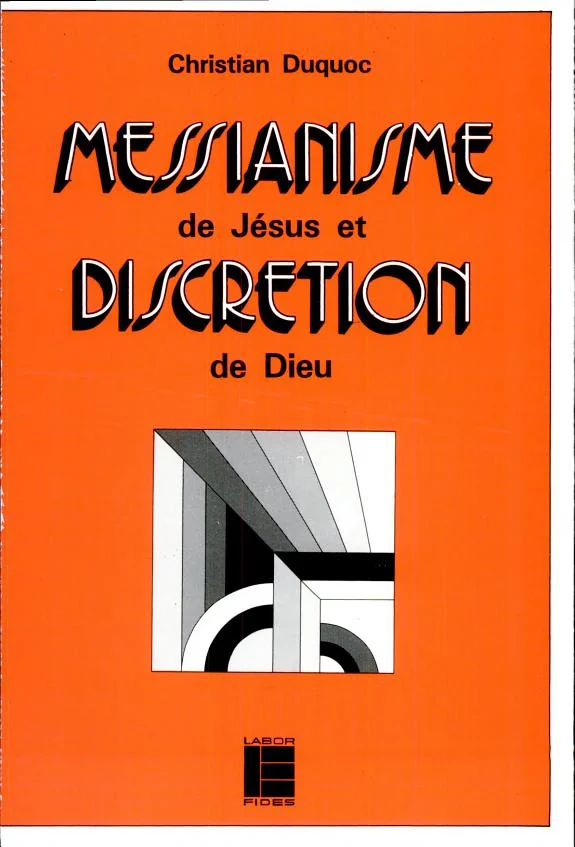
Messianisme de Jésus et discrétion de Dieu
 79
79

Messianisme de Jésus et discrétion de Dieu
Duquoc’s exploration of Jesus's messianic role and God's strategic silence is a demanding but rewarding engagement. The strength of "Messianisme de Jésus et discrétion de Dieu" lies in its rigorous deconstruction of theological assumptions, particularly its analysis of how divine absence becomes a powerful interpretive force. The 1984 publication date places it squarely within a French intellectual milieu concerned with language, power, and meaning. A notable passage might analyze the paradox of a revealed God who paradoxically remains hidden, forcing believers into a particular mode of interpretive faith. However, the work's dense prose and philosophical underpinnings can present a significant barrier to entry for those not well-versed in post-structuralist thought. It offers a critical lens on Christian doctrine, challenging conventional pieties, but at the cost of accessibility. Ultimately, it's a vital text for understanding the theological anxieties and philosophical critiques of the late 20th century.
📝 Description
79
### What It Is
Christian Duquoc's "Messianisme de Jésus et discrétion de Dieu," first published in 1984, examines the inherent tension between the messianic claims associated with Jesus and the perceived silence or 'discretion' of God in the historical and theological record. This work is not a hagiography but a critical exploration of how religious narratives construct divine presence and absence.
### Who It's For
This book is intended for advanced students and scholars of religious studies, theology, and philosophy of religion. It will appeal to those interested in post-structuralist approaches to theology, the semiotics of religious discourse, and critical analyses of messianic movements. Readers seeking a nuanced understanding of how faith traditions interpret divine action (or inaction) will find it valuable.
### Historical Context
Published in the mid-1980s, "Messianisme de Jésus et discrétion de Dieu" emerged during a period of significant intellectual ferment in France, influenced by thinkers like Jacques Derrida and Michel Foucault. The work engages with theological debates that were questioning traditional Christology and exploring the implications of divine hiddenness, a theme also addressed by theologians like Karl Barth in earlier decades. The reception of such critical theological works in the 1980s often involved academic circles grappling with secularization theories and the linguistic turn in philosophy.
### Key Concepts
The central concepts revolve around the 'messianism of Jesus' – the historical and theological implications of Jesus's role as a Messiah figure – and the 'discretion of God,' which refers to God's apparent withdrawal or hiddenness. Duquoc explores how this divine 'discretion' is interpreted within Christian theology, often as a deliberate strategy that shapes human faith and understanding. The work investigates the semiotics of divine revelation and silence, questioning how meaning is constructed when direct divine intervention is absent.
💡 Why Read This Book?
• Understand the theological implications of divine hiddenness, a concept central to Duquoc's analysis of God's 'discretion,' offering a unique perspective on faith formation. • Explore the semiotics of religious language as applied to messianic narratives, providing insight into how meaning is constructed around figures like Jesus, especially concerning the year 1984 when critical theological works were prominent. • Gain a critical perspective on Christology by examining the tension between Jesus's messianic claims and the perceived silence of the divine, a theme relevant to contemporary philosophical theology.
⭐ Reader Reviews
Honest opinions from readers who have explored this book.
❓ Frequently Asked Questions
What is the primary focus of Christian Duquoc's "Messianisme de Jésus et discrétion de Dieu"?
The book critically examines the messianic claims surrounding Jesus and contrasts them with the concept of God's 'discretion,' or apparent silence, exploring how this divine hiddenness shapes religious interpretation and faith.
When was "Messianisme de Jésus et discrétion de Dieu" first published?
This seminal work by Christian Duquoc was first published in 1984, placing it within a significant period of French philosophical and theological discourse.
Who would benefit most from reading this book?
Advanced students and scholars in theology, religious studies, and philosophy of religion who are interested in critical analyses of messianic movements and divine hiddenness will find this book particularly relevant.
Does the book offer traditional theological explanations for God's silence?
No, rather than offering traditional explanations, Duquoc deconstructs theological assumptions and explores the *implications* of divine discretion as a hermeneutical and existential challenge within Christianity.
What intellectual influences shaped Duquoc's work in 1984?
The book reflects the influence of French post-structuralist thought, including philosophers like Jacques Derrida and Michel Foucault, which was prevalent in intellectual circles during the 1980s.
What does 'discrétion de Dieu' mean in the context of the book?
'Discrétion de Dieu' refers to the apparent withdrawal, silence, or hiddenness of God in the historical and theological narrative, a concept Duquoc analyzes for its impact on faith and meaning.
🔮 Key Themes & Symbolism
The Messianic Paradox
The work dissects the multifaceted concept of Jesus as Messiah, not as a historical confirmation but as a theological construct. Duquoc scrutinizes how the messianic narrative is shaped by and, in turn, shapes understandings of divine power and purpose. The 'messianism of Jesus' is presented as a complex interpretative framework rather than a simple historical designation, inviting readers to question the very foundations of Christological claims.
Divine Hiddenness as Strategy
The core concept of 'discrétion de Dieu' is explored not as divine absence but as a strategic divine posture. Duquoc posits that God's perceived silence is an active element within the theological drama, compelling human faith and interpretation. This perspective challenges anthropomorphic views of God and delves into the semiotics of divine communication, where silence itself becomes a potent signifier.
Semiotics of Revelation and Absence
Duquoc applies principles of semiotics to religious discourse, analyzing how divine meaning is conveyed through both presence and absence. The book examines the signs and symbols associated with messianic figures and the ways in which the 'discretion of God' influences the hermeneutics of sacred texts. It questions how believers construct meaning when direct divine intervention is not apparent.
Critique of Theological Certainty
Emerging from a post-structuralist intellectual climate, the book functions as a critique of theological positivism and foundationalism. By highlighting the 'discretion' of God and the constructed nature of messianic claims, Duquoc encourages a more nuanced, questioning approach to religious doctrine. This invites a re-evaluation of certainty in faith and the role of doubt and interpretation.
💬 Memorable Quotes
“The silence of God is not an absence, but a presence that commands interpretation.”
— This interpretation of 'discrétion de Dieu' suggests that God's hiddenness is not a lack of being but an active theological strategy, forcing human subjects to engage in active meaning-making and interpretative faith.
“Messianic expectation shapes the very perception of divine action.”
— This highlights how pre-existing beliefs and frameworks about a messiah influence how individuals and communities interpret historical events and divine interventions, or lack thereof.
“The language of revelation is often a language of God's calculated withdrawal.”
— This suggests that divine communication is not always direct or overt, but can involve strategic concealment or indirectness, making the process of understanding God's will a complex interpretive act.
“Jesus's messianism functions as a complex signifier, open to diverse theological readings.”
— This points to the polysemic nature of the Christ figure in theology, where the title 'Messiah' does not yield a single, fixed meaning but invites a multiplicity of interpretations across different theological traditions and historical moments.
“Faith is born in the space between divine promise and apparent divine distance.”
— This encapsulates the existential challenge of faith, suggesting that belief is often forged not in the face of clear divine affirmation, but in the tension created by perceived divine remoteness.
🌙 Esoteric Significance
Tradition
While not strictly adhering to a single esoteric lineage like Kabbalah or Hermeticism, Duquoc's work engages with Gnostic themes of divine hiddenness and the challenges of recognizing the divine in the mundane. It echoes a mystical skepticism found in various traditions that question direct, easily accessible divine manifestation, emphasizing instead the interpretive act required to perceive the sacred.
Symbolism
The central 'symbol' explored is the 'discretion of God' itself – divine silence as a potent, active sign. Another key motif is the 'messianic sign' embodied by Jesus, which Duquoc analyzes not as a fixed symbol of salvation, but as a complex, multi-layered signifier whose meaning is perpetually negotiated within theological discourse.
Modern Relevance
Duquoc's analysis of divine hiddenness and the semiotics of religious language remains highly relevant to contemporary theological debates, particularly within fields like philosophical theology and trauma studies, which examine the impact of perceived divine absence. Thinkers exploring post-theistic spirituality and critical interpretations of religious texts draw on this nuanced approach.
👥 Who Should Read This Book
• Academic theologians and philosophers of religion seeking critical perspectives on Christology and the problem of evil or divine hiddenness. • Students of comparative religion interested in how different traditions interpret divine presence and absence in their foundational narratives. • Critical thinkers engaged with post-structuralist thought who wish to see its application in deconstructing theological claims and religious language.
📜 Historical Context
Christian Duquoc's "Messianisme de Jésus et discrétion de Dieu," published in 1984, emerged from the fertile intellectual landscape of late 20th-century France, heavily influenced by post-structuralist critiques. This era saw theologians and philosophers grappling with the implications of secularization and the linguistic turn, questioning traditional modes of theological discourse. Duquoc's work can be situated alongside critical theological examinations of divinity's presence and absence that were also being explored by thinkers like Jean-Luc Marion, who was also engaging with phenomenology and negative theology. The book's focus on divine 'discretion' offered a counterpoint to more triumphalist theological narratives prevalent in earlier decades. Its reception likely occurred within academic theological circles accustomed to rigorous theoretical engagement, a stark contrast to the more pietistic approaches to Christology.
📔 Journal Prompts
The messianism of Jesus as a theological construct.
Interpreting the 'discrétion de Dieu' in contemporary events.
Analyzing the semiotics of divine silence.
The relationship between faith and divine distance.
Re-evaluating theological certainty in light of divine hiddenness.
🗂️ Glossary
Messianisme de Jésus
The theological and historical concept of Jesus as the Messiah, encompassing his role, claims, and the interpretations thereof within Christian tradition and beyond.
Discrétion de Dieu
Literally 'discretion of God,' referring to God's perceived silence, hiddenness, or strategic withdrawal from direct intervention in the world, treated as a theological concept.
Semiotics
The study of signs and symbols and their interpretation, applied here to religious language and divine communication.
Hermeneutics
The theory and methodology of interpretation, especially the interpretation of biblical texts, religious texts, or philosophical concepts.
Christology
The branch of Christian theology relating to the person, nature, and role of Christ.
Post-structuralism
A philosophical and critical movement that challenges the assumptions of structuralism, emphasizing deconstruction, indeterminacy, and the instability of meaning.
Signifier/Signified
In semiotics, the signifier is the physical form of a sign (e.g., the word 'tree'), while the signified is the concept it represents (the idea of a tree).