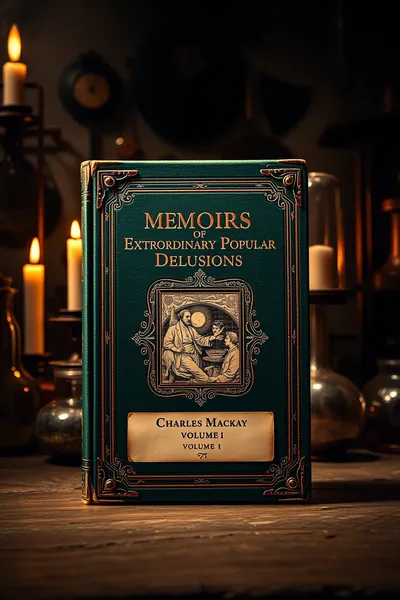
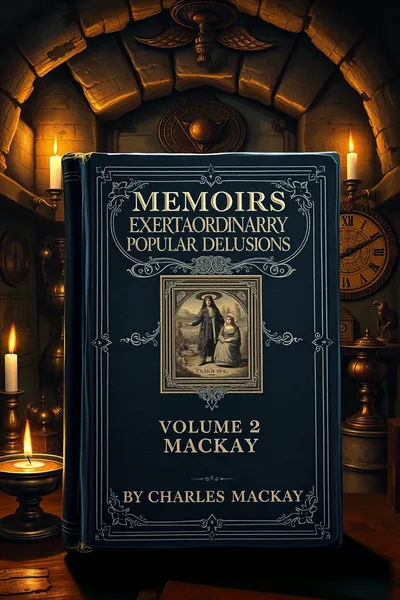
Memoirs of extraordinary popular delusions

 79
79

Memoirs of extraordinary popular delusions
Mackay’s 1856 chronicle of collective human irrationality is a sprawling, often darkly humorous, examination of how societies embrace absurdity. Its strength lies in the sheer breadth of its examples, from the Tulip Mania of 17th-century Holland to the widespread belief in fortune-telling. Mackay meticulously details these episodes, showcasing the potent force of mass psychology. However, the work occasionally suffers from its age; the narrative can feel dated, and the analysis, while insightful for its time, sometimes lacks modern psychological depth. A particularly striking section details the Mississippi Company's collapse, illustrating how greed fueled a speculative frenzy that ultimately devastated countless investors. Despite its Victorian prose, the book remains a potent reminder of our species' susceptibility to shared illusions.
📝 Description
79
Charles Mackay's 1856 book cataloged historical follies, mass hysteria, and widespread irrationality.
Published in 1856, Charles Mackay's "Memoirs of Extraordinary Popular Delusions" examines historical instances of collective madness. The book details how widespread beliefs, often fueled by superstition, greed, or fear, could lead entire populations astray. Mackay provides vivid accounts of phenomena ranging from financial bubbles like the South Sea Bubble to witch hunts and dancing manias.
This compendium appeals to those interested in crowd psychology and the cyclical nature of human belief. Historians, sociologists, and critical thinkers will find material that dissects the roots of both widespread acceptance and fervent denial. The work implicitly questions the idea of linear human rationality by highlighting persistent patterns of irrationality throughout recorded history.
While not strictly an esoteric text in the occult sense, Mackay's work touches upon themes often explored in esoteric traditions concerning the collective unconscious and the power of shared belief systems to shape reality. It aligns with a broader interest in understanding hidden forces that influence human behavior and societal trends, often outside the realm of rational explanation. The book’s focus on delusion and irrationality can be seen as a study of the shadow side of human consciousness, a concept relevant to many esoteric philosophies that seek to understand the totality of the human psyche.
✍️ Author
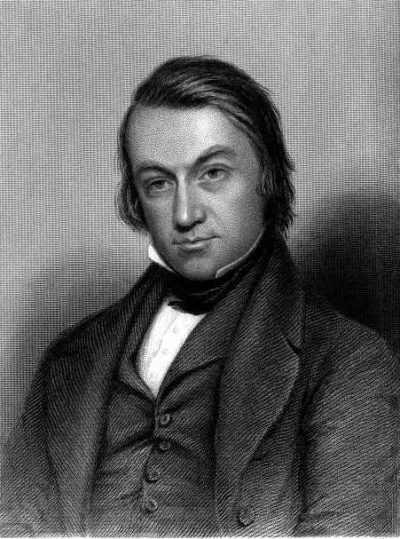
Charles Mackay
Scottish poet and journalist Charles Mackay wrote 'Extraordinary Popular Delusions and the Madness of Crowds'.
💡 Why Read This Book?
• Understand the mechanics of mass hysteria by examining Mackay's detailed account of the "Dancing Plague of 1518" in Strasbourg, revealing how shared compulsion can override individual reason. • Gain insight into economic irrationality through the analysis of the "South Sea Bubble" of 1720, illustrating how speculative manias are born from collective greed and fear. • Learn about the enduring power of fringe beliefs by exploring the persistent historical pursuit of alchemy, as documented in Mackay's chapters, showing how deeply ingrained desires can fuel centuries of misguided endeavor.
⭐ Reader Reviews
Honest opinions from readers who have explored this book.
❓ Frequently Asked Questions
What historical periods does Charles Mackay cover in Memoirs of Extraordinary Popular Delusions?
The book spans centuries, detailing events from ancient times to Mackay's contemporary era in the mid-19th century. It includes examples from the Roman Empire, the medieval witch trials, and the financial manias of the 17th and 18th centuries.
Is 'Memoirs of Extraordinary Popular Delusions' based on factual accounts?
Yes, Mackay compiled his work from historical records, chronicles, and contemporary accounts available up to his publication date in 1856. While his interpretations are his own, the events described are historically documented.
What is the 'Tulip Mania' discussed in the book?
The Tulip Mania, detailed in Mackay's work, refers to the speculative bubble in the Dutch Republic in the 1630s where tulip bulb prices reached extraordinarily high levels before crashing dramatically.
Does Mackay analyze the psychological underpinnings of these delusions?
Yes, Mackay explores concepts like mass psychology, the power of suggestion, greed, fear, and the human tendency to conform. He examines how these factors contribute to widespread irrational beliefs and behaviors.
Is 'Memoirs of Extraordinary Popular Delusions' considered an esoteric text?
While not strictly an esoteric text in the vein of ritual magic or occult philosophy, its exploration of collective belief, mass psychology, and the irrational can be seen as touching upon the hidden currents of human consciousness and societal dynamics.
When was 'Memoirs of Extraordinary Popular Delusions' first published?
The seminal work by Charles Mackay was first published in 1856, offering a Victorian perspective on historical follies and widespread irrationality.
🔮 Key Themes & Symbolism
The Anatomy of Hysteria
Mackay dissects the contagious nature of collective panic and delusion. He maps how fear and excitement, amplified through social networks, can transform rational individuals into participants in widespread irrationality. The work provides case studies like the "Dancing Plague of 1518," where inexplicable compulsions spread through communities, demonstrating how societal anxieties can manifest in bizarre, shared behaviors that defy logical explanation.
Greed and Financial Manias
A significant portion of Mackay's analysis focuses on economic follies driven by avarice. He chronicles speculative bubbles such as the "South Sea Bubble" (1720) and the "Tulip Mania" (1630s), showing how the pursuit of quick riches can override sound judgment, leading to devastating financial collapses. These episodes serve as stark warnings about the herd mentality inherent in markets and the seductive power of easy wealth.
The Persistence of Superstition
Mackay examines how ancient superstitions and irrational beliefs continue to hold sway even in the face of scientific progress. Chapters on witchcraft, alchemy, and fortune-telling reveal the enduring human fascination with the occult and the supernatural. The work highlights how deeply ingrained psychological needs for certainty, control, or magical solutions can fuel persistent, albeit irrational, belief systems across generations.
The Illusion of Progress
Published in 1856, during an era of rapid industrial and scientific advancement, Mackay's book serves as a cautionary counterpoint to unchecked optimism. By cataloging historical follies, he implicitly questions the linear trajectory of human rationality. The book suggests that despite technological or societal progress, the fundamental psychological mechanisms driving irrationality remain constant, posing a perpetual challenge to enlightened thought.
💬 Memorable Quotes
“Men, in the eyes of their own time, are for the most part very wise.”
— This observation suggests that individuals rarely perceive their own era's prevailing beliefs or actions as foolish. It implies a pervasive self-deception wherein collective irrationality is often mistaken for common sense or wisdom by those living through it.
“The history of the world is but the history of human error.”
— This provocative statement encapsulates Mackay's thesis that irrationality is a recurring theme in human civilization. It posits that rather than a steady march of progress, human history is characterized by repeated mistakes, follies, and widespread delusions.
“Popular delusions are rarely the offspring of mature thought.”
— This highlights the often impulsive and unexamined nature of mass beliefs. It suggests that widespread irrationality typically arises from immediate emotional responses, social contagion, or uncritical acceptance rather than considered reasoning.
“In every age, the most foolish things are commonly the most popular.”
— This assertion points to a paradox where absurdity or irrationality frequently gains wider acceptance than reasoned discourse. It suggests a societal tendency to gravitate towards simplistic, sensational, or emotionally appealing ideas, regardless of their factual basis.
“The Mississippi Scheme, which ruined so many, was founded on a delusion.”
— This refers to the speculative frenzy surrounding John Law's financial system in early 18th-century France. The 'delusion' was the belief in the perpetual and unlimited value of the Mississippi Company's stock, leading to hyperinflation and widespread ruin.
🌙 Esoteric Significance
Tradition
While not a primary text within a specific esoteric lineage like Hermeticism or Kabbalah, Mackay's work resonates with the Gnostic emphasis on illusion and the deception of the material world. It explores how collective 'ignorance' or 'delusion' can obscure deeper truths, mirroring the Gnostic concept of the ignorant demiurge or the souls trapped by false perception. The book's analysis of mass psychology and societal blind spots can be seen as an examination of the 'lower' or 'shadow' aspects of collective consciousness, often a subject of inquiry in esoteric circles seeking to understand and transcend human limitations.
Symbolism
The book itself acts as a symbolic compendium, with each historical delusion representing a facet of the human psyche's susceptibility to illusion. Financial bubbles, like the "South Sea Bubble," symbolize unchecked avarice and the ephemeral nature of material wealth. Witch trials represent the dangers of collective paranoia and the scapegoating of the 'other,' often fueled by societal anxieties. The persistent belief in alchemy, despite its scientific futility, symbolizes humanity's enduring desire for transformation and hidden knowledge, even when pursued through misguided means.
Modern Relevance
Mackay's insights remain highly relevant in the age of social media and the internet, platforms that can rapidly amplify misinformation and collective obsessions. Contemporary thinkers analyzing online echo chambers, conspiracy theories, and the spread of fake news draw parallels to Mackay's historical examples. His work is often cited in discussions of behavioral economics, marketing psychology, and the study of memetics, demonstrating its enduring value in understanding how ideas, both true and false, gain traction within populations.
👥 Who Should Read This Book
• Students of crowd psychology and social dynamics seeking historical case studies of mass irrationality, from financial manias to moral panics. • Critical thinkers and historians interested in the recurring patterns of human folly and the fragility of collective reason across different eras. • Individuals curious about the historical roots of superstition, economic bubbles, and pseudoscientific beliefs, wanting to understand the societal forces that propagate them.
📜 Historical Context
Charles Mackay's "Memoirs of Extraordinary Popular Delusions," published in 1856, emerged during the height of the Victorian era, a period marked by rapid industrialization, scientific discovery, and a burgeoning sense of national progress. The book served as a stark counterpoint to this prevailing optimism. Mackay, a Scottish journalist and poet, drew upon a wide array of historical sources to catalogue human irrationality, implicitly questioning the notion of an unilinear march towards enlightenment. His work appeared at a time when mass media was expanding, making the spread of both information and misinformation more potent. While Mackay was not directly engaging with a specific philosophical school in opposition, his work implicitly critiqued the Enlightenment's faith in pure reason by demonstrating the enduring power of superstition, greed, and mass psychology. His contemporary, Thomas Carlyle, also explored the role of the masses and the nature of belief in his writings, though often with a more romanticized or heroic lens. Mackay's book was widely read and contributed to a growing popular interest in historical curiosities and the psychology of crowds.
📔 Journal Prompts
The Mississippi Company's collapse as an example of collective delusion.
The enduring appeal of alchemy and its symbolic significance.
Comparing the mechanisms of the Tulip Mania to modern speculative events.
The role of fear in fueling historical witch hunts.
Reflecting on the cyclical nature of popular delusions as presented by Mackay.
🗂️ Glossary
South Sea Bubble
A notorious financial crisis in 1720 Britain, stemming from speculative investment in the South Sea Company. Mackay details how initial optimism and manipulation led to inflated stock prices before a catastrophic crash, ruining many investors.
Tulip Mania
A period in the Dutch Golden Age (early 17th century) characterized by extreme speculation in tulip bulbs. Prices reached astronomical levels before collapsing, serving as an early example of a speculative bubble and mass hysteria.
Dancing Plague of 1518
A historical event where people in Strasbourg, Alsace, began to dance uncontrollably for days, sometimes to death. Mackay examines this as an instance of mass psychogenic illness or hysteria.
Alchemy
An ancient proto-scientific and philosophical tradition focused on transmutation of base metals into gold, the discovery of a universal elixir, and the creation of a panacea. Mackay discusses its prevalence as a popular delusion.
Fortune-telling
The practice of predicting future events or uncovering hidden knowledge through various means, such as astrology, palmistry, or divination. Mackay includes it as a widespread and persistent popular delusion.
Prophecies of Nostradamus
The collection of prophecies attributed to the French astrologer and seer Michel de Nostredame. Mackay discusses the enduring fascination and interpretation of these prophecies as a form of popular belief.
Crusades
A series of religious wars sanctioned by the Latin Church in the medieval period. Mackay touches upon the fervent, often irrational, zeal that propelled these massive military expeditions.