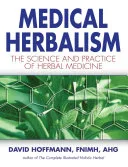
Medical Herbalism
 79
79

Medical Herbalism
David Hoffmann's Medical Herbalism offers a substantial contribution to the field, presenting a rigorous, science-informed perspective on plant-based medicine. Its strength lies in the detailed chemical analysis of medicinal plants and their physiological actions, providing a much-needed bridge between traditional use and contemporary pharmacology. The section on contraindications and interactions, while essential, feels somewhat condensed given the complexity of the subject matter. A passage detailing the specific mechanisms of action for certain glycosides, for instance, highlights the book's meticulousness. However, the sheer volume of technical information can be daunting for those without a strong scientific background. Hoffmann's work is an indispensable reference for serious practitioners but may prove less accessible for casual readers seeking introductory lore.
📝 Description
79
### What It Is Medical Herbalism by David Hoffmann, first published in 2003, functions as a comprehensive textbook detailing the scientific underpinnings of therapeutic herbalism. It meticulously examines the chemical structure and physiological effects of medicinal plants, providing practitioners with a robust framework for their application. The text goes beyond simple identification, offering detailed guidance on the preparation of remedies, precise dosage recommendations, and crucial information regarding contraindications.
### Who It's For This work is primarily intended for medical practitioners, herbalists, and students of natural medicine seeking a scientifically grounded approach to plant-based therapeutics. It caters to those who require detailed pharmacological information alongside practical application. Individuals interested in the intersection of traditional herbal knowledge and modern scientific understanding will find its depth valuable.
### Historical Context Published in 2003, Medical Herbalism emerged during a period of increasing scientific scrutiny and integration of complementary and alternative medicine (CAM) into mainstream discourse. Hoffmann's work positioned itself against a backdrop where herbalism was often relegated to folklore, seeking to establish it as a rigorous discipline. It built upon the legacy of earlier pharmacopoeias and materia medica, but with a distinct emphasis on chemical constituents and evidence-based efficacy, differentiating it from purely traditional or vitalistic approaches prevalent at the time.
### Key Concepts The book centers on the concept of phytochemistry, exploring how specific chemical compounds within plants (e.g., flavonoids, alkaloids, terpenes) exert therapeutic effects on the human body. It emphasizes the importance of standardized preparations and accurate dosage to ensure both efficacy and safety. Another core concept is the distinction between the actions of individual plant constituents and the synergistic effects of the whole plant, acknowledging the complexity of herbal medicine.
💡 Why Read This Book?
• Gain a precise understanding of plant constituents and their physiological effects, as detailed in Hoffmann's discussion of phytochemical analysis, enabling informed therapeutic choices. • Learn to prepare and dose herbal remedies accurately, drawing from the practical guidance provided in sections on formulation and contraindications for safer and more effective use. • Appreciate the scientific validation of traditional herbal practices, supported by the book's exploration of chemical structures and their documented actions since its 2003 publication.
⭐ Reader Reviews
Honest opinions from readers who have explored this book.
❓ Frequently Asked Questions
What is the primary focus of David Hoffmann's Medical Herbalism?
The book focuses on the scientific principles of therapeutic herbalism, detailing the chemical structure and physiological effects of medicinal plants for medical application. It covers preparations, dosage, and contraindications.
Who is the intended audience for Medical Herbalism?
It is intended for medical practitioners, herbalists, and students of natural medicine who seek a scientifically grounded understanding of herbal therapeutics.
When was Medical Herbalism first published?
Medical Herbalism was first published on October 24, 2003.
Does the book discuss plant identification?
Yes, the book includes comprehensive information concerning the identification of medicinal plants, alongside their chemical properties and therapeutic uses.
What kind of information is provided on herbal preparations?
The book offers up-to-date information on making various preparations, including details on standardization, dosage, and potential adverse effects or contraindications.
Is Medical Herbalism suitable for beginners?
While comprehensive, its scientific depth makes it more suited for practitioners and students with some existing knowledge of anatomy, physiology, or chemistry. Beginners might find it a challenging but rewarding advanced text.
🔮 Key Themes & Symbolism
Phytochemistry and Physiological Action
This theme delves into the chemical constituents of medicinal plants, such as alkaloids, flavonoids, and terpenes, and their specific interactions with human physiology. Hoffmann meticulously breaks down how these compounds, identified by their chemical structure, influence bodily systems. For example, the book might detail how specific saponins affect mucous membranes or how certain tannins exhibit astringent properties. This scientific approach grounds traditional herbal knowledge in biochemical mechanisms, offering a clear understanding of *why* a plant works and how to use it effectively and safely.
Standardization and Dosage
A critical aspect of Medical Herbalism is its emphasis on the precise formulation and administration of herbal remedies. Hoffmann addresses the need for standardized preparations, ensuring consistent levels of active compounds, which is crucial for predictable therapeutic outcomes. The text provides detailed guidelines on appropriate dosages for various conditions and patient types, distinguishing it from less precise traditional methods. This focus on accuracy is vital for practitioners aiming to integrate herbal medicine into a clinical setting, minimizing variability and maximizing efficacy.
Therapeutic Application and Contraindications
The book systematically outlines the therapeutic applications of numerous medicinal plants, linking their chemical profiles to specific health conditions. Beyond efficacy, Hoffmann devotes significant attention to potential contraindications, drug interactions, and side effects. This cautionary approach is paramount for responsible medical practice. By providing comprehensive information on who should avoid certain herbs and why, the work empowers practitioners to make safe, informed decisions, preventing adverse events and ensuring patient well-being within a modern medical framework.
Integration of Science and Tradition
Medical Herbalism seeks to bridge the gap between ancient herbal wisdom and modern scientific understanding. While acknowledging the historical use of plants, Hoffmann grounds his recommendations in biochemical research and clinical evidence. This integration allows for a more robust and defensible practice of herbal medicine. The work validates traditional knowledge through scientific inquiry, demonstrating that many age-old remedies have demonstrable physiological effects explained by their chemical composition, fostering greater acceptance and application in contemporary healthcare.
💬 Memorable Quotes
“Identification, preparation, dosage, contraindications, and actions.”
— This concise list encapsulates the core pillars of Hoffmann's approach to medical herbalism, highlighting the book's structured, practical, and safety-conscious methodology.
“The art and science of making herbal remedies.”
— This phrase suggests a balanced approach, acknowledging both the intuitive, experiential aspects ('art') and the precise, evidence-based methodologies ('science') required for effective herbal practice.
“By chemical structure and physiological effect.”
— This points to the book's fundamental organizing principle: understanding plants not just by their traditional uses, but by their verifiable chemical makeup and how those chemicals interact with the body.
“A foundational textbook on the scientific principles of therapeutic herbalism.”
— This statement positions the work as a definitive educational resource, emphasizing its role in establishing a rigorous, evidence-based curriculum for the study and practice of herbal medicine.
“The most up-to-date information on preparations, dosage, and contraindications.”
— This emphasizes the book's commitment to providing current, clinically relevant data, crucial for practitioners navigating the evolving landscape of natural medicine and patient safety.
🌙 Esoteric Significance
Tradition
While primarily a scientific textbook, Medical Herbalism can be seen as a modern manifestation of the Hermetic principle of 'As Above, So Below,' applied to the plant kingdom. It seeks to understand the macrocosm (the plant's chemical and energetic properties) and its relationship to the microcosm (the human body). It moves beyond purely vitalistic traditions by grounding these correspondences in observable biochemical interactions, representing a shift towards empirical verification within a lineage that historically relied more on sympathetic magic or energetic principles.
Symbolism
The book’s focus on chemical constituents can be interpreted symbolically. Each compound, like a specific alkaloid or terpene, represents a distinct 'essence' or 'virtue' of the plant, akin to alchemical principles distilled into tangible molecular forms. The detailed description of physiological effects symbolizes the plant's 'signature' – not in a mystical sense, but in its scientifically verifiable capacity to interact with and modulate specific bodily functions, mirroring the Hermetic idea of signatures revealing a plant's purpose.
Modern Relevance
Contemporary practitioners of evidence-based herbalism, functional medicine, and naturopathy draw heavily on Hoffmann's meticulous research. Thinkers and clinicians who prioritize understanding the biochemical mechanisms behind herbal actions, and who seek to integrate herbal remedies with conventional medical treatments, find his work indispensable. It informs modern approaches to botanical drug discovery and the development of standardized herbal extracts used in clinical settings worldwide.
👥 Who Should Read This Book
• Medical herbalists and naturopathic doctors seeking a scientifically rigorous reference for plant therapeutics, requiring detailed information on phytochemistry, dosage, and contraindications. • Pharmacy students and practitioners interested in the pharmacological basis of herbal medicine, wanting to understand how plant compounds interact with human physiology. • Researchers in pharmacognosy and ethnobotany looking for a comprehensive overview of medicinal plants grounded in both traditional knowledge and modern scientific analysis.
📜 Historical Context
Published in 2003, David Hoffmann's Medical Herbalism arrived at a juncture where complementary and alternative medicine (CAM) was gaining significant traction, yet often lacked rigorous scientific validation. The preceding decades had seen a resurgence of interest in herbalism, sometimes drawing from vitalistic philosophies or anecdotal evidence. Hoffmann's work distinguished itself by anchoring herbal therapeutics firmly in Western biomedical paradigms, focusing on phytochemistry and physiological effects. This approach contrasted with more holistic or energetic models prevalent in some herbal communities. It aimed to provide practitioners with the detailed pharmacological knowledge necessary for safe and effective clinical application, akin to a pharmaceutical materia medica but focused on whole plant extracts. The book's publication contributed to the growing body of literature seeking to legitimize herbal medicine through scientific inquiry, aligning with the broader movement to integrate evidence-based practices into healthcare.
📔 Journal Prompts
The specific chemical constituents like flavonoids and their physiological effects.
The concept of standardized preparations versus whole-plant remedies.
The detailed contraindications for a chosen herb discussed in the text.
Comparing the scientific explanation of a plant's action with its historical or traditional use.
The practical challenges of applying precise dosages in clinical herbal practice.
🗂️ Glossary
Phytochemistry
The study of chemicals derived from plants. It involves identifying plant compounds, understanding their structures, and determining their therapeutic or toxicological effects on the human body.
Alkaloids
A large group of naturally occurring organic compounds containing nitrogen atoms, usually basic in nature. Many alkaloids have potent physiological effects on humans and animals, forming the basis for numerous pharmaceuticals.
Flavonoids
A diverse class of plant compounds known for their antioxidant properties. They are widespread in fruits, vegetables, and beverages like tea and wine, and are believed to contribute to various health benefits.
Terpenes
A large and varied class of organic compounds produced by a variety of plants, particularly conifers. They are often responsible for the characteristic aromas of plants and can have diverse medicinal properties.
Contraindications
Specific situations or conditions where a particular medical treatment (in this case, a herbal remedy) should not be used because it may be harmful to the patient.
Standardization
The process of ensuring that herbal extracts contain a consistent amount of one or more active compounds, measured by specific chemical markers, to guarantee predictable therapeutic effects.
Physiological Effect
The impact of a substance or condition on the normal functioning of the body's systems and organs.