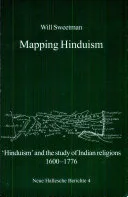
Mapping Hinduism
 73
73

Mapping Hinduism
Will Sweetman's "Mapping Hinduism" succeeds in its ambitious project to chart the vast territory of Hindu traditions. The book’s strength lies in its methodical approach, carefully dissecting complex philosophical systems like Advaita Vedanta and contrasting them with devotional practices. Sweetman avoids presenting a singular, essentialist Hinduism, instead highlighting the pluralistic nature of its expressions. A particular strength is the section detailing the historical development of key texts and their varying interpretations. However, the sheer scope means some areas, particularly the more modern, syncretic movements, receive less detailed attention. The dense academic prose, while precise, can occasionally feel detached from the lived spiritual experience of adherents. Despite this, the work offers a valuable academic survey for serious students.
📝 Description
73
### What It Is Mapping Hinduism offers a scholarly yet accessible exploration of the diverse traditions that constitute the Hindu religious landscape. First published in 2003 by Will Sweetman, this work moves beyond simplistic categorizations to present a nuanced overview of Hindu thought and practice. It examines the historical development, philosophical underpinnings, and ritualistic expressions that define Hinduism across its many forms.
### Who It's For This book is designed for students of comparative religion, scholars of South Asian studies, and individuals seeking a comprehensive understanding of Hinduism beyond introductory texts. It caters to those who appreciate rigorous academic analysis combined with an appreciation for the spiritual dimensions of the subject matter. Readers interested in the evolution of religious thought and practice will find particular value here.
### Historical Context Published in 2003, Mapping Hinduism entered a scholarly discourse already rich with studies of Indian religions. It emerged at a time when post-colonial critiques and evolving methodologies in religious studies were prompting new ways to understand traditions previously viewed through a Western lens. Sweetman's work contributes to this by offering a synthesis that acknowledges the internal diversity and historical fluidity of Hindu traditions, rather than presenting a monolithic view.
### Key Concepts The book systematically unpacks core concepts that are foundational to understanding Hindu traditions. It addresses the philosophical schools such as Vedanta and Yoga, explores the significance of deities within the pantheon, and examines the role of scripture and ritual. Sweetman also considers the social and political contexts that have shaped Hinduism throughout its long history, providing a framework for appreciating its complexity.
💡 Why Read This Book?
• Gain a structured understanding of the diverse philosophical schools within Hinduism, such as the nuances of Samkhya philosophy as presented in Chapter 3, allowing for a comparative analysis of different worldviews. • Appreciate the historical evolution of Hindu practices and beliefs, tracing developments from the Vedic period, as detailed in the book's chronological sections, to better grasp their contemporary forms. • Grasp the significance of key deities and their roles within the broader Hindu pantheon, moving beyond superficial recognition to a deeper appreciation of their theological and devotional functions, as explored in the dedicated chapters.
⭐ Reader Reviews
Honest opinions from readers who have explored this book.
❓ Frequently Asked Questions
What is the primary focus of Will Sweetman's "Mapping Hinduism"?
The book's primary focus is to provide a comprehensive and nuanced academic overview of the diverse traditions, philosophies, and practices that constitute Hinduism, emphasizing its historical development and internal pluralism.
When was "Mapping Hinduism" first published?
Will Sweetman's "Mapping Hinduism" was first published in 2003, positioning it within contemporary scholarship on religious studies and South Asian traditions.
Is "Mapping Hinduism" suitable for beginners with no prior knowledge?
While accessible to motivated learners, the book is geared towards students and scholars. It assumes some familiarity with academic discourse and religious studies concepts, offering depth rather than a basic introduction.
Does the book cover contemporary Hindu movements?
The book provides historical context and traces developments, offering insights into the roots of contemporary movements. However, its primary emphasis is on the historical and philosophical foundations rather than an exhaustive survey of all modern expressions.
What academic disciplines does "Mapping Hinduism" contribute to?
It significantly contributes to religious studies, comparative religion, South Asian studies, and the history of philosophy and culture.
What is the author's approach to presenting Hinduism?
Will Sweetman adopts a scholarly, analytical approach, aiming to map the complexity and diversity of Hindu traditions rather than presenting a singular, monolithic view.
🔮 Key Themes & Symbolism
Philosophical Schools
The work meticulously outlines the major philosophical systems that underpin Hindu thought, such as the dualistic realism of Nyaya and the non-dualism of Advaita Vedanta. Sweetman details their core tenets, epistemological frameworks, and ontological claims, providing readers with a clear understanding of the intellectual architecture supporting various Hindu practices. This section is crucial for appreciating the diverse conceptual universes inhabited by adherents, moving beyond mere ritualistic observation to grasp the underlying metaphysical reasoning.
Ritual and Practice
Mapping Hinduism examines the integral role of ritual (karma-kanda) and devotional practice (bhakti) across different Hindu lineages. It explores the significance of yajña (fire sacrifice), puja (worship), and pilgrimage, linking these practices to their scriptural foundations and theological justifications. The book highlights how ritual serves not only as a means of connecting with the divine but also as a mechanism for maintaining social order and transmitting religious knowledge across generations.
Deity and Devotion
The book offers a nuanced perspective on the Hindu pantheon, discussing the various forms of deities such as Vishnu, Shiva, and Devi, and their respective traditions (Vaishnavism, Shaivism, Shaktism). Sweetman explores the theological concepts of avataras and the complex relationship between the divine and the human, underscoring the importance of bhakti (devotion) as a path to liberation. This analysis moves beyond a simple listing of gods to an understanding of their function within different soteriological frameworks.
Historical Development
Sweetman traces the historical trajectory of Hindu traditions from the Vedic period through the development of the Puranas and the influence of various philosophical schools. This chronological perspective is vital for understanding how Hinduism evolved, adapted to changing social and political landscapes, and incorporated diverse regional and folk elements. The book emphasizes that Hinduism is not static but a dynamic tradition shaped by centuries of intellectual and cultural exchange.
💬 Memorable Quotes
“The diversity within what is termed 'Hinduism' is immense, encompassing widely differing theological, philosophical, and ritualistic systems.”
— This statement underscores the book's central thesis: that Hinduism should not be viewed as a monolithic entity but as a complex, multifaceted tradition with significant internal variations.
“Understanding the Vedic roots provides essential context for later developments in Hindu philosophy and practice.”
— This highlights the author's methodology, emphasizing the importance of historical origins and foundational texts in comprehending the evolution and varied expressions of Hindu traditions.
“Devotional paths, or bhakti movements, offered accessible routes to spiritual realization for a broad spectrum of society.”
— This points to the significance of devotional practices within Hinduism, suggesting they played a crucial role in democratizing access to spiritual fulfillment beyond the elite or priestly classes.
“The philosophical schools like Vedanta and Yoga provide frameworks for understanding the nature of reality and the human condition.”
— This emphasizes the intellectual depth of Hindu traditions, framing its philosophical systems as sophisticated attempts to address fundamental existential questions and provide pathways to liberation.
“Ritual acts, from domestic worship to grand public ceremonies, are integral to the maintenance and transmission of religious life.”
— This highlights the practical, performative dimension of Hinduism, illustrating how communal and individual rituals are essential for perpetuating religious identity and practice.
🌙 Esoteric Significance
Tradition
While "Mapping Hinduism" is primarily a scholarly work on the broad spectrum of Hindu traditions, its detailed examination of philosophical schools like Yoga and Vedanta touches upon elements often considered within esoteric or mystical studies. These traditions, particularly their contemplative and meditative practices, have historically informed various esoteric lineages in the West and East. The book's structured approach to these concepts can serve as a foundational text for those seeking to understand the roots of practices that explore consciousness and spiritual realization.
Symbolism
The book explores the rich symbolism inherent in Hindu traditions, such as the representation of deities like Vishnu with his multiple arms symbolizing his omnipresence and power, or Shiva as the destroyer and transformer, embodying cosmic cycles. The concept of the Om (Aum) symbol, representing the primordial sound and the essence of ultimate reality, is also implicitly discussed through its philosophical underpinnings. These symbols function not merely as decorative elements but as focal points for meditation and understanding profound metaphysical truths.
Modern Relevance
Contemporary practitioners of yoga and meditation, often engaging with these practices divorced from their original Hindu philosophical contexts, find "Mapping Hinduism" invaluable for understanding the deeper intellectual and spiritual heritage. Thinkers and movements focused on comparative spirituality and non-dual philosophies also draw upon Sweetman's meticulous mapping of these ideas. The work provides a crucial academic grounding for those seeking to explore the philosophical underpinnings of consciousness studies and alternative spiritual paths informed by Eastern thought.
👥 Who Should Read This Book
• Students of comparative religion seeking a comprehensive academic overview of Hindu traditions, offering detailed insights into philosophical schools and historical developments. • Scholars of South Asian studies requiring a structured, evidence-based resource to understand the complexities and diversity of Hinduism beyond introductory levels. • Individuals interested in the philosophical underpinnings of Yoga and Vedanta, looking for a text that rigorously defines core concepts and their historical evolution.
📜 Historical Context
When Will Sweetman's "Mapping Hinduism" was published in 2003, the study of South Asian religions was already a well-established academic field, but one continually reshaped by critical methodologies. Sweetman's work emerged in dialogue with scholars who were moving away from essentialist interpretations and towards understanding the historical contingency and internal diversity of Hindu traditions. It built upon the groundwork laid by figures like Wendy Doniger and Diana L. Eck, who had already begun to emphasize the pluralistic nature of Hinduism. The book contributed to a scholarly environment that was increasingly interested in vernacular traditions and the lived experiences of practitioners, moving beyond a purely textual or philosophical focus. While not facing significant censorship or overt controversy, its reception would have been situated within ongoing academic debates about how best to represent and analyze such a vast and ancient religious complex.
📔 Journal Prompts
The concept of dharma as presented in Chapter 2: how does its multifaceted meaning shape individual and societal conduct?
Reflect on the philosophical differences between Advaita Vedanta and Dvaita Vedanta as outlined in the text.
Consider the role of bhakti in the devotional traditions discussed. How does it contrast with paths focused purely on knowledge?
Analyze the significance of the Om symbol's philosophical implications as explored in the book.
The historical evolution of a specific deity's worship: how has its representation and practice changed over time according to the book?
🗂️ Glossary
Advaita Vedanta
A major school of Hindu philosophy emphasizing non-dualism, positing that reality is ultimately one and undifferentiated, with the individual self (Atman) being identical to the ultimate reality (Brahman).
Bhakti
A devotional path in Hinduism characterized by intense love and surrender to a personal deity, often considered a direct and accessible means of spiritual liberation.
Brahman
The ultimate, unchanging reality or cosmic spirit in Hinduism, understood as the source and sustainer of all existence, often described as formless and infinite.
Dharma
A foundational concept in Hinduism encompassing duty, righteousness, cosmic law, ethics, and one's essential nature or purpose in life.
Karma
The principle of cause and effect, where actions (karma) in this life and previous lives determine future consequences and shape the cycle of rebirth (samsara).
Samsara
The continuous cycle of birth, death, and rebirth, driven by karma, from which liberation (moksha) is sought in Hindu traditions.
Vedanta
A concluding section of the Vedas, forming the basis of a major school of Hindu philosophy concerned with metaphysics, epistemology, and the nature of ultimate reality.