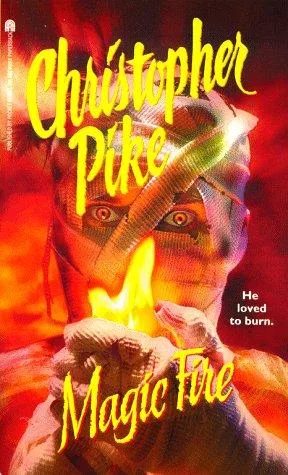
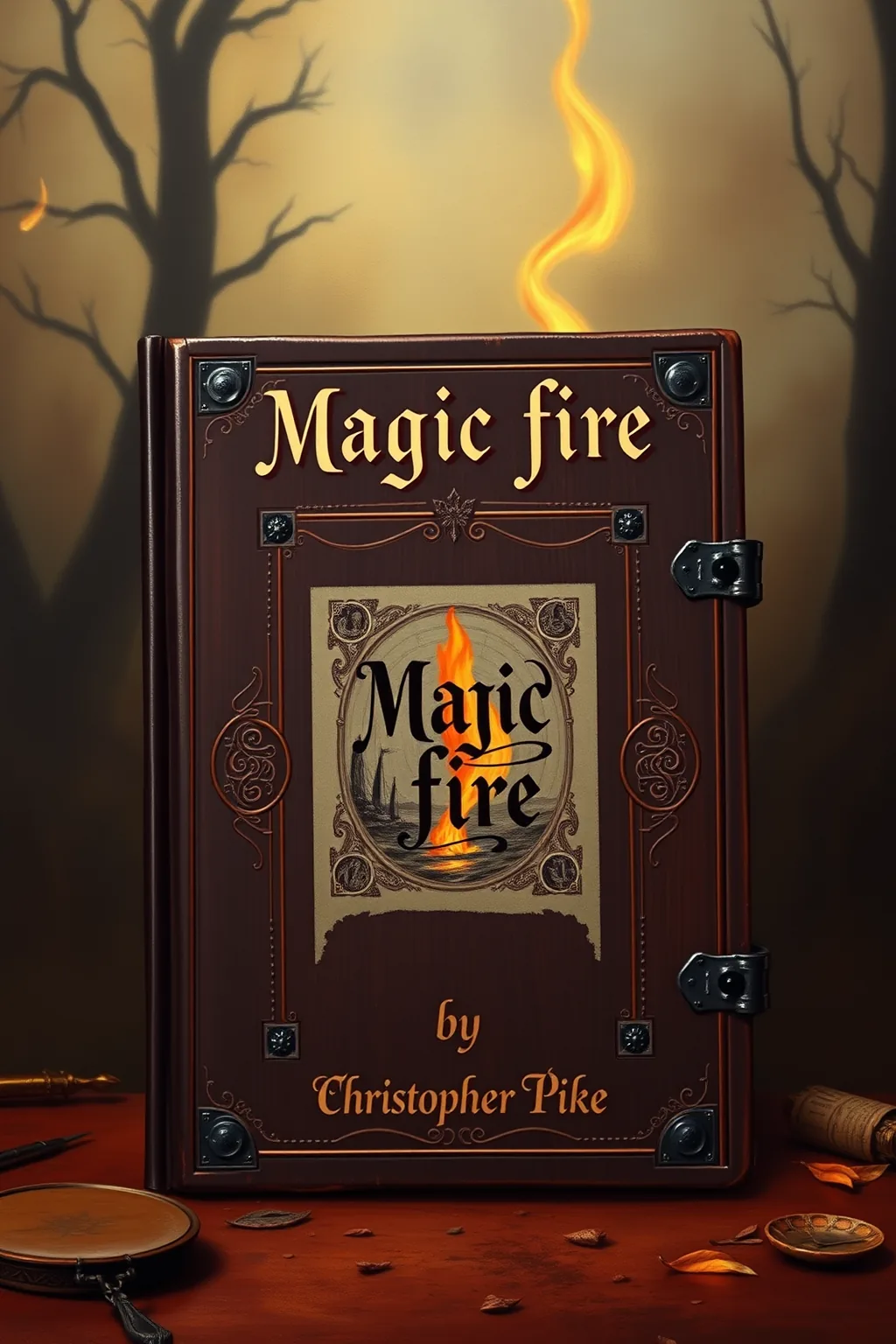
Magic fire
 78
78

Magic fire
Christopher Pike's "Magic Fire" (1998) offers a compelling, if sometimes dense, exploration of spiritual mechanics. The work's strength lies in its sustained focus on internal, rather than external, conflict. Pike presents the concept of "spiritual fire" not as a mere metaphor but as an active, almost sentient force driving transformation. One limitation, however, is the narrative's occasional opacity; certain symbolic passages could benefit from more explicit grounding. The depiction of the protagonist's struggle with the "fire" in chapters concerning her early spiritual awakening, for instance, is powerful but requires careful reader attention. Ultimately, "Magic Fire" is a significant text for those willing to engage with its demanding, yet rewarding, internal landscape.
📝 Description
78
### What It Is Magic Fire, first published in 1998 by Christopher Pike, presents a distinct exploration of esoteric concepts, moving beyond conventional genre boundaries. This work delves into themes of spiritual awakening and the nature of consciousness, framed within a narrative that challenges typical fictional structures.
### Who It's For This book is intended for readers interested in the intersection of metaphysics and personal narrative. It will appeal to those seeking to understand the subtler aspects of spiritual development and the symbolic language of inner transformation. It is not a light read but offers depth for the dedicated seeker.
### Historical Context Published in the late 20th century, Magic Fire emerged during a period of burgeoning interest in New Age thought and personal growth movements. Its exploration of consciousness aligns with broader cultural shifts questioning materialism and embracing alternative spiritualities. The work engages with ideas that were circulating within circles influenced by figures like Helena Blavatsky and Rudolf Steiner.
### Key Concepts The book introduces several core concepts, including the idea of spiritual "fire" as a transformative agent, the nature of past-life recall, and the symbolic representation of spiritual guides. It examines how these elements manifest and interact within an individual's inner landscape, providing a framework for understanding personal evolution.
💡 Why Read This Book?
• Gain a nuanced understanding of "spiritual fire" as a transformative force, distinct from mere enthusiasm, as explored in Pike's detailed narrative. • Grasp the symbolic language of spiritual guides and their interaction with the developing psyche, a key element in the book's 1998 publication context. • Explore concepts of past-life recall not as historical record, but as symbolic narratives influencing present consciousness, a unique approach within late 20th-century esoteric literature.
⭐ Reader Reviews
Honest opinions from readers who have explored this book.
❓ Frequently Asked Questions
What is the core concept of "Magic Fire" by Christopher Pike?
The core concept revolves around 'spiritual fire' as a powerful, transformative energy within individuals, driving spiritual evolution and challenging the ego. The book explores its manifestation and the personal journey of integrating this force.
When was "Magic Fire" first published?
"Magic Fire" by Christopher Pike was first published in 1998, placing it within the late 20th-century wave of interest in esoteric and New Age literature.
Is "Magic Fire" a fictional story or a non-fiction guide?
While it employs narrative elements and characters, "Magic Fire" functions more as an allegorical or symbolic exploration of spiritual concepts rather than a straightforward fictional story or a practical how-to guide.
What kind of spiritual concepts does the book address?
The book addresses concepts such as spiritual awakening, the nature of consciousness, symbolic guides, past-life influences, and the integration of inner transformative energies, often termed 'fire'.
Who might benefit most from reading "Magic Fire"?
Readers interested in esoteric philosophy, symbolic interpretations of spiritual growth, and the deeper mechanics of consciousness transformation would find "Magic Fire" particularly beneficial.
Does "Magic Fire" discuss specific esoteric traditions?
While not strictly adhering to a single tradition, the book's themes of inner fire and spiritual guides echo concepts found in various mystical paths, including elements reminiscent of Gnosticism and certain Hermetic traditions.
🔮 Key Themes & Symbolism
The Transformative Fire
This theme centers on the concept of an internal "fire" that acts as a catalyst for profound spiritual change. It's depicted not as destructive, but as a purifying and illuminating force that burns away illusions and limitations. The work explores how this energy, once awakened, necessitates a radical reorientation of the individual's perception and being, demanding courage and surrender from the seeker.
Symbolic Spiritual Guides
The book details the presence and function of symbolic entities or "guides" that assist the individual on their path. These are not presented as external deities but as archetypal manifestations of inner wisdom or aspects of the soul. Their interaction with the protagonist illustrates the process of receiving inner guidance and discerning its true nature, crucial for navigating the challenges of spiritual awakening.
Past-Life Echoes
Magic Fire examines how echoes from past existences can influence present-day consciousness and spiritual development. This isn't about literal reincarnation as historical fact, but rather how archetypal patterns and unresolved energies from former lives can manifest as psychological or spiritual blocks. The work suggests that understanding these "echoes" is vital for holistic integration.
Consciousness as Landscape
The book portrays human consciousness as a dynamic and often symbolic landscape that can be explored and understood. Inner states, emotional turmoil, and spiritual insights are rendered through vivid imagery, suggesting that the mind is a terrain upon which spiritual work is enacted. This metaphorical mapping of the inner world is central to the book's unique approach.
💬 Memorable Quotes
“The fire does not ask permission; it simply is.”
— This statement emphasizes the inherent, often uncontrollable, nature of spiritual awakening. It suggests that the transformative force is an intrinsic part of existence, not an external gift to be requested, but an internal reality to be confronted and integrated.
“Guides speak in the language of the soul, not the tongue of men.”
— This highlights the non-literal, intuitive communication received from inner wisdom or symbolic guides. It implies that understanding these messages requires a shift in perception, moving beyond rational thought to attunement with deeper, symbolic forms of knowing.
“The past is not a story told, but a seed that grows.”
— This interpretation of past-life influences suggests that they are not mere memories but active energetic patterns that continue to shape the present. The "seed" metaphor implies potential for growth and transformation if understood and tended.
“To know oneself is to walk through the flames.”
— This links self-knowledge directly to the process of spiritual transformation represented by fire. It posits that true self-discovery is an arduous but necessary process of confronting and integrating one's deepest truths, often involving significant internal challenges.
“The landscape within shifts with every breath of truth.”
— This captures the dynamic nature of consciousness as depicted in the book. It suggests that inner transformation is an ongoing process, responsive to moments of genuine insight and authenticity, constantly reshaping one's internal world.
🌙 Esoteric Significance
Tradition
Magic Fire draws implicitly from a broad stream of Western esoteric thought, particularly Gnostic and Hermetic currents that emphasize the inner divine spark and the arduous path of spiritual awakening. It departs from strict adherence to any single tradition by presenting a highly personalized, allegorical narrative. The "fire" motif echoes alchemical processes and the concept of Kundalini in Eastern traditions, but Pike frames it within a distinctly individualistic quest for self-realization, common in late 20th-century spiritual literature.
Symbolism
The central symbol is the "magic fire," representing an internal, transformative spiritual energy that purifies and illuminates. Spiritual "guides" function as archetypal personifications of inner wisdom or higher self aspects, aiding the seeker. The "landscape within" symbolizes the inner psychic and spiritual terrain that the individual must navigate, with its various challenges and revelations reflecting stages of consciousness development.
Modern Relevance
Contemporary spiritual seekers exploring consciousness, self-transformation, and symbolic psychology often find resonance in Pike's work. Modern interpretations of Jungian archetypes, the burgeoning field of spiritual psychology, and practices focusing on inner alchemy can find conceptual parallels. Thinkers and practitioners interested in the symbolic language of the soul and the nature of inner catalytic processes continue to draw inspiration from its unique approach.
👥 Who Should Read This Book
• Individuals exploring the nature of spiritual awakening and inner transformation, seeking a symbolic narrative that goes beyond conventional self-help. • Students of comparative mysticism interested in how concepts like "inner fire" and spiritual guides are presented in late 20th-century esoteric thought. • Seekers of personal growth who appreciate allegorical storytelling and are prepared to engage with dense symbolic content and challenging internal psychological processes.
📜 Historical Context
Christopher Pike's "Magic Fire," published in 1998, emerged in a fertile period for esoteric and self-help literature, a continuation of the New Age boom that gained momentum in the latter half of the 20th century. This era saw a significant public engagement with Eastern philosophies, Gnosticism, and various forms of Western esotericism, often synthesized into new spiritual frameworks. Pike's work can be seen as participating in this broader cultural conversation, offering a symbolic narrative that resonated with individuals seeking deeper meaning beyond conventional religious or materialist perspectives. While not directly engaging with academic esoteric scholarship of figures like Frances Yates or Antoine Faivre, Pike's exploration of inner transformative processes and symbolic guides tapped into a zeitgeist influenced by the psychological interpretations of Carl Jung and the spiritual explorations of figures like Helena Blavatsky, whose Theosophical Society had long popularized concepts of inner planes and spiritual evolution.
📔 Journal Prompts
The nature of your personal "spiritual fire" and its current expression.
Reflecting on the symbolic language of inner guides encountered in your journey.
The "landscape within": charting its recent shifts and revelations.
Integrating "past-life echoes" as symbolic narratives influencing your present path.
Confronting the flames: what truths does self-knowledge demand?
🗂️ Glossary
Spiritual Fire
A central metaphor for an inherent, transformative energy within the individual that purifies, illuminates, and drives spiritual evolution. It represents an awakening force that compels profound change.
Guides
Symbolic entities or archetypal manifestations representing inner wisdom, higher consciousness, or aspects of the soul that assist the individual on their spiritual path.
Landscape Within
A metaphorical representation of the inner psychic and spiritual realm, conceived as a dynamic terrain that can be explored, understood, and transformed.
Past-Life Echoes
Influences, patterns, or unresolved energies stemming from previous existences that manifest in the present life, affecting consciousness and spiritual development.
Ego
In this context, the limited sense of self, the personality structure that often resists spiritual transformation and must be transcended or integrated.
Awakening
The process of spiritual enlightenment or profound consciousness shift, often initiated by the "spiritual fire" and involving the integration of inner realities.
Integration
The process of harmonizing and synthesizing different aspects of the self, including spiritual insights, psychological challenges, and symbolic experiences, into a unified whole.