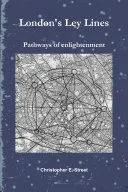
London's Ley Lines Pathways of Enlightenment
 73
73

London's Ley Lines Pathways of Enlightenment
Christopher Street's "London's Ley Lines" offers a curious perspective on the city's energetic undercurrents. The author’s assertion that leys are "everywhere, you just can't see them" sets a tone of esoteric revelation, akin to uncovering a secret tradition. Street successfully evokes a sense of hidden potential within the mundane urban landscape, particularly when discussing how these lines might lead to "magical places." However, the work sometimes struggles to move beyond assertion, leaving the reader wishing for more concrete methods or historical evidence to support the claims about accessing the "soul of the city." The comparison of leys to "beams of starlight" is evocative but also highlights their elusive nature, which the book doesn't entirely resolve. Ultimately, it serves as an intriguing, if at times speculative, guide to perceiving London through an energetic lens.
📝 Description
73
### What It Is Christopher Street's "London's Ley Lines: Pathways of Enlightenment" presents an exploration of the invisible energetic pathways believed to crisscross the British capital. Published in 2011, the work posits that these 'leys' are not mere geographical alignments but conduits of ancient wisdom, accessible to those attuned to their presence. The book argues that like starlight, leys are everywhere but unseen by the uninitiated, mirroring the hidden knowledge within secret traditions. It suggests that the land itself holds encoded secrets for future generations willing to seek them with proper perception.
### Who It's For This text is intended for readers interested in geomancy, dowsing, and the esoteric geography of urban environments. It appeals to individuals seeking to understand the spiritual or energetic underpinnings of a major metropolis, beyond its mundane appearance. Those fascinated by the concept of sacred sites, earth energies, and the potential for hidden wisdom embedded within the landscape will find this book particularly engaging. It is for the seeker who believes that physical locations can hold profound energetic significance.
### Historical Context The study of leys, popularized by Alfred Watkins in his 1921 book "The Old Straight Track," experienced a resurgence in esoteric circles throughout the 20th century. Street's work, published in 2011, enters this ongoing discourse, applying the principles to the specific context of London. It engages with the tradition of geomancy, which seeks to interpret the energetic qualities of places, and places itself within a lineage of writers who have sought to reveal the hidden spiritual dimensions of the Earth, particularly in Britain.
### Key Concepts The central concept is that of 'ley lines' as energetic pathways within the Earth's magnetic field, aligned with ancient sites and natural features. Street discusses the idea of 'enlightenment' as a potential outcome of attuning to these lines, suggesting they can lead to 'magical places' and a deeper connection to the 'soul of the city.' The book implies a form of terrestrial spirituality where the landscape itself is imbued with consciousness and ancient knowledge, requiring a specific 'vision' to perceive.
💡 Why Read This Book?
• Understand the concept of ley lines as energetic pathways, as presented by Christopher Street, offering a unique lens through which to view London's geography. • Discover how the book frames these lines as conduits to hidden knowledge, encouraging a perception of the land as an encoded repository of ancient wisdom. • Explore the idea of accessing 'magical places' within the city, connecting with its 'soul' through an awareness of these unseen terrestrial currents.
⭐ Reader Reviews
Honest opinions from readers who have explored this book.
❓ Frequently Asked Questions
What are ley lines according to Christopher Street's book?
Christopher Street describes ley lines as invisible energetic pathways crisscrossing the land, comparable to starlight. They are presented as conduits of ancient wisdom, accessible through a specific kind of perception, and potentially leading to magical places within the urban environment of London.
When was 'London's Ley Lines: Pathways of Enlightenment' first published?
The book "London's Ley Lines: Pathways of Enlightenment" by Christopher Street was first published in July 2011.
What is the historical background of ley line study?
The study of ley lines gained prominence with Alfred Watkins' "The Old Straight Track" in 1921. Christopher Street's work, published in 2011, continues this tradition of exploring earth energies and sacred geography, applying it specifically to London.
Can this book help me find 'magical places' in London?
The book suggests that by understanding and perceiving ley lines, readers may be guided to 'magical places' within London, connecting them to the city's deeper, energetic soul and hidden wisdom.
Is this book about practical dowsing techniques?
While it discusses the concept of perceiving unseen energies, "London's Ley Lines" focuses more on the philosophical and esoteric interpretation of these pathways rather than providing explicit, step-by-step dowsing instructions.
What does the author mean by 'pathways of enlightenment'?
The 'pathways of enlightenment' refer to the potential for spiritual or conscious expansion that the author believes can be attained by attuning oneself to the energetic currents of ley lines within London.
🔮 Key Themes & Symbolism
Invisible Urban Energies
The book posits that London is permeated by unseen energetic currents, termed 'ley lines.' These are not mere geographical alignments but active pathways carrying ancient wisdom. Street suggests that like hidden knowledge within secret traditions, these leys are publicly available yet unsuspected by most. The core idea is that the land itself holds consciousness, requiring a developed perception to access its deeper dimensions and spiritual potential within the urban sprawl.
Geomancy and Sacred Geography
This work engages with the principles of geomancy, the art of divining or interpreting the spiritual and energetic qualities of places. It views London not just as a physical metropolis but as a landscape imbued with terrestrial energies connected to ancient sites. The concept of 'pathways of enlightenment' suggests that by understanding these lines, one can achieve a higher state of awareness and connect with the intrinsic spirit of the city.
Perception and Hidden Knowledge
A central theme is the role of 'vision' in perceiving these hidden leys. Street compares them to elusive starlight, emphasizing that access is granted not through physical sight but through a refined sensitivity. This aligns with esoteric traditions where true knowledge is often veiled, available only to initiates or those who cultivate specific faculties of inner sight and intuition to uncover the encoded wisdom within the land.
The Soul of the City
The book explores the idea that London possesses a distinct 'soul,' an energetic essence that can be accessed through its ley lines. These pathways are presented as routes not just through space but towards a deeper understanding of the city's historical and spiritual identity. By following these energetic currents, the reader is invited to experience a more profound, magical connection to London beyond its surface reality.
💬 Memorable Quotes
“Leys are as elusive as beams of starlight. They are everywhere, you just can't see them.”
— This quote captures the fundamental paradox of ley lines as presented by Street: omnipresent yet invisible. It frames them as a form of hidden knowledge, accessible only through a shift in perception, much like recognizing faint celestial bodies requires specific conditions or knowledge.
“They may be compared to the hidden knowledge of a secret tradition.”
— This comparison emphasizes the esoteric nature of ley lines. It suggests that understanding them is akin to gaining access to guarded wisdom, available to those initiated into the 'know' while remaining concealed from the uninitiated masses.
“On public display and freely available to those in the know.”
— This highlights the accessibility of ley lines, contrasting their hidden nature with their constant presence. It implies that the barrier to understanding is not physical unavailability but a lack of the correct perceptual framework or esoteric knowledge.
“Thus the ancient wisdom at the basis of leys is encoded within the land for future generations to discover anew, if they possess the vision.”
— This interpretation underscores the book's premise that the Earth itself acts as a repository of ancient knowledge. It places the onus on the seeker to cultivate the necessary 'vision'—an intuitive or spiritual perception—to unlock these latent secrets.
“London's leys can lead you to magical places, to the soul of the city and to an understanding...”
— This suggests a transformative potential inherent in engaging with ley lines. It proposes that traversing these energetic pathways offers not just geographical navigation but a journey towards experiencing the city's deeper essence and achieving a profound level of insight.
🌙 Esoteric Significance
Tradition
The work fits within the Western esoteric tradition, particularly drawing from geomancy and earth mysteries, which gained prominence in the early 20th century. It echoes Theosophical ideas about hidden energies and sacred geography, suggesting a spiritual dimension to the physical landscape. While not strictly Hermetic or Kabbalistic, it shares the esoteric pursuit of uncovering hidden correspondences and universal principles within the mundane world, viewing the land as a text to be read by the initiated.
Symbolism
The primary symbol is the 'ley line' itself, representing invisible energetic currents and pathways of spiritual potential. These lines symbolize connection – linking ancient sites, natural features, and potentially, the seeker to a deeper consciousness. The concept of 'starlight' serves as a metaphor for their elusive, ethereal nature, while 'magical places' symbolize nodes of concentrated spiritual power or insight accessible via these terrestrial currents.
Modern Relevance
Contemporary practitioners of urban shamanism, geomancy, and psychogeography may find resonance with Street's work. Thinkers exploring the energetic imprint of cities and the potential for spiritual discovery within metropolitan environments can draw upon its concepts. It contributes to a modern dialogue about the sacredness of place in increasingly secularized and digitized landscapes, offering a framework for perceiving hidden layers of meaning in everyday environments.
👥 Who Should Read This Book
• Urban explorers and psychogeographers seeking to understand the energetic dimensions of cities beyond their physical structures. • Students of geomancy and earth energies interested in applying traditional concepts to contemporary, large-scale urban environments like London. • Individuals curious about esoteric interpretations of geography and the idea that landscapes hold encoded spiritual wisdom accessible through heightened perception.
📜 Historical Context
Christopher Street's "London's Ley Lines: Pathways of Enlightenment" (2011) emerges within a rich tradition of geomantic and earth-energy studies, significantly shaped by Alfred Watkins' seminal work "The Old Straight Track" in 1921. This field, often associated with alternative archaeology and esoteric geography, gained traction throughout the 20th century, attracting figures interested in pre-history, paganism, and earth mysteries. Street's book applies these concepts to the specific urban landscape of London, a context explored by others but perhaps less frequently with this particular focus on 'enlightenment pathways.' While not engaging directly with academic archaeology or history, it participates in a broader counter-cultural interest in sacred landscapes, distinct from mainstream urban planning or geological science. The reception of such works typically resides within specialized esoteric communities, valuing experiential perception over empirical verification.
📔 Journal Prompts
The concept of ley lines as 'beams of starlight' requires a shift in perception; describe a London landmark you perceive differently after reading about its potential energetic significance.
Reflect on the idea of 'ancient wisdom encoded within the land.' How might this apply to a specific historical site in London mentioned or implied in the text?
Consider the 'hidden knowledge of a secret tradition.' What elements within London's cityscape might function as such symbols or markers for ley line awareness?
The book suggests leys lead to 'magical places.' Identify a place in London that feels inherently 'magical' to you, and consider if it aligns with potential ley line intersections.
Contemplate the 'soul of the city.' What aspects of London's character or history do you believe are most strongly connected to its energetic pathways?
🗂️ Glossary
Ley Lines
Invisible energetic pathways believed to crisscross the Earth, often aligned with ancient sites and natural features. In this context, they are seen as conduits of ancient wisdom and potential pathways to spiritual insight.
Geomancy
An ancient form of divination or esoteric practice focused on interpreting the spiritual and energetic qualities of the Earth and specific locations.
Pathways of Enlightenment
The concept that following or attuning to ley lines can lead to a higher state of consciousness, spiritual understanding, or deeper connection to the essence of a place.
Vision
In this context, refers not to physical sight but to an intuitive or spiritual perception required to recognize and understand the presence and significance of ley lines.
Soul of the City
The intrinsic energetic essence or spiritual identity of a city, believed by the author to be connected to and discoverable through its ley lines.
Ancient Wisdom
Profound knowledge or spiritual understanding held to be inherent in the Earth's energetic structure, accessible through perception of phenomena like ley lines.
Secret Tradition
Esoteric knowledge or practices passed down through select groups, often veiled from the general public. Ley lines are compared to this type of guarded information.