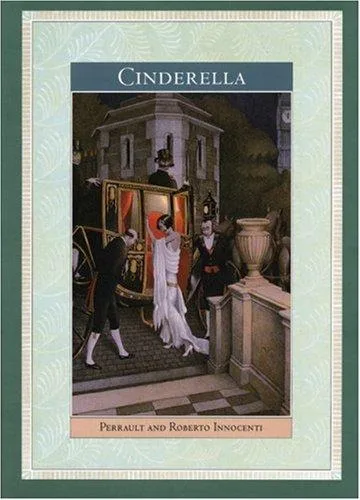
Les Contes de ma mère l'Oye

 75
75

Les Contes de ma mère l'Oye
Perrault’s *Les Contes* offers a starkly different experience from the sanitized versions often encountered today. What strikes one immediately is the unsentimental directness of the prose, particularly in tales like "The Fair One with Golden Locks" where peril is presented without elaborate embellishment. Perrault’s literary framing, intended to elevate these stories for adult audiences, is evident, yet the raw, often brutal, logic of folk narrative persists. The collection’s strength lies in its foundational status and its demonstration of how oral traditions were shaped into literary forms. A limitation, however, is the sometimes heavy-handed moralizing appended to each tale, which can feel didactic to a modern reader accustomed to more nuanced storytelling. The transformation of the wicked stepsisters in "Cinderella" into figures of outright cruelty, rather than mere unpleasantness, is a notable instance of Perrault’s thematic sharpening. Ultimately, this collection serves as an essential, albeit sometimes stark, glimpse into the origins of much-loved Western fairy lore.
📝 Description
75
Charles Perrault's 1697 collection, Les Contes de ma mère l'Oye, adapted oral folk tales for 17th-century French salons.
Charles Perrault's "Tales of Mother Goose," first published in 1697, comprises eight fairy tales that he adapted from existing oral traditions. Stories like "Little Red Riding Hood," "Cinderella," "Puss in Boots," and "Sleeping Beauty" were not his original creations. Perrault aimed to elevate these narratives, previously dismissed as simple children's entertainment, by rendering them in a sophisticated literary style. This approach sought to legitimize vernacular storytelling within the intellectual and artistic circles of 17th-century France, a period known as the Grand Siècle.
The collection resonated with contemporary audiences and gained significant influence, though its tales have been continuously adapted and reinterpreted over centuries. Perrault's work reflects the era's emphasis on classical forms and polished language, yet he championed the value of folk traditions. The stories themselves examine universal archetypes: the vulnerable protagonist confronting adversity, the clever deceiver, the arc of personal change, and the ultimate victory of good sense or cleverness. These narratives often contain underlying moral lessons, subtly woven into the plot.
While not explicitly esoteric in the occult sense, Perrault's work can be viewed through a lens of cultural transmission and symbolic interpretation. His act of literary formalization transformed tales steeped in folk belief and communal memory into a form accessible to elite society. This process mirrors how esoteric traditions often codify and transmit complex symbolic systems. The enduring archetypes within his stories, such as the innocent facing danger or the transformative quest, resonate with deeper psychological and symbolic meanings that scholars of mythology and comparative religion often explore.
💡 Why Read This Book?
• Gain insight into the literary elevation of folk tales, as Perrault refined oral traditions for the salons of 17th-century France. • Understand the moral frameworks of the Grand Siècle through the explicit lessons appended to stories like "The Sleeping Beauty in the Wood." • Examine the archetypal characters and plot structures that have influenced Western narrative, such as the cunning Puss in Boots and his manipulative strategies.
⭐ Reader Reviews
Honest opinions from readers who have explored this book.
❓ Frequently Asked Questions
What is the original publication year of Les Contes de ma mère l'Oye?
Charles Perrault's *Les Contes de ma mère l'Oye* was first published in 1675, making it a significant work from the late 17th century.
Are these tales the original versions of the fairy stories?
No, Perrault adapted existing folk tales that were part of oral tradition. His contribution was to give them literary form and wider circulation.
What fairy tales are included in Perrault's collection?
The collection includes eight tales, notably "Little Red Riding Hood," "Cinderella," "Puss in Boots," and "Sleeping Beauty."
What was the intended audience for Perrault's tales?
While based on folk tales, Perrault refined them for an educated, adult audience, aiming to elevate their status for literary appreciation.
What is the significance of the moral lessons in the tales?
The appended moral lessons reflect the social and ethical values prevalent in 17th-century France, offering commentary on behavior and consequences.
How did Perrault's work influence later storytellers?
Perrault's collection provided a foundational literary canon for fairy tales, influencing countless subsequent retellings and adaptations across literature and media.
🔮 Key Themes & Symbolism
Archetypal Transformation
The tales are rich with archetypal figures and situations that undergo significant transformation. Cinderella’s journey from scullery maid to princess, or the transformation of the wolf’s predatory nature into a cunning disguise, exemplifies this. In an esoteric context, these transformations mirror alchemical processes of purification and elevation, where base elements are refined into something precious. The narratives suggest that inner qualities, when recognized or aided, can transcend outward circumstances, a concept explored in various mystery traditions concerning the soul's journey towards enlightenment.
The Power of the Word
Perrault’s act of writing down and publishing these tales highlights the power of the written word to codify and disseminate knowledge, even from oral traditions. Characters like Puss in Boots wield language and clever speech as their primary tools for social climbing and manipulation. Esoterically, this resonates with the concept of *logos* or divine speech, and how carefully crafted narratives and pronouncements can shape reality, influence perception, and enact magical effects. The precise phrasing and storytelling within these tales become instruments of power.
Social Hierarchy and Wit
The stories frequently pit characters against rigid social structures, where wit, cleverness, and sometimes sheer luck allow individuals to ascend or survive. Perrault's "Puss in Boots" and "Cinderella" are prime examples, where protagonists navigate a world defined by rank and obligation. From an esoteric perspective, this reflects the Hermetic principle of "As Above, So Below," where the microcosm of social interaction mirrors cosmic laws. True mastery or enlightenment often involves understanding and skillfully maneuvering within these established orders, rather than simply overthrowing them, demonstrating a form of applied occult wisdom.
The Shadow and the Mask
Many tales feature characters who conceal their true nature, embodying the concept of the shadow self or the mask worn in public life. The wolf in "Little Red Riding Hood" and the witch in "Hansel and Gretel" (though not by Perrault, it shares thematic elements) represent lurking dangers that appear benign. Esoterically, this speaks to the necessity of recognizing deception, both external and internal. The ability to see beyond appearances, a core tenet in many mystical paths, is crucial for survival and spiritual progress, mirroring the protagonists’ need to discern true intentions.
💬 Memorable Quotes
“The fairy, who was very kind, said to her: 'My child, I will grant you your wish.'”
— This simple declaration marks the pivotal moment where benevolent intervention, often a divine or higher power, enters the narrative. It signifies the potential for grace and assistance when innocence or a pure desire is present, a common motif in spiritual seeking.
“The Marquis of Carabas, for that was his title, never replied to the compliments of his guests.”
— This highlights the subtle power dynamics and social maneuvering central to "Puss in Boots." The character, elevated by deception, maintains his status through a dignified, almost detached, silence, suggesting that true authority can sometimes be projected rather than earned through overt action.
“For he had put on the clothes of his master, and had taken a broom in each hand.”
— This describes Puss in Boots's elaborate disguise to deceive the ogre. It represents the use of illusion and assumed identity, a technique often discussed in esoteric philosophy regarding the manipulation of perception and the creation of manifest reality through symbolic action.
“But alas! she had neither silks nor fine clothes, and was besides very ugly.”
— This stark description of Cinderella's initial state emphasizes the contrast with her eventual transformation. It speaks to the concept of hidden potential, where outward appearance belies inner worth or future destiny, a theme resonant in initiatory processes.
“The wolf heard him, and seeing the dress of the little shepherdess, he ate her up.”
— This direct and brutal consequence in "Little Red Riding Hood" underscores the dangers of naivety and misplaced trust. It serves as a potent warning about the need for vigilance and discernment when encountering the unknown or the seemingly harmless.
🌙 Esoteric Significance
Tradition
While not explicitly belonging to a single esoteric school, Perrault's tales draw heavily from the archetypal symbolism found in universal folklore, which aligns with Jungian psychology and comparative mythology. These narratives can be interpreted through a Hermetic lens, focusing on the principles of correspondence, mentalism, and vibration, as the tales often illustrate how inner states manifest outwardly and how symbolic actions can alter reality. The collection's focus on transformation and hidden potentials also echoes Gnostic themes of divine sparks trapped within mundane circumstances.
Symbolism
Key symbols include the **wolf**, representing primal instinct, deception, and the shadow self that must be confronted. The **glass slipper** in "Cinderella" symbolizes purity, fragility, and a unique, almost magical, fit that signifies destiny and true identity, requiring a specific, refined state to be recognized. The **spinning wheel** and **spindle** in "Sleeping Beauty" are potent symbols of fate, the passage of time, and the potential for both creation and danger inherent in domestic crafts, linking to themes of destiny and the feminine principle.
Modern Relevance
Contemporary thinkers in depth psychology, particularly those influenced by Carl Jung, frequently analyze Perrault's tales for their archetypal patterns and their contribution to the collective unconscious. Storytelling and narrative therapy also draw upon these foundational myths to explore personal transformation and healing. Furthermore, modern fantasy literature and film continue to reinterpret these archetypes, demonstrating their enduring power to explore human desires, fears, and the quest for meaning in a complex world.
👥 Who Should Read This Book
• Students of comparative folklore and literary history seeking to understand the origins of Western fairy tales and their transition into print. • Aspiring writers and storytellers interested in archetypal narratives, character development, and the enduring power of mythic structures. • Readers exploring the psychological underpinnings of familiar stories and seeking to uncover deeper symbolic meanings beyond surface-level plots.
📜 Historical Context
Charles Perrault's *Les Contes de ma mère l'Oye* (Tales of Mother Goose) emerged in 1697, a period when French literature was heavily influenced by Classicism and the literary salons of Paris. Perrault, a member of the Académie Française since 1671, sought to legitimize vernacular storytelling by adapting popular folk tales into a refined literary style. This was a deliberate act of cultural elevation, aiming to prove that stories traditionally relegated to the nursery could possess literary merit suitable for aristocratic audiences. His work appeared in a climate where formal poetry and drama, heavily influenced by Greek and Roman models, dominated the literary scene. While Perrault’s collection was a success, it also faced a competing intellectual current represented by the emerging Enlightenment, which increasingly valued reason and empirical evidence over folklore and superstition. However, Perrault's tales were widely adopted and adapted, influencing later generations of writers and thinkers who engaged with the psychological and symbolic dimensions of these narratives.
📔 Journal Prompts
The wolf's disguise in "Little Red Riding Hood" and its deceptive nature.
Cinderella's transformation and the symbolic meaning of the glass slipper.
The Marquis of Carabas's rise to power through wit and cleverness.
The concept of the 'fairy godmother' as a benevolent intervener.
The moral lessons appended to each tale and their societal implications.
🗂️ Glossary
Folk Tale
A story originating in popular culture, typically passed on by word of mouth before being written down, often featuring fantastical elements and moral lessons.
Archetype
A universal, inherited pattern of thought or symbolic image that forms a basis for myth and narrative, such as the hero, the trickster, or the wise old man.
Grand Siècle
The 17th century in French history, particularly the reign of Louis XIV, characterized by significant cultural, artistic, and political achievements.
Oral Tradition
The transmission of cultural knowledge, stories, and customs from generation to generation by spoken word rather than by writing.
Literary Adaptation
The process of rewriting or transforming a work from one medium or style to another, in this case, from oral folk tales to written literary form.
Salon
A gathering of people, particularly women, under the patronage of an aristocratic or wealthy host, held in a large drawing room or ballroom, for conversation and entertainment, common in 17th and 18th-century France.
Vernacular
The language or dialect spoken by the ordinary people in a particular country or region; in literature, referring to works written in the common language rather than scholarly Latin.