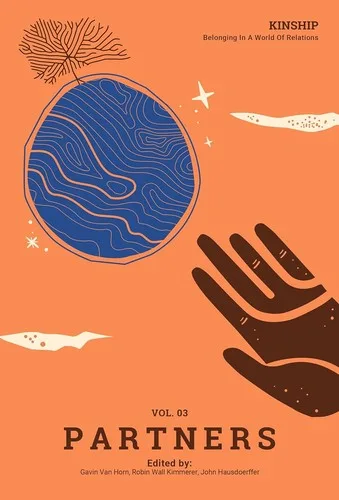
Kinship
 75
75

Kinship
The collaboration between Robin Wall Kimmerer, John Hausdoerffer, and Gavin Van Horn in *Kinship* presents a compelling argument for reorienting our relationship with the non-human world. The strength of the collection lies in its diverse voices, each bringing a unique lens—Kimmerer's botanical expertise, Hausdoerffer's philosophical depth, and Van Horn's ecological perspective—to the central theme of kinship. A particularly resonant passage discusses the concept of the Honorable Harvest, highlighting its ethical implications for contemporary consumption patterns. However, the work occasionally feels diffuse, with the thematic links between essays sometimes requiring significant reader effort to fully articulate. Despite this, *Kinship* offers a vital reframing of ecological responsibility, moving beyond mere stewardship to advocate for genuine reciprocity. It is a necessary intervention for anyone seeking to understand our place within the Earth's community.
📝 Description
75
Published in 2021, Kinship argues all life forms are related and possess inherent worth.
Kinship is a collection of essays by Robin Wall Kimmerer, John Hausdoerffer, and Gavin Van Horn that examines the connections between people and the natural world. The authors approach this relationship from philosophical and ecological viewpoints, moving past human centered ideas to focus on the mutual ties that shape existence. Their writing draws on Indigenous knowledge, scientific findings, and personal experiences. This book is for readers who want a better grasp of ecological ethics and a more integrated way of living with the Earth. It speaks to those interested in environmental philosophy, Indigenous studies, and spiritual ecology. The perspectives here can help people feel less disconnected from nature, encouraging a move from ideas of human control to a sense of kinship.
The book centers on the concept of kinship, proposing that all living things are related and have value. It discusses ideas such as the Honorable Harvest, an Indigenous principle for using resources sustainably, and the gift economy of nature, where resources are exchanged freely and in cycles. The authors also consider the significance of place based knowledge and fostering a feeling of belonging within the broader web of life. This work engages with a long tradition of ecological thought, including figures like Aldo Leopold and Barry Lopez, but it offers a unique perspective emphasizing kinship as a core principle. Its focus on reciprocal relationships connects with current discussions about decolonizing environmentalism and prioritizing Indigenous worldviews.
Kinship engages with a rich tradition of nature based spirituality and Indigenous worldviews that view the Earth not as a resource to be dominated, but as a community of kin. This perspective aligns with movements seeking to decolonize environmentalism and re establish a sense of belonging within the living world. It shares common ground with animistic traditions that recognize the inherent spirit and agency in all beings, fostering a relationship of respect and reciprocity.
💡 Why Read This Book?
• Gain a framework for understanding ecological relationships as reciprocal bonds, moving beyond anthropocentric notions of dominion, as exemplified by the concept of the Honorable Harvest discussed throughout the essays. • Cultivate a deeper sense of belonging and ethical responsibility towards the non-human world, informed by Indigenous wisdom and ecological science, particularly as presented in the discussions on place-based knowledge. • Explore the philosophical underpinnings of a 'gift economy' in nature, understanding how cycles of giving and receiving shape ecological systems and our place within them, a concept examined by the authors.
⭐ Reader Reviews
Honest opinions from readers who have explored this book.
❓ Frequently Asked Questions
What is the central philosophical concept explored in Kinship by Kimmerer, Hausdoerffer, and Van Horn?
The central concept is 'kinship,' which posits that all living beings are related and possess inherent value, advocating for a reciprocal relationship between humans and the natural world, moving beyond a view of human dominion.
When was Kinship first published, and what contemporary issues does it address?
Kinship was first published in 2021. It addresses contemporary issues of climate change, biodiversity loss, and the need for ecological ethics, drawing on Indigenous knowledge and scientific observation.
What is the 'Honorable Harvest' mentioned in Kinship?
The 'Honorable Harvest' is a principle from Indigenous traditions that guides the sustainable and respectful gathering of natural resources, ensuring that one takes only what is needed and does so in a way that regenerates the Earth.
How does Kinship differ from traditional environmentalist literature?
Kinship distinguishes itself by emphasizing reciprocal relationships and a sense of kinship with all beings, rather than focusing solely on conservation or stewardship, and by centering Indigenous worldviews.
Who are the main authors of Kinship?
The main authors are Robin Wall Kimmerer, John Hausdoerffer, and Gavin Van Horn, each contributing their unique perspectives on ecology, philosophy, and Indigenous knowledge.
What kind of learning experience can readers expect from Kinship?
Readers can expect an intellectually stimulating and emotionally resonant experience that encourages a profound reevaluation of their relationship with nature, fostering a sense of ethical responsibility and interconnectedness.
🔮 Key Themes & Symbolism
Reciprocal Relationships
The core of Kinship lies in its exploration of reciprocal relationships between humans and the non-human world. This theme moves beyond mere stewardship to advocate for a mutual exchange, recognizing the inherent worth and agency of all beings. The authors illustrate this through examples of ecological systems functioning as a 'gift economy,' where resources are shared and cycles of giving and receiving sustain life. This concept challenges anthropocentric perspectives, urging readers to consider what they owe to the Earth in return for its bounty, thereby fostering a deeper ethical engagement with nature.
Indigenous Knowledge Systems
Kinship deeply integrates Indigenous knowledge systems, particularly the concept of the Honorable Harvest, as a foundational principle for ecological ethics. This theme highlights how centuries of observation and relationship have informed sustainable practices. By drawing on these traditions, the book offers an alternative to Western paradigms of resource extraction and dominion. It emphasizes the importance of place-based understanding and the wisdom embedded in living in accordance with natural cycles, presenting these as vital for contemporary environmental challenges.
The Ethics of Belonging
This theme addresses the profound human need for belonging and how it is intrinsically linked to our connection with the natural world. The authors argue that a sense of kinship fosters a deeper ethical responsibility, transforming our perception of the Earth from a resource to be exploited into a community to which we belong. This perspective encourages empathy and respect for all life, suggesting that true ecological sustainability arises from recognizing ourselves as part of a larger, interconnected web of existence, not separate from it.
Ecological Philosophy
Kinship contributes to ecological philosophy by offering a nuanced critique of prevailing anthropocentric views and proposing a relational ontology. The book examines how philosophical frameworks can shape our actions towards the environment. By interweaving scientific observation with spiritual and ethical considerations, it provides a comprehensive vision for a more integrated and respectful coexistence with nature. This philosophical grounding is essential for understanding the systemic changes needed to address environmental crises.
💬 Memorable Quotes
“The world is not a collection of resources, but a community of subjects.”
— This statement reframes our perception of nature, shifting from viewing the environment as inert matter for human use to recognizing sentient beings with their own intrinsic value and agency.
“To be in kinship is to be in relationship, and to be in relationship is to be in reciprocity.”
— This highlights the active, two-way nature of ecological connections. It suggests that genuine relationships with the natural world require mutual respect, exchange, and a sense of shared existence.
“The Honorable Harvest teaches us to take only what is given, to take only what we need, and to do so with gratitude.”
— This paraphrased concept encapsulates the core principles of sustainable resource use derived from Indigenous wisdom, emphasizing mindful consumption and respect for the Earth's provisions.
“Place is not just a location, but a living being with its own history and spirit.”
— This interpretation emphasizes the animistic perspective that imbues specific geographical locations with life and consciousness, suggesting a deeper, spiritual connection beyond mere physical presence.
“Our own well-being is inextricably linked to the well-being of the Earth.”
— This statement underscores the fundamental interconnectedness of human and ecological health, implying that environmental degradation directly impacts human welfare and vice versa.
🌙 Esoteric Significance
Tradition
While not strictly adhering to a single esoteric lineage, *Kinship* draws heavily from animistic traditions and Indigenous worldviews that share common ground with Hermeticism's emphasis on 'As Above, So Below' and the interconnectedness of all things. Its focus on reciprocal exchange and the inherent spirit within nature aligns with pantheistic and panentheistic perspectives found in various mystical traditions, offering a modern interpretation of nature spirituality.
Symbolism
A primary symbol is the 'web of life,' representing the intricate and interdependent relationships between all living beings. The concept of the 'Honorable Harvest' functions symbolically as a ritualized practice for ethical engagement with the natural world, embodying respect and gratitude. Furthermore, specific plants and animals discussed throughout the book often serve as potent symbols for larger ecological principles or spiritual lessons, acting as conduits for understanding deeper truths about existence.
Modern Relevance
Contemporary thinkers and practitioners in ecopsychology, spiritual ecology, and Indigenous resurgence movements find significant resonance in *Kinship*. Its ideas are being applied in educational settings, conservation efforts, and personal spiritual practices aimed at fostering a deeper connection with the Earth. The book's emphasis on reciprocity and belonging offers a vital antidote to the alienation and ecological grief prevalent in modern society, making it a touchstone for those seeking to heal their relationship with the planet.
👥 Who Should Read This Book
• Students of Indigenous studies and environmental humanities seeking to understand the philosophical underpinnings of ecological kinship and the integration of traditional knowledge. • Individuals interested in ecopsychology and nature-based spirituality looking for frameworks to deepen their personal connection and ethical responsibility towards the natural world. • Environmental activists and policymakers desiring to move beyond conventional conservation models towards practices rooted in reciprocity and a recognition of the inherent value of all life.
📜 Historical Context
Published in 2021, *Kinship* arrived at a critical juncture in environmental discourse, marked by escalating climate crises and a growing global demand for more sustainable and ethical ways of living. The book engages with a lineage of ecological thought stretching back to Aldo Leopold's 'Land Ethic' and the work of Wendell Berry, yet it distinguishes itself through a profound integration of Indigenous epistemologies and a focus on reciprocal relationship. It emerged amidst a resurgence of interest in spiritual ecology and decolonizing approaches to environmentalism, offering a counterpoint to dominant Western paradigms of resource management and human exceptionalism. While not directly engaged in a public debate with a specific contemporary author, its perspective implicitly challenges the extractive philosophies prevalent in many industrial and economic systems, and it has been cited by scholars in environmental humanities for its contribution to relational ethics.
📔 Journal Prompts
Reflect on the concept of the Honorable Harvest and how its principles might guide your daily interactions with nature.
Consider the idea of the Earth as a community of subjects; what responsibilities does this perspective introduce?
Explore your personal sense of belonging within the larger web of life, drawing inspiration from the book's discussions on place.
How does the 'gift economy' of nature, as described in the text, challenge your understanding of resource distribution and consumption?
Identify a specific non-human being and consider what reciprocal relationship you might cultivate with it.
🗂️ Glossary
Kinship
A philosophical and ethical framework emphasizing the interconnectedness and reciprocal relationship between humans and all living beings, viewing them as part of a shared community.
Honorable Harvest
A principle derived from Indigenous traditions that guides the sustainable and respectful gathering of natural resources, emphasizing taking only what is needed and with gratitude.
Gift Economy
A model of exchange where resources are given freely without explicit expectation of immediate return, highlighting the cyclical and reciprocal nature of ecological systems.
Anthropocentrism
The belief that human beings are the central or most significant entities in the universe, often leading to a view of nature as existing solely for human use and benefit.
Place-Based Knowledge
Understanding and wisdom derived from intimate, long-term relationships with specific geographical locations and their ecological, cultural, and spiritual contexts.
Reciprocity
A mutual relationship or exchange between individuals or entities, fundamental to the concept of kinship as presented in the book, where giving and receiving are balanced.
Spiritual Ecology
An interdisciplinary field that explores the relationship between religion, spirituality, and ecological concerns, often advocating for nature-based ethics and practices.