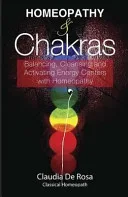
Homeopathy and Chakras
 81
81

Homeopathy and Chakras
Claudia De Rosa's "Homeopathy and Chakras" attempts a fascinating, albeit ambitious, correlation between two distinct healing paradigms. The strength of the work lies in its clear presentation of potential remedy-chakra connections, offering a novel framework for practitioners. The inclusion of diagrams is particularly helpful, demystifying the abstract energetic concepts. However, the primary limitation is the speculative nature of many of these connections; while presented as factual, the empirical basis for linking, for example, *Lycopodium clavatum* directly to the Solar Plexus chakra requires significant interpretive leap for those outside the author's framework. A particularly illustrative section details how remedies might influence the Sacral chakra's association with creativity and emotional flow. De Rosa's effort to create a practical guide is commendable, though it leans heavily on energetic theory that may not satisfy rigorous scientific scrutiny. It serves as an interesting speculative tool rather than a definitive guide.
📝 Description
81
### What It Is "Homeopathy and Chakras" by Claudia De Rosa presents a unique synthesis, exploring the energetic correspondences between homeopathic remedies and the body's primary energy centers, known as chakras. The work posits that specific remedies can influence, balance, or stimulate these vital energy nodes. It aims to bridge the disciplines of homeopathy, a system of alternative medicine developed in the late 18th century, with the yogic concept of chakras, which are understood as focal points of life force.
### Who It's For This book is intended for practitioners and students of both homeopathy and energy healing modalities. It would appeal to those interested in holistic health, alternative therapies, and the subtle energy systems of the body. Individuals seeking to deepen their understanding of how remedies might interact with energetic imbalances, or those wishing to explore the practical application of chakra balancing through homeopathic means, will find value here.
### Historical Context The book emerges from a milieu where alternative health practices continue to gain traction, often seeking to integrate disparate traditions. While homeopathy itself has a long history dating back to Samuel Hahnemann in Germany, the explicit mapping of remedies onto the chakra system, as understood in Eastern spiritual traditions, represents a more modern interpretive layer. De Rosa's work contributes to a broader contemporary trend of cross-disciplinary exploration in esoteric and healing arts.
### Key Concepts The core concept is the energetic resonance between specific homeopathic potencies and the vibrational frequencies associated with each of the seven primary chakras. De Rosa's approach involves identifying which remedies are believed to address disturbances in the physical, emotional, and spiritual layers typically associated with each chakra. The text often includes visual aids, such as diagrams, to illustrate these connections and facilitate understanding of the energetic pathways involved.
💡 Why Read This Book?
• Learn how specific homeopathic remedies are theorized to correspond with the seven primary chakras, offering a novel lens for understanding energetic imbalances, as explored in the sections detailing remedy applications to each energy center. • Discover practical methods for balancing chakra energy through the selection and application of homeopathic potencies, providing actionable techniques beyond standard chakra meditation practices. • Gain insight into the energetic rationale behind certain homeopathic prescriptions, moving beyond materia medica to a vibrational understanding of healing, particularly as illustrated by the diagrams presented.
⭐ Reader Reviews
Honest opinions from readers who have explored this book.
❓ Frequently Asked Questions
What is the primary goal of "Homeopathy and Chakras"?
The book aims to demonstrate the energetic connections between specific homeopathic remedies and the body's seven main chakras, providing a method to balance these energy centers through homeopathic intervention.
Who is Claudia De Rosa?
Claudia De Rosa is the author of "Homeopathy and Chakras," first published in 2012. Her work seeks to integrate principles of homeopathy with energetic concepts like chakras.
What kind of visual aids are included?
The book features pictures and diagrams designed to clarify the relationships between homeopathic remedies and chakra energy centers, making the concepts more accessible.
Is this book suitable for beginners in homeopathy?
Yes, the book's explanations and diagrams are intended to make the connection between homeopathy and chakras understandable, even for those new to the subject.
How does this book relate to traditional chakra theory?
It builds upon the traditional concept of chakras from Eastern spiritual traditions by applying a Western energetic healing system, homeopathy, to influence and balance them.
When was "Homeopathy and Chakras" first published?
The book "Homeopathy and Chakras" by Claudia De Rosa was first published on February 1, 2012.
🔮 Key Themes & Symbolism
Remedy-Chakra Correspondences
The central theme is the detailed mapping of specific homeopathic remedies to the seven primary chakras. De Rosa explores how particular substances, in their energetic potency, are believed to resonate with and influence the vibrational state of each chakra. This includes examining how a remedy might address blockages or imbalances within a chakra, thereby affecting the physical, emotional, and spiritual well-being associated with that energy center. For example, the text might link remedies to the Root chakra's grounding function or the Heart chakra's capacity for compassion.
Energetic Balancing Techniques
Beyond mere identification, the book provides practical guidance on using homeopathy for energetic balancing. It outlines approaches to selecting remedies based on chakra-related symptoms and energetic disharmonies. The goal is to restore equilibrium to the body's subtle energy system. This involves understanding how to use the vibrational quality of remedies to harmonize discordant energies within the chakras, promoting overall health and vitality.
Visualizing Subtle Energies
De Rosa emphasizes the importance of visual aids in understanding the complex interplay between remedies and chakras. The inclusion of pictures and diagrams serves to demystify the energetic connections, making abstract concepts more tangible. These visuals likely illustrate energetic pathways, chakra locations, and the specific influence of various remedies, aiding practitioners in grasping the theoretical framework and applying it effectively in practice.
Holistic Health Integration
The work advocates for a holistic approach to health, integrating principles from both homeopathy and yogic energy systems. It suggests that by understanding the energetic dimensions of illness and healing, practitioners can offer more comprehensive care. This integration allows for a deeper exploration of the root causes of ailments, addressing them on both a physical and energetic level for more complete restoration.
💬 Memorable Quotes
“An interesting connection between homeopathic remedies and energy centres.”
— This highlights the book's core premise: exploring the subtle energetic relationships and potential influences that homeopathic potencies may have on the body's vital energy centers, known as chakras.
“How to balance energy centres through chakra centres.”
— This points to the practical application offered by the text, providing methods and guidance for practitioners and individuals to restore equilibrium to their energetic systems using homeopathic principles.
“Pictures & diagrams to make things easier and interesting.”
— This emphasizes the pedagogical approach of the author, utilizing visual tools to clarify complex energetic concepts and enhance reader comprehension and engagement with the material.
“The text explores the vibrational resonance between specific remedies and chakra frequencies.”
— This interpretation suggests that the book posits a theory where each remedy possesses a unique energetic signature that can interact with, and potentially correct imbalances in, the corresponding vibrational frequency of a particular chakra.
“Understanding the Sacral chakra's role in creativity and emotional flow is enhanced by considering specific homeopathic influences.”
— This implies that the book offers insights into how certain homeopathic remedies might specifically address issues related to the Sacral chakra, such as creative blocks or emotional stagnation.
🌙 Esoteric Significance
Tradition
This work operates within the broader spectrum of Western Esotericism, specifically touching upon vibrational medicine and energetic healing. It attempts to bridge the gap between the 18th-century German development of homeopathy and the ancient Indian yogic concept of chakras. While not strictly Hermetic or Kabbalistic, it draws on the general esoteric principle of correspondences – the idea that different levels of reality mirror each other – and applies it to the subtle body and therapeutic intervention.
Symbolism
The primary symbols are the seven chakras themselves, representing stages of consciousness and energy flow from the base of the spine to the crown of the head. Each chakra carries associated colors, elements, and psychological functions. Homeopathic remedies, in this context, act as symbolic keys or vibrational signatures designed to unlock, balance, or stimulate these energetic centers, thereby symbolizing the restoration of cosmic order within the microcosm of the human being.
Modern Relevance
In contemporary holistic health circles, there is a continued interest in energy medicine and personalized healing. De Rosa's approach, though specific, taps into a modern desire to understand the body's energetic system and find non-pharmacological interventions. Thinkers and practitioners in fields like vibrational therapy, subtle energy healing, and integrative homeopathy may find her framework useful for expanding their diagnostic and therapeutic repertoires.
👥 Who Should Read This Book
• Homeopathic practitioners seeking to expand their understanding of energetic influences and explore new diagnostic avenues beyond conventional symptomology. • Students of yoga and Eastern energetic systems interested in how Western vibrational medicine might complement or interact with chakra balancing techniques. • Holistic health enthusiasts exploring the intersections of different healing modalities and looking for practical applications of subtle energy theory in personal wellness.
📜 Historical Context
Claudia De Rosa's "Homeopathy and Chakras," published in 2012, arrived during a period of sustained interest in complementary and alternative medicine (CAM). The early 21st century saw a growing desire among the public and some practitioners to synthesize diverse healing modalities, particularly those from Western and Eastern traditions. Homeopathy, established by Samuel Hahnemann in the late 18th century, coexisted with a burgeoning popular understanding of yogic chakra systems, often simplified from their complex Indian origins. While figures like Helena Blavatsky and later Theosophists had previously explored energy centers and their relation to consciousness, De Rosa's work focuses specifically on the intersection with homeopathic materia medica. This era also witnessed critiques of homeopathy's scientific validity from mainstream medicine, making works like De Rosa's part of a counter-narrative emphasizing energetic and holistic principles. The book contributes to a broader esoteric discourse seeking practical applications for subtle energy theories.
📔 Journal Prompts
The energetic resonance between homeopathic remedies and specific chakras.
Balancing the Root chakra through homeopathic intervention.
Visualizing the energetic pathways illustrated in the book's diagrams.
The Sacral chakra's association with creativity and emotional flow.
Integrating vibrational medicine with traditional chakra theory.
🗂️ Glossary
Chakra
In yogic and Tantric traditions, chakras are understood as centers of spiritual, physical, and emotional energy located along the spine. They are often depicted as spinning wheels or lotuses, governing various aspects of human experience.
Homeopathy
A system of alternative medicine developed by Samuel Hahnemann in the late 18th century, based on the principle of 'like cures like' (similia similibus curentur) using highly diluted substances.
Materia Medica
A comprehensive compilation of the known effects of a drug or substance on the human body, used in homeopathy to identify remedies for specific symptom pictures.
Potency
In homeopathy, the degree to which a substance has been diluted and succussed (vigorously shaken). Higher potencies are believed to have a more profound and subtle effect.
Energetic Imbalance
A state where the flow of vital energy (prana or qi) within the body's subtle energy systems, such as the chakras, is disrupted, blocked, or disharmonious, potentially leading to physical or emotional symptoms.
Vibrational Resonance
The concept that different substances and energy centers possess unique frequencies, and when these frequencies match or harmonize, an energetic interaction or transfer occurs.
Holistic Health
An approach to healthcare that considers the whole person—mind, body, and spirit—rather than focusing solely on the physical symptoms of illness.