Het Evangelie van Thomas en de Nederlanden

 81
81

Het Evangelie van Thomas en de Nederlanden
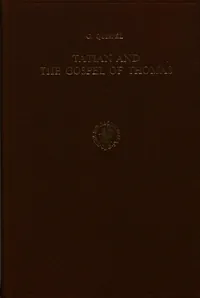
Gilles Quispel’s "Het Evangelie van Thomas en de Nederlanden" is less a popularization and more a focused academic investigation. Quispel, a foundational scholar in Gnostic studies, approaches the Gospel of Thomas with a meticulous eye, particularly interested in its reception and interpretation within the Dutch cultural sphere. The book's strength lies in its detailed textual analysis and Quispel's deep familiarity with early Christian apocrypha. He carefully unpacks the sayings, often highlighting their esoteric implications. However, the work can be dense for the uninitiated, and the specific connection to "de Nederlanden" might feel underdeveloped to some readers expecting a more robust historical narrative; it functions more as a thematic exploration than a documented historical link.
A particularly striking aspect is Quispel's discussion of the "kingdom of heaven" as an internal, realized state rather than an external event, a concept he traces through Thomas's sayings. This focus on interiority is a hallmark of Gnostic thought. The book’s limitation is its specialized nature; it demands prior knowledge of Gnostic texts and academic discourse. Quispel’s verdict on the Gospel of Thomas is one of profound, though often overlooked, spiritual significance.
Read more ↓
This is essential reading for scholars of Gnosticism, but requires patience from others.
📝 Description
81
### What It Is
This volume, "Het Evangelie van Thomas en de Nederlanden," presents a scholarly exploration of the Gospel of Thomas and its potential connections to the Low Countries. Gilles Quispel, a significant figure in Gnostic studies, offers an in-depth analysis that moves beyond mere textual exegesis. The work examines the Gospel of Thomas not just as an ancient religious document but also as a source of esoteric wisdom that has echoed through various historical and cultural landscapes.
### Who It's For
The book is intended for serious students of early Christianity, Gnosticism, and the history of Western esotericism. Readers interested in the transmission of ancient texts and their interpretation within specific regional contexts will find substantial material here. It appeals to those who appreciate rigorous academic research grounded in primary sources, particularly those seeking to understand the reception and influence of non-canonical gospels beyond mainstream theological discourse.
### Historical Context
Published in 1971, Gilles Quispel's work emerged during a period of renewed academic and popular interest in Gnosticism, significantly boosted by the Nag Hammadi library discoveries in 1945. Quispel himself was a leading voice in this field, known for his controversial but influential theories regarding the origins and interpretation of Gnostic texts. This study positions itself within the broader scholarly debate concerning the historical Jesus and the diversity of early Christian thought, engaging with figures like Elaine Pagels and Hans Jonas.
### Key Concepts
The Gospel of Thomas itself, a collection of sayings attributed to Jesus, is central. Quispel investigates its unique emphasis on "inner knowledge" (gnosis) and its distinction from the Pauline epistles and later creedal formulations. The "Nederlanden" aspect probes how these ideas might have found resonance or interpretation within the cultural and intellectual milieu of the Low Countries, suggesting a potential historical or thematic link that warrants examination.
💡 Why Read This Book?
• Understand the unique nature of the Gospel of Thomas's sayings, distinct from canonical Gospels, and its emphasis on inner gnosis, as explored by Quispel. • Gain insight into how ancient esoteric ideas, specifically Gnostic concepts, might have been interpreted or transmitted within the cultural landscape of the Low Countries, a focus of Quispel's 1971 study. • Appreciate the scholarly approach to non-canonical Christian texts, learning how figures like Gilles Quispel engaged with early Christian diversity in the mid-20th century.
⭐ Reader Reviews
Honest opinions from readers who have explored this book.
❓ Frequently Asked Questions
What is the Gospel of Thomas and why is it significant?
The Gospel of Thomas is a collection of sayings attributed to Jesus, discovered among the Nag Hammadi texts in 1945. It's significant because it presents a form of early Christianity focused on esoteric knowledge and inner spiritual realization, distinct from the narrative Gospels.
Who was Gilles Quispel?
Gilles Quispel (1916-2006) was a prominent Dutch scholar specializing in Gnosticism and early Christian apocrypha. He was a leading figure in the interpretation of the Nag Hammadi discoveries and known for his contributions to understanding Gnostic traditions.
What does 'de Nederlanden' refer to in the title?
'De Nederlanden' refers to the Low Countries, historically encompassing regions that are now the Netherlands and Belgium. The title suggests an investigation into the presence or interpretation of the Gospel of Thomas's ideas within this geographical and cultural area.
Is this book suitable for beginners interested in Gnosticism?
While valuable, the book is written for a scholarly audience. Beginners might find Quispel's detailed analysis and academic tone challenging. It's recommended to have some prior familiarity with Gnostic texts and early Christian history.
When was 'Het Evangelie van Thomas en de Nederlanden' first published?
The book 'Het Evangelie van Thomas en de Nederlanden' by Gilles Quispel was first published in 1971.
Where does the Gospel of Thomas fit within early Christianity?
The Gospel of Thomas is considered a non-canonical text, meaning it was not accepted into the official Christian Bible. It represents a strand of early Christianity, often labeled as Gnostic, that emphasized secret teachings and spiritual insight.
🔮 Key Themes & Symbolism
The Gospel of Thomas's Esotericism
This work centers on the Gospel of Thomas, a collection of sayings attributed to Jesus that offers a distinct path to spiritual understanding. Unlike the canonical Gospels, Thomas focuses heavily on inner knowledge (gnosis) and the realization of the divine within. Quispel highlights how these sayings represent a form of early Christianity that valued personal revelation and esoteric wisdom over dogmatic pronouncements, positioning it as a key text for understanding Gnostic spirituality.
Gnosis and Inner Knowledge
Central to Quispel's analysis is the concept of gnosis, or direct, intuitive knowledge of the divine. The Gospel of Thomas presents Jesus as a revealer of hidden truths, whose words unlock the potential for enlightenment within the seeker. The book explores how this emphasis on internal realization contrasts with external rituals or beliefs, forming the core of its esoteric appeal and its departure from mainstream early Christian thought.
Regional Interpretation of Gnosticism
The specific focus on 'de Nederlanden' (the Low Countries) explores how Gnostic ideas, particularly those found in the Gospel of Thomas, might have been received, interpreted, or transmitted within a particular European cultural context. Quispel examines the potential for these esoteric teachings to have found fertile ground or unique expressions in this region, contributing to the diverse landscape of Western mysticism.
The Textual Transmission of Wisdom
Examining the Gospel of Thomas also involves considering the dynamics of textual survival and interpretation. Quispel's work touches upon how such texts, potentially marginalized or suppressed by dominant religious authorities, maintained their influence through various channels. This theme underscores the resilience of esoteric traditions and their reliance on dedicated scholars and practitioners for preservation and study.
💬 Memorable Quotes
“The Kingdom of Heaven is within you.”
— This statement, central to the Gospel of Thomas, encapsulates its esoteric message: spiritual fulfillment is not an external destination but an internal state achievable through gnosis. Quispel uses such sayings to highlight Thomas's focus on interior spiritual realization.
“He who will seek, shall find.”
— This aphorism from the Gospel of Thomas emphasizes the active, intentional pursuit of spiritual truth. It suggests that the path to enlightenment requires personal effort and a genuine desire for understanding, a key tenet of esoteric traditions.
“The sayings are secrets of the kingdom.”
— This interpretation highlights the belief that the words of Jesus in the Gospel of Thomas are not merely historical accounts but veiled teachings meant for those initiated into their deeper, spiritual meaning.
“Find what is before your eyes, and what is hidden will be revealed to you.”
— This suggests a method of spiritual perception where understanding the manifest world leads to insight into hidden, spiritual realities. It implies a holistic view where the material and the spiritual are interconnected.
“The Gospel of Thomas presents a path of direct knowledge.”
— This paraphrased concept captures Quispel's view that Thomas offers a way to attain spiritual enlightenment through immediate insight, bypassing the need for intermediaries or complex dogma, aligning with Gnostic principles.
🌙 Esoteric Significance
Tradition
This work deeply engages with the Gnostic tradition, a complex set of early Christian and Hellenistic philosophical movements emphasizing salvation through esoteric knowledge (gnosis). Quispel positions the Gospel of Thomas as a primary Gnostic text, distinct from Pauline Christianity and later orthodox dogma. It aligns with the Gnostic belief in a hidden, true divinity accessible through secret teachings and inner awakening, diverging from the historical Jesus narratives prevalent in canonical texts.
Symbolism
The "Kingdom of Heaven" is a central symbol, interpreted not as a future afterlife but as a present, internal state of spiritual realization achievable through understanding the sayings. "Light" is another recurring motif, symbolizing divine knowledge and enlightenment that dispels ignorance. The act of "seeking" itself becomes symbolic of the individual's active pursuit of gnosis, a core practice within Gnostic traditions.
Modern Relevance
Quispel's work continues to influence contemporary studies of Gnosticism and esoteric Christianity. Modern scholars and practitioners interested in alternative spiritual paths, mindfulness, and the integration of psychological and spiritual well-being often draw upon the Gospel of Thomas's emphasis on inner knowledge. Thinkers exploring the historical Jesus outside the confines of creedal Christianity also find value in Quispel's detailed textual analysis.
👥 Who Should Read This Book
• Students of Comparative Religion: Those researching the diverse landscape of early Christianity and the development of Gnostic thought will find Quispel's specific focus on the Gospel of Thomas and its potential regional connections invaluable. • Esoteric Practitioners: Individuals interested in Gnostic traditions and the pursuit of inner knowledge will gain a deeper understanding of the foundational texts and their esoteric interpretations. • Historical Researchers of Western Esotericism: Scholars examining the transmission and reception of ancient mystical ideas within European cultural contexts will find the "de Nederlanden" aspect of the study particularly relevant.
📜 Historical Context
Gilles Quispel's "Het Evangelie van Thomas en de Nederlanden," published in 1971, arrived during a significant resurgence of interest in Gnosticism. The discovery of the Nag Hammadi library in 1945 had dramatically reshaped scholarly understanding of early Christian diversity, making texts like the Gospel of Thomas accessible for critical study. Quispel, a leading Dutch scholar in this burgeoning field, sought to place these Gnostic texts within broader historical and geographical contexts. The era saw intense debate among scholars like Elaine Pagels and Hans Jonas regarding the nature and origins of Gnosticism, with Quispel offering his own influential, sometimes controversial, interpretations. His work engaged with the intellectual currents of the mid-20th century, which were increasingly open to exploring alternative spiritualities and non-canonical religious traditions, moving beyond the strictures of traditional biblical scholarship.
📔 Journal Prompts
The concept of the Kingdom of Heaven as an internal state.
Gilles Quispel's interpretation of the sayings in the Gospel of Thomas.
The potential for esoteric wisdom to cross geographical boundaries.
The role of gnosis in achieving spiritual understanding.
The distinction between canonical and non-canonical early Christian texts.
🗂️ Glossary
Gnosticism
A diverse set of religious and philosophical movements prominent in the first centuries CE, emphasizing salvation through direct, intuitive knowledge (gnosis) of the divine, often viewing the material world as flawed or created by a lesser deity.
Gospel of Thomas
A non-canonical Christian text discovered at Nag Hammadi, comprising a collection of sayings attributed to Jesus, focusing on his esoteric teachings and the path to inner enlightenment.
Gnosis
Greek for 'knowledge.' In Gnosticism, it refers to a special, intuitive, or revealed knowledge of the divine and the true nature of reality, considered essential for salvation.
Canonical Texts
Religious texts that are officially accepted and recognized as authoritative by a particular religious tradition, such as the books of the Christian Bible.
Non-canonical Texts
Religious texts that are not officially accepted or recognized as authoritative by a religious tradition. The Gospel of Thomas is an example.
Apocrypha
Texts, typically religious or historical, that are not part of an officially accepted canon of scripture. Often refers to early Christian writings outside the New Testament.
De Nederlanden
Historical term referring to the Low Countries, generally encompassing the regions of present-day Netherlands and Belgium, indicating a specific geographical and cultural area of study.

















![Serrano Miguel Adolf Hitler The Ultimate Avatar [ 2000]](/img/thumb/serrano-miguel-adolf-hitler-the-ultimate-avatar-2000.webp)