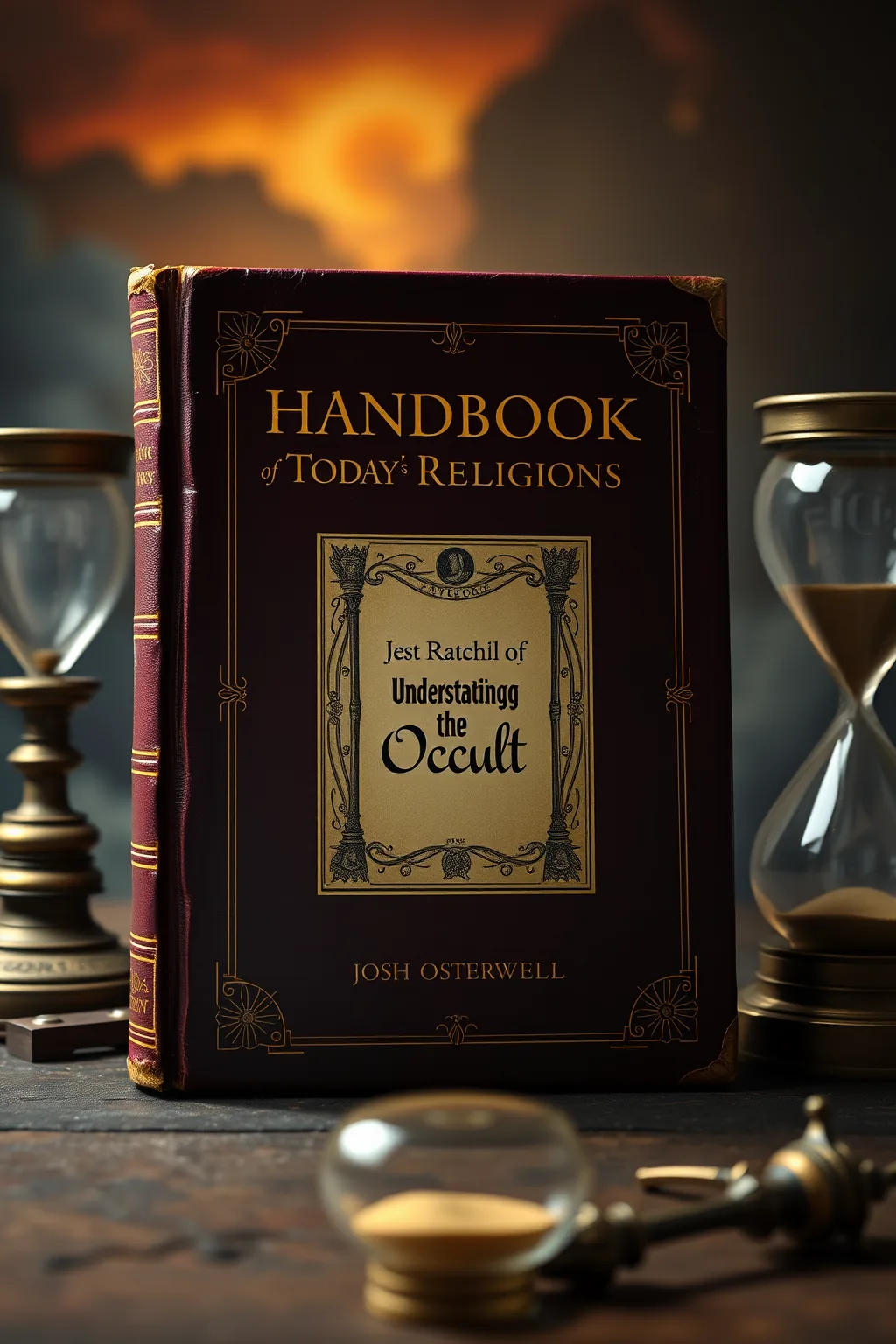
Handbook of Today’s Religions Understanding the Occult
 78
78

Handbook of Today’s Religions Understanding the Occult


Celeste Moreau (Divination & Symbolism Reviewer) — A meticulously researched and remarkably balanced examination, the 'Handbook of Today’s Religions: Understanding the Occult' offers invaluable insights into the diverse and often misunderstood world of esoteric thought. McDowell and Stewart masterfully demystify complex concepts, providing a clear lens through which to view occult philosophies and their practitioners. Their objective approach, while acknowledging potential concerns, allows for a deeper appreciation of the symbolic language and spiritual aspirations underpinning these traditions. This handbook is an indispensable resource for anyone navigating the labyrinthine paths of contemporary spirituality, offering clarity and a solid foundation for further study.
📝 Description
78
Embark on a profound exploration into the shadowed corridors of occult philosophy with the 'Handbook of Today’s Religions: Understanding the Occult.' This seminal work delves deep into the esoteric currents that shape contemporary spiritual landscapes, dissecting the hidden knowledge, ancient symbols, and mystical practices that lie beneath the surface of modern belief systems. McDowell and Stewart act as seasoned guides, illuminating the intricate tapestry of occult thought, from its ancient roots to its manifestations in the modern era. The atmosphere is one of intellectual rigor intertwined with a sense of unveiling profound truths, making it an essential companion for anyone seeking to understand the allure and complexity of the occult. It is crafted for the discerning reader—whether a seasoned scholar of comparative religion, a curious seeker of hidden wisdom, or a practitioner looking to contextualize their path—who desires a comprehensive and critical understanding of these often-misunderstood domains. Its philosophical significance lies in its ability to foster informed dialogue and critical discernment in an age of burgeoning spiritual exploration.
✍️ Author
Josh McDowell & Don Stewart
Joslin "Josh" McDowell (born August 17, 1939) is an American evangelical Christian apologist and evangelist. He is the author or co-author of over 150 books.
💡 Why Read This Book?
This handbook is crucial for seekers of truth who wish to move beyond superficial understandings of occultism. It provides a structured, informed perspective, essential for scholars of comparative religion and practitioners seeking to ground their knowledge. For anyone encountering the vast spectrum of modern spiritual movements, this book offers clarity, critical thinking tools, and a pathway to discerning the profound from the superficial.
⭐ Reader Reviews
Honest opinions from readers who have explored this book.
❓ Frequently Asked Questions
What distinguishes occult philosophy from mainstream religions?
Occult philosophy often emphasizes direct, personal experience of the divine, hidden knowledge accessible through initiation or esoteric practices, and a belief in unseen forces or dimensions, differing from the more communal and divinely revealed nature of many mainstream religions.
Does this book endorse or condemn occult practices?
The handbook aims for a comprehensive and objective understanding, analyzing the beliefs and practices of various occult traditions rather than offering outright endorsement or condemnation, encouraging informed discernment.
Who are the intended readers for this book?
The primary audience includes students of religion, theology, philosophy, and sociology, as well as individuals interested in cults, new religious movements, and the broader spectrum of spiritual exploration.
What kind of 'occult' topics are covered?
The book covers a wide array of subjects, including various forms of mysticism, spiritualism, witchcraft, ceremonial magic, alchemy, astrology, and their historical and contemporary manifestations.
Is prior knowledge of occultism required to read this book?
No, the handbook is designed to be accessible to readers with no prior background, providing foundational information and clear explanations of complex esoteric concepts.
🔮 Key Themes & Symbolism
The Nature of Esoteric Knowledge
This theme delves into the concept of 'hidden knowledge' (gnosis) as a central tenet of occult traditions. It explores how such knowledge is perceived as sacred, often guarded, and accessible only through specific disciplines, initiations, or divine revelation. The book examines the various methods employed to attain this esoteric understanding, from meditation and ritual to the interpretation of ancient texts and symbols, highlighting the pursuit of direct communion with the divine or ultimate reality.
Symbolism and Archetypal Language
A core element of occult philosophy is its rich symbolic language, which transcends literal interpretation to convey profound spiritual truths. This theme investigates the power of symbols—from alchemical imagery and astrological glyphs to Tarot cards and sacred geometry—as vehicles for understanding the cosmos, the human psyche, and the divine. The handbook illustrates how these symbols act as keys, unlocking deeper layers of meaning and facilitating a more intuitive grasp of esoteric principles.
The Spectrum of Modern Occultism
This section addresses the diverse and evolving landscape of occultism in the contemporary world. It moves beyond simplistic categorizations to explore the vast array of movements, practices, and belief systems that fall under the broad umbrella of occult philosophy. The book critically examines their origins, core tenets, and societal impact, providing readers with a nuanced understanding of how these ancient currents continue to influence modern spirituality and personal quests for meaning.
💬 Memorable Quotes
“The veil between worlds is thin for those who know where to look.”
— This quote speaks to the esoteric belief that the spiritual or unseen realms are not fundamentally separate but accessible through heightened perception or specific practices, often found within occult traditions.
“Truth is not found in dogma, but in the unveiled inner vision.”
— Emphasizes the subjective and experiential nature of spiritual discovery in esoteric paths, prioritizing personal insight over rigid doctrines.
“Every symbol is a doorway to a universe of meaning.”
— Highlights the profound depth and multi-layered significance embedded within the symbolic language of occultism, suggesting each icon holds vast potential for understanding.
“The seeker's journey is one of perpetual unveiling.”
— This speaks to the ongoing and evolving nature of spiritual growth within esoteric traditions, where understanding is not a final destination but a continuous process of discovery.
“In the silence, the deepest wisdom resonates.”
— Points to the value of introspection, meditation, and quiet contemplation as primary methods for accessing higher consciousness and profound insights in occult thought.
🌙 Esoteric Significance
Tradition
This work engages with a broad spectrum of esoteric traditions, including but not limited to Hermeticism, Gnosticism, Neoplatonism, Kabbalah, and various forms of Western ceremonial magic and folk occultism. It traces the lineage of these traditions, highlighting their shared emphasis on hidden knowledge, spiritual transformation, and the interconnectedness of the material and spiritual realms, often presenting them as distinct but related currents within the larger river of esoteric thought.
Symbolism
The handbook critically analyzes the rich tapestry of symbolism inherent in occult philosophy. It explores how symbols, such as the ouroboros, the pentagram, the tree of life, and alchemical motifs, serve as mnemonic devices, conceptual frameworks, and conduits for accessing spiritual realities. These symbols are presented not merely as decorative elements but as profound keys that unlock deeper philosophical and cosmological understandings, facilitating a more intuitive and holistic grasp of esoteric principles.
Modern Relevance
The esoteric currents examined in this handbook hold profound relevance today as individuals increasingly seek personalized spiritual paths and deeper meaning beyond conventional structures. The emphasis on self-discovery, inner transformation, and the exploration of consciousness resonates with contemporary spiritual seekers. Understanding these traditions offers insights into the diverse ways humanity has sought connection with the divine and the underlying archetypal patterns that continue to influence psychological and spiritual development in the modern era.
👥 Who Should Read This Book
This handbook is essential for students of comparative religion, theology, and philosophy seeking an informed overview of esoteric belief systems. Spiritual seekers curious about the underpinnings of various occult traditions will find clarity and context. Practitioners of esoteric arts can benefit from a critical and historical perspective on their chosen paths. Furthermore, anyone interested in understanding the cultural and spiritual landscape of the modern world, and the enduring allure of hidden knowledge, will find this a valuable and illuminating read.
📜 Historical Context
Published during a period of significant societal and spiritual flux, the 'Handbook of Today’s Religions: Understanding the Occult' emerged in an era where traditional religious frameworks were being questioned, and interest in alternative spiritualities, the paranormal, and esoteric philosophies surged. The late 20th century witnessed a notable increase in the visibility and accessibility of occult and New Age movements, fueled by counter-cultural shifts, the rise of mass media, and a growing desire for personal empowerment and spiritual autonomy. This context made a critical yet comprehensive examination of these phenomena particularly relevant, as authors sought to provide a grounded perspective for a public grappling with a burgeoning spiritual marketplace and a renewed fascination with ancient wisdom and hidden mysteries.
📔 Journal Prompts
Reflect on a personal experience where you felt a sense of 'hidden knowledge' or intuition guiding you.
How does the concept of 'symbolism' influence your understanding of the world around you?
What are your initial thoughts or preconceptions about 'occult philosophy' before reading this book?
Consider the idea of 'spiritual autonomy' and how it relates to the themes discussed.
In what ways can a critical understanding of diverse spiritual paths foster greater empathy and understanding?
🗂️ Glossary
Gnosis
A Greek term meaning 'knowledge,' often referring to a special, intuitive, or revealed knowledge of spiritual truths, central to Gnostic and other esoteric traditions.
Esotericism
A broad category of spiritual or religious traditions that focus on inner knowledge, personal experience, and hidden teachings, often intended for a select group of initiates.
Alchemy
An ancient philosophical and protoscientific tradition practiced throughout Europe, Africa, and Asia. It aimed at the transmutation of base metals into gold, but also encompassed spiritual transformation and the pursuit of immortality.
Hermeticism
A religious, philosophical, and esoteric tradition based on writings attributed to Hermes Trismegistus. It emphasizes the unity of all things and the attainment of divine wisdom through understanding cosmic principles.
Mysticism
The practice of achieving an spiritual ecstasy or a state of communion with the divine or ultimate reality, often through contemplation, meditation, or prayer.









![[Catalogue of Walter Moseley's Book Sale]](/img/thumb/catalogue-of-walter-moseley-s-book-sale-george-redway.webp)