Graphic concordance to the Dead Sea scrolls

 73
73

Graphic concordance to the Dead Sea scrolls
Charlesworth's Graphic Concordance is a formidable piece of scholarly infrastructure, a tool designed for deep textual excavation rather than casual browsing. Its strength lies in its systematic visual mapping of textual relationships, a departure from standard concordances that benefits those dedicated to minute analysis of the Qumran texts. The sheer labor involved in its construction is evident on every page. However, its graphic nature, while innovative, can also present a steep learning curve; it requires a deliberate effort to master its unique visual language. A particularly striking aspect is its approach to identifying thematic clusters, allowing one to see how certain ideas or phrases recur across disparate manuscripts, such as the repeated emphasis on 'wisdom' in texts like the Sapiential Works. This is not a book for the uninitiated but an essential reference for the serious investigator of the Dead Sea Scrolls.
📝 Description
73
### What It Is
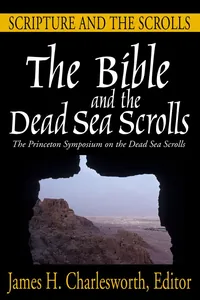
The Graphic Concordance to the Dead Sea Scrolls, first published in 1991 by James H. Charlesworth, presents a unique visual and textual catalog of the Qumran corpus. It moves beyond traditional alphabetical listings to offer a structured, comparative approach. The work aims to map the relationships between various scrolls and their textual components, providing scholars and serious students with a tool to understand the interconnectedness of these ancient Jewish texts.
### Who It's For
This volume is designed for researchers, academics, and dedicated enthusiasts of the Dead Sea Scrolls. Those engaged in textual criticism, historical linguistics, or the study of Second Temple Judaism will find its methodical organization invaluable. It caters to individuals seeking a deeper, more systematic understanding of the scroll fragments and their interrelations, rather than a general overview.
### Historical Context
Published in the wake of intensified Dead Sea Scrolls scholarship following their initial discovery in 1947 and subsequent widespread publication, Charlesworth's concordance emerged at a time when digital tools were nascent. Its creation was a significant undertaking, providing a much-needed systematic framework for analyzing the vast and complex collection. This work appeared as scholars like Geza Vermes were also publishing influential studies on the scrolls' place within Jewish history.
### Key Concepts
The concordance focuses on concepts like textual variation, manuscript families, and thematic groupings within the Qumran library. It facilitates the identification of shared phrases, literary parallels, and potential scribal influences across different manuscripts. The system employed allows for the tracing of specific words or phrases through the collection, illuminating the linguistic and thematic landscape of the period.
💡 Why Read This Book?
• Gain a structured understanding of textual relationships across the Dead Sea Scrolls, moving beyond simple keyword searches to see thematic and linguistic connections between manuscripts like the Rule of the Community and the War Scroll. • Access a unique visual mapping system that aids in the comparative analysis of ancient Hebrew and Aramaic texts, offering insights into scribal practices and textual transmission unique to the Qumran discoveries. • Develop a deeper appreciation for the scholarly efforts required to catalog and cross-reference the fragmented Dead Sea Scrolls, providing a concrete example of the challenges faced by researchers in the late 20th century.
⭐ Reader Reviews
Honest opinions from readers who have explored this book.
❓ Frequently Asked Questions
What makes the Graphic Concordance different from a standard alphabetical concordance?
Unlike a standard concordance that lists words alphabetically, the Graphic Concordance uses a visual, relational system. It maps how specific words, phrases, and concepts appear across different scrolls, illustrating connections and thematic groupings rather than just providing a simple word index.
Who is James H. Charlesworth and what is his contribution?
James H. Charlesworth is a prominent scholar of Second Temple Judaism and the Dead Sea Scrolls. His work on the scrolls is extensive, and the Graphic Concordance represents a significant contribution to making these complex texts accessible for systematic study and comparison.
What is the primary benefit for scholars using this book?
Scholars benefit from the ability to visually trace textual patterns and relationships between various manuscripts. This aids in understanding the literary and theological development within the Qumran community and the broader context of ancient Judaism.
Is this book suitable for beginners interested in the Dead Sea Scrolls?
While comprehensive, the Graphic Concordance is primarily a scholarly tool. Beginners might find it more useful after consulting introductory texts, as its visual and systematic approach requires a foundational understanding of the scrolls themselves.
When was the Graphic Concordance to the Dead Sea Scrolls first published?
The Graphic Concordance to the Dead Sea Scrolls was first published in 1991, making it a product of late 20th-century scholarly methodologies before the widespread advent of sophisticated digital textual analysis tools.
What kind of textual data does the Graphic Concordance organize?
It organizes data from the Dead Sea Scrolls, including fragments from biblical books, sectarian documents like the Community Rule, and other previously unknown Jewish writings discovered at Qumran.
🔮 Key Themes & Symbolism
Textual Interconnection
The core of this concordance lies in revealing how the various Dead Sea Scrolls are not isolated documents but part of a complex textual ecosystem. Charlesworth's system visually demonstrates shared vocabulary, recurring themes, and parallel passages across manuscripts, suggesting a shared intellectual and scribal environment at Qumran. This interconnection is vital for understanding the development of early Jewish thought and biblical interpretation during the Second Temple period.
Manuscript Analysis
This work provides a framework for detailed manuscript analysis. By organizing information graphically, it allows researchers to compare textual variations, identify potential textual families, and trace the transmission of specific texts. The focus is on the physical and textual characteristics of the scrolls themselves, offering a method to study them as artifacts and literary products simultaneously.
Thematic Cartography
The Graphic Concordance acts as a thematic map of the Qumran library. It highlights how certain concepts—such as purity, covenant, or eschatology—are distributed and emphasized across different scrolls. This thematic cartography is crucial for reconstructing the worldview and theological preoccupations of the groups associated with the scrolls, offering a visual representation of their intellectual landscape.
Scholarly Methodology
The book itself is a testament to a specific scholarly methodology for approaching large textual corpora. Its creation in 1991 predates many modern digital tools, showcasing an innovative, labor-intensive approach to cataloging and cross-referencing ancient texts. It demonstrates the power of systematic organization in advancing our understanding of historical documents.
💬 Memorable Quotes
“The Concordance graphically displays the relationships between the texts.”
— This statement highlights the fundamental innovation of the work: its visual and relational approach. It suggests that the book offers more than just a list of words; it provides a map of how the various scrolls connect to each other thematically and linguistically.
“Mapping the vocabulary of the Qumran corpus.”
— This paraphrase points to the core function of the concordance – to systematically record and organize the words found within the Dead Sea Scrolls. It emphasizes the comprehensive nature of the undertaking, aiming to cover the entire lexicon of this significant ancient library.
“Identifying textual parallels across different manuscripts.”
— This concept underscores the book's utility in comparative textual study. It allows users to discover how the same ideas or phrases appear in multiple scrolls, which is essential for understanding textual transmission and the intellectual milieu of the Qumran community.
“A systematic tool for analyzing the Dead Sea Scrolls.”
— This reflects the purpose behind the Graphic Concordance's design. It was intended not as a general introduction but as a specialized instrument for researchers needing to conduct in-depth, systematic investigations into the complex body of texts.
“Visualizing the structure of the Qumran library's content.”
— This interpretation emphasizes the graphical aspect of the concordance. It suggests that the book helps users 'see' the underlying organizational principles and thematic groupings within the collection of scrolls, providing a structural overview.
🌙 Esoteric Significance
Tradition
While the Dead Sea Scrolls themselves are primarily Jewish texts from the Second Temple period, their study has significant intersections with esoteric traditions. Scholars of Hermeticism, Gnosticism, and Kabbalah often examine these texts for precursor ideas, shared mystical concepts, or parallels in communal organization and scriptural interpretation. Charlesworth's concordance, by mapping textual relationships, indirectly aids esotericists in tracing the lineage of certain symbols or doctrines that may have influenced later esoteric movements.
Symbolism
The Dead Sea Scrolls contain rich symbolism, often related to light vs. darkness, purity rituals, and messianic expectations. For example, the concept of the 'Sons of Light' versus the 'Sons of Darkness' (prominent in texts like the War Scroll) has been interpreted through various esoteric lenses, relating to dualistic cosmologies. The meticulous organization of texts within Charlesworth's work allows for a more precise study of how such symbolic language is employed and developed across different scrolls, facilitating deeper symbolic analysis.
Modern Relevance
Contemporary esoteric thinkers and groups, particularly those focused on Jewish mysticism or the historical roots of Western esotericism, continue to draw from the Dead Sea Scrolls. Scholars of Kabbalah might use tools like this concordance to trace the development of concepts like the divine name or angelic hierarchies. Modern practitioners of ritual magic or comparative mysticism also find value in understanding the specific textual context and variations of these ancient Hebrew and Aramaic writings, appreciating the precision Charlesworth's work offers.
👥 Who Should Read This Book
• **Scholars of Second Temple Judaism:** Researchers needing to perform detailed comparative analysis of biblical and sectarian texts will find this a vital reference for identifying textual links and thematic patterns. • **Advanced Students of Ancient Religions:** Individuals seeking to understand the intellectual and religious landscape of Judea before the common era will benefit from the structured overview of the Qumran library's contents. • **Textual Critics and Linguists:** Those focused on the precise wording, scribal practices, and linguistic evolution within ancient Hebrew and Aramaic will appreciate the detailed textual mapping provided.
📜 Historical Context
The Graphic Concordance to the Dead Sea Scrolls emerged in 1991, a period of intense scholarly activity surrounding these discoveries. Following the initial finds in 1947 and the subsequent release of most texts to researchers, scholars grappled with organizing and interpreting a vast, fragmented library. Charlesworth's work provided a novel, visually-oriented system for cross-referencing that complemented traditional alphabetical methods. This was crucial at a time when digital databases were still in their infancy, making such a comprehensive manual tool invaluable. It arrived as figures like E.P. Sanders were also publishing influential works on the historical Jesus and the context of early Christianity, situating the scrolls within broader debates about Second Temple Judaism. The reception was largely academic, recognizing its utility for specialized research, though its unique format required a dedicated user base.
📔 Journal Prompts
The concept of 'Sons of Light' and 'Sons of Darkness' in textual comparison.
Mapping the recurrence of specific purity regulations across different Qumran manuscripts.
How does the visual structure of the concordance enhance understanding of textual relationships compared to a standard index?
Identifying thematic clusters related to covenant in the works cataloged.
Reflecting on the scholarly effort represented by the 1991 publication date and its context.
🗂️ Glossary
Qumran Corpus
The collection of ancient Jewish manuscripts discovered in caves near the site of Qumran, dating primarily from the 3rd century BCE to the 1st century CE. It includes biblical texts, sectarian documents, and other writings.
Second Temple Judaism
The period of Jewish history extending from the rebuilding of the Second Temple in Jerusalem (c. 516 BCE) to its destruction by the Romans in 70 CE. This era saw significant religious and intellectual diversity.
Textual Criticism
The scholarly discipline focused on identifying and correcting textual errors, and determining the most original wording of ancient documents through comparison of various manuscript versions.
Sectarian Documents
Writings originating from specific religious groups within Judaism during the Second Temple period, such as the Dead Sea Scrolls' Community Rule or Damascus Document, which outline the beliefs and practices of those groups.
Manuscript Families
Groups of ancient manuscripts that share common textual features, suggesting they were copied from a common source or were influenced by the same scribal traditions.
Thematic Grouping
The organization of texts or textual fragments based on shared subjects, ideas, or motifs, rather than solely on alphabetical order or chronological sequence.
Eschatology
The branch of theology concerned with the final destiny of the soul and of humankind, often involving beliefs about the end times, judgment, and the afterlife.