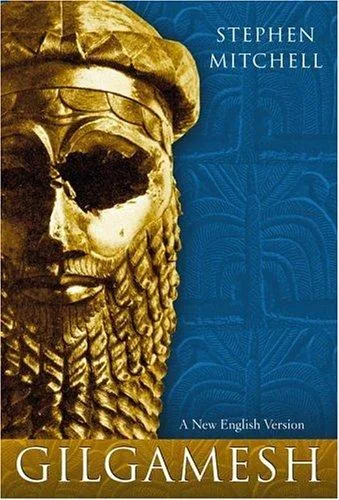
Gilgamesh
 75
75

Gilgamesh
Mitchell's "Gilgamesh" offers a compelling entry point into one of the world's oldest narratives. His translation, published in 2004, prioritizes lyrical flow, rendering the ancient Sumerian and Akkadian fragments into verse that feels remarkably immediate. The character of Gilgamesh, a complex blend of arrogance and vulnerability, emerges with potent clarity, particularly in his profound grief over Enkidu's death. This translation excels in conveying the emotional weight of the epic. However, the very fluidity that makes it accessible might, for some scholars, smooth over the rougher, more challenging textures of the original languages and cultural context. The focus on poetic resonance, while a strength, occasionally overshadows the starkness of certain passages, such as the descriptions of the underworld. Nevertheless, Mitchell’s "Gilgamesh" serves as a powerful, albeit interpreted, encounter with primordial human concerns.
Verdict: A finely wrought, emotionally resonant translation that brings ancient Mesopotamian concerns to life.
📝 Description
75
### What It Is Stephen Mitchell's 2004 translation presents the "Gilgamesh," one of humanity's oldest surviving works of literature. Originating from ancient Mesopotamia, this epic poem chronicles the exploits of Gilgamesh, the king of Uruk, and his eventual quest for immortality. It is not merely a narrative but a foundational text exploring themes that predate many known mythologies.
### Who It's For This version is particularly suited for readers seeking an accessible yet evocative rendition of the ancient epic. It appeals to those interested in early human conceptions of mortality, friendship, and the divine, as well as scholars of comparative mythology and ancient Near Eastern literature. Readers who appreciate poetic translation will find Mitchell's approach rewarding.
### Historical Context The "Epic of Gilgamesh" dates back to the Second Dynasty of Ur (c. 2100–2000 BCE), with later Akkadian versions circulating widely. Its rediscovery and translation in the 19th century, notably by George Smith in 1872, sparked immense interest in Mesopotamian civilization and biblical parallels. The poem's themes of flood narratives, divine intervention, and heroic journeys found echoes in various cultures, influencing later religious and literary traditions.
### Key Concepts The work explores the fundamental human struggle with death, the nature of true friendship, and the search for meaning in a mortal existence. It examines the relationship between civilization and the wild, the concept of divine justice, and the consequences of unchecked ambition. The epic also offers insights into the religious and cultural worldview of ancient Sumerians and Babylonians.
💡 Why Read This Book?
• Understand the foundational concepts of Mesopotamian civilization by engaging with the Epic of Gilgamesh, a text dating to around 2100 BCE, providing unique insights into early human societal structures and beliefs. • Explore the archetypal depiction of friendship and loss through the relationship between Gilgamesh and Enkidu, a narrative element that predates many later literary explorations of human connection. • Confront early human philosophical inquiries into mortality and the quest for meaning, as Gilgamesh grapples with his own ephemerality following Enkidu's death, offering a distinct perspective on existential concerns.
⭐ Reader Reviews
Honest opinions from readers who have explored this book.
❓ Frequently Asked Questions
What is the oldest known version of the Epic of Gilgamesh?
The "Epic of Gilgamesh" has roots in Sumerian poems dating to around 2100 BCE. The most complete surviving versions are in Akkadian and date to the 12th century BCE, found in the library of Ashurbanipal.
Who translated Stephen Mitchell's version of Gilgamesh?
Stephen Mitchell is the translator for this 2004 edition. He is known for his poetic and accessible translations of various ancient texts.
What are the main themes in the Epic of Gilgamesh?
Key themes include the search for immortality, the nature of friendship, the contrast between civilization and the wild, confronting death, and the responsibilities of kingship.
Where does the story of Gilgamesh originate?
The epic originates from ancient Mesopotamia, specifically Sumer and Akkad, with its earliest literary expressions found in Sumerian poems.
Is Stephen Mitchell's translation of Gilgamesh considered scholarly?
Mitchell's translation is highly regarded for its readability and poetic quality, making the epic accessible. While not always adhering to strict academic philology, it captures the spirit and emotional core of the work for a broad audience.
What is Uruk in the context of the Epic of Gilgamesh?
Uruk was a major ancient Mesopotamian city-state, and in the epic, it is Gilgamesh's domain. He is described as two-thirds god and one-third human, king of Uruk.
🔮 Key Themes & Symbolism
The Quest for Immortality
Gilgamesh's central obsession, the pursuit of eternal life, drives much of the narrative following Enkidu's death. This quest highlights the ancient Mesopotamian understanding of mortality and the divine. The epic explores the futility of seeking physical immortality, suggesting that true legacy lies in deeds and remembrance, a concept profoundly explored through Gilgamesh's journey to find Utnapishtim, the only mortal granted eternal life.
Friendship and Grief
The bond between Gilgamesh and Enkidu is a cornerstone of the epic, depicting a powerful friendship that transforms the arrogant king. Enkidu's death plunges Gilgamesh into profound grief and terror of his own mortality. This relationship explores the transformative power of connection and the universal experience of loss, influencing later literary portrayals of male companionship and mourning.
Civilization Versus the Wild
The epic contrasts the structured, urban life of Uruk, embodied by Gilgamesh, with the untamed natural world represented by Enkidu in his early life. Enkidu's 'civilizing' through Shamhat marks a pivotal transition, raising questions about the benefits and costs of societal integration. This duality reflects ancient Mesopotamian views on the order of the cosmos and humanity's place within it.
The Nature of Kingship
Gilgamesh's initial reign is characterized by tyranny, but his experiences and the wisdom gained from his quest shape him into a more just ruler. The epic examines the responsibilities and burdens of leadership, the balance between power and compassion, and the impact of a ruler's actions on their people. The epic offers an early exploration of ideal governance.
💬 Memorable Quotes
“What is my grief, that I should rage? I shall die, and so shall I not always be dead?”
— This poignant question, voiced by Gilgamesh after Enkidu's death, encapsulates the existential dread and confusion that fuels his quest for immortality. It reflects a raw confrontation with mortality, questioning the purpose of suffering when oblivion is certain.
“I have learned that the dead do not see the sun.”
— A stark realization of mortality's finality. This line signifies Gilgamesh's dawning understanding that earthly existence and its pleasures cease upon death, a truth that drives his fear and his desperate search for an end to death itself.
“In your铛, I see the face of my own death.”
— Gilgamesh’s profound grief and fear manifest as he confronts the mortality of his dearest friend, Enkidu. This moment marks a critical turning point, forcing him to acknowledge his own vulnerability.
“The strong do what they can and the weak suffer what they must.”
— This pragmatic, and somewhat bleak, statement reflects an ancient worldview regarding power dynamics and fate. It suggests a natural order where the powerful are not bound by the same limitations as the less fortunate.
“The shepherd’s life is not for me. I want to live the life of the city.”
— Spoken by Enkidu as he transitions from the wild to civilization, this line highlights the allure of social order and the communal aspects of city life, contrasting with the freedom of nature.
🌙 Esoteric Significance
Tradition
While not explicitly tied to a single esoteric lineage like Hermeticism or Kabbalah, the "Epic of Gilgamesh" is a foundational text in the study of ancient Near Eastern mythologies and proto-esoteric thought. Its exploration of the soul, the afterlife (or lack thereof), and divine-human interaction provides a crucial backdrop for understanding the roots of later mystical traditions that sought to comprehend cosmic order and human spiritual destiny.
Symbolism
The Cedar Forest symbolizes the untamed, sacred realm, a place of divine power and primal forces that Gilgamesh and Enkidu conquer. Humbaba, its guardian, represents the wild, chaotic nature that must be subdued for civilization to expand. The Great Flood narrative, a prominent motif, symbolizes divine judgment and purification, a concept echoed in various creation and destruction myths across cultures, representing cosmic renewal or existential cleansing.
Modern Relevance
Contemporary esoteric practitioners and scholars of comparative religion often reference Gilgamesh for its archetypal themes. Jungian psychology, for instance, finds resonance in Gilgamesh's journey as a quest for self-realization and integration of the shadow self. Modern mythopoetic movements and writers exploring ancient wisdom traditions frequently revisit the epic for its profound insights into the human condition and the perennial search for meaning beyond mortality.
👥 Who Should Read This Book
• Students of comparative mythology and ancient Near Eastern cultures seeking primary source material on early human beliefs about life, death, and the gods. • Readers interested in the philosophical underpinnings of existentialism and the human struggle with mortality, as Gilgamesh confronts his own ephemerality. • Translators and literary scholars examining the evolution of epic poetry and the challenges of rendering ancient texts into modern vernacular.
📜 Historical Context
The "Epic of Gilgamesh" is a composite work, with its earliest Sumerian precursors dating to the Third Dynasty of Ur (c. 2100 BCE). The most comprehensive Akkadian versions, compiled by the scribe Sin-leqi-unninni around the 12th century BCE, survived on clay tablets in the library of the Assyrian king Ashurbanipal at Nineveh. Its rediscovery by archaeologists and the subsequent translation by George Smith in 1872, which controversially linked its flood narrative to biblical accounts, ignited global fascination with Mesopotamian civilization. This period saw intense competition among European powers to excavate and interpret Near Eastern antiquities. The epic's influence permeated subsequent literature and religious thought, though its reception was often filtered through biblical comparison, sometimes leading to its dismissal as mere derivative.
📔 Journal Prompts
Gilgamesh's fear of death after Enkidu's passing.
The transformation of Enkidu from wild man to civilized companion.
The symbolic meaning of the Cedar Forest in the epic.
The relationship between Gilgamesh's kingly duties and his personal quest.
Utnapishtim's advice on finding contentment in mortality.
🗂️ Glossary
Uruk
An ancient Mesopotamian city, considered one of the world's first major urban centers. In the epic, it is the magnificent city ruled by Gilgamesh, representing civilization and human achievement.
Enkidu
A wild man created by the gods to challenge Gilgamesh. He becomes Gilgamesh's closest companion and friend, and his death is the catalyst for Gilgamesh's existential crisis.
Shamhat
A temple courtesan or priestess who seduces Enkidu, drawing him away from his wild existence and introducing him to the ways of civilization and humanity.
Humbaba
The monstrous guardian of the Cedar Forest, appointed by the god Enlil. He represents the untamed forces of nature and is defeated by Gilgamesh and Enkidu.
Utnapishtim
The only mortal granted eternal life by the gods after surviving the Great Flood. Gilgamesh seeks him out to learn the secret of immortality.
Ishtar
A powerful Mesopotamian goddess of love, fertility, and war. She attempts to seduce Gilgamesh, and when rejected, she unleashes the Bull of Heaven upon Uruk.
Bull of Heaven
A celestial beast sent by the goddess Ishtar to punish Gilgamesh for rejecting her advances. Its defeat by Gilgamesh and Enkidu further angers the gods.