Flower of Life
 73
73

Flower of Life

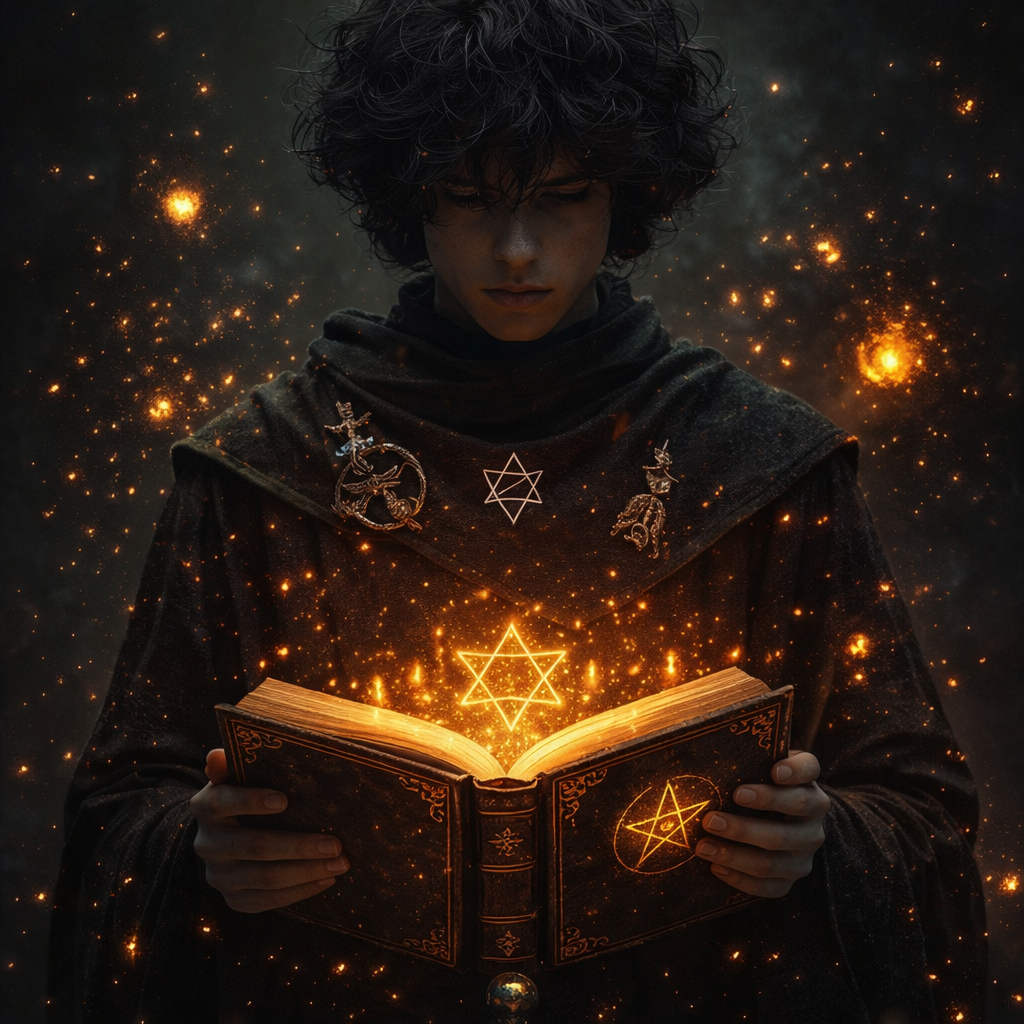

Debbie Lane's "Flower of Life" composition book is, at its heart, a utilitarian object imbued with symbolic intent. It functions precisely as advertised: a lined notebook. The strength of the work lies in its deliberate association with the Flower of Life, a potent symbol of creation and interconnectedness. This connection elevates a simple journal into a potential tool for focused spiritual practice. However, the book's primary limitation is its inherent lack of unique content; it is a blank slate. The onus is entirely on the user to imbue its pages with meaning. A passage that stands out is the suggestion to use it for "Goal tracking." This mundane application, when paired with the Flower of Life, prompts a consideration of whether our aspirations themselves can be seen as geometric expressions of our potential, unfolding according to universal patterns.
Ultimately, "Flower of Life" is a well-intentioned, if basic, offering for those who find resonance in sacred geometry.
📝 Description
73
### A Geometric Blueprint of Consciousness
Debbie Lane's "Flower of Life" presents a composition notebook designed for those drawn to sacred geometry and energetic principles. Far from a mere journal, its pages are intended as a canvas for exploring personal growth, spiritual practice, and mindful living. The book's premise is simple: to provide a dedicated space for individuals to document their journey, whether through meditation, goal tracking, or creative ideation. The very act of using such a notebook is framed as a practice in itself, encouraging focused intention and self-reflection. It invites users to connect with the symbolism of the Flower of Life, a universally recognized pattern found across cultures and throughout nature, as a catalyst for their own inner exploration.
### For the Seeker and the Scribe
This volume is specifically curated for individuals who feel a pull towards the energetic resonance of symbols like the Flower of Life. It caters to those actively engaged in practices such as yoga and meditation, offering a practical tool to record insights, track progress, and set intentions. It's also ideal for anyone seeking to organize their thoughts, dreams, and aspirations, from creating to-do lists and bucket lists to mapping out creative projects or personal development plans. The notebook is positioned as a versatile companion for life's many facets, suitable for gifting to loved ones who appreciate esoteric themes and mindful living, making it a thoughtful present for birthdays or any occasion.
### Echoes of Ancient Wisdom
The "Flower of Life" composition book taps into a lineage of geometric symbolism that has fascinated humanity for millennia. The Flower of Life pattern itself is found in ancient sites across the globe, from the Temple of Osiris in Abydos, Egypt, dating back to approximately 550 BCE, to medieval European cathedrals. Its recurrence suggests a fundamental role in understanding cosmic order and creation across diverse spiritual and philosophical traditions. By providing a modern medium for engaging with this ancient symbol, Lane's work connects contemporary practitioners with a rich historical and cross-cultural dialogue about the interconnectedness of all things and the underlying patterns of reality.
### Unlocking Sacred Geometry's Potential
The core concepts explored through the "Flower of Life" extend beyond mere aesthetics. The book implicitly references the power of sacred geometry as a language of the universe, a blueprint for creation that influences energy and consciousness. It suggests that by contemplating and interacting with forms like the Flower of Life, individuals can align themselves with these universal principles. This alignment is thought to foster clarity, enhance intuition, and facilitate a deeper understanding of one's place within the larger cosmic order. The notebook serves as a personal laboratory for experimenting with these ideas, translating abstract geometric concepts into tangible personal growth and awareness.
💡 Why Read This Book?
• You will learn to integrate sacred geometry into daily life by using the "Flower of Life" symbol as a focal point for intention setting and personal reflection, moving beyond abstract appreciation to practical application. • You will experience a structured approach to personal development by utilizing the provided prompts for activities like goal tracking and meditation, grounding these practices within the energetic framework suggested by the book's theme. • You will gain a tangible connection to ancient wisdom by journaling about concepts inspired by the "Flower of Life," a symbol with roots stretching back to at least 550 BCE Egypt, fostering a sense of historical continuity.
why_read
⭐ Reader Reviews
Honest opinions from readers who have explored this book.
❓ Frequently Asked Questions
What is the Flower of Life symbol?
The Flower of Life is an ancient geometric symbol composed of multiple overlapping circles, arranged in a flower-like pattern. It is found in various cultures and is believed to represent the interconnectedness of all life and the fundamental patterns of creation.
What kind of notebook is the "Flower of Life"?
It is a composition book with blank lined pages, designed for users to write, draw, or plan. It serves as a versatile journal for various personal and spiritual practices.
Who is Debbie Lane?
Debbie Lane is the author of "Flower of Life." While specific biographical details about her esoteric background are not widely available, her work centers on creating tools that connect users with spiritual symbols and practices.
When was "Flower of Life" first published?
The book was first published on March 4, 2019. This places it within contemporary literature exploring esoteric themes and personal development.
Can this notebook be used for bullet journaling?
Yes, the blank lined pages make it suitable for bullet journaling. Users can adapt it to track tasks, plan events, and create custom layouts alongside their reflections on the Flower of Life.
Is the Flower of Life symbol mentioned in other ancient texts?
Indeed, the Flower of Life symbol has been found in numerous ancient sites and artifacts globally, suggesting its widespread significance across different historical periods and cultures, from Egypt to China.
🔮 Key Themes & Symbolism
Sacred Geometry as Universal Language
The work implicitly positions sacred geometry, epitomized by the Flower of Life symbol, not merely as art but as a fundamental language of the cosmos. This theme explores how geometric patterns underpin reality, from the cellular level to galactic structures. The notebook invites users to engage with this concept by providing a space to record their thoughts and observations as they connect with the symbol, suggesting that understanding these patterns can lead to a deeper comprehension of universal order and interconnectedness.
Consciousness and Energetic Resonance
Central to the book's appeal is the idea that symbols like the Flower of Life possess inherent energetic qualities that can influence human consciousness. By using this notebook for practices like meditation and goal tracking, users are encouraged to harness this energetic resonance for personal growth. The act of writing and reflecting within its pages becomes a method for attuning oneself to higher frequencies, fostering clarity, intuition, and a sense of energetic alignment with desired outcomes and the universal flow.
Personal Growth and Intentional Living
The "Flower of Life" composition book serves as a practical tool for fostering intentional living and personal development. Its blank pages are a call to action, encouraging users to actively participate in their own evolution. Whether planning a bucket list, tracking daily habits, or brainstorming ideas, the notebook provides a dedicated space to manifest intentions. This theme emphasizes the power of focused attention and consistent practice, using the symbolic backdrop of the Flower of Life to support the user's journey towards self-realization.
Cross-Cultural Symbolism and Ancient Wisdom
This theme highlights the enduring presence and universal recognition of the Flower of Life symbol across diverse cultures and historical epochs. Its appearance in contexts ranging from ancient Egyptian temples to medieval art underscores its deep roots in human spiritual and philosophical inquiry. The notebook acts as a contemporary conduit, enabling individuals to connect with this ancient wellspring of wisdom and explore the shared human quest for understanding the origins and structure of existence.
💬 Memorable Quotes
“Do you love the Flower Of Life and great energy? Then this composition book is for you.”
— This opening statement directly addresses the target audience, framing the notebook not just as an object but as a tool for those already attuned to the symbol's energetic properties and seeking a physical medium for their connection.
“Grab one for yourself, wife, husband, mom, dad, or a friend as a birthday gift.”
— This highlights the notebook's versatility as a gift, suggesting its appeal extends beyond the individual practitioner to encompass a broader social circle interested in esoteric themes or mindful living.
“This blank lined journal can be used for many other important things in your life.”
— This phrase emphasizes the adaptability of the notebook, positioning it as a multi-functional tool capable of supporting various aspects of a user's life, from practical organization to spiritual practice.
“Here Are Some Ideas Of What To With This Notebook”
— This signals the book's intention to provide practical guidance and inspiration, encouraging users to explore diverse applications for the journal and discover how it can best serve their personal journey.
“Below are some ideas. *Yoga *To do list *Calendar *Bucket List *Meditation *Goal tracking *Sleep Journal *Bullet journal *Brainstorming *Books to read *Meal planning *Mind mapping *Party planning”
— This list showcases the broad utility of the notebook, demonstrating its capacity to accommodate both structured planning and creative exploration, linking the esoteric symbol to everyday life activities.
🌙 Esoteric Significance
Tradition
The "Flower of Life" composition book draws heavily from the Western esoteric tradition, particularly its fascination with sacred geometry and its perceived influence on consciousness and the manifest world. It echoes Neoplatonic and Hermetic ideas about the universe being structured according to mathematical and geometric principles. While not explicitly tied to a single lineage like Kabbalah or Gnosticism, it taps into a broader current of thought that views geometric forms as keys to unlocking cosmic secrets and understanding divine order.
Symbolism
The primary symbol, the Flower of Life, is central. In esoteric traditions, it is often interpreted as representing the interconnectedness of all creation, the seven days of creation (in one common interpretation), and the fundamental blueprint from which all physical and energetic forms emerge. Other potential symbols, implied by the notebook's suggested uses, include the act of writing itself as a form of manifestation and the geometric unfolding of intentions within the user's life, mirroring the creation pattern.
Modern Relevance
Contemporary practitioners of mindfulness, yoga, and energy healing often incorporate sacred geometry into their practices. Thinkers and artists exploring consciousness studies, fractal patterns in nature, and the physics of intention find resonance with the Flower of Life. Schools of thought focusing on manifestation and law of attraction also frequently utilize such geometric archetypes as focal points for visualization and energetic alignment, making Lane's notebook a relevant tool for modern seekers.
👥 Who Should Read This Book
• Individuals exploring sacred geometry and its connection to consciousness will find this notebook a practical starting point for personal contemplation and application. • Practitioners of yoga, meditation, and mindfulness seeking a dedicated space to record insights, track progress, and set intentions will benefit from its structured yet open format. • Those interested in personal development, goal setting, and creative brainstorming can utilize its pages to organize their thoughts and aspirations within an aesthetically and energetically resonant framework.
📜 Historical Context
Published in 2019, Debbie Lane's "Flower of Life" composition book emerges within a contemporary resurgence of interest in sacred geometry, mindfulness, and esoteric symbolism. This period saw a proliferation of literature and practices drawing inspiration from ancient traditions, often presented through accessible formats like journals and workbooks. The Flower of Life symbol itself, with documented appearances in Egyptian temples dating back to around 550 BCE and its presence in medieval European art, has long been a subject of study for mystics and scholars. In the late 20th century, figures like Drunvalo Melchizedek popularized the symbol within New Age circles, linking it to concepts of consciousness and creation. Lane's work can be seen as contributing to this ongoing popularization, offering a simple, tangible tool for individuals to engage with this ancient geometric form in their personal practice, distinct from more academic or overtly theoretical treatments of the subject.
📔 Journal Prompts
The Flower of Life's interconnected circles as a metaphor for your daily relationships.
Mapping your personal goals using the structure of the Flower of Life.
Reflecting on the energetic resonance of geometric patterns in your environment.
Documenting insights gained during meditation sessions using this journal.
Visualizing the unfolding of your creative projects, inspired by the Flower of Life.
🗂️ Glossary
Flower of Life
An ancient geometric symbol composed of multiple evenly-spaced, overlapping circles arranged in a flower-like pattern. It is considered a symbol of creation, interconnectedness, and universal patterns found throughout nature and ancient cultures.
Sacred Geometry
The study and use of geometric shapes, patterns, and proportions that are considered sacred or symbolic. It posits that these forms are fundamental to the structure of the universe and hold spiritual significance.
Energy
In esoteric contexts, 'energy' refers to a subtle force or vibration that permeates all existence. It is believed to be influenced by symbols, thoughts, and intentions, and can be harnessed for healing, manifestation, and spiritual growth.
Meditation
A practice where an individual uses a technique – such as mindfulness, or focusing the mind on a particular object, thought, or activity – to train attention and awareness, and achieve a mentally clear and emotionally calm and stable state.
Goal Tracking
The process of monitoring progress towards achieving specific objectives. In the context of this book, it involves using the journal to document steps taken, challenges faced, and milestones reached in pursuit of personal or spiritual goals.
Composition Book
A type of notebook characterized by its sturdy cover and sewn or glued binding, typically containing lined pages. It is commonly used for academic notes or journaling.
Symbolism
The use of symbols to represent ideas or qualities. In esoteric philosophy, symbols are often seen as keys to unlocking deeper meanings and understanding universal principles.