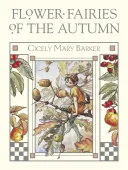
Flower Fairies of the Autumn
 83
83

Flower Fairies of the Autumn
Cicely Mary Barker’s 'Flower Fairies of the Autumn' offers a gentle, if somewhat conventional, depiction of nature spirits. The real strength lies in Barker’s delicate watercolour technique, which renders the autumnal flora and insect life with remarkable accuracy and charm. The accompanying poems, while simple, possess a quaint rhythm that evokes the intended whimsical atmosphere. A passage describing the 'Fungi Fairy' and its association with damp, decaying wood, for instance, beautifully captures the often-overlooked beauty of decomposition in the forest floor. However, the conceptual depth of the 'flower fairy' trope itself, while popular, offers little in the way of challenging esoteric thought; it remains firmly within the realm of charming fantasy rather than deep philosophical exploration. It is a visually pleasing, if intellectually light, collection for devotees of the genre.
📝 Description
83
### What It Is
Cicely Mary Barker's 'Flower Fairies of the Autumn,' first published in the 1920s and reissued in 2020, presents a collection of poems and accompanying watercolour illustrations. These artworks depict small, winged beings associated with autumnal flora and fauna. The book aims to reveal the hidden life within the natural world during the fall season, encouraging a closer observation of botanical and insect life. It serves as an introduction to the concept of nature spirits tied to specific plants and seasons.
### Who It's For
This volume is ideal for individuals with an interest in folklore, botanical illustration, and gentle introductions to animistic perspectives. It appeals to those who appreciate the aesthetic of early 20th-century children's literature and the subtle magic often attributed to the natural world. Readers seeking to foster a deeper connection with nature, particularly during the autumn months, will find its content engaging. It is also suitable for collectors of Barker's popular 'Flower Fairy' series.
### Historical Context
The original 'Flower Fairy' series emerged during a period of significant interest in spiritualism and nature-based philosophies in Britain. Following the widespread influence of authors like Arthur Conan Doyle in promoting spiritualism and the earlier works of folklorists documenting fairy beliefs, Barker's books tapped into a cultural current that sought enchantment in the everyday. The early 20th century saw a surge in illustrated children's books, with artists like Arthur Rackham also exploring fantastical themes, though Barker’s focus remained resolutely on the specific botanical and entomological details of the British countryside.
### Key Concepts
The central concept is the personification of autumnal natural elements through fairy imagery. Each fairy is linked to a specific plant, insect, or natural phenomenon characteristic of autumn, such as Michaelmas Daisies, Fungi, or the conkers. This approach imbues the mundane aspects of the season with a sense of agency and spirit, suggesting an underlying magical ecology. The book implicitly promotes an animistic worldview, where natural objects possess a consciousness or spirit, a concept found in various pre-industrial and esoteric traditions.
💡 Why Read This Book?
• Gain an appreciation for autumnal flora and fauna through the lens of nature spirits, learning to identify specific plants like the Michaelmas Daisy and their associated fairy lore. • Experience an introduction to animistic concepts, understanding how early 20th-century works like Barker's linked specific natural elements to unseen forces. • Discover the artistic legacy of Cicely Mary Barker, appreciating her watercolour techniques and how they visually represented a whimsical, nature-focused worldview popular in the 1920s.
⭐ Reader Reviews
Honest opinions from readers who have explored this book.
❓ Frequently Asked Questions
When was Cicely Mary Barker's 'Flower Fairies of the Autumn' originally published?
The original 'Flower Fairies' series, including 'Flower Fairies of the Autumn,' was first published in the 1920s. This specific edition was reissued much later, in 2020, making the original artwork and poetry accessible to a new generation.
What are the main subjects covered in 'Flower Fairies of the Autumn'?
The book focuses on fairies associated with autumnal flowers, plants, and insects found in the British countryside. It covers subjects like Michaelmas Daisies, fungi, blackberries, and various autumnal insects, each personified by a fairy.
Are the poems in 'Flower Fairies of the Autumn' complex?
No, the poems are generally simple and lyrical, designed for a younger audience or for those who appreciate a gentle, rhyming verse. They describe the habits and appearances of the fairies and their connection to specific natural elements.
What is the artistic style of Cicely Mary Barker's illustrations?
Barker's illustrations are characterized by their delicate watercolour technique. They are known for their detailed and accurate depictions of botanical subjects, combined with whimsical, imaginative portrayals of fairy figures.
Does this book connect to any specific esoteric traditions?
While not explicitly tied to a formal esoteric system, the book aligns with broader animistic and folkloric traditions that attribute spirits or consciousness to natural phenomena. It reflects a common thread in Western esotericism concerning nature spirits.
Is 'Flower Fairies of the Autumn' suitable for adults interested in esotericism?
Yes, adults interested in the history of folklore, botanical illustration, and gentle introductions to nature-based spirituality or animism will find value in it, particularly as a historical artifact of nature-focused children's literature.
🔮 Key Themes & Symbolism
Autumnal Nature Spirits
This theme explores the personification of the autumn season's botanical and entomological life through a cast of fairies. Each fairy is intrinsically linked to a specific plant, fungus, or insect prevalent during the fall months. For instance, the book might feature a fairy associated with the Michaelmas Daisy or the humble toadstool. This approach imbues the often-overlooked aspects of autumn – falling leaves, damp earth, fading blooms – with a vibrant, hidden life, suggesting an animistic perspective where nature is alive with conscious entities.
Botanical Accuracy and Whimsy
A core element is the fusion of meticulous botanical observation with imaginative fairy depiction. Cicely Mary Barker’s illustrations are noted for their accuracy in rendering plant species, ensuring that the flowers and foliage are recognizable. This grounding in natural detail serves as a counterpoint to the whimsical, often ethereal portrayal of the fairies themselves. The juxtaposition encourages readers to see the inherent magic and beauty within the precise forms of nature, bridging the gap between scientific observation and fantastical belief.
Folklore and Childhood Enchantment
The book taps into the rich vein of British folklore concerning fairies and nature spirits, presenting them in a format accessible to children and adults alike. It evokes a sense of wonder and enchantment, encouraging a closer relationship with the natural world. By personifying elements of the autumn landscape, it fosters an appreciation for the cyclical nature of life and the subtle beauty found in decay and transition, aligning with traditional nature-based spiritual viewpoints.
The Cycle of Seasons
As part of a larger series, 'Flower Fairies of the Autumn' specifically highlights the unique character of the fall season through its fairy inhabitants. It encourages readers to observe the changes occurring in nature during this time – the ripening of fruits, the changing colours of leaves, the emergence of fungi. This focus on seasonal transition is a fundamental aspect of many nature-based spiritual practices, emphasizing the rhythm of the earth and the distinct energies associated with each period of the year.
💬 Memorable Quotes
“Fairies of the Fungi who dwell in the wood, / Where moss grows thick and the air is damp and good.”
— This couplet immediately establishes the theme of specific fairy associations with particular habitats. It highlights the Fungi Fairy's connection to the damp, shaded, and often overlooked environments of the forest floor, suggesting these are places where hidden life thrives.
“The Blackberry Fairy, she nods her head / As she watches the berries turn rosy red.”
— This verse links a fairy directly to the ripening process of a common autumnal fruit. It personifies the transformation of the blackberry, imbuing the natural phenomenon with a sense of gentle observation and care by a nature spirit.
“When the leaves begin to fall and fly, / The Autumn Fairy waves goodbye.”
— This simple statement marks the transition between seasons, personifying the departure of autumn itself. It captures the ephemeral nature of the season and hints at the cyclical passage of time, with each season having its own distinct fairy presence.
“The Michaelmas Daisy blooms so bright, / With fairy wings of purple light.”
— This quote directly connects a specific flower, the Michaelmas Daisy, with a fairy adorned in corresponding colours. It illustrates Barker’s method of associating fairies with the visual characteristics of the plants they inhabit.
“Among the conkers, brown and round, / Little fairy footsteps can be found.”
— This highlights the fairy presence within the specific context of conkers, a quintessential symbol of British autumn. It suggests that even mundane natural objects like conkers are imbued with magical life and activity.
🌙 Esoteric Significance
Tradition
Barker's work, while not explicitly aligned with a formal esoteric school like Theosophy or Hermeticism, strongly echoes animistic and nature-based spiritual traditions. It taps into a lineage of nature mysticism that perceives inherent life and spirit within the natural world, a concept present in various indigenous beliefs and later synthesized in Western esotericism. The series can be seen as a popular, accessible manifestation of the idea that elements of nature are overseen or inhabited by distinct elemental beings, a theme explored in works like Paracelsus's 'Liber de Nymphis, sylfhis, pygmaeis et salamandris et de caeteris spiritibus'.
Symbolism
The primary symbolism lies in the direct correlation between specific flora/fauna and their associated fairy. The 'Fungi Fairy,' for example, symbolizes the often-hidden, decomposing, yet vital processes of the forest floor. The 'Blackberry Fairy' represents the bounty and ripening of late summer transitioning into autumn. These personifications symbolize the inherent life force, or 'anima mundi,' within each natural element, encouraging a perception of the world as a living, interconnected web of spiritual energies.
Modern Relevance
Contemporary eco-spiritual movements and nature-based witchcraft practices often draw inspiration from works like Barker's. Pagans, Wiccans, and animist practitioners find in her illustrations and poems a visual and conceptual language for understanding and interacting with nature spirits (elementals or land spirits). Thinkers and artists focused on re-enchanting the natural world, or those exploring the intersection of art, nature, and childhood innocence, also find value in Barker’s approach as a gentle entry point into deeper ecological and spiritual connections.
👥 Who Should Read This Book
• Aspiring nature artists and illustrators seeking to blend botanical accuracy with imaginative representation, learning from Barker's detailed watercolour techniques. • Practitioners of nature-based spirituality and animism who wish to explore historical representations of nature spirits and elemental beings in Western culture. • Collectors of vintage children's literature and enthusiasts of early 20th-century illustration who appreciate the aesthetic and cultural context of Barker's 'Flower Fairy' series.
📜 Historical Context
Cicely Mary Barker's 'Flower Fairies' series, including 'Flower Fairies of the Autumn,' emerged in the 1920s, a period resonating with the lingering cultural impact of the spiritualist movement and a burgeoning interest in folklore. Following figures like Sir Arthur Conan Doyle who championed spiritualism, and drawing on earlier folkloric documentation, Barker’s work provided a gentler, more nature-focused expression of enchantment. This era also saw a flourishing market for illustrated children's books, with artists like Arthur Rackham exploring fantastical realms. However, Barker distinguished herself by grounding her fairy imagery in precise botanical detail, a characteristic that set her apart from more overtly stylized contemporaries. Her work resonated with a public seeking solace and wonder in the natural world, especially in the wake of World War I, offering a vision of innocent magic distinct from the more complex allegories found in some other children's literature of the time.
📔 Journal Prompts
The Michaelmas Daisy fairy's connection to its bloom.
The concept of fairies inhabiting fungi and decaying wood.
The transition represented by the Blackberry Fairy's ripening berries.
The visual representation of autumn's departure through the Autumn Fairy.
Interpreting the symbolism of the conker within its natural context.
🗂️ Glossary
Michaelmas Daisy
A species of daisy, typically blooming in late summer and autumn, often with purple or pink petals. It is a common subject in British gardens and folklore, associated with the feast day of St. Michael the Archangel (September 29th).
Fungi
A kingdom of organisms that includes yeasts, molds, and mushrooms. In Barker's work, they represent the often-hidden and decomposing elements of the forest floor, symbolizing cyclical renewal.
Conkers
The shiny brown seed of the horse chestnut tree, a characteristic sight in Britain during autumn. They are often associated with children's games and the changing season.
Animism
The belief that objects, places, and creatures all possess a distinct spiritual essence. In the context of the book, it refers to the idea that plants and natural phenomena have their own spirits or consciousness.
Nature Spirits
Beings believed to inhabit and govern natural phenomena, such as plants, water, or rocks. Barker's 'Flower Fairies' are a specific, popular depiction of such entities within a Western folkloric context.
Botanical Illustration
The art of depicting plant life in a detailed and accurate manner, often for scientific or educational purposes. Barker's work combines this accuracy with imaginative elements.
Folklore
The traditional beliefs, customs, and stories of a community, passed through the generations by word of mouth. Barker's fairies are drawn from and contribute to British folklore.