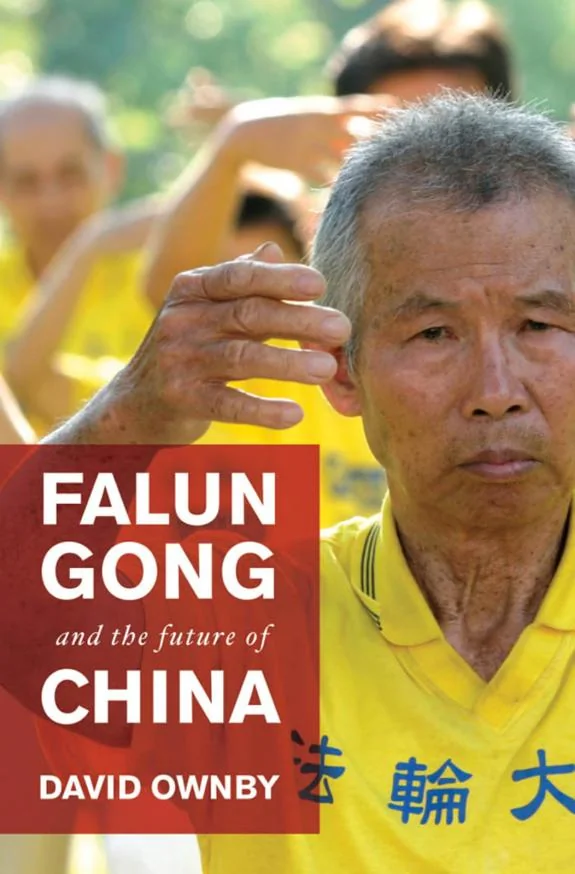
Falun Gong and the Future of China
 81
81

Falun Gong and the Future of China
Ownby's "Falun Gong and the Future of China" provides a scholarly, if somewhat dry, account of a movement that defies easy categorization. Its strength lies in meticulously detailing the historical trajectory of Falun Gong from its inception in the early 1990s to the significant crackdown initiated by the Chinese Communist Party. The book's examination of the 1999 Zhongnanhai protest is particularly illuminating, presenting it not as a sudden outburst but as a calculated response to escalating pressure. A limitation, however, is the occasional lack of engagement with the lived experiences of practitioners, focusing more on the organizational and political aspects. The work's discussion of Li Hongzhi's cosmological explanations, while informative, could benefit from deeper comparative analysis with other spiritual traditions. Ultimately, Ownby delivers a valuable, fact-based primer for understanding Falun Gong's complex position within China.
📝 Description
81
### What Falun Gong Is David Ownby's "Falun Gong and the Future of China" offers a rigorous examination of a spiritual movement that captured global attention. Far from a simple overview, the work dissects the origins, doctrines, and practices of Falun Gong, a qigong discipline that blends Buddhist and Taoist concepts with a unique spiritual cosmology. The book details its rapid growth in the late 20th century and its subsequent suppression by the Chinese Communist Party.
### Who It's For This study is indispensable for scholars of new religious movements, sinologists, and anyone seeking to understand the intersection of spirituality, politics, and human rights in contemporary China. It appeals to those interested in the dynamics of belief systems that challenge state authority and the resilience of spiritual communities under duress. Readers who appreciate detailed historical analysis and a nuanced perspective on socio-religious phenomena will find it particularly rewarding.
### Historical Context Published in 2008, the book emerged from a period of intense scrutiny following the 1999 Zhongnanhai protest, a silent demonstration by an estimated 10,000 practitioners. This event, a response to escalating state persecution, brought Falun Gong into sharp international focus. Ownby situates the movement within the broader landscape of Chinese spiritual traditions and the government's historical efforts to control independent social organizations, particularly those with spiritual or religious dimensions.
### Key Concepts The work explores core Falun Gong tenets, including the cultivation of virtue, the principles of Truthfulness, Compassion, and Forbearance (Zhen-Shan-Ren), and the concept of karma. It also addresses the controversial claims regarding qigong's health benefits and the spiritual leader Li Hongzhi's teachings. Ownby scrutinizes the movement's organizational structure and its perceived threat to the secular authority of the Chinese state.
💡 Why Read This Book?
• Gain a factual understanding of Falun Gong's origins and doctrines, learning how its blend of Buddhist and Taoist philosophy, alongside qigong practices, emerged in the early 1990s. • Understand the specific historical events, such as the 1999 Zhongnanhai protest by 10,000 practitioners, that led to the Chinese government's severe suppression of the movement. • Analyze the political and social forces at play in China through the lens of a spiritual movement that challenged state control, as detailed in the book's examination of the CCP's motivations.
⭐ Reader Reviews
Honest opinions from readers who have explored this book.
❓ Frequently Asked Questions
What is the primary spiritual teaching of Falun Gong as described by David Ownby?
The primary spiritual teaching, as detailed by Ownby, centers on the cultivation of virtue through the principles of Truthfulness, Compassion, and Forbearance (Zhen-Shan-Ren), alongside qigong exercises for physical and spiritual well-being.
When did Falun Gong gain significant public attention leading to government action?
Falun Gong gained significant public attention and faced governmental action following the large, peaceful protest by approximately 10,000 practitioners outside Zhongnanhai in April 1999.
Who is the central figure associated with the founding of Falun Gong?
The central figure associated with the founding and leadership of Falun Gong is Li Hongzhi, whose teachings form the core of the movement's spiritual doctrine.
What philosophical traditions influence Falun Gong according to the book?
According to David Ownby's work, Falun Gong draws significantly from traditional Chinese philosophies, particularly Buddhism and Taoism, integrating their concepts into its unique spiritual framework.
What was the nature of the Chinese government's response to Falun Gong?
The Chinese government's response, as explored in the book, involved a severe crackdown, labeling Falun Gong an 'evil cult,' and initiating widespread arrests, propaganda campaigns, and suppression of practitioners.
Does the book discuss the health claims associated with Falun Gong?
Yes, the book discusses the claims made by Falun Gong regarding qigong's benefits for physical health and spiritual cultivation, examining their role in the movement's appeal and growth.
🔮 Key Themes & Symbolism
Spiritual Doctrine and Practice
The work meticulously details the core tenets of Falun Gong, emphasizing Li Hongzhi's teachings on Zhen-Shan-Ren (Truthfulness, Compassion, Forbearance) as foundational. It explains the spiritual cultivation aspects, including meditation and qigong exercises, and how these practices are presented as pathways to moral improvement and spiritual enlightenment. The book explores the synthesis of Buddhist and Taoist concepts within this framework, highlighting how these elements contribute to the movement's appeal and its unique spiritual identity.
State Suppression and Resistance
A central theme is the conflict between Falun Gong and the Chinese Communist Party. Ownby analyzes the CCP's decision to ban the movement in 1999, framing it as a threat to state control and social stability. The book details the systematic persecution that followed, including arrests and propaganda. It also examines Falun Gong's organized resistance, most notably the 1999 Zhongnanhai protest, as a significant act of civil disobedience against state authority.
Qigong and Health Claims
The book addresses the significant role of qigong and associated health claims in Falun Gong's rapid proliferation. Ownby explores how the promise of improved physical health and longevity, often linked to spiritual development, attracted millions of followers in the 1990s. It examines the societal context of this appeal, including a public search for alternative health solutions and spiritual meaning during a period of rapid social change in China.
The Future of Chinese Spirituality
"Falun Gong and the Future of China" implicitly questions the trajectory of spiritual and religious life within the People's Republic of China. By examining a movement that grew exponentially outside state control and was brutally suppressed, Ownby prompts reflection on the state's capacity to manage or eliminate independent belief systems. The book suggests that such movements, even when repressed, can shape the spiritual landscape and potentially influence future societal dynamics.
💬 Memorable Quotes
“The 1999 Zhongnanhai protest involved 10,000 practitioners.”
— This factual statement anchors the narrative, illustrating the scale and organized nature of Falun Gong's peaceful demonstration against state brutality, a pivotal moment leading to intensified suppression.
“Falun Gong blends Buddhist and Taoist concepts.”
— This highlights the syncretic nature of the movement's doctrine, explaining its appeal by drawing on established Chinese spiritual traditions while offering a distinct modern interpretation.
“The movement was founded in the early 1990s.”
— Placing the founding within this specific decade provides crucial historical context, linking Falun Gong's emergence to China's period of rapid economic reform and social flux.
“Li Hongzhi is the spiritual leader.”
— Identifying Li Hongzhi is essential, as his teachings and pronouncements form the central pillar of Falun Gong's ideology and organizational direction.
“Zhen-Shan-Ren are the core principles.”
— This encapsulates the ethical and spiritual foundation of Falun Gong, offering insight into the values practitioners are expected to cultivate in their daily lives.
🌙 Esoteric Significance
Tradition
Falun Gong, as presented by Ownby, draws heavily upon indigenous Chinese spiritual traditions, notably Buddhism and Taoism, while incorporating elements of qigong and new religious movement (NRM) characteristics. It departs from classical esoteric lineages by emphasizing modern cosmology, health benefits, and direct spiritual guidance from its founder, Li Hongzhi. Its integration of moral cultivation (Zhen-Shan-Ren) with physical practice positions it as a modern spiritual discipline aimed at personal transformation within a contemporary socio-political context.
Symbolism
Key symbols include the Falun, or " Dharma Wheel," which practitioners visualize during meditation, representing the universe and spiritual cultivation. The principles of Zhen-Shan-Ren (Truthfulness, Compassion, Forbearance) serve as ethical symbols guiding behavior and spiritual progress. The practice of qigong itself, involving specific movements and meditation, symbolizes the integration of mind, body, and spirit, aiming for harmony and energetic balance.
Modern Relevance
Contemporary thinkers and researchers examining NRMs, state control over religion, and diaspora activism often reference Falun Gong. Its resilience in the face of severe persecution and its active use of global media and human rights platforms offer case studies for scholars of religious freedom and political dissent. The movement's ability to maintain a global presence despite suppression highlights enduring themes of spiritual resistance and the complexities of belief in the digital age.
👥 Who Should Read This Book
• Scholars of Chinese studies and religious sociology seeking to understand the dynamics of new spiritual movements and their interaction with authoritarian states. • Individuals interested in comparative religion and the phenomenon of qigong, exploring how ancient practices are adapted into modern spiritual systems. • Human rights advocates and political scientists analyzing state repression, civil disobedience, and the challenges faced by persecuted religious minorities.
📜 Historical Context
David Ownby's "Falun Gong and the Future of China" emerged in 2008, a period marked by ongoing international debate surrounding the persecution of Falun Gong, initiated by the Chinese Communist Party (CCP) in July 1999. The book critically examines the movement's rapid growth in the 1990s, a decade characterized by China's economic liberalization and a concurrent resurgence of religious and spiritual interest, often outside state supervision. Ownby situates Falun Gong within this milieu, contrasting it with official state-sanctioned religious bodies and other contemporary qigong schools. A key event driving global awareness was the silent protest by approximately 10,000 Falun Gong practitioners outside Zhongnanhai in April 1999, a direct response to escalating state harassment. This demonstration, and the subsequent crackdown, drew significant scholarly attention. For instance, scholars like Benjamin Penny were also analyzing new religious movements in China during this era. The book’s analysis of the CCP’s motivations for suppression, viewing Falun Gong as a threat to its ideological and political monopoly, remains a crucial lens for understanding state-society relations in contemporary China.
📔 Journal Prompts
Falun Gong's principles of Zhen-Shan-Ren.
The significance of the 1999 Zhongnanhai protest.
Li Hongzhi's role as spiritual leader.
The blend of Buddhist and Taoist elements.
The concept of qigong cultivation.
🗂️ Glossary
Falun Gong
A spiritual discipline founded by Li Hongzhi in the early 1990s, combining qigong exercises with a moral philosophy centered on Truthfulness, Compassion, and Forbearance.
Qigong
A traditional Chinese practice involving coordinated body posture, movement, breathing, and meditation for health, spirituality, and martial arts training.
Zhen-Shan-Ren
The core ethical principles of Falun Gong: Truthfulness (Zhen), Compassion (Shan), and Forbearance (Ren), guiding practitioners' moral and spiritual development.
Li Hongzhi
The founder and spiritual leader of Falun Gong, credited with disseminating its teachings and practices globally.
Zhongnanhai
The central headquarters of the Chinese Communist Party and the State Council of the People's Republic of China, where the 1999 protest took place.
Dharma Wheel (Falun)
A central symbol in Falun Gong, representing the universe and the spiritual laws practitioners strive to embody and cultivate.
Sinology
The academic study of China, including its language, history, literature, philosophy, and culture.