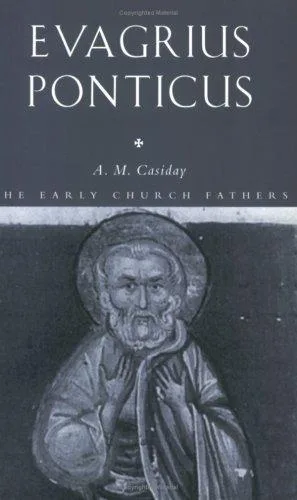
Evagrius Ponticus
 83
83

Evagrius Ponticus
This collection presents Evagrius Ponticus not as a saintly figure, but as a rigorous intellectual confronting the human condition from within the nascent Christian monastic movement. The strength lies in its directness; Evagrius does not shy away from the stark, almost clinical analysis of the 'logismoi' that plague the ascetic. His categorization of these inner disturbances, particularly 'acedia'—that soul-crushing ennui—feels remarkably prescient. A limitation, however, is the inherent abstraction; without significant prior knowledge of 4th-century monastic practices and Neoplatonic underpinnings, the text can appear dense. The section detailing the ascent of the mind beyond material distractions, aiming for pure prayer, serves as a powerful, albeit challenging, demonstration of his philosophical depth.
Evagrius offers a potent, unvarnished look at spiritual warfare.
📝 Description
83
### What It Is Evagrius Ponticus's collected works, as presented in this 1980 edition, offer a foundational text for understanding early Christian monasticism and its engagement with philosophical thought. The compilation focuses on his ascetical and contemplative writings, particularly those structured around the concept of 'logismoi' (thoughts or passions) and the pursuit of *apatheia* (unchangeable calm).
### Who It's For This volume is essential for scholars of patristics, early Christian mysticism, and the history of asceticism. It will also appeal to serious practitioners of contemplative prayer seeking to understand the historical roots of their tradition, particularly those interested in the desert fathers and mothers and their rigorous spiritual disciplines.
### Historical Context Written in the late 4th century CE, Evagrius's work emerged during a period of intense philosophical and religious ferment. As a disciple of Gregory of Nazianzus and later associated with Origenist circles, Evagrius synthesized Neoplatonic ideas with Christian doctrine. His teachings, particularly those concerning the nature of demons and the structure of the cosmos, later led to controversy and his condemnation at the Council of Chalcedon in 553 CE, though his ascetical principles retained influence.
### Key Concepts The core of Evagrius's teaching revolves around the 'eight evil thoughts' or 'demons' that afflict the mind: gluttony, lust, avarice, sadness, anger, acedia (sloth/despair), vainglory, and pride. He provides a systematic approach to recognizing and overcoming these through prayer, fasting, and intellectual vigilance, aiming for a state of pure prayer and union with God.
💡 Why Read This Book?
• Gain a nuanced understanding of the 'eight evil thoughts' as detailed by Evagrius, moving beyond simplistic interpretations of sin to a psychological framework for spiritual struggle. • Grasp the concept of *apatheia*, a state of unshakeable inner calm and freedom from passions, as a goal of early Christian contemplation, as outlined in his ascetical works. • Explore the historical synthesis of Neoplatonic philosophy and Christian asceticism, understanding how Evagrius engaged with figures like Plotinus in his framework for the ascent of the soul.
⭐ Reader Reviews
Honest opinions from readers who have explored this book.
❓ Frequently Asked Questions
What are the "eight evil thoughts" according to Evagrius Ponticus?
Evagrius identified eight primary negative thoughts or passions: gluttony, lust, avarice, sadness, anger, acedia (a form of spiritual sloth or despair), vainglory, and pride. He viewed these as obstacles to spiritual progress.
What is *apatheia* in the context of Evagrius's teachings?
*Apatheia* refers to a state of inner stillness, freedom from emotional disturbance, and unshakeable calm. It is the goal of ascetic practice, allowing the mind to achieve pure prayer.
When did Evagrius Ponticus live and write?
Evagrius Ponticus lived approximately from 345 to 399 CE. His writings reflect the spiritual and intellectual climate of the late 4th century.
Was Evagrius Ponticus condemned by the Church?
Yes, some of Evagrius's teachings, particularly concerning Origenist ideas and the nature of demons, were condemned posthumously at the Fifth Ecumenical Council in 553 CE.
How did Neoplatonism influence Evagrius?
Evagrius incorporated Neoplatonic concepts, such as the hierarchy of being and the ascent of the soul through intellectual purification, into his Christian framework for spiritual development.
What role did 'logismoi' play in his thought?
'Logismoi' (Greek for thoughts or reasonings) are the fundamental mental phenomena Evagrius analyzed. He saw them as the seeds of passions and actively sought to transform or neutralize harmful ones.
🔮 Key Themes & Symbolism
The Eight Evil Thoughts
This compilation meticulously details Evagrius's systematic analysis of the 'logismoi,' or evil thoughts, which he identified as the primary obstacles to spiritual progress. These are not mere temptations but deeply ingrained patterns of the mind: gluttony, lust, avarice, sadness, anger, acedia, vainglory, and pride. Evagrius offers a rigorous method for recognizing, confronting, and ultimately neutralizing these inner adversaries through vigilant prayer and ascetic discipline, aiming to purify the intellect and prepare the soul for divine union.
Apatheia and Pure Prayer
Central to Evagrius's ascetical project is the attainment of *apatheia*, a state of emotional equanimity and freedom from the disturbance of passions. This is not apathy but a profound inner stillness that allows the mind to achieve 'pure prayer'—a direct, unmediated communion with God. The work outlines the arduous path to this state, emphasizing the role of detachment from worldly concerns and the cultivation of constant, focused prayer as essential practices for spiritual liberation.
The Gnostic Ascent of the Soul
Drawing heavily on Neoplatonic philosophy, Evagrius presents a model of the soul's journey back to its divine source. This involves an intellectual and spiritual ascent, moving from the material world and its distractions towards the contemplation of divine realities. His cosmology often involves angelic hierarchies and demonic forces, reflecting a worldview common in late antiquity, where understanding these spiritual powers is crucial for navigating the inner life.
Monastic Discipline and Practice
The writings serve as a practical manual for the solitary monk. Evagrius stresses the importance of renunciation, fasting, manual labor, and constant prayer as the tools for spiritual warfare. He addresses the psychological challenges faced by ascetics, particularly the pervasive spiritual dryness known as acedia, offering concrete strategies for overcoming such states and maintaining fervor in the pursuit of God amidst the rigmarole of daily monastic existence.
💬 Memorable Quotes
“The mind is tormented by the logismoi, but it can also become a monk and achieve knowledge of God.”
— This highlights Evagrius's dualistic view of the mind: it is the battleground for destructive thoughts, yet also the very instrument capable of achieving spiritual enlightenment and divine understanding.
“Do not think that the demons are the cause of all evil, but rather that they exploit the passions within you.”
— This emphasizes personal responsibility in spiritual struggle. While external forces (demons) exist, they gain power through pre-existing inner weaknesses or 'passions' within the individual.
“A monk who has not been tempted is like a soldier who has not seen battle.”
— This aphorism underscores Evagrius's belief that temptation and struggle are integral to spiritual development. True spiritual strength is forged through enduring and overcoming these trials.
“When you are praying, you are speaking to God. When you are meditating on the logismoi, God is speaking to you.”
— This suggests that even the analysis of negative thoughts, when done with spiritual intent, can become a form of divine communication, revealing the nature of inner obstacles and the path to overcoming them.
“The goal is not to eradicate the logismoi, but to prevent them from becoming passions.”
— This clarifies Evagrius's nuanced approach. Thoughts are natural; the danger lies in allowing them to take root and develop into ingrained emotional states or habitual behaviors that hinder spiritual progress.
🌙 Esoteric Significance
Tradition
Evagrius Ponticus stands at the intersection of early Christian asceticism and Hellenistic philosophy, particularly Neoplatonism. While firmly rooted in Christian monasticism, his systematic approach to the inner life, the ascent of the soul, and the purification of the intellect draws heavily from philosophical traditions. He represents a Gnostic-tinged current within Christianity, focusing on gnosis (knowledge) achieved through rigorous spiritual practice and intellectual discipline, aiming for a direct, unmediated experience of the divine.
Symbolism
The 'eight evil thoughts' (logismoi) function as symbolic representations of the soul's potential for deviation from its divine origin. Each thought—gluttony, lust, avarice, sadness, anger, acedia, vainglory, pride—symbolizes a specific mode of attachment to the material world or the ego. The concept of 'pure prayer' itself symbolizes the soul's ultimate state of unadulterated focus on God, stripped of all intermediate distractions and self-consciousness.
Modern Relevance
Contemporary contemplative traditions, particularly within Christian mysticism and mindfulness practices, continue to draw from Evagrius's insights. His detailed analysis of mental states and the cultivation of inner stillness offers a framework for modern psychological and spiritual exploration. Thinkers and practitioners interested in the history of consciousness, the philosophy of mind, and the practical application of ancient spiritual disciplines find his work directly relevant to understanding and managing the inner life.
👥 Who Should Read This Book
• Ascetical practitioners seeking historical depth: Those engaged in rigorous spiritual disciplines will find Evagrius's systematic approach to overcoming inner obstacles, particularly his analysis of the 'eight evil thoughts,' invaluable. • Scholars of Patristics and Early Christianity: Students of the desert fathers, monasticism, and the development of Christian theology will benefit from this foundational text and its historical context. • Philosophers of Mind and Consciousness: Individuals interested in the historical intersections of philosophy and spirituality will find Evagrius's exploration of the intellect, perception, and the nature of thought particularly engaging.
📜 Historical Context
Evagrius Ponticus composed his influential writings in the late 4th century CE, a period when Christian monasticism was solidifying its practices and intellectual foundations. He operated within a vibrant, often contentious, intellectual milieu, influenced by his teacher Gregory of Nazianzus and the broader currents of Hellenistic philosophy, particularly Neoplatonism. His work synthesized these philosophical concepts with the ascetic ideals of Egyptian desert monasticism. However, his association with Origenist theology and certain cosmological views led to significant controversy. His teachings were posthumously condemned at the Council of Chalcedon in 553 CE, a reception event that highlights the theological debates of the era. Contemporaries like John Cassian, who was deeply influenced by Evagrius, played a crucial role in transmitting his ideas to the Western Church, often adapting them to avoid the controversies that plagued Evagrius himself.
📔 Journal Prompts
The nature of acedia as an obstacle to pure prayer.
Evagrius's framework for confronting the eight evil thoughts.
The relationship between Neoplatonic ascent and Christian contemplation.
The practice of vigilance in the face of logismoi.
Achieving *apatheia* through spiritual discipline.
🗂️ Glossary
Logismoi
Greek term for thoughts, reasonings, or mental impulses. Evagrius categorized these into eight primary 'evil thoughts' that disturb the mind and hinder spiritual progress.
Apatheia
A state of inner stillness, emotional equilibrium, and freedom from passions. It is the goal of ascetic practice, allowing for unhindered prayer and contemplation.
Pure Prayer (Euche)
The highest form of prayer, characterized by direct, unmediated communion with God, free from distractions of thought, emotion, or imagination.
Acedia
A complex spiritual malaise often translated as sloth, boredom, or despair. It represents a profound weariness and disengagement from spiritual effort.
Asceticism
A discipline of rigorous self-denial and self-control, practiced for spiritual growth. It involves practices like fasting, prayer, and renunciation of worldly comforts.
Neoplatonism
A school of philosophy originating with Plotinus, emphasizing the transcendent One, the descent of the soul, and the ascent back to the divine through intellectual purification.
Demons (Daimones)
In Evagrius's cosmology, these are spiritual forces that exploit the passions within humans. He also classified them according to the 'evil thoughts' they represent.







![Tales of Mystery and Imagination [29 stories]](/img/thumb/tales-of-mystery-and-imagination-29-stories-edgar-allan-poe-397462.webp)