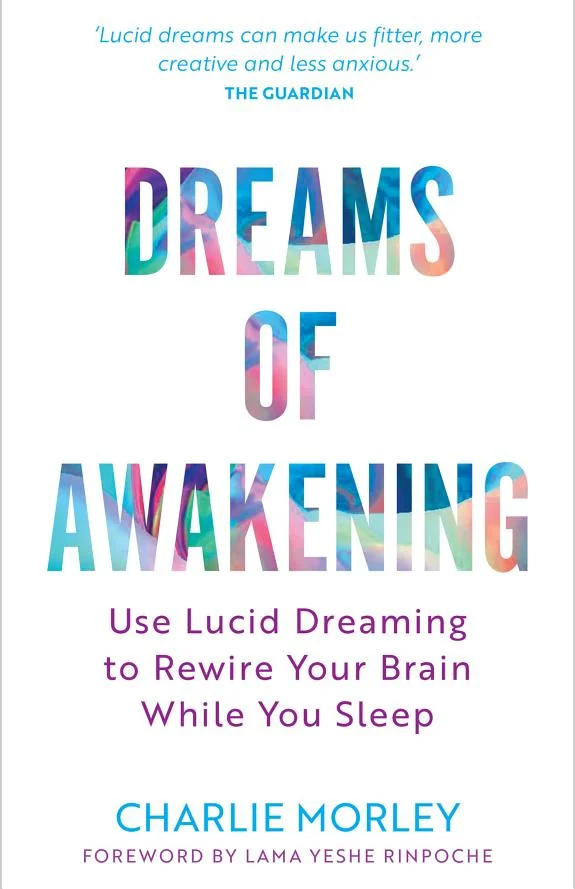
Dreams of Awakening (Revised Edition)
 81
81

Dreams of Awakening (Revised Edition)
Charlie Morley's revised *Dreams of Awakening* offers a more robust framework for understanding and practicing lucid dreaming than many popular guides. By grounding techniques in both Western psychology and Tibetan Buddhist dream yoga, Morley provides a dual perspective that enriches the practice. The inclusion of recent scientific research, particularly concerning its therapeutic applications for anxiety and nightmares, is a significant strength. However, the revised edition could benefit from more detailed case studies illustrating the therapeutic applications, moving beyond general descriptions. A particularly insightful section discusses the concept of 'dream yoga' as a path to spiritual insight, linking the altered state to waking awareness. While the book is accessible, its depth may require dedicated study for full assimilation. Ultimately, *Dreams of Awakening* serves as a valuable, scientifically-informed manual for conscious dream exploration.
📝 Description
81
Charlie Morley's Dreams of Awakening (Revised Edition) presents lucid dreaming as a potent tool for psychological and spiritual development.
This revised edition of Charlie Morley's work integrates modern scientific understanding with established Western lucid dreaming practices and Tibetan Buddhist dream yoga. It functions as a guide to achieving and using conscious awareness while dreaming, detailing both the theory and practical methods involved. The book examines how these dream practices can contribute to personal growth and improve overall well-being.
Readers will find clear instructions for those new to lucid dreaming, alongside avenues for experienced practitioners to deepen their knowledge and explore advanced applications. The book is also relevant for therapists and mental health professionals seeking complementary methods for addressing psychological distress and healing trauma. It addresses individuals interested in psychology, consciousness studies, and contemplative practices who wish to explore their inner world through altered states of consciousness.
This book connects the long history of dream exploration found in shamanic traditions and ancient philosophies with the modern scientific study of lucid dreaming, which gained momentum in the 20th century. It specifically draws from Tibetan Buddhism's millennia-old tradition of dream yoga, which aims for clarity and spiritual insight within the dream state. Morley's approach bridges these diverse streams, acknowledging influences from early dream researchers and contemporary neuroscientists.
💡 Why Read This Book?
• Gain practical methods for inducing and maintaining lucidity in dreams, directly applicable from techniques described in the book's chapters on "Reality Testing" and "Dream Catalysts. • Learn to utilize lucid dreams for therapeutic purposes, such as processing anxiety or nightmares, as detailed in the revised sections on "Trauma Resolution" and "Nightmare Intervention." • Explore the intersection of Western science and Tibetan Buddhist dream yoga, a unique synthesis presented through Morley's integration of concepts like "Clear Light" and neuroscientific findings from the 2024 revision.
⭐ Reader Reviews
Honest opinions from readers who have explored this book.
❓ Frequently Asked Questions
What is the primary focus of the revised edition of Dreams of Awakening?
The revised edition of Charlie Morley's *Dreams of Awakening* focuses on lucid dreaming as a practice for psychological and spiritual growth, integrating updated scientific research and practical techniques from Western and Tibetan Buddhist traditions.
How does the book address the therapeutic applications of lucid dreaming?
It includes new sections detailing the use of lucid dreaming to aid in the treatment of anxiety, panic attacks, nightmares, and trauma healing, supported by recent scientific studies.
What is the connection between lucid dreaming and Tibetan Buddhism in this book?
Morley explores the parallels and synergistic potential between Western lucid dreaming techniques and the ancient Tibetan Buddhist practice of dream yoga, often referred to as 'the yoga of the dream state'.
Who would benefit most from reading Dreams of Awakening?
Individuals interested in self-exploration, consciousness studies, psychology, and contemplative practices, as well as those seeking tools for personal healing and spiritual development, will find this book beneficial.
What makes this revised edition different from the original?
The revised edition incorporates up-to-date scientific research and includes new material on therapeutic applications, making the content more relevant and comprehensive for contemporary readers.
What is 'dream yoga' as discussed in the book?
Dream yoga, within the context of the book, refers to the Tibetan Buddhist tradition of utilizing the dream state for spiritual insight and realizing the nature of consciousness, often integrated with lucid dreaming practices.
🔮 Key Themes & Symbolism
Consciousness in Sleep
The book posits that consciousness does not cease during sleep but rather shifts into different states. It details how lucid dreaming allows for the maintenance of awareness and volition within these altered states. By engaging with the dream environment consciously, practitioners can explore the nature of mind and reality from a unique vantage point, challenging the perceived boundary between waking and sleeping consciousness. This theme is central to understanding the potential for growth and insight offered by the practice.
Therapeutic Dreamwork
A significant focus of the revised edition is the application of lucid dreaming for psychological healing. Morley outlines methods for confronting and transforming nightmares, processing trauma by re-scripting dream scenarios, and managing anxiety through conscious engagement with dream imagery. This approach views dreams not as passive occurrences but as active arenas for therapeutic intervention and self-healing, supported by emerging psychological research.
Bridging Traditions
Morley artfully synthesizes Western scientific approaches to lucid dreaming, exemplified by researchers like Stephen LaBerge, with the profound spiritual insights of Tibetan Buddhist dream yoga. This integration highlights common ground and offers a more holistic understanding of dream states. The book emphasizes that both paths, though distinct in origin, aim to uncover deeper truths about consciousness and reality.
Embodied Awareness
The practice of lucid dreaming encourages a heightened sense of embodied awareness, even within the non-physical realm of the dream. Techniques often involve focusing on bodily sensations within the dream, which helps to stabilize lucidity and deepen the experience. This concept extends to integrating the insights gained from dreams into waking life, fostering a more present and integrated sense of self.
💬 Memorable Quotes
“Lucid dreaming offers a direct pathway to understanding the nature of mind.”
— This statement encapsulates the core argument for lucid dreaming as more than just a curious phenomenon. It suggests that by becoming aware within dreams, we gain a unique, experiential insight into how our consciousness constructs reality.
“The dream state is an opportunity for profound psychological healing.”
— This highlights the therapeutic potential of lucid dreaming. It reframes dreams as a space where unresolved issues or traumas can be consciously addressed and potentially transformed, offering a powerful tool for personal growth.
“Awareness cultivated in dreams can permeate waking life.”
— This emphasizes the integration aspect. The lucidity and insight gained while dreaming are not meant to be confined to sleep but are tools to enhance clarity, presence, and understanding in our everyday waking existence.
“Tibetan dream yoga provides ancient frameworks for exploring consciousness.”
— This points to the rich historical and spiritual lineage of dream practices. It suggests that established traditions offer profound wisdom that complements modern scientific investigations into the dream state.
“Scientific research increasingly validates the benefits of lucid dreaming.”
— This assertion underscores the book's commitment to evidence-based practices. It reassures readers that the techniques discussed are not purely speculative but are supported by contemporary studies, particularly regarding mental health.
🌙 Esoteric Significance
Tradition
This work significantly draws from and contributes to the modern esoteric exploration of consciousness, particularly through its synthesis of Western lucid dreaming techniques and Tibetan Buddhist dream yoga. It aligns with traditions that view altered states of consciousness as pathways to spiritual realization and deeper self-understanding, moving beyond purely psychological interpretations to embrace metaphysical implications.
Symbolism
Within the book, the dreamscape itself functions as a primary symbol, representing the boundless potential of the mind and the subconscious. Specific motifs like 'falling' can symbolize loss of control, while 'flying' often represents liberation and expanded perspective. The concept of the 'Clear Light' from Tibetan Buddhism is a potent symbol of pure, unconditioned awareness, which lucid dreaming aims to access.
Modern Relevance
Morley's approach resonates with contemporary movements in transpersonal psychology, mindfulness-based therapies, and consciousness studies. Thinkers and practitioners exploring non-ordinary states for personal growth, healing, and spiritual insight, such as those involved in psychedelic-assisted therapy research or advanced meditation practices, find valuable parallels and practical applications in his work.
👥 Who Should Read This Book
• Individuals interested in exploring the frontiers of consciousness, seeking to understand the nature of mind beyond waking states. • Practitioners of meditation or contemplative disciplines looking to deepen their practice through the unique insights offered by dream yoga and lucid dreaming. • Those experiencing nightmares, anxiety, or trauma who are seeking alternative therapeutic approaches that leverage the power of the subconscious mind.
📜 Historical Context
The study and practice of lucid dreaming gained significant momentum in the late 20th century, spurred by researchers like Stephen LaBerge, whose work in the 1980s brought empirical validation to the phenomenon. Concurrently, Tibetan Buddhism had long cultivated sophisticated practices of dream yoga, documented over centuries. Charlie Morley's *Dreams of Awakening* emerges within this fertile ground, bridging the empirical rigor of Western science with the contemplative depth of Eastern spiritual traditions. While figures like J.B. Rhine had explored psychic phenomena earlier, the specific focus on conscious dreaming and its therapeutic potential intensified in the latter half of the century. The book's revised edition, published in 2024, situates itself within a contemporary scientific landscape increasingly open to exploring consciousness, offering a synthesis that acknowledges both historical precedents and modern advancements, contrasting with earlier, more purely mystical or speculative accounts of dream exploration.
📔 Journal Prompts
Reflect on the concept of 'dream re-scripting' and how it might apply to a recurring anxiety dream.
Consider the parallels between reality testing in lucid dreaming and mindfulness practices in waking life.
Explore the potential of dream incubation for problem-solving, as discussed in the text.
Analyze the symbolic meaning of a recent dream, referencing the book's approach to dream interpretation.
Contemplate the 'Clear Light' symbol and its potential connection to moments of clarity in your waking awareness.
🗂️ Glossary
Lucid Dreaming
The state of being aware that one is dreaming while the dream is still in progress, allowing for conscious interaction with the dream environment.
Dream Yoga
A traditional Tibetan Buddhist practice focused on maintaining consciousness and spiritual awareness within the dream state, often aiming for insight and liberation.
Reality Testing
Techniques practiced during waking life to develop a habit of questioning one's reality, which can then carry over into dreams, triggering lucidity.
Dream Re-scripting
A therapeutic technique within lucid dreaming where one consciously alters the narrative or outcome of a disturbing dream to resolve underlying issues.
Nightmare Intervention
Strategies used in lucid dreams to actively confront, transform, or end a nightmare, reducing its negative impact.
Clear Light
A fundamental concept in Tibetan Buddhism referring to the subtlest, most fundamental nature of consciousness, often sought during deep sleep or the dying process.
Dream Incubation
The practice of setting an intention to dream about a specific topic or problem before sleep, in the hope of receiving insight or a solution.