Dreaming through Darkness
 82
82

Dreaming through Darkness
Charlie Morley's Dreaming through Darkness offers a compelling framework for confronting what lies beneath the surface of conscious awareness. The book's strength lies in its pragmatic synthesis of lucid dreaming techniques with Tibetan Buddhist insights, moving beyond theoretical discussions of the Shadow. Morley's explanation of how the Shadow, far from being purely negative, can be a fount of creativity and power is particularly well-articulated. I found his practical exercises, especially those linking dream imagery to waking emotional states, to be exceptionally useful. However, the book occasionally leans into a prescriptive tone that might feel limiting for those with deeply entrenched psychological patterns; the assertion that 'this power will remain untapped' until faced can feel a touch absolute. A passage discussing the 'divine spirit' within the Shadow offers a particularly striking, if challenging, perspective. Ultimately, Dreaming through Darkness provides a valuable, actionable toolkit for personal integration.
📝 Description
82
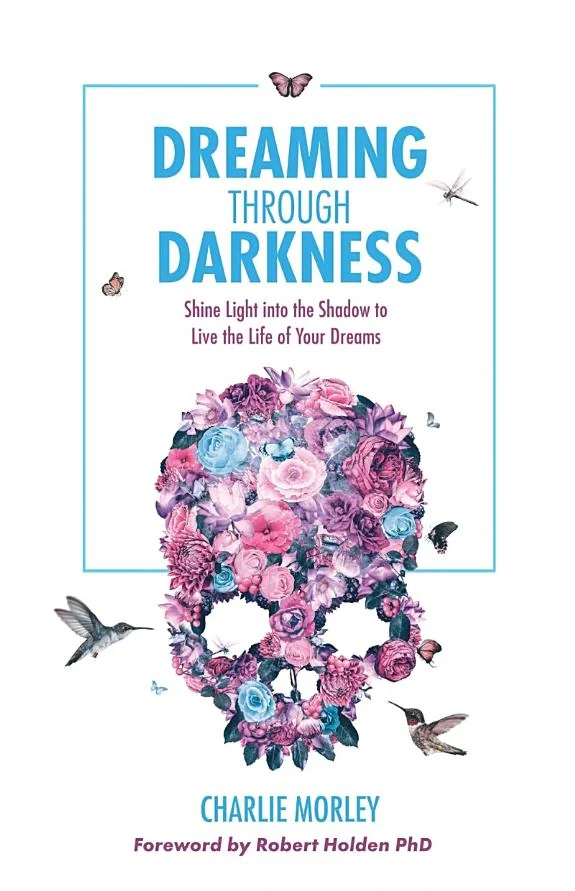
Charlie Morley's 2017 book, Dreaming through Darkness, offers a method for integrating the unconscious.
Dreaming through Darkness, published in 2017, presents a methodology for integrating unconscious aspects of the self. The book posits the Shadow not as a negative force, but as a source of power and creativity. Morley moves beyond basic shadow work by using specific, actionable techniques drawn from contemplative traditions. The approach provides a structured way to confront and reclaim disowned parts of the psyche, aiming for greater wholeness and the unlocking of hidden capacities.
This book is for individuals ready to engage with challenging inner aspects. It appeals to practitioners of lucid dreaming and dream analysis seeking deeper meaning. Those interested in Tibetan Buddhist meditation and concepts of consciousness will find its approach resonant. It is also suitable for anyone on a personal development path who feels hindered by hidden aspects of themselves. Engagement requires a willingness to explore uncomfortable truths for the sake of growth.
Published in 2017, Dreaming through Darkness emerged during a time of growing interest in integrating Eastern contemplative practices with Western therapeutic models. While Jungian psychology had long explored the concept of the Shadow, Morley's work applies lucid dreaming and Tibetan Buddhist techniques directly. Its approach bridges depth psychology and contemporary spiritual practice, reflecting a synthesis of these traditions for Western audiences.
💡 Why Read This Book?
• You will learn specific lucid dreaming techniques to directly engage with your hidden Shadow aspects, a method distinct from purely analytical dream interpretation, as detailed in chapters on dream-work. • You will gain a practical understanding of how Tibetan Buddhist concepts, such as the nature of mind, can reframe your relationship with fear and shame, moving beyond Western psychological paradigms. • You will feel empowered by concrete exercises designed to unlock creativity and personal power by consciously integrating disowned parts of yourself, moving from untapped potential to active manifestation.
⭐ Reader Reviews
Honest opinions from readers who have explored this book.
❓ Frequently Asked Questions
What is the primary definition of the Shadow in Charlie Morley's 'Dreaming through Darkness'?
In 'Dreaming through Darkness,' the Shadow is defined not as inherently negative but as the disowned part of the psyche. It encompasses hidden fears, shame, and wounds, but also divine spirit, beauty, and talents, acting as a source of untapped creativity and power.
What specific practices does 'Dreaming through Darkness' draw upon?
The book integrates practical exercises from lucid dreaming, dream-work, Tibetan Buddhism, and mindfulness meditation to facilitate the exploration and integration of the Shadow.
When was 'Dreaming through Darkness' first published?
'Dreaming through Darkness' by Charlie Morley was first published on May 30, 2017.
How does this book differ from traditional Jungian shadow work?
While Jungian psychology explores the Shadow, Morley's work emphasizes direct engagement through lucid dreaming and Tibetan Buddhist contemplative methods, offering actionable techniques for integration rather than solely analytical exploration.
Who is the author, Charlie Morley, and what is his background?
Charlie Morley is a contemporary author and teacher who bridges lucid dreaming, mindfulness, and Buddhist philosophy. His work often focuses on integrating these traditions for psychological and spiritual growth, drawing from his extensive practice and study.
What is the main benefit of bringing the Shadow into the light, according to the book?
Bringing the Shadow into the light, as discussed in the book, allows its inherent power to be accessed and utilized. This integration is presented as crucial for reaching one's full potential and unlocking creativity.
🔮 Key Themes & Symbolism
The Shadow as Power Source
Morley reframes the Shadow not as a dark void but as a reservoir of potent energy. This includes suppressed creativity, hidden talents, and even spiritual aspects of the self. By confronting and integrating these disowned parts, individuals can reclaim this power. The book argues that this untapped potential is directly linked to our capacity for innovation and authentic self-expression, moving beyond mere psychological integration towards spiritual actualization.
Lucid Dreaming for Integration
The work champions lucid dreaming as a direct interface with the unconscious psyche, specifically the Shadow. Unlike passive dream recall, lucid dreaming allows for active engagement with dream content, enabling the dreamer to confront, understand, and reconcile with Shadow figures or themes. This active participation transforms the dream state into a potent laboratory for psychological healing and self-discovery, facilitating a conscious dialogue with the deeper self.
Buddhist Psychology and the Mind
Drawing heavily from Tibetan Buddhism, the book applies principles of mindfulness and the nature of consciousness to shadow work. Concepts such as impermanence and the illusory nature of the self provide a philosophical backdrop for understanding how we construct and cling to our perceived identities. This perspective encourages a detached yet compassionate observation of Shadow material, fostering equanimity and reducing the fear associated with confronting difficult inner states.
Holistic Self-Actualization
The ultimate aim presented is holistic self-actualization, achieved by integrating all aspects of the self, including the Shadow. This process leads to a more complete and authentic existence, where hidden potentials are realized and inner conflicts are resolved. The book suggests that this integration is not just a therapeutic outcome but a spiritual imperative, leading to a more vibrant and purposeful life.
💬 Memorable Quotes
“The Shadow is the part of us made up of all that we hide from others: our shame, our fears and our wounds, but also our divine spirit, our blinding beauty and our hidden talents.”
— This quote establishes the book's core premise: the Shadow is dual-natured, containing both perceived negatives and potent positives. It challenges the common view of the Shadow as solely detrimental, highlighting its potential as a source of strength and unique gifts.
“The Shadow is not bad – in fact it is the source of our creativity and power – but until we bring it into the light this power will remain untapped and our full potential unreached.”
— This statement emphasizes the crucial link between acknowledging the Shadow and unlocking personal power. It suggests that conscious integration is the key to accessing latent abilities and fulfilling one's complete potential, framing shadow work as an essential step towards self-mastery.
“Using practical exercises sourced from lucid dreaming and dream-work, Tibetan Buddhism and mindfulness meditation, this book explores how to...”
— This excerpt outlines the methodological foundation of the book. It highlights the unique synthesis of diverse contemplative and psychological practices, signaling a practical, multi-faceted approach to understanding and engaging with the inner self.
“Interpretation: The Shadow holds immense, untapped power waiting for conscious engagement.”
— This interpretation underscores the active role required from the reader. It suggests that the Shadow's power isn't passive but requires conscious effort, interaction, and integration through the methods provided in the book to become a manifest force.
“Interpretation: Integrating the Shadow is essential for realizing one's full potential.”
— This concept emphasizes that wholeness is achieved not by eradicating the Shadow, but by integrating it. It positions this integration as a non-negotiable step for anyone seeking to achieve their complete capabilities and live a more authentic life.
🌙 Esoteric Significance
Tradition
This work sits at the intersection of Western depth psychology (particularly Jungian concepts of the Shadow) and Tibetan Buddhist contemplative traditions. It departs from purely analytical approaches by incorporating experiential techniques like lucid dreaming. Within esoteric frameworks, it aligns with paths that emphasize direct experience and the integration of 'lower' aspects of the psyche into a more realized whole, echoing alchemical principles of transformation.
Symbolism
The 'Darkness' itself serves as a primary symbol, representing the unconscious, the unknown, and the disowned aspects of the psyche. Dreams, particularly lucid dreams, function as symbolic landscapes where these hidden elements can manifest and be engaged with. The act of 'dreaming through' suggests a process of conscious navigation and transformation, where symbols encountered in the dream state are not merely passively observed but actively worked with for integration.
Modern Relevance
Morley's synthesis is highly relevant to contemporary spiritual and therapeutic movements. It informs practices in somatic experiencing, mindfulness-based stress reduction (MBSR), and psychedelic-assisted therapy, all of which explore altered states and unconscious material. His work is often cited by teachers in the lucid dreaming community and by those seeking to integrate Buddhist philosophy with modern self-help methodologies, demonstrating its appeal to a generation seeking holistic approaches to well-being.
👥 Who Should Read This Book
• Individuals exploring their unconscious mind: Those interested in dream analysis, lucid dreaming, or Jungian psychology will find concrete tools for direct engagement with their inner world. • Buddhist practitioners seeking practical application: Those familiar with Buddhist concepts of mind and consciousness can use this book to apply these principles to shadow integration in a tangible way. • Personal development seekers facing blocks: Anyone feeling stuck or sensing untapped potential will benefit from the book's methods for reclaiming disowned aspects of themselves for greater creativity and power.
📜 Historical Context
Dreaming through Darkness, published in 2017, arrived during a period of burgeoning interest in the practical application of contemplative practices for psychological well-being. This era saw a significant cross-pollination between Western psychology and Eastern spiritual traditions, particularly Buddhism and mindfulness. While Carl Jung had extensively theorized the Shadow in the mid-20th century, Morley's work distinguished itself by its concrete application of lucid dreaming techniques, a practice gaining traction beyond niche circles. Contemporary authors like Tara Brach were popularizing Buddhist psychology, making concepts of non-judgmental awareness accessible. Unlike purely academic explorations, Morley's book offered a direct, experiential pathway, bridging the gap between psychological theory and embodied practice. Its emergence coincided with a growing public appetite for tools that promised deeper self-understanding and personal empowerment outside of traditional therapeutic settings.
📔 Journal Prompts
Reflect on the 'divine spirit' aspect of your Shadow.
Map the relationship between your waking fears and dream imagery.
Identify one hidden talent Morley suggests resides in the Shadow.
Analyze the power dynamics within your dream encounters.
Consider how Buddhist concepts of mind alter your view of shame.
🗂️ Glossary
The Shadow
In this context, the Shadow refers to the disowned parts of the psyche, encompassing repressed fears, shame, and wounds, but also hidden talents and spiritual potential. It is presented as a source of untapped power.
Lucid Dreaming
A state of consciousness where the dreamer is aware they are dreaming and can exert varying degrees of control over the dream narrative and its elements. Used here as a tool for direct engagement with the unconscious.
Dream-work
The practice of analyzing and interpreting dream content to gain insight into the unconscious mind. Morley expands this to include active engagement and transformation within the dream state.
Tibetan Buddhism
A major branch of Buddhism originating in Tibet, characterized by specific philosophical teachings, meditative practices, and a rich symbolic system, particularly regarding the nature of consciousness and reality.
Mindfulness Meditation
A contemplative practice focused on cultivating non-judgmental awareness of the present moment, including thoughts, feelings, and bodily sensations. It serves as a foundational practice for observing Shadow material.
Integration
The psychological and spiritual process of bringing disowned or unconscious aspects of the self into conscious awareness and acceptance, leading to greater wholeness and functionality.
Potential Unreached
Refers to the full capacity and abilities of an individual that remain dormant or inaccessible due to the repression or non-acknowledgment of Shadow aspects.