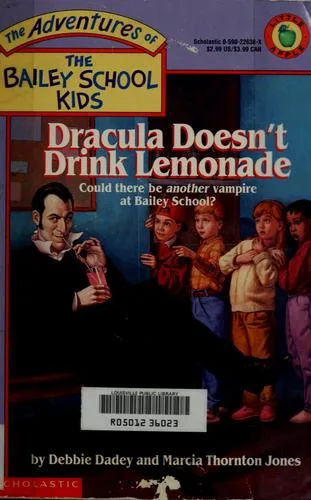
Dracula doesn't drink lemonade
 82
82

Dracula doesn't drink lemonade



Dadey and Jones’s entry into the Bailey School Kids series, 'Dracula Doesn't Drink Lemonade,' sidesteps the expected frights with a charmingly mundane take on the Prince of Darkness. The strength lies in its gentle subversion of vampire lore; the titular Dracula’s aversion to lemonade is a wonderfully absurd detail that immediately disarms young readers. However, the plot, while functional, occasionally feels a bit too slight, moving from one predictable encounter to the next without much dramatic tension. A passage describing the children’s attempts to understand why a vampire might dislike a common beverage highlights the book's whimsical approach, but the resolution feels somewhat abrupt. Despite this, the book succeeds in its primary goal: making the concept of a vampire approachable and even humorous for a new generation.
📝 Description
82
### What It Is
'Dracula Doesn't Drink Lemonade' is a children's novel that playfully subverts classic vampire tropes. Authored by Debbie Dadey and Marcia Thornton Jones, the book offers a lighthearted entry into the Gothic genre for younger readers. It introduces characters and scenarios that engage with the familiar folklore of vampires but reframes them within an accessible, age-appropriate narrative.
### Who It's For
This book is primarily aimed at early chapter book readers, typically aged 6-9, who are beginning to explore more complex narrative structures and themes. It serves as an excellent introduction to characters often associated with mystery and the supernatural, presented without the frightening elements of adult horror literature. Families looking for shared reading experiences that bridge popular culture with early literary engagement will find this title suitable.
### Historical Context
Published in 1995, 'Dracula Doesn't Drink Lemonade' emerged during a period when children's literature saw a rise in series that revisited established characters and genres with modern sensibilities. The mid-1990s were also a time of increased interest in fantasy and supernatural themes across media, making this an opportune moment for a playful take on vampire lore. The book belongs to the 'The Adventures of the Bailey School Kids' series, which began its run in 1994.
### Key Concepts
The central concept revolves around the deconstruction of the vampire mythos for a young audience. It presents Dracula not as a terrifying monster, but as a character with peculiar habits, such as a preference for blood over lemonade. This approach encourages critical thinking about stereotypes and the nature of fear, reframing potentially intimidating figures into approachable characters. The narrative explores themes of friendship and acceptance, as the children in the story interact with and understand the peculiar vampire.
💡 Why Read This Book?
• You will learn how classic horror figures can be recontextualized for children, specifically how the vampire mythos is adapted in 'Dracula Doesn't Drink Lemonade' by focusing on peculiar, non-threatening habits rather than monstrous deeds. • You will feel a sense of playful curiosity as the Bailey School Kids investigate unusual occurrences, fostering an early appreciation for critical thinking and questioning stereotypes, as seen in their efforts to understand Dracula's dietary preferences. • You will gain an understanding of early 1990s children's literature trends through this series, which began in 1994, offering a specific example of how popular culture narratives were made accessible to young readers.
why_read
⭐ Reader Reviews
Honest opinions from readers who have explored this book.
❓ Frequently Asked Questions
What age group is 'Dracula Doesn't Drink Lemonade' suitable for?
The book is generally recommended for early chapter book readers, typically between the ages of 6 and 9. It's designed to be engaging and understandable for this age bracket, introducing common folklore in a non-frightening manner.
Who are the authors of 'Dracula Doesn't Drink Lemonade'?
The book was written by Debbie Dadey and Marcia Thornton Jones. They are known for their collaborative work on children's series, including 'The Adventures of the Bailey School Kids'.
What is the main theme of 'Dracula Doesn't Drink Lemonade'?
The central theme involves demystifying the vampire figure for children. It highlights how characters perceived as 'monsters' can have ordinary, even humorous, preferences, encouraging readers to look beyond stereotypes.
Is this book part of a series?
Yes, 'Dracula Doesn't Drink Lemonade' is part of 'The Adventures of the Bailey School Kids' series, which features the same group of children encountering various mysterious figures and situations.
When was 'Dracula Doesn't Drink Lemonade' first published?
The book was first published in 1995, making it a product of mid-1990s children's literature trends that often adapted popular folklore for younger audiences.
Does the book contain scary content for young children?
No, the book is designed to be lighthearted and humorous, not frightening. It playfully reinterprets vampire lore, focusing on absurd details like Dracula's drink preferences rather than traditional horror elements.
🔮 Key Themes & Symbolism
Subverting Vampire Tropes
The narrative playfully dismantles traditional vampire stereotypes by focusing on mundane, almost comical, aspects of the character. Instead of dwelling on bloodlust or eternal damnation, the story highlights Dracula's peculiar dislike for lemonade. This approach makes the figure of Dracula accessible and non-threatening, encouraging young readers to question preconceived notions about 'monsters' and understand that even familiar archetypes can be presented in novel, age-appropriate ways. The book demonstrates how familiar folklore can be adapted for new audiences without losing its essence, merely reframing its presentation.
Curiosity and Investigation
The core of the story involves the young protagonists, the Bailey School Kids, encountering and trying to understand the unusual behavior of the vampire. Their natural curiosity drives the plot as they observe Dracula and attempt to rationalize his peculiar habits. This theme encourages a spirit of inquiry and critical thinking, showing children that it's natural to question the unexplained and seek logical (or in this case, humorously illogical) explanations. The process of investigation itself becomes a learning experience about observation and deduction.
Acceptance of Differences
Through their interactions with Dracula, the children learn to accept individuals who are different from themselves. The vampire's unusual preferences and lifestyle are presented not as flaws, but simply as characteristics that make him unique. This fosters a message of inclusivity and understanding, teaching children that diversity is normal and that judging others based on superficial traits or stereotypes is unproductive. The narrative implicitly promotes empathy by encouraging readers to see the world from another character's perspective.
Humor in the Mundane
The book finds humor in the juxtaposition of the legendary vampire figure with ordinary, everyday situations. Dracula’s specific aversion to lemonade, a common beverage, creates an absurd contrast that generates comedic effect. This theme highlights how humor can be derived from unexpected scenarios and the breaking of established expectations. It teaches young readers that even figures associated with fear or mystery can possess qualities that are relatable or amusingly peculiar, making the narrative engaging and memorable.
💬 Memorable Quotes
“Dracula doesn't drink lemonade.”
— This central line encapsulates the book's premise: taking a well-known figure and giving him a simple, unexpected, and decidedly un-monstrous preference. It serves as the hook for the story and signals the playful subversion of traditional vampire lore for a younger audience.
“The children wondered why he wouldn't drink lemonade.”
— This phrase captures the essence of the Bailey School Kids' investigative approach. Their curiosity about Dracula's peculiar habit drives the plot, showcasing how children naturally seek to understand the world and its inhabitants, even those who seem unusual.
“He looked like a vampire, but he acted strangely.”
— This observation highlights the book's theme of challenging stereotypes. The character visually aligns with vampire expectations, yet his actions defy them, encouraging readers to look beyond appearances and preconceived notions about individuals.
“Maybe he prefers bat-aid.”
— A pun that exemplifies the book's lighthearted and humorous tone. It plays on the expected association of vampires with bats and the common beverage 'Band-Aid,' demonstrating creative wordplay suitable for young readers.
“The children decided to be friends with the vampire.”
— This statement signifies the resolution and the underlying message of acceptance. Despite the character's unusual nature, the children embrace him, promoting themes of inclusivity and friendship across perceived differences.
🌙 Esoteric Significance
Tradition
While not explicitly tied to a specific esoteric lineage like Hermeticism or Gnosticism, 'Dracula Doesn't Drink Lemonade' can be seen as engaging with a modern, secularized form of folklore and myth interpretation. It draws upon the archetype of the vampire, a figure steeped in centuries of occult and supernatural lore, but strips away its darker, more complex metaphysical implications for a juvenile audience. It represents a contemporary approach to myth-making where established figures are repurposed for educational and entertainment ends, functioning as a gateway to understanding archetypes before delving into their more profound esoteric meanings.
Symbolism
The primary 'symbol' in this context is the vampire itself, traditionally representing death, the shadow self, and the primal predatory instinct. Here, Dracula’s symbolism is deliberately muted. His aversion to lemonade, a symbol of refreshment and conventional, non-threatening sustenance, serves to neutralize his traditional menace. The children, representing innocence and burgeoning reason, interact with this de-fanged archetype, symbolizing the process of understanding and integrating potentially frightening concepts in a controlled, non-threatening manner, turning the 'monster' into a subject of curiosity rather than terror.
Modern Relevance
Contemporary children's media frequently engages in similar deconstructions of classic monsters. Shows like 'Hotel Transylvania' echo this book's approach by presenting monsters as relatable characters with everyday problems. This strategy remains relevant for educators and parents seeking to introduce children to cultural figures and narratives in a way that encourages critical thinking about stereotypes and promotes empathy. The book's method of reframing archetypes speaks to modern pedagogical approaches that value curiosity, humor, and the gentle dismantling of fear-based perceptions.
👥 Who Should Read This Book
• Early chapter book readers (ages 6-9) who are beginning to explore stories with a touch of mystery and fantasy, offering a gentle introduction to the vampire archetype. • Parents and educators seeking books that demystify common folklore figures and encourage critical thinking about stereotypes, using humor and relatable scenarios. • Fans of the 'Adventures of the Bailey School Kids' series looking to continue following the group's lighthearted investigations into unusual characters and situations.
📜 Historical Context
Published in 1995, 'Dracula Doesn't Drink Lemonade' emerged within the 'The Adventures of the Bailey School Kids' series, which debuted the previous year. This period saw a surge in children's literature that playfully engaged with established genres and archetypes. Authors like R.L. Stine, with his 'Goosebumps' series (which began in 1992), had already demonstrated the market for age-appropriate spooky stories, creating a landscape where supernatural themes were popular. Dadey and Jones's work distinguished itself by focusing less on outright scares and more on whimsical subversion and gentle humor. While Stine often played with genuine suspense, this book offered a more comedic take, presenting a Dracula whose primary peculiarity was a dislike for lemonade rather than a thirst for blood. This approach catered to an audience seeking familiarity with classic figures but without the more intense frights, reflecting a broader trend of making established folklore accessible and less intimidating for younger readers in the mid-90s.
📔 Journal Prompts
The vampire's preference for blood over lemonade.
The children's strategy for understanding Dracula's habits.
The concept of a 'friendly' vampire.
Comparing the book's Dracula to other fictional vampires.
How stereotypes are challenged in the narrative.
🗂️ Glossary
Vampire
A mythical creature, often depicted as a reanimated corpse, that subsists by feeding on the life essence (typically in the form of blood) of the living. In folklore, vampires are often associated with darkness, immortality, and supernatural powers.
Archetype
A recurring symbol, character type, or narrative pattern that appears across different cultures and time periods. The vampire is a well-known literary and folkloric archetype often representing primal fears or desires.
Subversion
The act of undermining or overthrowing something established, such as expectations or norms. In literature, it involves taking a familiar concept or character and presenting it in an unexpected or contradictory way.
Folklore
The traditional beliefs, customs, and stories of a community, passed through the generations by word of mouth. Vampire legends are a significant part of European folklore.
Stereotype
A widely held but fixed and oversimplified image or idea of a particular type of person or thing. The book challenges the stereotype of the vampire as purely monstrous.
Demystify
To make a topic or concept easier to understand by explaining it clearly. This book demystifies the figure of the vampire for young readers.
Juxtaposition
The act or instance of placing two or more things side by side, often to compare or contrast them or to create an interesting effect. The book juxtaposes the legendary vampire with mundane activities like drinking lemonade.