Dojo
 75
75

Dojo
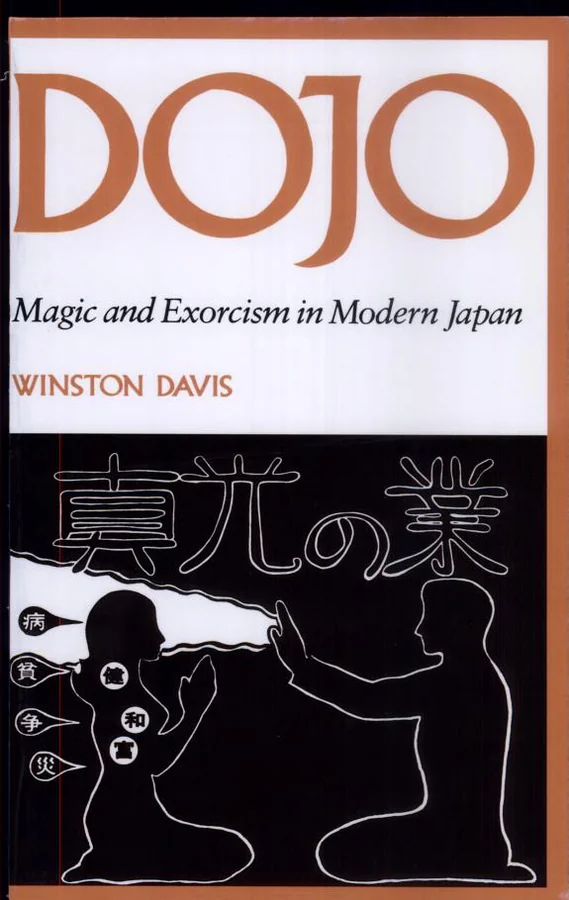
Winston Davis’s "Dojo" avoids the typical hagiography often found in texts discussing martial arts. Instead, it presents a rigorous, almost anthropological, dissection of the dojo as a crucible for both physical discipline and philosophical inquiry. The strength lies in its academic detachment, presenting the evolution of the dojo from its early forms to its modern iterations with clear, evidence-based reasoning. A particularly insightful section details the transition of martial practices from battlefield necessity to formalized training systems. However, the book’s academic tone, while a strength for scholars, might present a barrier for casual enthusiasts seeking a more narrative or motivational account of martial arts lore. The dense prose, while informative, requires sustained attention. Ultimately, "Dojo" serves as an essential, if demanding, historical and philosophical primer for understanding the dojo's enduring cultural significance.
📝 Description
75
### What It Is Dojo, by Winston Davis, first published in 1980, offers a scholarly examination of the origins and development of the martial art and its associated philosophy. Originally presented as a Stanford University Press publication, the book moves beyond a mere historical account to explore the spiritual and cultural underpinnings of the martial arts tradition.
### Who It's For This work is intended for academic researchers in comparative religion, cultural studies, and the history of philosophy. It will also appeal to practitioners of martial arts who seek a deeper understanding of the historical and philosophical roots of their discipline, moving beyond physical technique to explore the underlying worldview.
### Historical Context Published at a time when Western academic interest in Eastern philosophies and practices was burgeoning, "Dojo" emerged as a significant contribution to the scholarly discourse. The early 1980s saw increasing engagement with concepts like Zen Buddhism and its influence on Japanese culture, with figures like D.T. Suzuki having already laid groundwork in earlier decades. Davis's work provided a focused academic lens on a specific, yet culturally rich, aspect of this broader fascination.
### Key Concepts The book systematically unpacks the foundational principles that shaped the "dojo" not just as a physical training space, but as an environment for personal transformation. It examines the integration of ethical codes, spiritual disciplines, and pedagogical methods that have characterized these institutions for centuries. The emphasis is on the "way" (do) as a path of continuous self-cultivation, drawing from a blend of philosophical traditions.
💡 Why Read This Book?
• Gain insight into the philosophical underpinnings of the "do" (way) as a path of self-cultivation, distinct from mere physical training, as explored in the book's analysis of early martial arts philosophy. • Understand the historical shift of martial practices from battlefield applications to structured training systems, a key transition detailed by Davis, offering a new perspective on their evolution. • Appreciate the dojo not just as a physical space but as a pedagogical environment designed for ethical and spiritual development, a concept central to the book's exploration of its societal role.
⭐ Reader Reviews
Honest opinions from readers who have explored this book.
❓ Frequently Asked Questions
When was Winston Davis's "Dojo" first published?
Winston Davis's "Dojo" was first published on June 1, 1980, by Stanford University Press, marking its initial entry into academic discourse.
What academic fields does "Dojo" by Winston Davis contribute to?
"Dojo" contributes significantly to academic fields such as comparative religion, cultural studies, and the history of philosophy, offering a scholarly perspective on martial arts traditions.
What is the primary focus of Winston Davis's "Dojo"?
The book's primary focus is the scholarly examination of the origins, development, and philosophical underpinnings of the martial arts dojo as an environment for self-cultivation.
Does "Dojo" discuss the spiritual aspects of martial arts?
Yes, "Dojo" explores the spiritual and cultural dimensions of martial arts, moving beyond physical techniques to analyze the philosophical and ethical frameworks inherent in the dojo tradition.
Is "Dojo" suitable for martial arts practitioners?
It is suitable for practitioners seeking a deeper academic understanding of their discipline's historical and philosophical roots, rather than a guide to combat techniques.
What is the significance of the term 'Dojo' as presented in the book?
The book elucidates 'Dojo' not merely as a training hall, but as a 'way' or 'path' (do) for continuous self-cultivation, integrating ethical and spiritual disciplines.
🔮 Key Themes & Symbolism
The Dojo as a Microcosm
Davis presents the dojo as more than a physical space for training; it is depicted as a carefully constructed environment designed to foster spiritual and ethical development. The book details how the rituals, the hierarchy, and the very architecture of the dojo contribute to creating a microcosm where students can confront their limitations and cultivate discipline. This concept is crucial for understanding the profound impact these institutions have had on individuals and society, extending far beyond mere physical prowess.
The 'Do' as a Path of Cultivation
Central to Davis's analysis is the interpretation of 'Do' (the Way) as a lifelong path of self-cultivation. This theme emphasizes that martial arts, as taught in the dojo, are not solely about combat efficacy but about a transformative process. The work explores how this concept draws from various philosophical traditions, integrating physical discipline with mental fortitude and moral development, creating a holistic approach to human betterment that transcends the immediate practice.
Historical Evolution of Practice
The book meticulously traces the historical trajectory of martial arts practices, charting their evolution from battlefield necessities to formalized systems of training. Davis highlights key shifts in emphasis, such as the transition from survival-oriented techniques to methods focused on character building and spiritual attainment. This historical perspective is vital for contextualizing the modern dojo and understanding the forces that have shaped its curriculum and philosophy over centuries.
Integration of Philosophy and Technique
A recurring theme is the inseparable link between philosophical inquiry and practical martial technique. Davis argues that the efficacy and enduring appeal of dojo training lie in its ability to fuse physical conditioning with intellectual and spiritual exploration. This integration ensures that practitioners are not merely skilled combatants but individuals with a developed sense of self-awareness, ethical grounding, and philosophical understanding, reflecting a broader esoteric pursuit of wholeness.
💬 Memorable Quotes
“The dojo is a space where the student confronts the self.”
— This concept highlights the internal focus of martial arts training. It suggests that the physical challenges and disciplined environment of the dojo are designed to bring about self-awareness and personal growth, rather than solely focusing on external combat skills.
“The 'way' is a process, not a destination.”
— This interpretation underscores the continuous nature of self-cultivation within the dojo tradition. It implies that the journey of learning and personal development is ongoing, emphasizing effort and dedication over the achievement of a final goal.
“Ethical codes are as crucial as physical forms.”
— This points to the integral role of morality and discipline in martial arts. It suggests that the ethical principles guiding a practitioner's behavior are as fundamental to their training and development as the mastery of physical techniques.
“From battlefield necessity to formalized discipline.”
— This paraphrase captures the historical transition of martial arts. It signifies the shift from practical, often brutal, combat methods used in conflict to structured, pedagogical systems designed for broader personal development.
“The dojo cultivates mind, body, and spirit.”
— This summarizes the holistic approach of dojo training. It emphasizes that the practice aims for the integrated development of a person's mental faculties, physical capabilities, and spiritual or inner life.
🌙 Esoteric Significance
Tradition
While not strictly adhering to a single lineage, "Dojo" intersects with traditions emphasizing self-cultivation and the integration of physical and spiritual practices. It draws parallels with Hermetic principles of "as above, so below" by demonstrating how external discipline (physical training) leads to internal transformation (mental and spiritual development). The concept of the 'Way' (Do) echoes Buddhist notions of the Eightfold Path and Taoist ideals of living in harmony with natural principles, positioning the dojo as a modern locus for ancient esoteric aims.
Symbolism
The central symbol is the 'Dojo' itself, representing not just a place but a consecrated space for transformation. The 'bow' signifies respect, humility, and the shedding of ego upon entering this sacred space. The 'kata' (forms) are not merely sequences of movements but symbolic representations of combat principles and life challenges, serving as active meditations. The uniform ('gi') symbolizes purity and equality within the training environment, stripping away external status.
Modern Relevance
Contemporary schools of mindfulness, contemplative practices, and even certain branches of embodied psychology often draw implicitly or explicitly on the principles explored in "Dojo." Thinkers and practitioners in fields like somatics and trauma-informed care find resonance in the dojo's structured approach to integrating mind and body. Furthermore, the academic study of ritual, embodied cognition, and the sociology of religion continues to reference the institutional models of the dojo that Davis analyzed.
👥 Who Should Read This Book
• Martial arts practitioners seeking to deepen their understanding beyond physical techniques, exploring the philosophical and historical context of their chosen discipline. • Students of comparative religion and cultural studies interested in how spiritual and ethical frameworks manifest in institutionalized practices. • Researchers in the history of philosophy and education looking at pedagogical models that emphasize holistic self-development and character building.
📜 Historical Context
Winston Davis's "Dojo" emerged in 1980, a period marked by significant Western academic and popular interest in Eastern philosophies and practices. The post-war decades had seen a growing engagement with Zen Buddhism, Theosophy, and various martial traditions, influenced by scholars like D.T. Suzuki and the increasing availability of translations. Davis's work distinguished itself by offering a focused, scholarly examination of the dojo as a specific institutional and philosophical construct, moving beyond generalized discussions of Eastern spirituality. It arrived at a time when comparative religion and cultural studies departments were expanding their curricula to include non-Western traditions. While figures like Bruce Lee had popularized martial arts globally, academic texts like Davis's provided a critical, historical framework, engaging with intellectual currents that sought to understand these practices as complex systems of belief and social organization, rather than mere forms of combat.
📔 Journal Prompts
The concept of 'Do' as a path: how does this apply to your current life pursuits?
Reflect on the historical transition of martial practices from necessity to formalized discipline.
Analyze the symbolic meaning of the dojo space in your own life.
Consider the integration of ethical codes within your personal development journey.
How does the idea of the dojo as a 'microcosm' inform your understanding of community?
🗂️ Glossary
Dojo
Literally 'place of the way,' a martial arts training hall where students practice physical techniques and cultivate mental and spiritual discipline.
Do
The Japanese word for 'way' or 'path,' signifying a method of self-cultivation, spiritual practice, or philosophical principle, as in 'Judo' (the gentle way).
Kata
A detailed choreographed pattern of martial art movements, often practiced alone or in pairs, serving as a form of active meditation and skill refinement.
Gi
The uniform worn by students in a dojo, typically consisting of loose-fitting trousers and a jacket, symbolizing purity and equality.
Bow
A gesture of respect and humility performed upon entering or leaving the dojo, and before and after practice with a partner or instructor.
Self-cultivation
The process of intentionally developing one's character, intellect, and moral standing through disciplined practice and introspection, a core aim of the dojo.
Pedagogical
Relating to the method and practice of teaching; in the context of the dojo, it refers to the structured system of instruction and learning.