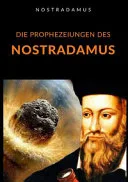
Die Prophezeiungen des Nostradamus
 83
83

Die Prophezeiungen des Nostradamus
The enduring legacy of Nostradamus's quatrains is undeniable, and this edition of 'Die Prophezeiungen des Nostradamus' provides direct access to the source. The sheer density of symbolic language within the verses is striking; consider the quatrain referring to the "great king of terror" and the "fateful year 1792", often linked to the French Revolution. However, the primary limitation remains the inherent ambiguity. Without external interpretive frameworks, the verses offer little concrete predictive power, relying heavily on post-hoc alignment with events. The work's strength lies not in verifiable prophecy but in its capacity to reflect the anxieties and hopes of its readers across centuries. It’s a historical artifact that continues to spark debate and fascination.
📝 Description
83
Published in 1555, 'Les Propheties' contains the quatrains attributed to Michel de Nostredame.
This volume presents the quatrains of Michel de Nostredame, known as Nostradamus. Originally published in 1555 as 'Les Propheties', the text is arranged into 'centuries,' with each quatrain a four-line poem. These verses use allegorical language, astrological references, and historical allusions, allowing for multiple interpretations of future events. The work appeals to those interested in historical prophecy, esoteric studies, and the cultural impact of prophetic literature. Readers should be prepared to engage with symbolic language and historical texts that blend prediction with interpretation.
Nostradamus wrote these prophecies in 16th-century France, a time of religious wars and political unrest. Astrology and divination were widely accepted. His initial publication followed earlier almanacs and brought him royal patronage. The prophecies emerged when such pronouncements carried considerable social and political weight, even as scientific rationalism began to grow. Catherine de' Medici was one of his patrons, showing the complex reception of these writings in elite circles.
Nostradamus's quatrains are symbolic riddles, not direct predictions. They employ anagrams, obscure mythology, and astrological data. The organization into 'centuries' hints at a structured, albeit cryptic, system of foresight. This approach aligns with Renaissance hermeticism and the belief in hidden correspondences within the cosmos, where celestial patterns could be read to understand earthly and future events.
💡 Why Read This Book?
• Understand the foundational text of Western prophetic literature, grasping the specific structure of quatrains organized into centuries that have influenced countless interpretations. • Explore the historical context of 16th-century France, a period of religious strife and astrological belief, which shaped Nostradamus's worldview and the reception of his work. • Engage with the symbolic language and allegorical methods employed by Nostradamus, learning how these techniques allow for diverse readings applied to events like the French Revolution.
⭐ Reader Reviews
Honest opinions from readers who have explored this book.
❓ Frequently Asked Questions
When were Nostradamus's prophecies first published?
The initial collection of Nostradamus's prophecies, 'Les Propheties', was first published in Lyon, France, in 1555. This foundational edition laid the groundwork for centuries of interpretation and fascination.
What is the typical format of Nostradamus's predictions?
Nostradamus's predictions are presented in the form of quatrains, which are four-line poems. These quatrains are grouped into larger sections called centuries, with each century typically containing one hundred quatrains.
Who was Nostradamus?
Michel de Nostredame, known as Nostradamus, was a French astrologer, physician, and reputed seer who lived from 1503 to 1566. He gained fame for his collection of prophecies.
Are Nostradamus's prophecies considered historically accurate?
The historical accuracy of Nostradamus's prophecies is a subject of debate. While many claim specific quatrains accurately foretold events like the rise of Napoleon or the French Revolution, others argue these interpretations are retrofitted and the prophecies are too vague to be definitively proven.
What historical period influenced Nostradamus's writings?
Nostradamus wrote during the 16th century, a period marked by significant religious conflict (the Wars of Religion), political instability in France, and a widespread cultural acceptance of astrology and occult sciences.
How did Nostradamus organize his prophecies?
He organized his prophecies into 'centuries,' which are collections of roughly 100 quatrains each. There are ten such centuries in the complete work, although the final century is incomplete.
🔮 Key Themes & Symbolism
The Art of Quatrain Prophecy
The central theme is the method of prophetic communication through quatrains. Nostradamus utilized four-line verses, often steeped in allegory, anagrams, and astrological jargon, to convey his visions. This format allowed for a degree of obscurity that protected him and invited ongoing interpretation. The organization into 'centuries' suggests a deliberate, albeit cryptic, ordering of future epochs or significant events, making the text a complex puzzle for subsequent generations seeking to decode future historical trajectories.
Astrological and Alchemical Underpinnings
A significant thematic undercurrent is the reliance on astrological configurations and alchemical symbolism. Nostradamus, trained as a physician and versed in Renaissance natural philosophy, integrated celestial movements and transformations as key components of his prophetic framework. References to planetary alignments, solstices, and eclipses are frequent, suggesting that cosmic rhythms were seen as direct indicators of earthly events. This connection places his work firmly within the Hermetic tradition of macrocosm-microcosm correspondence.
Historical Cycles and Recurring Patterns
The prophecies explore the idea of recurring historical cycles and patterns, suggesting that humanity is subject to predictable, albeit complex, phases. The arrangement into centuries implies a progression through time, with each era facing its unique challenges and transformations. This cyclical view contrasts with linear historical progression and finds resonance in various esoteric traditions that emphasize cosmic epochs and the cyclical nature of existence. Readers are prompted to identify these patterns across different historical periods.
The Ambiguity of Prediction
A meta-theme is the inherent ambiguity of prophecy itself. Nostradamus's language is deliberately veiled, using coded terms and shifting perspectives. This ambiguity is not a flaw but a feature, allowing the prophecies to remain relevant across diverse historical contexts. The work implicitly questions the nature of foreknowledge and the human desire to control or understand the future, highlighting how interpretations are shaped by the present concerns of the reader rather than solely by the author's intent.
💬 Memorable Quotes
“The year 1792 will be the great renovation of a wicked century.”
— This quatrain is frequently cited as a prediction of the French Revolution, specifically the overthrow of the monarchy and the establishment of the First Republic in 1792, marking a pivotal shift in French history.
“From the human beast, the literary people will be born.”
— This enigmatic verse has been interpreted in various ways, from the emergence of new literary movements to a commentary on the transformation of intellectual discourse in later eras.
“The great kingdom will be eaten up very soon.”
— Often linked to the fall of empires or significant political upheavals, this phrase speaks to themes of decline and the transience of power, a recurring motif in historical prophecy.
“When the foundations of the world are shaken, I will emerge from the earth.”
— This speaks to a sense of apocalyptic timing and the seer's role as a messenger during periods of profound global change or existential crisis.
“Near the city where the two rivers flow into one, a great slaughter will occur.”
— This type of geographically suggestive quatrain is often used to pinpoint specific locations for predicted conflicts or disasters, requiring geographical and historical analysis.
🌙 Esoteric Significance
Tradition
Nostradamus's work is deeply rooted in the Western Esoteric Tradition, drawing from Hermeticism, Kabbalah, and Renaissance Neoplatonism. His method of symbolic interpretation and astrological correlation aligns with Hermetic principles of correspondence between the celestial and terrestrial realms. The layered, allegorical nature of his quatrains echoes Kabbalistic techniques of exegesis, seeking hidden meanings within texts. While not strictly a Kabbalistic text, it shares the belief in divine order and hidden knowledge accessible through specific interpretive frameworks.
Symbolism
Key symbols include celestial bodies (Sun, Moon, planets) representing cosmic influences and temporal markers, and animals (lions, eagles, wolves) often signifying rulers, nations, or forces of nature. The 'great king' or 'Antichrist' figures represent archetypal forces of tyranny or cosmic disruption. The concept of the 'great fire' and 'flood' symbolizes purification or apocalyptic transformation, common motifs in cyclical cosmologies and esoteric destruction/creation narratives.
Modern Relevance
Contemporary esoteric practitioners and occult scholars continue to engage with Nostradamus's work. It remains a touchstone for discussions on fate versus free will, the nature of prophecy, and historical cycles. Modern interpretations often align his quatrains with global conflicts, political shifts, and technological advancements, demonstrating the text's enduring adaptability. Thinkers in fields ranging from comparative mythology to fringe historical analysis still reference his visions when attempting to understand patterns in human history.
👥 Who Should Read This Book
• Students of Renaissance esotericism seeking primary source material on 16th-century prophetic traditions and their intellectual underpinnings. • Enthusiasts of historical prophecy interested in deciphering cryptic verses and exploring their alleged connections to major world events. • Comparative religion scholars examining the role of divination and apocalyptic literature across different historical and cultural contexts.
📜 Historical Context
Nostradamus composed his prophecies in the mid-16th century, a period of immense upheaval in Europe. The French Wars of Religion (1562–1598) were brewing, the Reformation had fractured Christendom, and anxieties about the end times were prevalent. His work, 'Les Propheties', first published in 1555, emerged within this climate of fear and uncertainty, alongside a strong tradition of astrological almanacs and prophetic literature. While figures like Nostradamus were consulted by royalty, including Catherine de' Medici, such esoteric pursuits existed in tension with the rising currents of Renaissance humanism and early scientific inquiry. Competing schools of thought often dismissed such divinations as superstition, yet their cultural resonance persisted, demonstrating a complex interplay between occult belief and intellectual development.
📔 Journal Prompts
The 'great king of terror' quatrain: what modern event or figure does it evoke for you?
Reflect on the astrological references in the centuries: how might celestial events shape human destiny?
Consider the recurring themes of war and transformation: what patterns do you observe across different quatrains?
Analyze the use of anagrams and obscure references: what does this symbolic language reveal about Nostradamus's intent?
The concept of the 'wicked century': how does this frame the author's view of historical progress?
🗂️ Glossary
Quatrain
A four-line stanza, the primary poetic form used by Nostradamus to record his prophecies. Each quatrain is typically dense with symbolism and allusion.
Century
A collection of approximately one hundred quatrains, used by Nostradamus to organize his prophecies. These are thought by some to represent chronological periods or thematic groupings.
Anagram
A word or phrase formed by rearranging the letters of another. Nostradamus is believed to have used anagrams to obscure names or specific references within his prophecies.
Astrology
The study of the movements and relative positions of celestial bodies interpreted as having an influence on human affairs and the natural world. Nostradamus frequently incorporated astrological data into his predictions.
Hermeticism
A philosophical and religious tradition based on writings attributed to Hermes Trismegistus. It emphasizes the correspondence between the macrocosm (universe) and the microcosm (human), and the pursuit of hidden knowledge.
Almanac
A publication containing astronomical tables and other information, often including predictions of weather and astrological forecasts. Nostradamus published almanacs before his famous prophecies.
Seer
A person who is believed to have supernatural insight into future events. Nostradamus is widely regarded as a historical seer due to his prophetic writings.