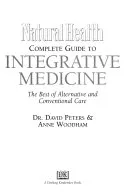
Complete Guide to Integrative Medicine
 84
84

Complete Guide to Integrative Medicine
David Peters and Anne Woodham's *Complete Guide to Integrative Medicine* attempts a monumental task: codifying the disparate landscape of complementary and alternative medicine (CAM) alongside conventional care. Its strength lies in its encyclopedic scope, detailing hundreds of applications for common ailments. However, the sheer breadth can sometimes dilute the depth, presenting many options without always providing the rigorous comparative analysis needed to discern efficacy. A notable passage might discuss the nuanced application of botanical remedies alongside pharmaceutical interventions for cardiovascular health, highlighting potential interactions and synergistic benefits. While valuable as a directory, it sometimes feels more like an extensive catalog than a critical examination of integrated treatment protocols. The work ultimately serves as a useful, if sometimes overwhelming, resource for exploring holistic health strategies.
📝 Description
84
### What It Is
This comprehensive volume presents a unified framework for understanding and applying integrative medicine. It details how conventional medical practices can be harmonized with a wide array of complementary and alternative healing modalities. The book serves as a practical manual, offering specific strategies for addressing common health concerns by drawing from diverse therapeutic approaches.
### Who It's For
The guide is intended for healthcare practitioners seeking to broaden their therapeutic toolkit, individuals managing chronic conditions who are exploring options beyond standard treatments, and anyone interested in a holistic perspective on wellness. It caters to those who wish to actively participate in their health management by understanding the synergy between different healing systems.
### Historical Context
Published initially in 2000, *Complete Guide to Integrative Medicine* emerged during a period of increasing public and professional interest in alternative and complementary therapies. This era saw a growing demand for evidence-based integration of these modalities into mainstream healthcare, moving beyond anecdotal claims to structured approaches. The work reflects the burgeoning field's efforts to bridge traditional Western medicine with practices like acupuncture, herbalism, and mind-body techniques.
### Key Concepts
The core principle is synergy: combining treatments to achieve outcomes superior to any single modality. It emphasizes a patient-centered approach, tailoring interventions to individual needs rather than a one-size-fits-all model. The book explores the physiological and energetic pathways through which different therapies can interact, promoting balance and self-healing.
💡 Why Read This Book?
• Learn over 40 specific, integrated treatment protocols for common ailments, moving beyond single-modality thinking as detailed in the original blurb. • Understand how to combine conventional treatments with alternative methods, a core concept presented in the book's approach to healthcare. • Discover hundreds of practical ways to manage health concerns, providing actionable insights not typically found in standard medical texts.
⭐ Reader Reviews
Honest opinions from readers who have explored this book.
❓ Frequently Asked Questions
When was the first edition of the Complete Guide to Integrative Medicine published?
The Complete Guide to Integrative Medicine was first published in the year 2000, reflecting a growing interest in holistic health approaches at the turn of the millennium.
What is the primary goal of integrative medicine as presented in this book?
The primary goal is to harmonize conventional medical practices with a wide range of complementary and alternative healing modalities to create a unified, patient-centered approach to healthcare.
How many common ailments does the book suggest ways to deal with?
The book suggests hundreds of different ways to deal with forty common ailments, offering a broad spectrum of potential treatments.
Who are the authors of the Complete Guide to Integrative Medicine?
The authors are David Peters and Anne Woodham. The book was first published under their guidance in 2000.
What types of health approaches are combined in this guide?
It combines conventional Western medicine with various complementary and alternative methods, such as herbalism, acupuncture, and mind-body techniques.
Is this book suitable for medical professionals?
Yes, the guide is intended for healthcare practitioners seeking to expand their therapeutic options and integrate new modalities into their practice.
🔮 Key Themes & Symbolism
Synergistic Healing Modalities
The work posits that optimal health outcomes arise not from isolated treatments but from the intelligent combination of diverse therapeutic systems. It explores how conventional pharmaceuticals can be complemented by herbal remedies, or how acupuncture might enhance recovery alongside physical therapy. This approach moves beyond a simple menu of options to suggest a dynamic interplay, where different modalities might support or amplify each other's effects. The book aims to provide a framework for practitioners and individuals to select and combine these approaches effectively for specific conditions.
Patient-Centered Care
A central tenet is the shift from a disease-focused model to a person-focused one. The guide emphasizes that effective integrative medicine requires understanding the unique biological, psychological, and even spiritual landscape of each patient. It advocates for personalized treatment plans that consider individual responses, preferences, and the interconnectedness of mind, body, and spirit. This holistic view encourages active patient participation and shared decision-making in the healing process.
Bridging Conventional and Alternative
The book serves as a bridge between the established practices of Western medicine and the often-stigmatized world of alternative therapies. It seeks to lend structure and accessibility to CAM, presenting them not as fringe concepts but as viable components of a comprehensive healthcare strategy. By detailing hundreds of applications for common ailments, it provides concrete examples of how these disparate fields can be interwoven to offer more complete and effective care.
Holistic Wellness Framework
Beyond merely treating illness, the guide promotes a broader vision of holistic wellness. It suggests that true health involves maintaining balance across multiple dimensions of existence. This includes not only physical vitality but also mental clarity, emotional equilibrium, and a sense of purpose. The book encourages readers to view health as an ongoing process of cultivation, supported by a diverse range of practices that nurture the whole person.
💬 Memorable Quotes
“Suggests hundreds of different ways to deal with forty common ailments.”
— This statement from the original blurb highlights the book's practical, encyclopedic nature, promising a vast array of actionable strategies for specific health challenges.
“Utilize an integrated approach to health care that combines conventional and alternative methods.”
— This core concept emphasizes the book's central thesis: the power of synergy lies in harmonizing established medical science with complementary and alternative therapies for enhanced patient outcomes.
“First published in 2000.”
— This factual anchor situates the book within a specific historical moment, marking its emergence during a period of significant growth and acceptance for integrative medicine.
“David Peters, Anne Woodham (authors).”
— Identifying the authors provides attribution and context, acknowledging the individuals who compiled this extensive guide to integrated health practices.
“Addresses forty common ailments.”
— This specificity indicates the book's focus on practical application, targeting prevalent health issues with a wide range of proposed solutions.
🌙 Esoteric Significance
Tradition
While not explicitly tied to a single esoteric lineage, the book's emphasis on holistic balance, the interconnectedness of mind-body-spirit, and the utilization of diverse healing energies aligns with broader Hermetic and Neoplatonic principles. It echoes the Hermetic maxim 'As above, so below' by seeking correspondences between different levels of healing and different modalities. Its approach to integrating varied therapies can be seen as a modern manifestation of the alchemical pursuit of combining disparate elements into a harmonious whole, aiming for a perfected state of health.
Symbolism
The concept of 'integration' itself acts as a potent symbol, representing the alchemical union of opposites – conventional and alternative, science and intuition, physical and energetic. The 'hundreds of ways' to address ailments can be seen as a symbolic representation of the infinite possibilities available when one looks beyond a singular, mechanistic view of health. The patient, as the central focus, becomes a microcosm reflecting the universal principle of seeking balance and wholeness amidst complexity.
Modern Relevance
This work remains highly relevant in contemporary discussions surrounding wellness, functional medicine, and personalized healthcare. Practitioners in fields like naturopathy, functional medicine, and even forward-thinking conventional doctors often draw upon the principles outlined here. The book’s foundational approach continues to inform the development of integrated treatment plans and the ongoing dialogue about evidence-based complementary therapies in clinical settings worldwide.
👥 Who Should Read This Book
• Individuals seeking to expand their understanding of health beyond conventional Western medicine, looking for a structured overview of alternative and complementary therapies. • Healthcare practitioners, including doctors, nurses, and therapists, who wish to incorporate a broader range of treatment options into their practice or understand how to collaborate with CAM providers. • Patients managing chronic conditions who are exploring holistic approaches and desire practical, actionable strategies for improving their well-being through integrated methods.
📜 Historical Context
The *Complete Guide to Integrative Medicine*, first published in 2000, arrived at a pivotal moment for alternative and complementary medicine (CAM). The late 20th century saw a groundswell of public interest in therapies outside the Western biomedical model, fueled by dissatisfaction with conventional medicine's limitations and a growing holistic philosophy. This period was characterized by increasing efforts to legitimize and integrate CAM into mainstream healthcare, moving beyond anecdotal evidence towards more structured research and application. Key figures like Andrew Weil were popularizing concepts of integrative healing, while institutions began establishing dedicated centers. The book emerged within this milieu, seeking to provide a practical, comprehensive resource that bridged the gap between these burgeoning fields and established medical practice. It faced the challenge of navigating skepticism from some quarters of the medical establishment while meeting the demand from patients and practitioners eager for such information.
📔 Journal Prompts
Reflect on the concept of synergistic healing modalities as presented in the book.
Consider the integration of conventional treatments with alternative methods for a specific ailment you have researched.
Analyze how the principle of patient-centered care could be applied to a hypothetical health scenario.
Explore the historical context of integrative medicine development around the year 2000.
Evaluate the balance between different therapeutic systems for addressing forty common ailments.
🗂️ Glossary
Integrative Medicine
A healthcare approach that combines conventional medical treatments with complementary and alternative therapies, aiming for optimal health and healing.
Conventional Medicine
The system of medicine commonly practiced in Western countries, based on scientific research, diagnostic tests, and treatments like surgery and pharmaceuticals.
Alternative Medicine
Therapies used instead of conventional medical treatments, such as using a special diet to treat cancer instead of chemotherapy.
Complementary Medicine
Therapies used together with conventional medical treatments, like using aromatherapy to help ease side effects of chemotherapy.
Holistic Approach
An approach to healthcare that treats the whole person—mind, body, and spirit—rather than focusing solely on a specific disease or symptom.
Ailments
Conditions of illness or disease; specific health problems or disorders.
Synergy
The interaction or cooperation of two or more organizations, substances, or other agents to produce a combined effect greater than the sum of their separate effects.