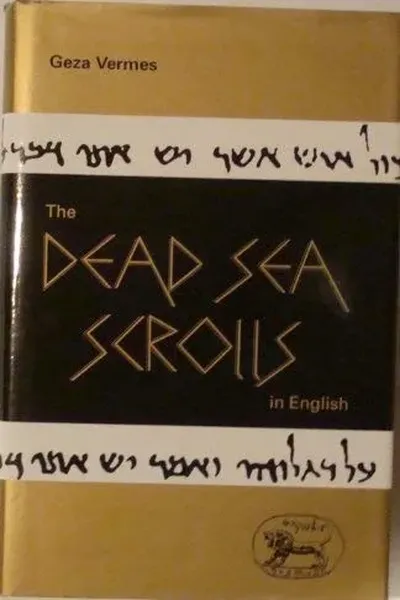
Complete Dead Sea Scrolls in English

 77
77

Complete Dead Sea Scrolls in English
Géza Vermès's complete translation of the Dead Sea Scrolls is a monumental achievement, offering the most comprehensive English rendering of these pivotal ancient texts. Its strength lies in Vermès's scholarly rigor and his commitment to presenting the documents in a coherent, accessible manner. The inclusion of extensive introductory material and annotations, though not always present in every edition, greatly aids comprehension, contextualizing the scrolls within the turbulent religious and political climate of Second Temple Judaism. A notable limitation, however, can be the sheer density of information, which may initially daunt readers unfamiliar with the period. The translation of the Community Rule (Serekh HaYahad), for example, meticulously details the strict communal discipline and theological framework of the Qumran sect, a passage that demands careful study but yields profound understanding of their distinct way of life. Vermès’s work remains a foundational resource for anyone serious about engaging with these texts.
📝 Description
77
### What It Is
This volume presents the complete collection of the Dead Sea Scrolls, translated into English by Géza Vermès. It offers a comprehensive compilation of the ancient Jewish texts discovered near the Qumran caves between 1947 and 1956. The collection includes biblical manuscripts, apocryphal writings, and sectarian documents, providing an unparalleled window into Second Temple Judaism and the origins of early Christianity. Vermès's translation aims for clarity and accuracy, making these foundational texts accessible to a broad audience. The work is structured to guide readers through the diverse range of documents, from the familiar books of the Hebrew Bible to previously unknown religious literature.
### Who It's For
This book is an essential resource for scholars of ancient history, biblical studies, and religious movements. It is also invaluable for individuals interested in the historical context of early Christianity, Jewish mysticism, and the development of religious thought in the ancient Near East. Students, theologians, and anyone seeking a deeper understanding of the textual and cultural landscape from which major world religions emerged will find this translation indispensable. It serves those who wish to engage directly with primary sources that shaped millennia of spiritual and intellectual traditions.
### Historical Context
The discovery of the Dead Sea Scrolls, beginning in 1947, revolutionized the study of Second Temple Judaism. These manuscripts, dating from the 3rd century BCE to the 1st century CE, predate many previously known Hebrew biblical texts and offer unique insights into Jewish sectarianism during that period. The scrolls shed light on groups like the Essenes, potentially the community at Qumran, and their distinct interpretations of scripture and religious law. Their existence challenged earlier assumptions about the biblical text's transmission and the religious diversity of Judea before the Roman destruction of the Second Temple in 70 CE. The sheer volume and variety of texts have fueled decades of scholarly debate.
### Key Concepts
The scrolls reveal a complex Jewish world with diverse interpretations of Mosaic Law and prophetic texts. Concepts such as messianism, apocalypticism, and ritual purity are prominent, reflecting anxieties and hopes within communities facing political and religious upheaval. The sectarian texts, in particular, outline detailed rules for community life, eschatological expectations, and unique theological doctrines. The interpretation of these documents has been crucial for understanding the theological landscape that influenced both Rabbinic Judaism and early Christianity, offering parallel or divergent views on core religious ideas and practices.
💡 Why Read This Book?
• Understand the historical and religious milieu of early Christianity by examining sectarian Jewish texts like the Community Rule, offering direct insight into the beliefs and practices of groups active around the turn of the Common Era. • Gain access to the earliest known manuscripts of biblical books, allowing for direct comparison with later versions and a deeper appreciation of textual transmission history prior to the 1st century CE. • Explore the diverse theological landscape of Second Temple Judaism, encountering concepts such as dualism and messianic expectation as articulated in texts like the War Scroll, which provides a unique perspective on apocalyptic thought.
⭐ Reader Reviews
Honest opinions from readers who have explored this book.
❓ Frequently Asked Questions
When were the Dead Sea Scrolls discovered and where?
The Dead Sea Scrolls were discovered in caves near the ancient settlement of Qumran, on the northwest shores of the Dead Sea. The initial discoveries were made by Bedouin shepherds starting in 1947, with subsequent excavations continuing until 1956.
What languages are the Dead Sea Scrolls written in?
The majority of the Dead Sea Scrolls are written in Hebrew. However, a significant number are also in Aramaic, and a few are in Greek. This linguistic diversity reflects the cultural influences present in Judea during the Second Temple period.
Who was Géza Vermès and why is his translation significant?
Géza Vermès was a Hungarian-born scholar and rabbi, renowned for his work on the Dead Sea Scrolls and the historical Jesus. His translation is significant for its scholarly accuracy and its accessibility, providing a comprehensive English version that has been widely adopted by academics and general readers alike since its first publication.
What is the significance of the Community Rule (Serekh HaYahad)?
The Community Rule is one of the most important sectarian documents found among the Dead Sea Scrolls. It outlines the strict organizational structure, beliefs, and ritual practices of the Qumran community, offering crucial insights into Jewish sectarianism during the Second Temple period.
Do the Dead Sea Scrolls contain the entire Hebrew Bible?
Yes, fragments of every book of the Hebrew Bible (Tanakh) have been found among the Dead Sea Scrolls, with the exception of the Book of Esther. These manuscripts represent the oldest known copies of these biblical texts.
What does 'Second Temple Judaism' refer to in relation to the scrolls?
Second Temple Judaism refers to the period of Jewish history from the return from Babylonian exile (c. 516 BCE) until the destruction of the Second Temple in Jerusalem by the Romans in 70 CE. The Dead Sea Scrolls provide primary source material for understanding the religious diversity and movements within this era.
🔮 Key Themes & Symbolism
Sectarian Jewish Life
The scrolls offer an unprecedented glimpse into the diverse religious communities of Second Temple Judaism, particularly the Essenes or a related group at Qumran. Texts like the Community Rule detail their communal organization, strict adherence to purity laws, messianic expectations, and apocalyptic worldview. This provides a stark contrast to the more familiar Sadducean and Pharisaic Judaism, revealing a spectrum of beliefs and practices that significantly informed the religious landscape of the era. Understanding these distinct groups is vital for contextualizing the emergence of early Christian thought and Rabbinic Judaism.
Biblical Textual History
This collection includes the oldest known manuscripts of books from the Hebrew Bible, predating previously known copies by centuries. The presence of these texts, dating from the 3rd century BCE to the 1st century CE, allows scholars to trace the development and transmission of the biblical text. Comparing these ancient versions with later Masoretic texts reveals variations and confirms the general stability of the biblical canon over time. This provides a critical foundation for textual criticism and historical-critical study of the Bible, impacting theological and historical interpretations.
Messianism and Apocalypticism
A recurring theme within many of the scrolls is the fervent expectation of a coming messianic age and the imminence of divine judgment. Texts such as the War Scroll describe cosmic battles between forces of good and evil, anticipating a divinely ordained victory. These writings illuminate the apocalyptic mindset prevalent in certain Jewish circles during periods of intense political and social stress, offering direct parallels and contrasts to similar themes found in the New Testament. The varied portrayals of messianic figures reveal a complex and evolving understanding of divine intervention.
💬 Memorable Quotes
“The Rule of the Community begins with the description of the ideal member.”
— This foundational text sets forth the stringent requirements for joining the Qumran sect, emphasizing a commitment to divine law, communal living, and a purified spiritual existence.
“The War of the Sons of Light Against the Sons of Darkness.”
— This title points to a central apocalyptic text within the scrolls, depicting a future cosmic struggle between divinely favored forces and their malevolent adversaries, reflecting the eschatological hopes of the community.
“All who enter the covenant shall be judged by God.”
— This principle highlights the importance of divine judgment and accountability within the Qumran community, underscoring their belief in a structured, divinely ordained spiritual and ethical order.
“The Teacher of Righteousness instructed them in the ways of God.”
— This refers to a pivotal, albeit enigmatic, figure in the Qumran sect's history and theology, presented as a divinely inspired guide who revealed God's true intentions to his followers.
“To separate from the congregation of the men of iniquity.”
— This phrase encapsulates the Qumran community's strong sense of separation from mainstream Jewish society, which they viewed as corrupt, and their commitment to forming an exclusive, righteous fellowship.
🌙 Esoteric Significance
Tradition
While not fitting neatly into established Western esoteric lineages like Kabbalah or Hermeticism, the Dead Sea Scrolls hold immense significance for understanding the roots of mystical and Gnostic thought. The emphasis on hidden knowledge, dualistic cosmology (light vs. darkness), angelic hierarchies, and messianic revelation in texts like the Community Rule and the War Scroll prefigure themes later explored in Gnosticism and certain mystical traditions. They represent a crucial bridge, demonstrating the existence of complex, esoteric-leaning spiritual interpretations within Judaism itself during a formative period.
Symbolism
Key symbols within the scrolls include the prevalent dualism of light and darkness, representing good and evil, the community and the outside world, or spiritual enlightenment versus ignorance. The concept of the 'New Covenant' signifies a purified, exclusive community bound by divine law, distinct from the perceived corruption of the broader Jewish populace. Water, particularly in ritual purity contexts, symbolizes spiritual cleansing and separation necessary for entering the sacred community and participating in eschatological events.
Modern Relevance
Contemporary scholars of early Christianity and comparative religion continue to draw heavily from Vermès's translation to understand the Jewish matrix from which Christianity emerged. Mystics and esotericists interested in the origins of Western esotericism explore the scrolls for evidence of pre-Kabbalistic Jewish mysticism, angelic lore, and apocalyptic traditions. Movements focused on communal living, spiritual purity, and prophetic interpretation find conceptual echoes in the Qumran texts, making the scrolls a subject of ongoing fascination for those seeking ancient wisdom traditions.
👥 Who Should Read This Book
• Academics and students of Ancient History and Religious Studies: To gain direct access to primary source materials that redefined the understanding of Second Temple Judaism and the origins of Christianity. • Devout individuals seeking historical context for Abrahamic faiths: To explore the diverse theological landscape and spiritual aspirations within Judaism leading up to and during the formative period of early Christianity. • Researchers of early mystical and esoteric traditions: To investigate the textual evidence for apocalypticism, dualism, and communal spiritual practices that may have influenced later esoteric movements.
📜 Historical Context
The discovery of the Dead Sea Scrolls beginning in 1947 occurred during a pivotal era for both Jewish and Christian scholarship, immediately following the establishment of the State of Israel. These manuscripts, dating from approximately the 3rd century BCE to the 1st century CE, provided an unprecedented direct look into the religious diversity of Judea during the Second Temple period. Prior to their discovery, understanding of this era relied heavily on later Rabbinic texts and the New Testament, which offered perspectives potentially shaped by later theological developments. The scrolls revealed the existence of distinct Jewish groups, such as the Essenes, and their unique interpretations of scripture, law, and eschatology, challenging earlier assumptions about a monolithic Judaism. Scholars like Yigael Yadin and, later, Géza Vermès engaged intensely with these texts, often debating their precise meaning and community affiliation. The scrolls' contents offered significant parallels to early Christian teachings, fueling ongoing scholarly discourse about the relationship between Jesus' movement and existing Jewish sects.
📔 Journal Prompts
The Qumran community's emphasis on ritual purity.
The concept of the 'Teacher of Righteousness' and his teachings.
Apocalyptic visions described in the War Scroll.
The structure and rules outlined in the Community Rule (Serekh HaYahad).
The significance of the 'New Covenant' as interpreted by the Qumran sect.
🗂️ Glossary
Second Temple Period
The era of Jewish history from the rebuilding of the Second Temple in Jerusalem around 516 BCE until its destruction by the Romans in 70 CE. This period was marked by diverse Jewish religious movements and significant theological developments.
Sectarian Texts
Documents originating from specific, often exclusive, religious groups within Second Temple Judaism, such as the Qumran community. These texts detail their unique beliefs, rules, and interpretations of scripture.
Apocalypticism
A religious worldview characterized by belief in the imminent revelation of hidden cosmic truths, often involving a dramatic struggle between good and evil, divine judgment, and the establishment of a new, righteous world order.
Messianism
Belief in a future divinely appointed leader or savior (a messiah) who will bring about a period of peace, justice, and redemption. Different Jewish groups held varied expectations about the nature and role of the messiah.
Community Rule (Serekh HaYahad)
A key sectarian document found among the Dead Sea Scrolls, detailing the organizational structure, initiation rites, laws, and theological tenets of the community believed to have resided at Qumran.
Teacher of Righteousness
An important, though largely anonymous, figure within the Qumran community, revered as a divinely inspired founder or leader who interpreted scripture and guided the community's spiritual path.
Dualism
A philosophical or religious concept that posits the existence of two fundamental, often opposing, principles or substances. In the context of the scrolls, this often refers to a stark contrast between light and darkness, good and evil.