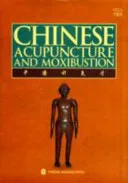
Chinese Acupuncture and Moxibustion
 79
79

Chinese Acupuncture and Moxibustion
Cheng Xinnong and Liangyue Deng's "Chinese Acupuncture and Moxibustion" offers a robust, if somewhat dense, exposition of its subject matter. The book’s strength lies in its methodical presentation of meridians, acupoints, and diagnostic signs, providing a clear roadmap for understanding the TCM energetic landscape. The diagrams are particularly helpful for visualizing complex anatomical and energetic pathways. However, for readers unfamiliar with the foundational principles of Qi and Yin/Yang, the initial chapters can present a steep learning curve. The section on specific point indications, while thorough, could benefit from more clinical case examples to illustrate application. The work is a solid reference for serious students and practitioners, though its academic tone may be less engaging for the casual inquirer.
📝 Description
79
Cheng Xinnong and Liangyue Deng's 2007 volume details Chinese acupuncture and moxibustion based on foundational texts.
This book systematically covers Chinese acupuncture and moxibustion, drawing from historical texts and established practices. It explains the theoretical basis of Traditional Chinese Medicine (TCM) as it applies to these therapeutic methods. Readers will find detailed information on diagnostic techniques, meridian pathways, acupoint locations, and treatment plans for various conditions. The work aims to clarify the energetic physiology and pathology fundamental to these ancient healing practices.
The text is intended for acupuncturists and moxibustion practitioners who wish to improve their theoretical understanding and clinical application. Students of TCM, medical historians, and those studying alternative health systems will also find it valuable. Individuals interested in the philosophical and energetic principles behind bodywork therapies will gain insight.
"Chinese Acupuncture and Moxibustion" is built upon a medical tradition that is more than two thousand years old. Its principles developed over centuries, shaped by Daoist thought and practical experience. The contributions of Cheng Xinnong, a prominent figure in modern Chinese medicine, and Liangyue Deng make this work accessible to current readers. It follows in the tradition of earlier medical texts that documented these techniques.
This book is situated within the broad tradition of Chinese medicine, which has long been intertwined with Daoist philosophy and practices aimed at cultivating vital energy, or Qi. The concepts of meridians, acupoints, and the balance of Yin and Yang are not merely physiological but also represent a framework for understanding the body's energetic, and sometimes spiritual, state. The meticulous mapping of these energetic channels and the application of therapeutic techniques like acupuncture and moxibustion reflect a worldview where the physical and energetic bodies are inseparable and influence each other. This approach views health as a state of harmonious flow within these energetic systems.
💡 Why Read This Book?
• Gain a structured understanding of the meridian system, learning how concepts like the Liver meridian's pathway are mapped and utilized for therapeutic intervention, a detail central to TCM diagnostics. • Grasp the specific indications and techniques for moxibustion, understanding how the application of heat from burning mugwort at acupoints like ST36 offers a distinct therapeutic modality. • Appreciate the foundational theories of Qi and Yin/Yang as presented in the text, recognizing their role in the 2000-year evolution of Chinese medical thought and practice.
⭐ Reader Reviews
Honest opinions from readers who have explored this book.
❓ Frequently Asked Questions
What is the primary theoretical basis of Chinese Acupuncture and Moxibustion?
The primary theoretical basis is Traditional Chinese Medicine (TCM), which posits that health is maintained by the smooth flow of vital energy, or Qi, through a network of meridians. Imbalances in Qi, Yin, and Yang are considered the root of illness.
Who was Cheng Xinnong and what is his contribution?
Cheng Xinnong (程莘农) was a prominent modern Chinese physician and one of the founders of acupuncture research in China. His expertise contributed significantly to the systematization and teaching of acupuncture and moxibustion in the 20th century.
How does moxibustion differ from acupuncture in this text?
Acupuncture involves inserting fine needles into specific points on the body to regulate Qi flow. Moxibustion uses heat, typically generated by burning dried mugwort (Artemisia vulgaris), applied to acupoints to warm meridians and expel cold.
What are meridians according to Chinese Acupuncture and Moxibustion?
Meridians are pathways or channels within the body through which Qi and Blood circulate. They connect the internal Zang-fu organs to the surface of the body, forming an intricate network where acupoints are located.
Can this book be used for self-treatment?
While informative, the book is primarily intended for practitioners and students of Traditional Chinese Medicine. Self-treatment without proper training is generally not recommended due to the complexity of diagnosis and point selection.
When was the original "Essentials of Chinese Acupuncture" first published?
The original "Essentials of Chinese Acupuncture" text, on which this work is based, was first compiled and published in the late 1970s, becoming a key textbook for TCM education.
🔮 Key Themes & Symbolism
Meridian System Theory
The book meticulously details the network of meridians and collaterals, the invisible channels through which Qi and Blood circulate in Traditional Chinese Medicine. It maps the twelve primary meridians and their associated Zang-fu organs, explaining how blockages or imbalances within these pathways manifest as disease. Understanding this intricate system is crucial for accurate diagnosis and effective treatment, forming the bedrock of acupuncture and moxibustion practice as presented by Cheng Xinnong and Liangyue Deng.
Acupoint Energetics
Central to the text is the concept of acupoints (xue wei) as specific locations on the meridians with unique energetic properties. The book classifies these points, detailing their anatomical locations, therapeutic actions, and indications for various conditions. It explores how stimulating these points via needling (acupuncture) or heat (moxibustion) can influence the flow of Qi and Blood, thereby restoring balance and promoting healing according to TCM principles.
Diagnostic Principles
"Chinese Acupuncture and Moxibustion" outlines the diagnostic methods fundamental to TCM, including observation, listening/smelling, inquiry, and palpation. It emphasizes the importance of identifying patterns of disharmony related to Yin and Yang, the Five Elements, and organ systems. This comprehensive diagnostic approach, rooted in the foundational text "Essentials of Chinese Acupuncture," guides the practitioner in selecting appropriate treatment strategies.
Moxibustion Techniques
Beyond acupuncture, the book provides extensive coverage of moxibustion, a therapeutic technique involving the burning of mugwort (Artemisia vulgaris). It details various methods of application, such as indirect moxibustion using ginger or salt as intermediaries, and direct moxibustion. The text explains how moxibustion warms meridians, dispels cold, and invigorates Qi and Blood, offering a complementary approach to healing, particularly for chronic conditions and deficiencies.
💬 Memorable Quotes
Direct passages from the work, attributed to the author.
“The meridians are the channels through which Qi and Blood flow.”
— This statement expresses a core tenet of Traditional Chinese Medicine. It highlights the circulatory system not just of physical substances but of vital energy (Qi), underscoring the interconnectedness of the body's energetic and physiological functions.
“Acupoints are specific locations on the meridians with therapeutic functions.”
— This emphasizes the precise nature of acupuncture. It suggests that these points are not arbitrary but possess distinct energetic qualities that can be targeted to influence specific organ systems or physiological processes.
“Moxibustion warms the meridians and dispels cold.”
— This succinctly describes the primary action of moxibustion. It points to its efficacy in treating conditions characterized by coldness or stagnation, offering a heat-based therapy distinct from the needling techniques of acupuncture.
“Diagnosis involves identifying patterns of disharmony.”
— This highlights the pattern-based approach to illness in TCM. Rather than focusing on isolated symptoms, the practitioner seeks to understand the underlying systemic imbalance contributing to the patient's condition.
“Qi is the vital energy that animates life.”
— This definition underscores the fundamental importance of Qi in TCM. It positions this invisible force as essential for all physiological functions and life processes, making its regulation a primary goal of therapeutic interventions.
🌙 Esoteric Significance
Tradition
While primarily a medical text, "Chinese Acupuncture and Moxibustion" inherently connects to Daoist cosmology and philosophy. The concepts of Qi, Yin and Yang, and the Five Elements are not merely physiological descriptors but represent fundamental energetic principles that permeate the universe. The precise mapping of meridians and acupoints can be seen as a form of energetic cartography, mirroring the esoteric traditions that map subtle energy bodies and cosmic forces. This work offers a practical, empirically-grounded application of principles often explored in more abstract metaphysical systems.
Symbolism
The meridian system itself functions as a powerful symbol of interconnectedness and flow, representing the body's energetic pathways analogous to rivers or ley lines. Acupoints, such as the 'Sea of Qi' (CV 17) or points associated with specific organs like the 'Spirit Gate' (HT7), carry symbolic weight, linking physical locations to profound energetic and even spiritual functions. The herb mugwort (Artemisia vulgaris), central to moxibustion, is often associated with purification and protective qualities in various folk traditions, adding a layer of symbolic resonance to the heat therapy.
Modern Relevance
Contemporary practitioners of integrative medicine, energy healing modalities, and somatic therapies frequently reference the foundational principles outlined in works like "Chinese Acupuncture and Moxibustion." Thinkers and practitioners exploring biofield theory, mind-body medicine, and consciousness studies often find the TCM model of Qi and meridians a useful framework for understanding subtle energy dynamics. Its systematic approach continues to inform research into acupuncture's efficacy and its potential integration into mainstream healthcare systems globally.
👥 Who Should Read This Book
• Students of Traditional Chinese Medicine: Those beginning their formal education in TCM will find this book an indispensable resource for understanding the theoretical framework and practical application of acupuncture and moxibustion. • Licensed Acupuncturists: Practitioners seeking to deepen their theoretical knowledge, review foundational concepts, or consult specific point indications and meridian pathways will benefit from its comprehensive detail. • Researchers of Medical History: Scholars investigating the evolution of healing practices and comparative medical systems will find valuable insights into the historical development and theoretical underpinnings of these ancient therapies.
📜 Historical Context
Emerging from a medical tradition deeply rooted in Chinese civilization, "Chinese Acupuncture and Moxibustion" builds upon centuries of empirical observation and philosophical integration. The first edition of its source text, "Essentials of Chinese Acupuncture," appeared in the late 1970s, a period of renewed scholarly interest and internationalization of Traditional Chinese Medicine (TCM). This era saw significant efforts to codify and present TCM principles in a structured format accessible to both domestic students and a global audience. The work draws heavily on classical texts but is presented with modern pedagogical clarity, reflecting the influence of figures like Cheng Xinnong, a key proponent of standardizing TCM education. This period also saw TCM practitioners in the West engaging with these texts, sometimes in contrast to established Western medical paradigms, seeking alternative frameworks for understanding health and disease.
📔 Journal Prompts
The concept of Qi flowing through the Liver meridian.
The symbolic meaning of moxibustion's application at specific acupoints.
The relationship between Yin and Yang in diagnostic patterns.
The function of the Pericardium meridian in TCM theory.
The historical development of acupoint nomenclature.
🗂️ Glossary
Qi (Chi)
The fundamental vital energy or life force believed to circulate throughout the body in Traditional Chinese Medicine, animating all living things and responsible for physiological functions.
Meridians (Jing Luo)
Specific pathways or channels within the body through which Qi and Blood circulate, connecting the Zang-fu organs to the surface and forming an intricate network.
Acupoints (Xue Wei)
Specific locations on the meridians where Qi is concentrated and can be accessed for therapeutic purposes, typically via acupuncture needles or moxibustion.
Moxibustion
A therapeutic technique involving the burning of dried mugwort (Artemisia vulgaris) near the skin or on specific acupoints to warm meridians, expel cold, and promote the flow of Qi and Blood.
Yin and Yang
Two complementary and interdependent fundamental forces or principles in Chinese philosophy and medicine, representing opposing but interconnected qualities (e.g., passive/active, dark/light, cold/hot) whose balance is crucial for health.
Zang-fu Organs
The internal organ systems in TCM, broadly categorized into Zang (solid, yin organs like the Liver, Heart, Spleen) and Fu (hollow, yang organs like the Stomach, Small Intestine, Bladder).
Artemisia vulgaris (Mugwort)
A herb commonly used in moxibustion due to its warming properties and its ability to penetrate meridians and expel cold, often associated with therapeutic benefits in TCM.