Cheiro's language of the hand
 80
80

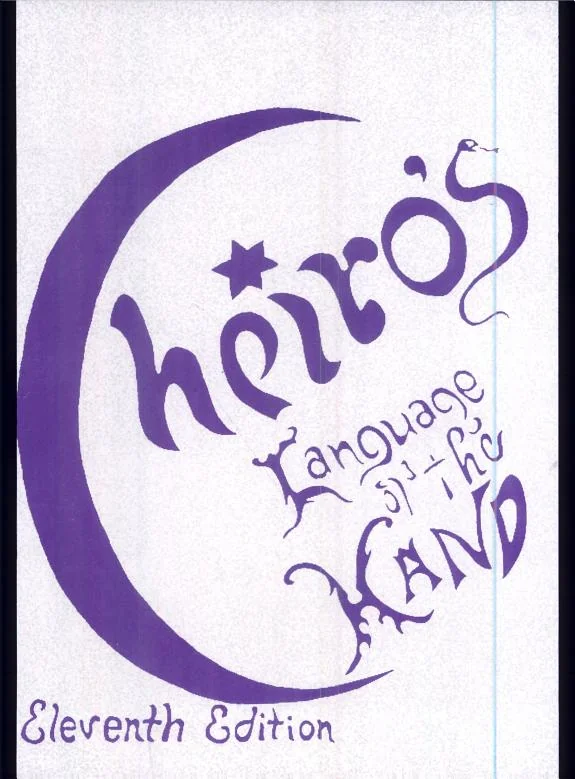
Cheiro's language of the hand
Cheiro's Language of the Hand offers a remarkably detailed and systematic approach to palmistry, eschewing vague pronouncements for a structured, almost scientific, breakdown of hand features. The strength lies in its sheer comprehensiveness; few texts cover the mounts, lines, and finger nuances with such meticulousness. However, the dated prose and the inherent subjectivity of interpretation can present challenges for the modern reader. A particularly illustrative section details the 'Mount of Apollo,' linking its prominence to artistic talent and public recognition, providing a concrete example of Cheiro’s interpretive method. While it requires careful study, the book serves as a foundational reference for serious palmists.
📝 Description
80
Cheiro published 'Language of the Hand' in 1986, detailing a system for palmistry.
Cheiro's Language of the Hand presents a detailed system for palmistry, explaining how to read the lines, mounts, and hand shapes to understand personality and destiny. The book categorizes hand types, finger features, and markings, connecting them to psychological traits and life paths. It is intended for serious students of chiromancy and esoteric studies who desire a structured method for hand analysis. Those interested in physiognomy, graphology, and character assessment will find relevant material. The work also appeals to individuals seeking self-knowledge through ancient divinatory practices.
The book breaks down hand analysis into distinct parts. It covers the main lines like the life, head, and heart lines, as well as minor lines and the seven mounts: Venus, Jupiter, Saturn, Apollo, Mercury, Mars, and Luna. Various markings such as stars, crosses, and tridents are also discussed. Each of these elements is associated with specific planetary influences and psychological characteristics, forming a comprehensive interpretive framework.
First appearing in 1986, Cheiro's work arrived during a period of renewed interest in occultism and parapsychology. This era followed the earlier efforts of figures like Helena Blavatsky and the Theosophical Society, which had helped revive interest in esoteric philosophies in the late 19th century. This later resurgence saw both academic and popular engagement with divination and occult studies, creating a favorable environment for detailed guides on subjects like palmistry.
💡 Why Read This Book?
• Gain a structured methodology for palmistry, moving beyond superficial readings by understanding the specific interpretations of the Mount of Venus and its connection to affection and sensuality as detailed by Cheiro. • Learn to identify and interpret over fifty distinct hand markings, from the simple 'cross' to the 'triangle,' as presented in the book's detailed catalog, offering precise diagnostic tools. • Explore the correlation between specific finger lengths and shapes, such as a long, thin Mercury finger, and associated personality traits like communication skills and business acumen, as laid out in Cheiro's classifications.
⭐ Reader Reviews
Honest opinions from readers who have explored this book.
❓ Frequently Asked Questions
When was Cheiro's Language of the Hand first published?
The original publication date for Cheiro's Language of the Hand is cited as 1986, placing it within a period of renewed interest in esoteric studies.
What are the seven mounts of the hand according to Cheiro?
Cheiro identifies seven primary mounts: Venus, Jupiter, Saturn, Apollo, Mercury, Mars, and Luna, each associated with specific planetary energies and personality aspects.
Does the book explain how to read finger shapes?
Yes, Cheiro's Language of the Hand meticulously describes various finger shapes, lengths, and the characteristics of the joints, linking them to individual temperament and aptitudes.
Are there specific markings that Cheiro discusses in palmistry?
Absolutely. The book details numerous markings such as stars, crosses, squares, triangles, and trident symbols found on the palm, providing their unique interpretations.
Is this book suitable for beginners in palmistry?
While comprehensive, the detailed nature of Cheiro's work makes it particularly valuable for dedicated students, offering a deep dive into the subject's intricacies.
What is the primary focus of Cheiro's palmistry system?
Cheiro's system focuses on a detailed analysis of lines, mounts, and hand/finger shapes, correlating them with psychological traits, life tendencies, and potential destiny.
🔮 Key Themes & Symbolism
Chiromantic Cartography
The book functions as a detailed map of the hand, treating each line, mount, and finger as a specific geographical feature with assigned meaning. Cheiro meticulously details the seven mounts—Venus, Jupiter, Saturn, Apollo, Mercury, and Mars—assigning them planetary rulers and correlating their prominence with character traits like ambition (Jupiter) or creativity (Apollo). This systematic approach aims to demystify palmistry, presenting it as a decipherable language of the human form rather than arbitrary guesswork.
Lines as Life Narratives
Cheiro emphasizes the major and minor lines of the palm as indicators of life's journey and psychological states. The Life Line, Head Line, and Heart Line are treated as foundational narratives, with variations in their depth, breaks, and formations offering insights into health, intellect, and emotional capacity. The text also explores numerous minor lines, such as the Apollo Line or the Mercury Line, providing nuanced readings on talents, communication, and fortune.
Hand and Finger Morphology
Beyond the lines, the book dedicates significant attention to the overall shape of the hand and the characteristics of the fingers. Cheiro categorizes hands into types (e.g., Square, Spatulate, Conical) and discusses how finger length, shape, and the texture of the skin contribute to a holistic understanding of an individual's inherent nature and predispositions. This morphological analysis adds another layer to the interpretive framework, connecting physical form directly to personality.
Markings and Their Significance
Cheiro's system includes a comprehensive catalog of specific markings found on the palm, such as stars, crosses, tridents, and islands. Each symbol is assigned a specific interpretation, often indicating auspicious events, challenges, or specific talents. For instance, a well-defined star on the Mount of Apollo is often interpreted as a sign of fame or artistic success, demonstrating how these small details can significantly alter the reading of a palm.
💬 Memorable Quotes
“The mounts are the foundation upon which the lines are written.”
— This highlights Cheiro's structural approach, suggesting that the underlying 'energetic centers' of the hand (mounts) provide the context and potential for the events or traits indicated by the lines.
“A clear and unbroken Heart Line indicates emotional stability.”
— This paraphrases a common interpretation of the Heart Line, linking its physical integrity on the palm to a person's capacity for consistent and balanced emotional expression.
“The Head Line, when sloping, suggests imagination.”
— This concept points to the interpretation of the Head Line's angle, suggesting that a downward or sloping trajectory correlates with creative thinking and a strong imaginative faculty.
“Fingers that are long and tapering often denote artistic or refined sensibilities.”
— This captures the essence of Cheiro's analysis of finger morphology, connecting slender, pointed fingers to qualities of grace, artistic inclination, and a delicate nature.
“The Life Line reveals vitality and physical constitution.”
— This paraphrased concept emphasizes the primary association of the Life Line with an individual's physical health, energy levels, and overall constitution throughout their lifespan.
🌙 Esoteric Significance
Tradition
Cheiro's work is firmly rooted in the Western esoteric tradition, specifically drawing from the long history of chiromancy which has roots in ancient Greece and India. While not explicitly aligned with Hermeticism or Kabbalah in its presentation, it operates within the broader framework of divinatory arts that seek to understand divine order or hidden patterns within creation. It represents a practical, applied form of esoteric knowledge aimed at self-understanding and forecasting, fitting into the lineage of practical occultism that flourished particularly in the late 19th and 20th centuries.
Symbolism
The core symbolism in Cheiro's work lies in the direct correlation between physical hand features and abstract concepts. The seven mounts symbolize specific archetypal energies or planetary influences (e.g., Jupiter for leadership, Venus for love). The lines are symbolic pathways representing different facets of life's journey and psychological makeup. Markings like stars or crosses are further symbolic shorthand, indicating specific events or potentials within the broader narrative of the palm's 'map'.
Modern Relevance
Modern practitioners of palmistry, both amateur and professional, frequently reference Cheiro's foundational text due to its systematic and comprehensive nature. Contemporary authors and online resources on chiromancy often build upon or adapt Cheiro's classifications of hand shapes, mounts, and line interpretations. His work remains a standard reference for those seeking detailed, structured knowledge in the field, influencing how many modern readers approach the interpretation of the hand.
👥 Who Should Read This Book
• Aspiring palmists seeking a comprehensive and systematic introduction to hand analysis, moving beyond introductory concepts to detailed interpretations of lines, mounts, and markings. • Students of esoteric history interested in the development of Western divination practices, particularly the codification of palmistry in the late 20th century. • Individuals engaged in self-discovery and character analysis who are looking for a structured method to explore personal tendencies and potential through the study of physiognomy.
📜 Historical Context
Cheiro's Language of the Hand, first published in 1986, entered a cultural landscape that had seen a significant revival of interest in esoteric subjects since the late 19th century, spurred by movements like Theosophy. This period in the late 20th century witnessed a continued popularization of divination and occult sciences. Cheiro himself, born Count Louis Hamon, was active in the early 20th century, publishing earlier works that laid the groundwork for this later compilation. His approach was influenced by earlier palmists and esotericists but sought to codify the practice with a systematic, almost scientific, presentation. This contrasted with more mystical or purely intuitive approaches to divination, positioning his work as a practical guide. While specific contemporary authors engaging directly with Cheiro's palmistry texts are less documented in mainstream academic discourse, the broader field of parapsychology and occult studies saw figures like Colin Wilson exploring similar themes, and the continued publication of such detailed guides indicates a sustained audience for systematic esoteric knowledge.
📔 Journal Prompts
The prominence of the Mount of Jupiter on your hand: what leadership qualities does this suggest?
Reflecting on the formation of your Head Line: how does its path mirror your intellectual approach?
Interpreting the markings on your palm: identify one specific symbol and its potential meaning.
The shape of your fingers: what inherent talents or tendencies do they indicate?
Comparing your dominant and non-dominant hand: how do the differences in lines and mounts manifest?
🗂️ Glossary
Mounts
Fleshy, raised pads on the palm located at the base of the fingers and thumb, each associated with a planet and specific personality traits or life influences.
Life Line
The major arc running from beside the thumb towards the wrist, primarily interpreted as indicating vitality, physical health, and significant life experiences.
Head Line
The line running horizontally across the palm, generally interpreted as representing intellect, mental processes, learning style, and communication.
Heart Line
The line running horizontally across the upper palm, typically interpreted as relating to emotional nature, romantic relationships, and heart health.
Apollo Line (Sun Line)
A vertical line running up towards the Mount of Apollo (under the ring finger), often associated with success, fame, artistic talent, and happiness.
Mercury Line (Health Line)
A line, often faint or absent, running from the Mount of Mercury towards the wrist, traditionally associated with health and business acumen.
Trident
A marking consisting of three distinct lines branching from a single point, often interpreted as amplifying the qualities of the mount or line upon which it appears.