Change
 81
81

Change
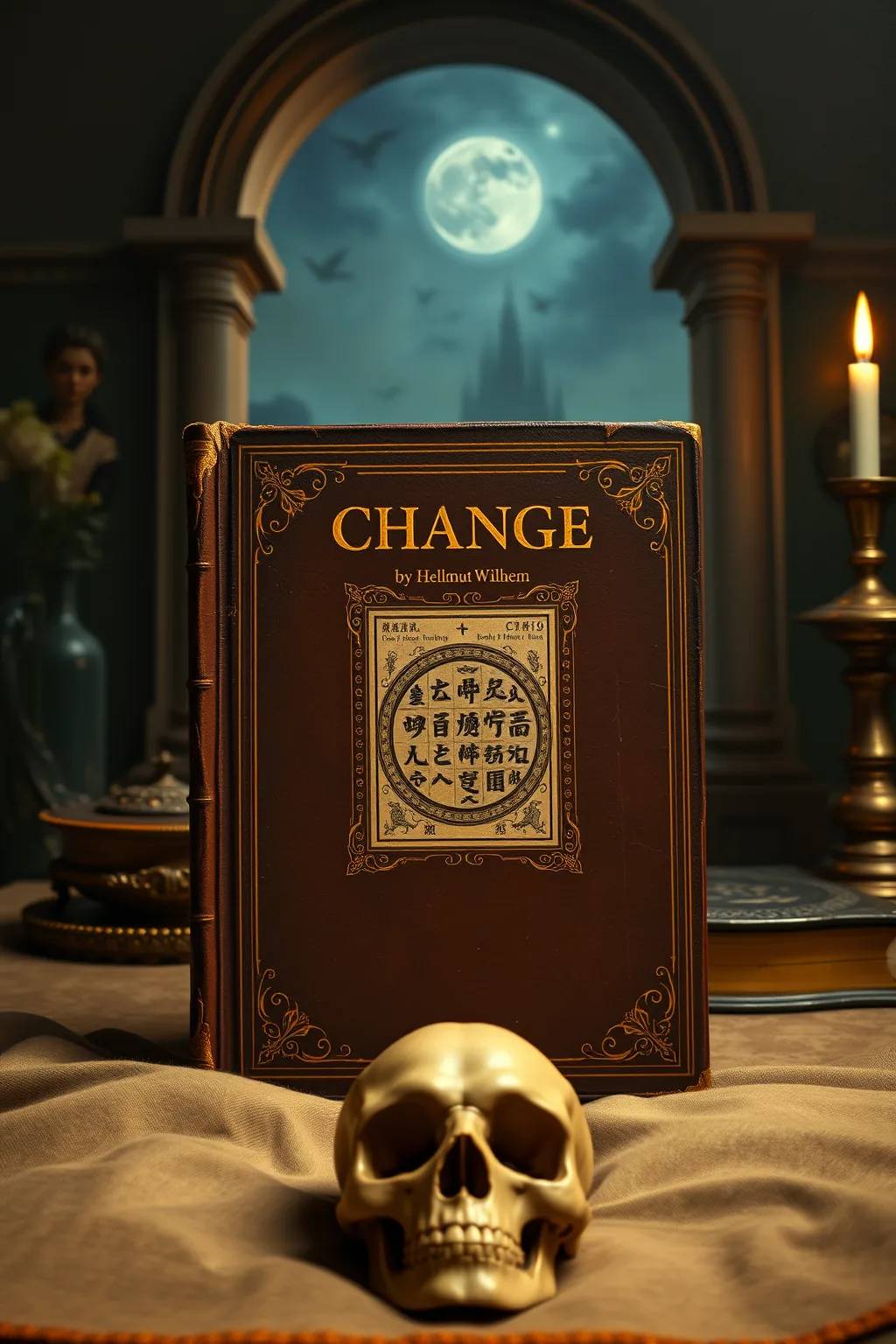
Hellmut Wilhelm's "Change" presents a compelling, if demanding, examination of transformative processes. The author's strength lies in his meticulous deconstruction of change, moving beyond simple metaphor to present it as a structured, albeit often chaotic, phenomenon. Wilhelm's analysis of "dynamic equilibrium" is particularly insightful, offering a framework to understand how societies and individuals maintain coherence amidst flux. However, the book's dense prose and reliance on abstract conceptualization can be a barrier. At times, the text feels overly academic, requiring significant reader effort to translate theory into tangible application. A notable passage discusses the "threshold of dissolution," vividly illustrating how societal decay can paradoxically precede renewal, a concept that remains potent. While its theoretical depth is undeniable, "Change" might have benefited from more concrete, illustrative examples to anchor its sophisticated arguments. It is a serious work for dedicated students of transformation.
📝 Description
81
Hellmut Wilhelm's "Change" (2019) analyzes transformation not as an event, but as an inherent force.
Published in 2019, Hellmut Wilhelm's "Change" examines the principles underlying shifts in consciousness, society, and the natural world. This book is not a manual for self-improvement but a philosophical inquiry into the mechanics of transformation. Wilhelm treats change as a fundamental constant, observing its effects from individual psychological development to large-scale historical currents. He draws on philosophical ideas and psychological theories to build a model for understanding the causes and processes of change.
The work is for readers seeking a rigorous, analytical grasp of the dynamics of transformation. It will interest students of esoteric thought, comparative religion, and philosophy who prefer non-linear developmental frameworks. Individuals involved in personal growth, especially those finding common self-help methods inadequate, may find Wilhelm's structured analysis of change principles valuable. The book demands engagement with abstract concepts and an interest in the underlying drivers of evolution and societal upheaval.
Wilhelm's "Change" arises from a long lineage of philosophical and esoteric thought dedicated to codifying the dynamics of transformation. Though published in 2019, its intellectual foundations connect to early 20th-century explorations of consciousness and societal evolution, echoing figures like Carl Jung and his work on individuation. The book offers a structured way to comprehend rapid societal changes and perceived modern instability, presenting a counterpoint to purely materialist or deterministic historical views.
💡 Why Read This Book?
• Gain a structured understanding of the "dynamic equilibrium" that governs personal and societal evolution, moving beyond superficial notions of progress. • Explore the "principle of emergent complexity" to grasp how predictable patterns arise from seemingly chaotic interactions. • Understand the "threshold of dissolution" concept, offering a lens to view societal or personal breakdowns not as endings, but as precursors to new forms.
⭐ Reader Reviews
Honest opinions from readers who have explored this book.
❓ Frequently Asked Questions
What is the central thesis of Hellmut Wilhelm's "Change"?
The central thesis is that change is not an anomaly but a fundamental, structured process governed by principles like dynamic equilibrium and emergent complexity, essential for evolution and adaptation.
When was "Change" by Hellmut Wilhelm first published?
Hellmut Wilhelm's "Change" was first published in 2019, making it a contemporary exploration of long-standing philosophical and esoteric themes.
Does "Change" offer practical advice for self-improvement?
While not a direct self-help manual, the book provides analytical frameworks and concepts like the 'feedback loop of intention' that can inform personal development strategies by understanding the mechanics of change.
What academic disciplines does "Change" engage with?
The book engages with philosophy, psychology, sociology, and esoteric studies, drawing on concepts from thinkers like Carl Jung to analyze transformative processes.
Is "Change" considered an esoteric text?
Yes, "Change" is categorized as esoteric literature due to its exploration of underlying universal principles and its engagement with concepts that transcend conventional scientific or materialist explanations.
What does Wilhelm mean by the 'threshold of dissolution'?
The 'threshold of dissolution' refers to the critical point where existing structures, whether personal or societal, must break down to permit the emergence of new forms and possibilities.
🔮 Key Themes & Symbolism
Dynamic Equilibrium
This theme posits that stability is not static but a continuous, active process of adjustment. Wilhelm argues that systems, from individual psyches to societies, maintain their form through constant recalibration in response to internal and external forces. This contrasts with a view of stability as an absence of change, instead presenting it as a complex dance of opposing pressures, ensuring resilience and adaptability. The concept is central to understanding how life persists and evolves through inherent fluctuations.
Emergent Complexity
Wilhelm explores how simple elements, through iterative processes and interactions, can give rise to sophisticated and often unpredictable outcomes. This principle is crucial for understanding phenomena that cannot be easily predicted from the sum of their parts, such as consciousness, societal trends, or ecological systems. The work suggests that change itself is a driver of this emergent complexity, creating new levels of organization and behavior that were not present in the initial state.
Threshold of Dissolution
This concept addresses the necessary breakdown of existing structures for new forms to emerge. Wilhelm suggests that periods of apparent decay or crisis are often vital junctures, where the old must dissolve to make way for the new. It reframes destructive processes not as terminal failures but as essential stages in a larger cycle of renewal and transformation, applicable to both personal crises and societal upheavals.
Feedback Loop of Intention
Wilhelm examines how focused will and collective intention can influence the direction and pace of change. This theme studies the reciprocal relationship between conscious intent and the unfolding processes of transformation. It suggests that by understanding and directing intention, individuals and groups can more effectively engage with and shape the forces of change, rather than being passively swept along by them.
💬 Memorable Quotes
Direct passages from the work, attributed to the author.
“The end of one form is the necessary condition for the birth of another.”
— This interpretation of the 'threshold of dissolution' principle underscores the idea that decay and endings are not final but essential prerequisites for new beginnings and transformations.
“Intention acts as a rudder upon the currents of change.”
— This interpretation of the 'feedback loop of intention' illustrates how conscious will can guide the direction of transformative processes, rather than simply being subject to them.
“To understand change is to understand the nature of becoming.”
— This statement captures the philosophical essence of the book, linking the study of change directly to the fundamental nature of existence and continuous evolution.
💡 Key Ideas
Editorial paraphrase of the work's core concepts — not direct quotes.
Stability is not the absence of motion, but the rhythm of its forces.
This paraphrased concept highlights Wilhelm's view of dynamic equilibrium, suggesting that true stability is found in the continuous, balanced interplay of forces, rather than a static state of rest.
Complexity arises not from design, but from the interactions of the simple.
This quote, paraphrasing a core idea, emphasizes Wilhelm's concept of emergent complexity, where intricate systems develop organically through the relationships between basic components.
🌙 Esoteric Significance
Tradition
This work fits within the Western esoteric tradition, drawing from philosophical inquiries into natural law and cyclical processes. It echoes Gnostic and Hermetic concerns with underlying universal principles that govern manifest reality. Wilhelm departs from some traditions by offering a more systematic, almost scientific, framework for understanding change, rather than relying solely on mystical revelation or ritualistic practice, though its core concepts resonate with the cyclical worldview found in traditions like Buddhism or ancient Greek philosophy.
Symbolism
While "Change" focuses on conceptual frameworks, its exploration of "threshold of dissolution" evokes the alchemical symbol of the Ouroboros, representing cyclical death and rebirth. The "principle of emergent complexity" can be seen as analogous to the unfolding of the Tree of Life in Kabbalah, where divine essence manifests in increasingly complex forms. The idea of "dynamic equilibrium" finds echoes in Taoist concepts of Yin and Yang, where opposing forces maintain balance through constant interplay.
Modern Relevance
Contemporary thinkers in fields like organizational development, social psychology, and even spiritual coaching often grapple with managing rapid change. Wilhelm's frameworks offer a deeper theoretical underpinning for understanding these dynamics. His concepts of "emergent complexity" and "dynamic equilibrium" are particularly relevant to modern systems thinking and are explored by various contemporary esoteric authors who seek to integrate esoteric principles with scientific understanding of complex systems.
👥 Who Should Read This Book
• Students of esoteric philosophy seeking to understand transformation through a structured, analytical lens, moving beyond purely metaphorical interpretations. • Comparative religion scholars interested in how different traditions conceptualize evolution, decay, and renewal across time and systems. • Individuals engaged in deep personal or societal analysis who require frameworks for understanding systemic shifts and the underlying forces at play.
📜 Historical Context
Hellmut Wilhelm's "Change" (2019) enters a discourse on transformation that has long engaged thinkers across philosophy and esoteric traditions. Its publication date places it in an era marked by rapid technological advancement and global interconnectedness, intensifying questions about societal evolution and individual adaptation. The work implicitly engages with the legacy of figures like Carl Jung, whose theories on individuation and archetypes explored psychological transformation in the mid-20th century. Wilhelm's approach can be seen as extending these inquiries into broader systemic analyses. The book offers a counterpoint to deterministic historical narratives, emphasizing agency and underlying principles. While direct engagement with specific contemporary movements is not detailed, its focus on systemic change aligns with contemporary systems theory and complexity science, albeit from an esoteric perspective. The reception of such works often lies within niche academic and spiritual communities, rather than mainstream critical discourse.
📔 Journal Prompts
The feedback loop of intention: How has your focused will shaped a recent change in your life?
Reflect on a personal or societal 'threshold of dissolution' you have witnessed or experienced.
Analyze a complex situation using the principle of emergent complexity.
Consider a period of perceived instability in your life through the lens of dynamic equilibrium.
How does the idea of change as an inherent rhythm, rather than a disruption, alter your perspective?
🗂️ Glossary
Dynamic Equilibrium
A state of balance achieved not through stasis, but through continuous, active adjustment and recalibration of opposing forces within a system.
Emergent Complexity
The phenomenon where sophisticated and unpredictable patterns or properties arise from the interactions of simpler components within a system.
Threshold of Dissolution
The critical point at which existing structures or forms must break down to allow for the emergence of new possibilities and configurations.
Feedback Loop of Intention
The reciprocal relationship where conscious will or collective intention influences the direction and pace of transformative processes.
Principle of Cyclicality
The underlying concept that processes of change often follow recurring patterns of creation, dissolution, and renewal.
Systemic Transformation
Change that affects the fundamental structure and interrelationships within a complex system, rather than merely altering superficial aspects.
Becoming
The philosophical concept referring to the continuous process of change, evolution, and existence, as opposed to a static state of being.
🔮 Readers Also Liked
Browse all →









More by Hellmut Wilhelm
All books →



More Free Occult Philosophy Books
View all →