Celtic Lore

 72
72

Celtic Lore
Ward Rutherford's Celtic Lore presents a methodical survey of a complex mythological landscape. The work's strength lies in its systematic cataloging of deities, heroes, and foundational myths, providing a valuable reference for the uninitiated. Rutherford avoids romanticized interpretations, instead focusing on the structures and recurring motifs within the lore. A particular passage discussing the Triads of the Wisdom of the Isle of Britain, even if paraphrased, highlights the didactic nature of ancient Celtic storytelling. However, the book's academic tone, while commendable for its rigor, can sometimes feel dry, lacking the animating spark one might expect from such vibrant subject matter. The prose is functional, prioritizing information delivery over evocative description. Ultimately, Celtic Lore is an informative, if somewhat detached, scholarly compilation of ancient Celtic narratives and beliefs.
📝 Description
72
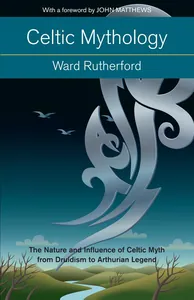
Ward Rutherford's Celtic Lore, published in 1993, details myths, legends, and spiritual beliefs of ancient Celtic societies.
Ward Rutherford's 1993 book, Celtic Lore, examines the myths, legends, and spiritual beliefs that shaped ancient Celtic societies across Ireland, Scotland, Wales, and Brittany. It moves beyond simple storytelling to analyze the symbolic structures and cosmological views of these peoples. The work covers the Celtic pantheon, the importance of sacred sites, and the rituals that structured daily life. Rutherford places Celtic beliefs within the context of Iron Age Europe, noting influences and differences from other Indo-European mythologies. The book was published during a period of renewed interest in Paganism and indigenous European spiritualities, engaging directly with this trend.
Published in the early 1990s, a time marked by growing academic and popular interest in Paganism and pre-Christian European religions, Celtic Lore engaged with this resurgence. It offered a more detailed account than general New Age explorations, focusing on specific Celtic traditions. The book connects ancient beliefs to enduring cultural expressions, appealing to those interested in the roots of Western esoteric thought and the historical context of Celtic spirituality.
💡 Why Read This Book?
• Gain a structured understanding of the Celtic pantheon, including figures like the Morrigan and Lugh, moving beyond superficial mentions to grasp their roles and symbolic meanings as detailed in the book's mythological narratives. • Explore the concept of the Otherworld, Tír na nÓg, and its significance in Celtic cosmology, learning how it functioned as both a spiritual realm and a narrative setting within the tales presented. • Appreciate the historical context of Celtic spirituality by understanding its roots in Iron Age Europe, as discussed in relation to contemporary belief systems and societal structures of the early 1990s.
⭐ Reader Reviews
Honest opinions from readers who have explored this book.
❓ Frequently Asked Questions
What is the primary focus of Ward Rutherford's Celtic Lore?
The book primarily focuses on the myths, legends, spiritual beliefs, and cosmology of the ancient Celtic peoples across Ireland, Scotland, and Wales, examining their pantheon, sacred sites, and ritual practices.
When was Celtic Lore first published and why is this significant?
Celtic Lore was first published in 1993. This timing is significant as it coincided with a growing popular and academic interest in pre-Christian European religions and Pagan revival movements.
Does the book discuss the role of Druids?
Yes, the book explores the multifaceted role of druids in Celtic society, detailing their functions as lore-keepers, spiritual leaders, and mediators, as presented through the mythological and historical accounts within the text.
What key concepts are covered in Celtic Lore?
Key concepts include the cyclical perception of time, the spiritual dimension of the Otherworld (Tír na nÓg), animal symbolism, and the relationship between the human and divine realms as depicted in Celtic narratives.
Is Celtic Lore suitable for beginners in mythology?
Yes, the book's systematic approach and clear explanations make it suitable for beginners, providing a foundational understanding of Celtic myths and beliefs without overwhelming them with overly academic jargon.
What distinguishes Celtic Lore from other books on Celtic mythology?
Its distinction lies in its structured, reference-like approach to cataloging deities and myths, and its contextualization within the broader landscape of Iron Age European cultures, aiming for a more analytical rather than purely narrative presentation.
🔮 Key Themes & Symbolism
The Celtic Pantheon
This theme delves into the complex hierarchy and roles of Celtic gods and goddesses, such as the formidable Morrigan and the skilled Lugh. Rutherford's work systematically maps these figures, often drawing connections between their myths and their perceived domains—war, harvest, magic, and kingship. It examines how these deities were not static but evolved, reflecting the dynamic nature of Celtic society. The exploration moves beyond simple enumeration to consider their symbolic significance and the rituals likely associated with their worship, offering insight into a pre-Christian worldview.
The Otherworld
Central to Celtic belief is the concept of the Otherworld, often referred to as Tír na nÓg. This theme analyzes its portrayal in myths as a parallel dimension, a realm of youth, beauty, and immortality, but also a place of enchantment and peril. Rutherford explores how the boundaries between the human and Otherworld were perceived as permeable, with heroes and mortals frequently crossing over. The significance of sacred sites, like mounds and wells, as liminal gateways to this spiritual dimension is also a key focus, highlighting its pervasive influence on Celtic imagination and spirituality.
Druids and Lore Keepers
The book examines the pivotal role of the druids within Celtic society, extending beyond their priestly functions. Rutherford presents them as custodians of sacred knowledge, skilled in law, divination, and history. This theme scrutinizes their status as intellectual and spiritual elites who preserved and transmitted the oral traditions, myths, and genealogies that formed the bedrock of Celtic culture. The work considers their influence on societal order and their connection to the natural world, as reconstructed from historical accounts and mythological narratives.
Symbolism in Nature and Animals
Celtic spirituality is deeply intertwined with the natural world, and this theme unpacks the symbolic meanings attributed to animals, plants, and landscapes. Rutherford discusses how creatures like the stag, raven, and boar were often imbued with divine or supernatural significance, acting as messengers, totems, or manifestations of deities. The importance of trees, rivers, and mountains as sacred elements or dwelling places of spirits is also explored. This focus reveals a worldview where the boundaries between the physical and spiritual were fluid, and nature itself served as a text for understanding cosmic order.
💬 Memorable Quotes
“The Celtic pantheon was not monolithic but a complex assembly of regional deities and ancestral spirits.”
— This highlights that understanding Celtic religion requires acknowledging its diversity. It suggests that different tribes or regions likely had their own favored deities or variations in worship, rather than a single, unified religious structure.
“Tír na nÓg served as both an idyllic paradise and a place of potent magical influence.”
— This captures the dual nature of the Celtic Otherworld. It wasn't merely a passive heaven but an active force, capable of bestowing blessings or enacting enchantments, reflecting a more dynamic spiritual geography than simple afterlife concepts.
“Druids were the intellectual backbone of Celtic society, preserving law and lore.”
— This emphasizes the druids' critical function beyond mere religious rites. They were the keepers of tradition, history, and social order, acting as the cultural and intellectual elite responsible for the continuity of Celtic civilization.
“The cycle of seasons and life mirrored the perceived cosmic order.”
— This interpretation points to a worldview deeply connected to natural rhythms. The Celts likely saw patterns in the yearly cycles of growth, decay, and rebirth as reflections of fundamental universal principles and divine will.
“Animal motifs in Celtic art often carried specific symbolic weight related to spiritual power.”
— This suggests that depictions of animals were not merely decorative but encoded messages. These symbols likely represented deities, forces of nature, or spiritual qualities, indicating a sophisticated visual language tied to their belief system.
🌙 Esoteric Significance
Tradition
Celtic Lore fits within the broader stream of Western Esotericism by exploring pre-Christian indigenous European spiritual systems. While not directly Hermetic or Gnostic, it contributes to traditions that seek to recover and understand ancient sources of magic, cosmology, and nature-based spirituality. It provides foundational mythological material for modern Druidic and Celtic Reconstructionist paths, which often draw inspiration from these ancient narratives to form contemporary practices and worldviews.
Symbolism
Key symbols explored include the Ogham alphabet, a system of tree-based runes used for divination and inscription, representing a sacred connection to the natural world. The Triquetra, a three-cornered knot, symbolizes concepts of threefold divinity, interconnectedness, or the cycles of life, death, and rebirth. Animals like the raven and the stag are presented not merely as fauna but as powerful spirit guides or manifestations of deities, embodying wisdom, power, and the wildness of the Otherworld.
Modern Relevance
Contemporary practitioners of modern Druidry and Celtic Reconstructionism frequently reference works like Rutherford's for their mythological frameworks and understanding of ancient Celtic cosmology. Thinkers and groups focused on ecological spirituality and reclaiming indigenous European heritage find value in its detailed accounts of nature-based beliefs. The book's systematic approach also informs comparative mythological studies and continues to be a resource for those seeking to understand the roots of Western folklore and esoteric symbolism.
👥 Who Should Read This Book
• Students of comparative mythology seeking to understand the unique characteristics of Celtic narratives and their place within Indo-European traditions. • Modern Druids and Celtic Reconstructionists looking for foundational mythological content and symbolic interpretations to inform their spiritual practices. • Researchers of ancient European history and religion interested in the societal structures, beliefs, and cosmological views of pre-Christian Celtic peoples.
📜 Historical Context
Ward Rutherford's Celtic Lore emerged in 1993, a period marked by a burgeoning interest in indigenous European spiritualities and a significant revival of Paganism. This era saw a divergence from earlier, more generalized New Age spirituality towards a more focused exploration of specific ancestral traditions. Rutherford's work engaged with this trend by providing a structured, mythographical account of Celtic beliefs, situating them within the broader context of Iron Age European cultures. Unlike more syncretic approaches, his book aimed for a degree of historical and cultural specificity. Contemporaries exploring similar veins included scholars and authors like Miranda Green, whose work also focused on Celtic art and religion, and authors contributing to the growing Neo-Pagan literature, though Rutherford's approach leaned more towards descriptive cataloging than explicit ritual instruction.
📔 Journal Prompts
The multifaceted role of the druids as presented in the text.
Symbolic interpretations of animal figures like the raven or stag.
The perceived relationship between the human world and Tír na nÓg.
Reflections on the cyclical nature of time as understood by the Celts.
Connections between natural elements and spiritual significance in Celtic lore.
🗂️ Glossary
Tír na nÓg
Literally 'Land of Youth,' this is the Celtic mythological Otherworld, often depicted as a paradise of eternal youth, beauty, and abundance, separate from the mortal realm.
Morrigan
A complex goddess associated with fate, battle, sovereignty, and the land. She often appears as a trio of figures and is linked to prophecy and the supernatural aspects of warfare.
Lugh
A prominent god in Celtic mythology, often depicted as a master of all arts and skills, associated with kingship, craftsmanship, and the sun. He is a heroic figure in many tales.
Ogham
An ancient Celtic alphabet, primarily used for inscriptions on stone monuments. It is often associated with trees and has been used in later esoteric traditions for divination.
Triads
A literary and philosophical device in Welsh and Irish tradition, presenting three related statements or concepts. They often encapsulate wisdom, law, or mythological lore.
Otherworld
A parallel spiritual or supernatural realm in Celtic mythology, distinct from the mortal world, inhabited by deities, spirits, and the dead. Its boundaries are often permeable.
Druid
A member of the priestly and learned class in ancient Celtic societies, responsible for religious rituals, law, divination, and the preservation of lore and history.