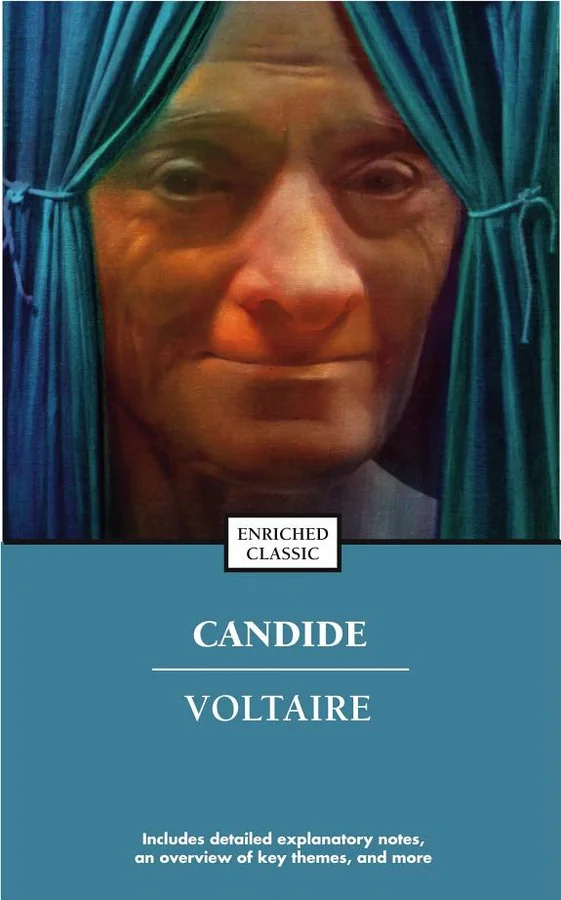
Candide
 84
84

Candide
Voltaire’s *Candide* is less a narrative and more a philosophical demolition derby. The sheer velocity with which Candide is subjected to horrors – from being whipped for listening to El Dorado’s philosophy to surviving the Lisbon earthquake – is breathtakingly relentless. While the satire of optimistic philosophy is undeniably sharp, particularly the endlessly rationalizing Pangloss, the book’s true strength lies in its unvarnished depiction of human cruelty and natural disaster. Its limitation, however, is that the relentless pace and sheer absurdity can sometimes overshadow the deeper existential questions it raises, leaving the reader breathless but perhaps not fully contemplative. The concluding advice to "cultivate our garden" offers a stark contrast to the grand metaphysical schemes it skewers, but its practical wisdom feels earned only after enduring the preceding chaos. It is a brilliant, brutal, and ultimately pragmatic polemic.
📝 Description
84
### What It Is
Voltaire's *Candide*, first published anonymously in 1759, presents a satirical novella that follows the titular character, Candide, as he endures a series of increasingly absurd and calamitous events. Initially indoctrinated with the philosophy of "best of all possible worlds" by his tutor Pangloss, Candide's journey exposes him to war, religious persecution, earthquakes, and personal misfortunes across Europe and South America. The narrative functions as a pointed critique of Leibnizian optimism and theological determinism, using swift pacing and dark humor to dismantle complacent philosophical stances.
### Who It's For
This work is suited for readers interested in the Enlightenment era's intellectual debates and the roots of philosophical satire. Those who appreciate sharp wit, biting social commentary, and narratives that challenge prevailing dogmas will find *Candide* particularly engaging. It appeals to students of literature, philosophy, and history, as well as anyone seeking a text that uses humor to confront serious questions about suffering, faith, and the nature of reality. Its brevity makes it accessible for a focused study or casual reading.
### Historical Context
Published during the height of the Enlightenment, *Candide* emerged in a Europe grappling with scientific advancements and challenges to traditional religious and philosophical authority. The Lisbon earthquake of 1755, a catastrophic event that killed tens of thousands, profoundly influenced Voltaire and is directly referenced within the novella. This disaster fueled skepticism towards optimistic philosophies that sought to reconcile the existence of evil with a benevolent, omnipotent God. Voltaire's work engaged directly with the ideas of Gottfried Wilhelm Leibniz, whose optimistic metaphysics posited that this is the best of all possible worlds. The book’s critique was so potent that it faced censorship and was banned in several places upon its release.
### Key Concepts
The novella centers on the refutation of philosophical optimism, particularly the Leibnizian concept that all events, including evils, are necessary parts of a divinely ordered, perfect whole. It explores the problem of evil and suffering, questioning how such calamities can exist if a benevolent deity presides over the world. The narrative also touches upon themes of religious hypocrisy, the corrupting influence of power and wealth, and the search for meaning and happiness in a seemingly chaotic existence. Ultimately, it suggests a pragmatic approach to life, advocating for diligence and practical work rather than abstract speculation.
💡 Why Read This Book?
• You will encounter a direct literary assault on Leibnizian optimism, understanding why Voltaire felt compelled to critique the notion that this is the 'best of all possible worlds' following events like the 1755 Lisbon earthquake. • You will gain a visceral appreciation for the power of satire in dismantling complacent philosophical systems, learning how Voltaire used Candide's misfortunes to expose the absurdities of pre-Enlightenment thought. • You will discover a pragmatic approach to finding meaning through "cultivating our garden," a concept presented as a counterpoint to abstract speculation and a practical response to existential suffering.
⭐ Reader Reviews
Honest opinions from readers who have explored this book.
❓ Frequently Asked Questions
What is the main philosophical idea Voltaire satirizes in Candide?
Voltaire satirizes philosophical optimism, specifically the Leibnizian concept that this is the 'best of all possible worlds.' He uses Candide's endless misfortunes to demonstrate the existence of immense suffering and evil, challenging the notion that all events are divinely ordained for the best.
Who is Pangloss and what does he represent?
Pangloss is Candide's tutor, an allegorical figure representing blind optimism and Leibnizian philosophy. He consistently rationalizes even the most horrific events, claiming they are necessary for the greater good, thereby embodying the philosophical stance Voltaire sought to debunk.
What historical event significantly influenced Voltaire's writing of Candide?
The devastating Lisbon earthquake of 1755, which killed tens of thousands, profoundly impacted Voltaire. This event directly challenged optimistic philosophies that claimed a benevolent God would prevent such widespread suffering, and it is explicitly referenced in the novella.
What is the meaning of the ending phrase 'cultivate our garden'?
The concluding advice to 'cultivate our garden' suggests focusing on practical work and tangible improvements in one's immediate environment, rather than engaging in abstract philosophical debates. It represents a shift towards pragmatism and personal responsibility in the face of a chaotic world.
Was Candide controversial when it was published?
Yes, Candide was highly controversial upon its anonymous publication in 1759. Its sharp critique of religion, government, and philosophy led to it being banned in several cities and Geneva, and it was condemned by religious authorities.
What is the primary literary style of Candide?
Candide is primarily known for its use of satire and irony. Voltaire employs a fast-paced, episodic narrative structure and dark humor to critique the philosophical and social conventions of his time, particularly optimistic metaphysics and religious dogma.
🔮 Key Themes & Symbolism
Critique of Philosophical Optimism
The novella launches a relentless assault on the Leibnizian doctrine that this is the 'best of all possible worlds.' Through Candide's unending series of misfortunes – from war and natural disasters to personal betrayals – Voltaire systematically dismantles the notion that all evil is merely a necessary component of a perfect divine plan. The character of Pangloss, who finds reasons to praise Providence even while suffering, serves as the embodiment of this blind, uncritical faith. The work posits that such philosophical complacency ignores the stark realities of human suffering and the apparent indifference of the universe.
The Problem of Evil and Suffering
Candide confronts the problem of evil head-on, not as an abstract theological debate, but as a lived, brutal experience. The Lisbon earthquake, the auto-da-fé, slavery, and war are depicted with unflinching clarity, forcing readers to question the nature of a benevolent deity in a world so rife with pain. Voltaire suggests that the existence of gratuitous suffering cannot be easily reconciled with traditional religious explanations, pushing towards a more secular and pragmatic understanding of the human condition.
Pragmatism vs. Speculation
In stark contrast to the abstract philosophical systems espoused by characters like Pangloss, the novella culminates in a call for practical action. The final assertion, 'we must cultivate our garden,' signifies a rejection of idle speculation and a turn towards tangible work and self-sufficiency. This pragmatic approach suggests that finding meaning and improving one's lot comes not from grand theories about the universe's perfection, but from diligent effort in one's immediate sphere of influence, a grounded response to a chaotic existence.
Critique of Institutions
Voltaire uses Candide's journey to expose the corruption, hypocrisy, and violence inherent in various societal institutions. The military is depicted as a force of senseless destruction, religious authorities are shown as persecutors masquerading as pious figures (particularly in the Spanish Inquisition), and the aristocracy is portrayed as often cruel and self-serving. The novella critiques how these established powers contribute to the suffering of individuals and perpetuate injustice, often under the guise of divine mandate or social order.
💬 Memorable Quotes
“If there is a God, this is the worst of all possible worlds.”
— This paraphrased sentiment captures the core argument against Leibnizian optimism. It directly confronts the idea that this world, with its pervasive suffering, could be the 'best' possible creation, suggesting instead that such a world would be a testament to a flawed or malevolent creator.
“We must cultivate our garden.”
— This final, pragmatic directive suggests abandoning abstract philosophical debates that offer no solutions to suffering. Instead, it advocates for focusing on tangible work, self-improvement, and caring for one's immediate surroundings as the most sensible response to the world's chaos.
“It is clear that the face of the earth is the ruin of the heavens.”
— This statement, often attributed to Candide's observations, highlights the stark contrast between an idealized view of the cosmos or divine order and the harsh realities of the physical world. It implies that earthly suffering contradicts any notion of a perfectly ordered, benevolent celestial plan.
“What is optimism? It is the madness of insisting that all is well when it is not.”
— This interpretation encapsulates Voltaire's scathing critique of philosophical optimism. It frames the doctrine not as a reasoned belief, but as a form of delusion or willful ignorance that prevents individuals from acknowledging and addressing the very real suffering in the world.
“Is it possible that the birds were always eaten by the cats, and the cats by the dogs?”
— This rhetorical question, reflecting Candide's dawning realization, challenges the natural order as justification for cruelty. It questions the inherent fairness of a system where the strong prey on the weak, suggesting that such predation is not a sign of divine wisdom but simply a brutal reality.
🌙 Esoteric Significance
Tradition
While not explicitly a text of a specific esoteric tradition, *Candide* functions as a critical examination of theological and philosophical systems that often underpin esoteric thought. Its engagement with determinism, divine providence, and the problem of evil touches upon themes central to Gnosticism and Hermeticism, which often grapple with the perceived imperfections of the material world and the nature of a creator. Voltaire's work, however, offers a secular, rationalist counterpoint, using satire to expose the logical inconsistencies in attempts to reconcile suffering with divine goodness, a perspective often explored through mystical or allegorical lenses in esoteric lineages.
Symbolism
The character of Pangloss, with his incessant, distorted rationalizations, symbolizes the dangers of rigid, dogmatic adherence to abstract philosophical systems detached from lived experience. Candide himself, representing an innocent or naive soul, embodies the journey of disillusionment and eventual pragmatic awakening. The 'garden' at the end represents not a mystical Eden, but a tangible, earthly sphere of influence where practical work and community are valued over abstract contemplation, a symbol of grounded existence.
Modern Relevance
Contemporary thinkers and practitioners continue to draw on *Candide*'s critique of blind faith and simplistic optimism. In fields like existentialism and absurdism, the novella’s unflinching portrayal of a chaotic universe and the search for meaning finds resonance. Its secular humanism and emphasis on action over speculation align with modern therapeutic approaches that focus on practical problem-solving and acceptance of life's inherent difficulties, offering a timeless literary precedent for confronting existential angst.
👥 Who Should Read This Book
• Students of Enlightenment philosophy: To gain a direct, satirical engagement with Leibnizian optimism and understand the intellectual battles of the 18th century. • Readers interested in literary satire: To appreciate Voltaire's masterful use of irony, wit, and dark humor to critique societal and philosophical norms. • Those questioning the problem of evil: To explore a classic literary response to suffering and the difficulties of reconciling it with concepts of divine order.
📜 Historical Context
Published in 1759, *Candide* emerged from the intellectual ferment of the French Enlightenment, a period characterized by a vigorous challenge to traditional religious and political authority. Voltaire, a leading figure of this movement, engaged directly with the philosophical ideas of Gottfried Wilhelm Leibniz, whose optimistic metaphysics posited that this is the best of all possible worlds. The devastating Lisbon earthquake of 1755, which killed tens of thousands, served as a potent empirical counter-argument for Voltaire, fueling his skepticism. His work was also a reaction against the perceived complacency of thinkers like Jean-Jacques Rousseau, who, despite acknowledging evil, offered less radical solutions. The novella’s sharp critique of religious institutions, particularly the Catholic Church and its associated intolerance (highlighted by the auto-da-fé scenes), led to its immediate condemnation and banning in Geneva and Paris, underscoring its controversial nature and impact.
📔 Journal Prompts
Candide's initial indoctrination into optimistic philosophy.
The recurring motif of natural disasters and human cruelty.
Pangloss's relentless rationalizations despite evident suffering.
The stark contrast between abstract speculation and practical labor.
The meaning and implications of 'cultivating our garden'.
🗂️ Glossary
Optimism (Philosophical)
The philosophical doctrine, most notably articulated by Gottfried Wilhelm Leibniz, asserting that the existing world is the best possible world that a benevolent and omnipotent God could have created, with all evils being necessary for the greater good.
Leibnizianism
The philosophical system developed by Gottfried Wilhelm Leibniz, characterized by his principle of sufficient reason, his metaphysical concept of monads, and his theory of optimism.
Auto-da-fé
A public penance or procession of condemned heretics during the Spanish and Portuguese Inquisitions, often culminating in execution, particularly burning at the stake.
Satire
The use of humor, irony, exaggeration, or ridicule to expose and criticize people's stupidity or vices, particularly in the context of contemporary politics and other topical issues.
Enlightenment
An 18th-century intellectual and cultural movement emphasizing reason, individualism, skepticism, and science, challenging traditional authority and dogma.
Determinism
The philosophical belief that all events, including human cognition, decision, and action, are causally determined by an unbroken chain of prior occurrences. In Candide, it relates to the idea that all events are predetermined by Providence.
Pragmatism
A philosophical approach that assesses the truth of meaning of theories or beliefs in terms of the success and usefulness of their practical application. In Candide, it culminates in the idea of 'cultivating our garden'.