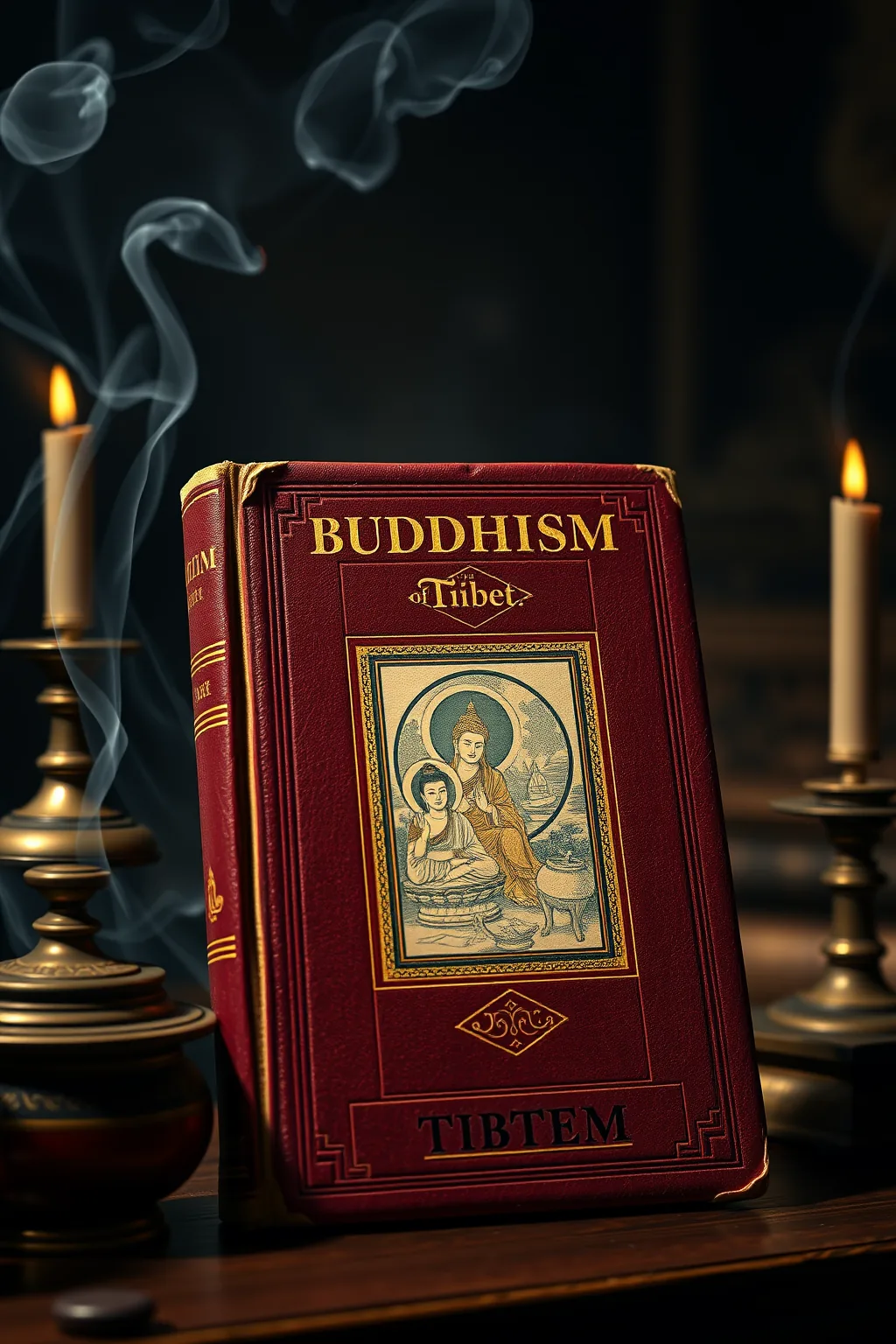
Buddhism Of Tibet Or Lamaism
 80
80

Buddhism Of Tibet Or Lamaism



Alaric Kestrel (Metaphysical Studies Reviewer) — Major L. A. Waddell's 'Buddhism of Tibet or Lamaism' stands as a monumental achievement in the study of esoteric Eastern traditions. Waddell's firsthand experience and linguistic mastery grant unparalleled access to the intricate doctrines and practices of Tibetan monks and hermits. This work is not merely an academic treatise; it's an invitation to explore the profound symbolism, advanced philosophical concepts, and the yogic disciplines that form the bedrock of this ancient lineage. Its strength lies in its comprehensive scope and the author's dedication to accuracy, making it an indispensable resource for serious scholars and dedicated practitioners alike seeking to decipher the profound spiritual landscape of the Tibetan plateau.
📝 Description
80
Major L. A. Waddell's 1895 work details the spiritual disciplines of Tibetan monks and hermits.
Published in 1895, 'Buddhism of Tibet or Lamaism' by Major L. A. Waddell provides a detailed account of the religious and spiritual practices of Tibetan monks and hermits. Waddell, who benefited from fluency in the Tibetan language and participation in the 1903 British Tibet Expedition, aimed to present an authentic view of this tradition. The book examines the philosophical ideas and the rituals central to Tibetan Buddhism, often referred to as Lamaism in Western discourse.
Illustrated with numerous plates, the text focuses on the visual elements of Tibetan spiritual life. It discusses iconography, symbolic meanings within rituals, and the monastic systems that support these practices. Waddell's research sought to illuminate a spiritual path that was then largely unknown in the West, offering insights into the disciplined life and transformative aspects of Himalayan religious traditions.
This book enters the study of Tibetan Buddhism, a tradition often classified under occult philosophy due to its focus on tantric practices, yogic disciplines, and complex cosmological systems. Waddell's work, appearing when Western interest in Eastern religions was growing, offers a description of rituals and beliefs that were seen as arcane and mystical. It situates Tibetan practices within a lineage of spiritual development that includes meditation, visualization, and the pursuit of altered states of consciousness, aligning it with broader esoteric interests in spiritual transformation and hidden knowledge.
✍️ Author
its monks and hermits. For many years thi
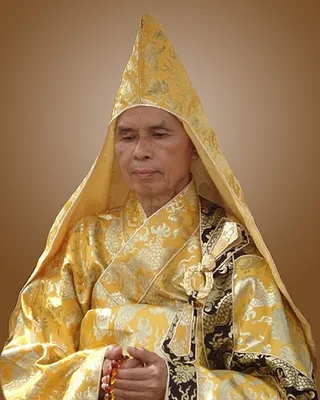
Thích Nhất Hạnh ( TIK NAHT HAHN; Vietnamese: [tʰǐk̟ ɲə̌t hâjŋ̟ˀ] , Huế dialect: [tʰɨt̚˦˧˥ ɲək̚˦˧˥ hɛɲ˨˩ʔ]; born Nguyễn Xuân Bảo; 11 October 1926 – 22 January 2022) was a Vietnamese Thiền Buddhist monk, peace activist, prolific author, poet, and teacher, who…
💡 Why Read This Book?
This classic offers a rare, comprehensive insight into Tibetan Buddhism, demystifying its esoteric practices and rich symbolism for Western audiences. Ideal for seekers of hidden wisdom, scholars of comparative religion, and practitioners interested in the unique spiritual paths of the Himalayas. Discover a world of profound philosophy and disciplined yogic traditions.
⭐ Reader Reviews
Honest opinions from readers who have explored this book.
❓ Frequently Asked Questions
What makes 'Buddhism of Tibet or Lamaism' unique?
Its comprehensive nature, based on the author's firsthand research and fluency in Tibetan, provides a rare and reliable window into the esoteric practices and philosophical depth of Tibetan Buddhism for Western readers.
Who was Major L. A. Waddell?
Major L. A. Waddell was a British physician and scholar who dedicated years to learning the Tibetan language and immersing himself in the study of Tibetan culture and religion, culminating in this seminal work.
Is this book suitable for beginners in Buddhism?
While comprehensive, its depth and focus on esoteric aspects may be best appreciated by those with some foundational knowledge of Buddhist principles, though dedicated beginners will find a rich, albeit challenging, introduction.
What kind of illustrations are included?
The book is richly illustrated with images that illuminate the symbolic language, deities, rituals, and monastic life central to Tibetan Buddhism, enhancing the reader's understanding of the text.
How does this book differ from modern texts on Tibetan Buddhism?
It offers a historical perspective from a time when Tibetan Buddhism was less understood in the West, providing foundational knowledge and insights from an era of intense exploration and documentation.
🔮 Key Themes & Symbolism
The Esoteric Core of Tibetan Practices
This theme looks at the profound, often concealed, spiritual disciplines and yogic techniques practiced by Tibetan monks and hermits. It explores the intricate methodologies aimed at spiritual liberation and enlightenment, moving beyond superficial understanding to reveal the deep philosophical currents and meditative states cultivated within the tradition. The text illuminates the tantric elements and the symbolic language used to convey advanced spiritual concepts, offering readers a glimpse into practices that have been passed down through generations, emphasizing the transformative power of disciplined spiritual pursuit.
Symbolism and Iconography of the Himalayas
The book meticulously unpacks the wide range of symbolism and iconography that permeates Tibetan Buddhism. From the intricate designs of mandalas to the diverse forms of deities and their symbolic attributes, each element is presented not merely as art, but as a profound vehicle for spiritual teaching. Waddell's work highlights how these visual representations are integral to the meditative and philosophical understanding of the practitioners, serving as keys to unlocking deeper states of consciousness and comprehending complex spiritual truths. It reveals the visual language through which the esoteric teachings are communicated.
The Monastic and Hermitic Life
This theme examines the disciplined lifestyle and rigorous spiritual training undertaken by Tibetan monks and hermits. It provides an intimate look into the daily routines, philosophical studies, and ascetic practices that shape their existence, highlighting the dedication required to pursue spiritual realization. The text elucidates the societal role of these spiritual practitioners and their commitment to preserving and transmitting the ancient wisdom, offering a nuanced understanding of the human element within this profound spiritual tradition and the sacrifices made in pursuit of enlightenment.
💬 Memorable Quotes
Direct passages from the work, attributed to the author.
“The tantric ritual is the visible expression of the invisible spiritual forces.”
— This highlights the crucial role of ritual in Tibetan Buddhism, presenting it not as mere ceremony but as a powerful conduit for accessing and manifesting spiritual energies.
“The hermit's life is a dedicated quest for absolute truth, beyond worldly illusion.”
— This emphasizes the extreme asceticism and singular focus of Tibetan hermits in their pursuit of ultimate spiritual realization, detached from material concerns.
“Symbolism is the language of the soul, revealing hidden meanings to the initiated.”
— This underscores the importance of symbolic interpretation in understanding Tibetan Buddhist teachings, suggesting a deeper, esoteric layer accessible to those with the right knowledge.
“The highest aim is to transcend the duality of self and universe, achieving Buddhahood.”
— This captures the ultimate goal of Tibetan Buddhist practice, pointing towards a state of non-duality and complete spiritual awakening.
💡 Key Ideas
Editorial paraphrase of the work's core concepts — not direct quotes.
The "Lamaism" of Tibet is the Buddhism of the Mahayana school, profoundly modified and enriched.
This quote establishes the foundational Buddhist lineage of Tibetan practice while hinting at the unique developments and esoteric additions that distinguish it.
🌙 Esoteric Significance
Tradition
This work is deeply rooted in the Vajrayana (Diamond Vehicle) tradition of Mahayana Buddhism, which is the predominant form of Buddhism practiced in Tibet. It specifically focuses on the unique developments and practices that have come to be known as Tibetan Buddhism or Lamaism, highlighting its tantric elements and yogic disciplines that aim for rapid spiritual transformation and enlightenment.
Symbolism
The book is replete with explorations of profound symbolism, from the intricate mandalas used for meditation and initiation to the diverse pantheon of deities, each embodying specific philosophical concepts or spiritual qualities. It deciphers the iconographic language of thangkas, ritual objects, and monastic architecture, presenting them not as mere artistic representations but as keys to unlocking advanced spiritual teachings and states of consciousness, vital for the esoteric path.
Modern Relevance
In contemporary times, 'Buddhism of Tibet or Lamaism' remains a foundational text for understanding the historical roots and core tenets of Tibetan Buddhism. Its detailed descriptions of practices and philosophy offer invaluable context for modern practitioners and scholars seeking to engage with the tradition's depth. The book continues to illuminate the enduring relevance of disciplined spiritual inquiry and the useful insights into the nature of reality that Tibetan Buddhism offers to a world often seeking deeper meaning.
👥 Who Should Read This Book
This key work is essential for serious students of comparative religion, scholars of Eastern philosophy, and individuals fascinated by the esoteric dimensions of spiritual traditions. It is particularly valuable for practitioners of Buddhism seeking a deeper historical and theoretical understanding of the Vajrayana path. While its depth may challenge complete novices, dedicated seekers of hidden knowledge and those interested in the rich cultural and spiritual heritage of Tibet will find 'Buddhism of Tibet or Lamaism' an indispensable and clear resource.
📜 Historical Context
Published in the early 20th century, 'Buddhism of Tibet or Lamaism' emerged during a period of burgeoning Western interest in Eastern spiritual traditions, often viewed through a lens of exoticism and mystery. Major L. A. Waddell's work was a direct response to this curiosity, aiming to provide a scholarly yet accessible account of a complex and relatively unknown religious system. The early 1900s, particularly the British Expedition to Tibet in 1903-1904, marked a significant moment of increased contact between Tibet and the West, though often fraught with political undertones. Waddell's text, therefore, represents a pioneering effort to document and explain Tibetan Buddhism from a position of relative authority and insider knowledge, breaking ground for future scholarly and spiritual engagement with this rich tradition.
📔 Journal Prompts
How does the symbolism described in the book resonate with your personal spiritual journey?
Reflect on the concept of 'emptiness' (sunyata) as presented in Tibetan Buddhist philosophy. What does it mean to you?
Consider the role of a guru or spiritual teacher in Tibetan Buddhism. How does this compare to other traditions or your own experiences?
What are the most striking differences or similarities you observe between Tibetan Buddhism and other Buddhist schools or spiritual paths?
Imagine you are a monk or hermit in Tibet during the time of Waddell's research. What aspects of their disciplined life appeal to you, and what challenges do you foresee?
🗂️ Glossary
Lama
A spiritual teacher in Tibetan Buddhism, often a monk who has attained a high level of spiritual development and is qualified to guide others on the path to enlightenment.
Vajrayana
The 'Diamond Vehicle' or 'Thunderbolt Vehicle,' a branch of Mahayana Buddhism that emphasizes tantric practices, rituals, and yogic disciplines for rapid spiritual realization.
Mandala
A complex geometric diagram used as a spiritual tool in Hinduism and Buddhism, representing the universe or a sacred space, often used for meditation and initiation.
Deity (Yidam)
In Vajrayana Buddhism, a meditational deity or archetypal being that a practitioner visualizes and communes with to realize their own Buddha-nature.
Tantra
A complex set of spiritual practices and texts within Vajrayana Buddhism, employing rituals, visualizations, and mantras to achieve enlightenment by transforming ordinary experiences into spiritual insights.
This book appears in 3 collections
🔮 Readers Also Liked
Browse all →









From the “Occultism” Collection
View all →







More Free Occult Philosophy Books
View all →