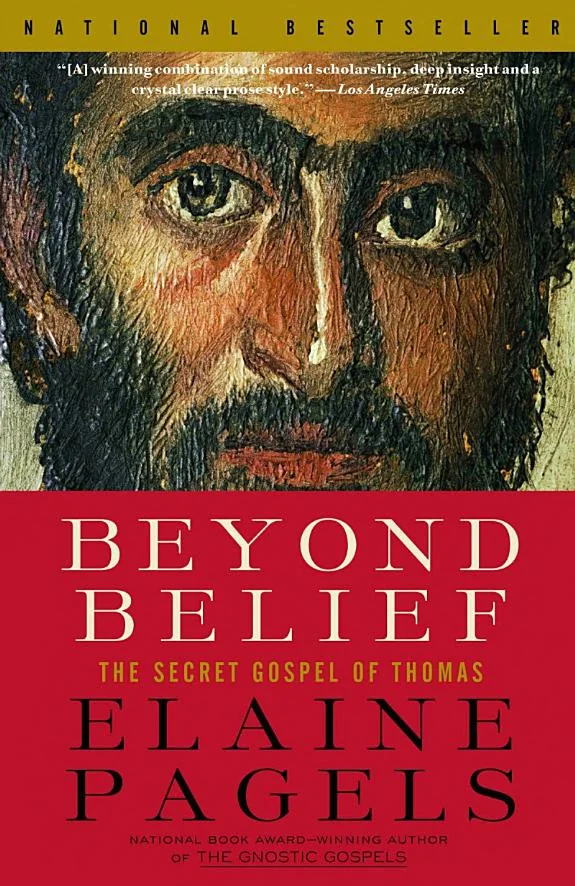
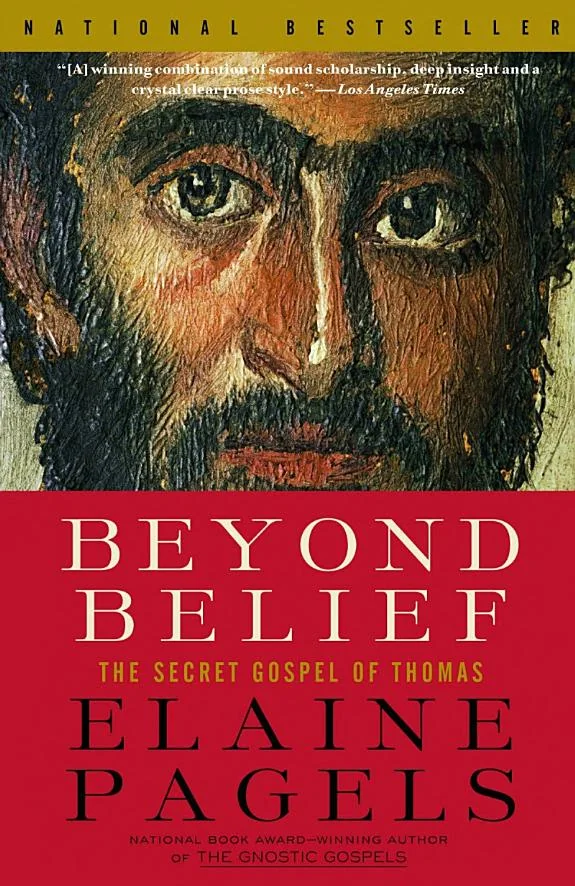
Beyond belief
 72
72

Beyond belief
Pagels's "Beyond Belief" offers a bracing look at the construction of Christian identity. Rather than presenting a unified early church, she illuminates the cacophony of voices and competing interpretations surrounding Jesus. Her meticulous dissection of Gospel narratives, particularly the synoptic problem and the Gospel of John, is a strength. A notable limitation, however, is the potential for readers unfamiliar with the scholarly debates to feel adrift without extensive prior knowledge. The chapter discussing the Fourth Gospel’s unique portrayal of Jesus as a divine revealer, distinct from the synoptics, provides a potent example of how theological intent shaped historical accounts. Pagels ultimately argues that the "historical Jesus" is less a fixed entity and more a reflection of the communities that sought to understand him. It is a vital corrective to uncritical readings of scripture.
📝 Description
72
### What It Is Elaine Pagels's "Beyond Belief: The Search for the Historical Jesus" is not a devotional text but a scholarly examination of how early Christian communities constructed narratives about Jesus. Published in 2003, it analyzes the varied interpretations and competing visions of Jesus that emerged in the first centuries CE. Pagels, renowned for her work on Gnostic Gospels, here turns her attention to the canonical texts and their historical development.
### Who It's For This book is for readers who approach religious history with a critical, academic lens. It appeals to those interested in the evolution of early Christianity, the formation of scripture, and the diverse theological debates that characterized the nascent faith. Students of comparative religion, history, and textual criticism will find substantial material for study.
### Historical Context Pagels situates her analysis within the academic study of Christian origins, a field marked by rigorous historical-critical methods since the 19th century. Her work builds upon scholarship that questioned traditional authorship and dating of biblical texts, engaging with debates about the "Jesus Seminar" and its reconstructions of Jesus's sayings. The early 2000s saw continued scholarly interest in the social and political factors influencing early Christian doctrine.
### Key Concepts The book delves into the concept of "belief" itself, exploring how different factions within early Christianity defined what it meant to follow Jesus. It examines the tension between oral traditions and the eventual canonization of texts, highlighting how power dynamics influenced which narratives became dominant. Pagels also scrutinizes the role of Paul of Tarsus in shaping early Christian theology and the emergence of a distinct gentile Christianity.
💡 Why Read This Book?
• You will learn how the canonical Gospels, particularly the Gospel of John, were shaped by specific theological agendas in the late first century, offering a new perspective on biblical interpretation. • You will understand the concept of "belief" in early Christianity as a fluid and contested idea, rather than a monolithic doctrine, thereby deepening your grasp of religious evolution. • You will gain insight into the scholarly debates surrounding the "Jesus Seminar" and the historical-critical method's application to Christian origins, providing a foundation for academic inquiry.
⭐ Reader Reviews
Honest opinions from readers who have explored this book.
❓ Frequently Asked Questions
What is Elaine Pagels's academic background?
Elaine Pagels is a distinguished historian of religion, specializing in early Christianity and Gnosticism. She is a professor emerita at Princeton University, known for her seminal works on the Nag Hammadi library.
How does "Beyond Belief" differ from works on Gnostic Gospels?
While Pagels is famous for "The Gnostic Gospels," "Beyond Belief" focuses on the canonical Christian scriptures. It examines how the dominant traditions within early Christianity developed and contrasted with alternative interpretations.
When was "Beyond Belief" first published?
The book "Beyond Belief: The Search for the Historical Jesus" was first published in 2003, continuing Pagels's exploration of early Christian texts and their historical contexts.
What is the "Jesus Seminar"?
The "Jesus Seminar" is a group of scholars who use historical-critical methods to determine the authenticity of sayings attributed to Jesus. Pagels references their work and the broader scholarly conversations about the historical Jesus.
Does "Beyond Belief" present a definitive historical Jesus?
No, Pagels's work emphasizes that the "historical Jesus" is largely inaccessible and that the Jesus figures presented in early texts reflect the beliefs and needs of their communities.
What role does Paul of Tarsus play in the book?
The book explores Paul's significant influence on shaping early Christian theology and the development of a distinct gentile Christianity, contrasting his interpretations with those found in the Gospels.
🔮 Key Themes & Symbolism
Narrative Construction of Jesus
Pagels investigates how diverse communities in the first centuries CE crafted different narratives about Jesus, reflecting their own theological and social concerns. This theme highlights that the figure of Jesus was not uniformly understood but was subject to varied interpretations, particularly evident in the contrast between the synoptic Gospels and the Gospel of John. The work explores how these narratives served to solidify identity and belief within nascent Christian groups.
The Fluidity of "Belief"
The book examines "belief" not as a static set of doctrines but as a dynamic and often contested concept within early Christianity. Pagels shows how different factions defined what it meant to believe in Jesus, often leading to significant theological disputes. This exploration is crucial for understanding the internal diversity and debates that characterized the early Christian movement before widespread canonization.
Oral Tradition vs. Canonization
A central theme is the tension between the preservation of oral traditions about Jesus and the eventual process of canonization, where certain texts gained authoritative status. Pagels discusses how power dynamics and theological aims influenced which accounts became dominant, while others were marginalized. This process shaped the enduring Christian scriptures and the understanding of Jesus's life and teachings.
Pauline Christianity and Gentile Identity
The work analyzes the profound impact of Paul of Tarsus on the development of Christian theology, particularly his role in establishing a distinct gentile Christianity. Pagels contrasts Paul's emphasis on faith and revelation with other early Christian perspectives, illustrating the diverse theological currents that contributed to the formation of the religion.
💬 Memorable Quotes
“The Jesus of the Fourth Gospel is a cosmic being who comes from heaven and returns to heaven.”
— This highlights the radical theological shift in the Gospel of John, presenting Jesus not merely as a historical figure but as a divine revealer, distinct from the more earthly portrayals in earlier synoptic accounts.
“The canonical Gospels present divergent views of Jesus.”
— This observation underscores Pagels's central argument: that early Christianity was not monolithic, and the accepted scriptures themselves contain varied and sometimes conflicting portraits of Jesus.
“Early Christians struggled to define who Jesus was and what his message meant.”
— This paraphrase points to the core of Pagels's analysis – the ongoing debate and interpretive work undertaken by the earliest followers of Jesus to grapple with his identity and teachings.
“The formation of scripture involved choices about what to include and exclude.”
— This reflects the theme of canonization, emphasizing that the process was not merely passive recording but an active selection based on theological and community-driven criteria.
“Paul's letters often shaped the understanding of Jesus for non-Jewish converts.”
— This points to the significant role of Paul in bridging Jewish and gentile worlds, adapting the message of Jesus for a broader audience and influencing the trajectory of Christian doctrine.
🌙 Esoteric Significance
Tradition
While Pagels's work is primarily historical and critical, it resonates with esoteric traditions by highlighting the suppressed or alternative interpretations of early Christianity, akin to Gnostic or other non-canonical streams. Esoteric scholarship often looks for hidden meanings or original, uncorrupted teachings, and Pagels's examination of textual diversity and the politics of canonization provides fertile ground for such inquiry.
Symbolism
The book implicitly touches upon the symbolism of light and darkness, particularly when discussing the Gospel of John's dualistic language. Jesus as the "light of the world" versus the "darkness" of ignorance or opposition can be interpreted through various esoteric lenses, representing spiritual illumination and the struggle against illusion or material bondage.
Modern Relevance
Contemporary scholars and spiritual seekers interested in the historical Jesus, the formation of religious texts, and the diverse roots of Western spirituality often draw upon Pagels's meticulous research. Her work informs discussions within comparative religion and critical theology, encouraging a more nuanced understanding of how foundational religious narratives are constructed and evolve.
👥 Who Should Read This Book
• Academic researchers and students of early Christianity and comparative religion seeking a critical analysis of the canonical Gospels and their historical development. • Readers interested in the history of belief and how religious narratives are shaped by community needs and power dynamics, moving beyond devotional approaches. • Individuals exploring alternative interpretations of Christian origins and the diversity of thought within the first centuries CE, seeking to understand the context of suppressed traditions.
📜 Historical Context
Published in 2003, "Beyond Belief" emerged within a vibrant academic landscape focused on the historical Jesus and the origins of Christianity. Elaine Pagels was already a prominent figure, having revolutionized the study of early Christianity with her 1979 work "The Gnostic Gospels." Her 2003 book engaged with ongoing scholarly dialogues, including those stemming from the "Jesus Seminar," which sought to identify the authentic sayings of Jesus through historical-critical methods. This period saw a continued interest in the social, political, and cultural forces that shaped early Christian communities. Pagels’s work offered a nuanced perspective, emphasizing the diversity of belief and the constructed nature of early Christian narratives, often contrasting with more traditional theological interpretations. Her scholarship implicitly engaged with scholars like Bart Ehrman, who also explored textual criticism and the development of Christian doctrine during this era.
📔 Journal Prompts
The concept of "belief" as explored in the Fourth Gospel.
The tension between oral tradition and the canonization process.
Paul's role in shaping gentile Christian identity.
The diverse portrayals of Jesus within the synoptic Gospels.
The implications of textual selection for understanding early Christianity.
🗂️ Glossary
Synoptic Gospels
The Gospels of Matthew, Mark, and Luke, which share a similar narrative structure and content, suggesting a literary relationship between them.
Gospel of John
The fourth canonical Gospel, distinguished by its theological depth, emphasis on Jesus's divine nature, and unique discourses, often seen as presenting a different perspective from the Synoptics.
Canonization
The process by which a set of texts is officially recognized as authoritative scripture within a religious tradition.
Historical-Critical Method
An academic approach to studying religious texts that seeks to understand their historical origins, literary context, and development through critical analysis.
Jesus Seminar
A group of scholars employing the historical-critical method to evaluate the authenticity of sayings attributed to Jesus in the New Testament.
Gnosticism
A diverse set of religious movements in the early centuries CE that emphasized personal spiritual knowledge (gnosis) and often viewed the material world as flawed or evil.
Gentile Christianity
The branch of Christianity that developed among non-Jewish converts, significantly shaped by figures like Paul of Tarsus.