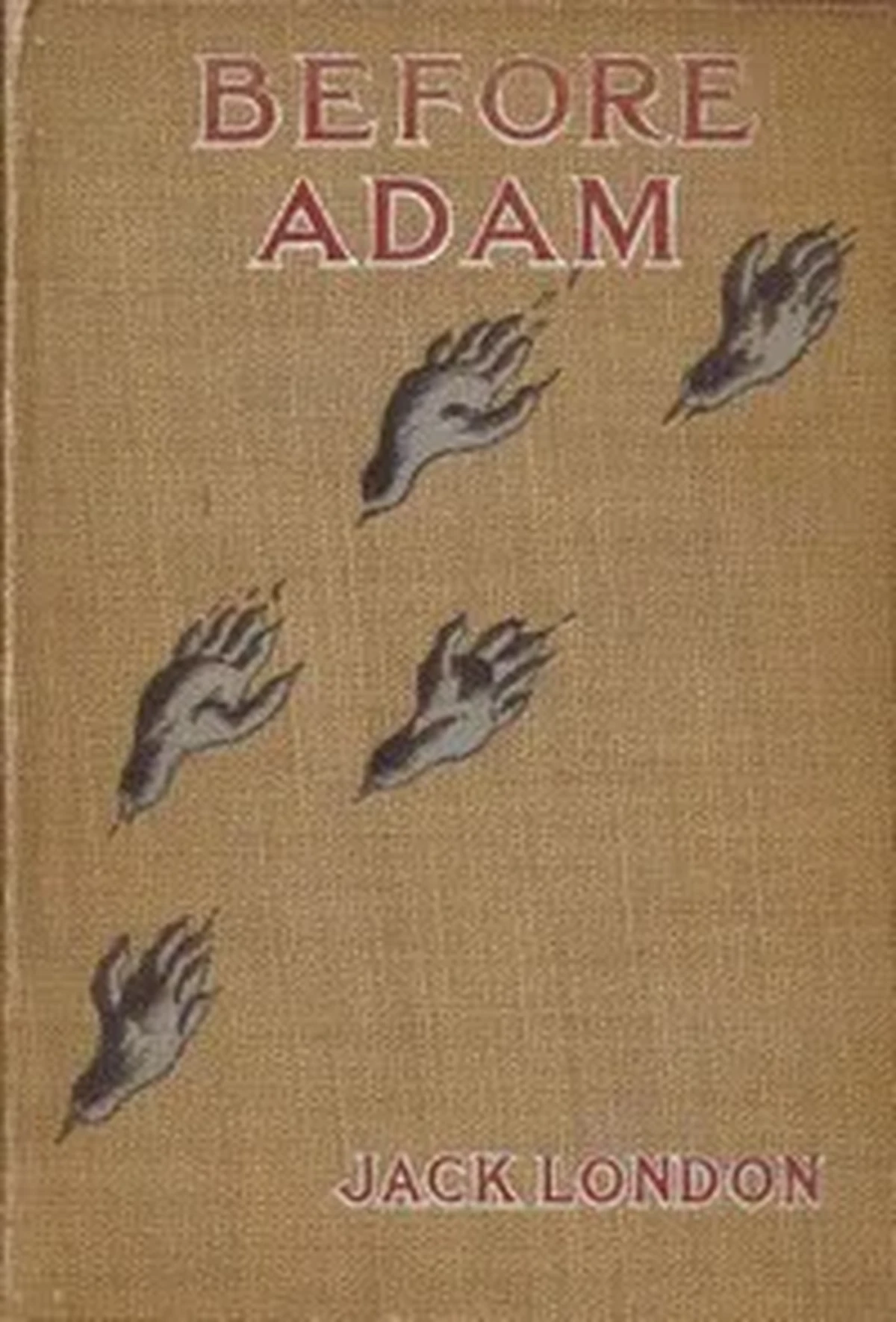
Before Adam
 73
73

Before Adam
Jack London, known for his rugged tales of the Klondike, ventures into surprisingly introspective territory with *Before Adam*. The novella's premise—a man reliving ancestral memories through dreams—is a bold conceptual leap, predating many more famous explorations of inherited consciousness. London’s prose, while occasionally dense with speculative theory, powerfully evokes the raw, sensory experience of a prehistoric existence. The strength lies in its audacious imagination, attempting to bridge the gap between scientific speculation and a deeply felt, almost shamanic connection to the past. However, the narrative occasionally falters under the weight of its own theoretical underpinnings, sometimes sacrificing character for concept. A particularly striking passage describes the protagonist’s visceral fear of the sea, an echo of ancient, pre-mammalian existence. Ultimately, *Before Adam* offers a fascinating, albeit uneven, glimpse into the primal roots of human experience, a curious departure for its author.
📝 Description
73
Jack London published *Before Adam* in 1920, a novella exploring inherited consciousness.
Jack London's posthumous novella, *Before Adam*, published in 1920, presents a modern man troubled by vivid dreams of his ancestral past. This is not a simple adventure; London uses speculative science and proto-psychology to examine humanity's earliest origins. The narrative centers on a protagonist who experiences what he believes are memories from his distant ancestors, manifesting as intense dreams.
This work appeals to readers interested in early 20th-century speculative fiction that engages with anthropology, evolutionary theory, and nascent psychological ideas. Those who ponder consciousness, the nature of memory, and our connection to a deep human past will find the book thought-provoking. It is for individuals who enjoy stories that question conventional views of identity and time, linking the individual to a vast, shared history.
Published in 1920, *Before Adam* emerged during a time when scientific thought on human origins was rapidly evolving. Darwin's theories had sparked widespread debate, and thinkers were exploring concepts like heredity and atavism. London's novella taps into this intellectual climate, where the lines between science, psychology, and mysticism blurred when considering the human psyche and its ancestral roots. It reflects a fascination with uncovering the deep past within the individual mind.
💡 Why Read This Book?
• Gain insight into early 20th-century evolutionary thought and its impact on speculative fiction, specifically London's engagement with atavism as presented around 1920. • Experience a unique narrative structure that uses dreams to access ancestral memory, a concept explored in the protagonist's visions of "the Man-House." • Understand the speculative psychological theories prevalent at the time, offering a unique perspective on inherited consciousness distinct from later psychoanalytic theories.
⭐ Reader Reviews
Honest opinions from readers who have explored this book.
❓ Frequently Asked Questions
What is the central concept explored in Jack London's *Before Adam*?
The novella primarily explores the concept of ancestral memory, suggesting that modern humans can access the instincts and experiences of their earliest ancestors through dreams and primal consciousness.
When was *Before Adam* first published?
*Before Adam* was first published posthumously in 1920, after Jack London's death in 1916.
Is *Before Adam* a science fiction novel?
While it contains speculative elements drawing on evolutionary theory and early psychology, *Before Adam* is often categorized as proto-science fiction or philosophical fiction due to its focus on consciousness and ancient human origins.
What is the role of dreams in *Before Adam*?
Dreams are the primary vehicle through which the protagonist accesses his ancestral past. They are depicted as vivid, visceral experiences that allow him to inhabit the consciousness of ancient beings.
Does *Before Adam* connect to Jack London's other works?
While distinct, *Before Adam* shares London's recurring fascination with primal instincts, survival, and the raw forces of nature, themes also prominent in works like *The Call of the Wild* and *White Fang*.
Is *Before Adam* available online?
As a work first published in 1920, *Before Adam* is in the public domain and widely available for free online through various digital archives.
🔮 Key Themes & Symbolism
Ancestral Memory
The novella posits that the consciousness of humanity's earliest ancestors is not entirely lost but exists as a latent layer within modern minds. This inherited memory manifests through dreams and primal instincts, allowing the protagonist to experience life as creatures from epochs prior to human civilization. It explores the idea that our deep past shapes our present in ways we may not consciously recognize, suggesting a continuity of experience across vast evolutionary timescales. This theme challenges linear perceptions of time and identity, proposing a more cyclical or layered understanding of existence rooted in our biological heritage.
Primal Consciousness
London examines the nature of consciousness at its most fundamental level, stripping away societal constructs to reveal the raw, instinctual awareness of early beings. The protagonist’s dreams depict a world governed by immediate sensory input, survival imperatives, and a visceral connection to the environment. This exploration touches on the concept of the 'Man-Ape' and the 'Man-House,' representing stages of evolutionary development and the environments that shaped them. It's an imaginative portrayal of consciousness before complex language or abstract thought, focusing on direct perception and instinctual response.
Evolutionary Atavism
The novella draws heavily on the concept of atavism, the reappearance of a trait or characteristic from an ancestor. In *Before Adam*, this is applied not just physically but psychologically, with the protagonist exhibiting behaviors and fears seemingly inherited from pre-human ancestors. The work speculates on how evolutionary legacies might resurface, offering a fictional framework for understanding inherited predispositions and the deep biological roots of human behavior. This theme reflects contemporary scientific discussions of heredity and the persistence of ancient traits within modern organisms.
The Deep Past
London attempts to visualize and inhabit the very distant past, a period before recorded history or even recognizable humanity. The narrative is structured around stages of evolutionary development, from early aquatic or reptilian-like stages to the emergence of more ape-like ancestors. This focus on the 'deep past' serves as a backdrop for exploring the origins of consciousness, instinct, and fundamental human drives. It’s an ambitious attempt to reconstruct and empathize with the lived experience of creatures separated from us by millions of years, highlighting the profound continuity of life.
💬 Memorable Quotes
Direct passages from the work, attributed to the author.
“He lived a thousand lives before Adam.”
— This concise statement captures the novella's core premise: that the protagonist's consciousness contains traces of countless ancestral existences predating even the earliest recognized human lineage.
“The world was his cradle and his grave.”
— This phrase suggests a primal existence where the immediate environment is both the source of all experience and the ultimate destination, reflecting a consciousness unburdened by concepts of future or legacy.
“He felt the ancient fear of the sea.”
— This highlights the concept of inherited memory, where a modern individual experiences a deep-seated, instinctual fear originating from very ancient ancestors who likely encountered the ocean's dangers.
“The Man-House was a dream of the past.”
— This refers to a specific, imagined ancestral dwelling or environment that represents a significant evolutionary stage, serving as a locus for the protagonist's deep-seated, inherited memories.
“He was a creature of instinct and sensation.”
— This describes the state of primal consciousness explored in the novella, where actions and awareness are driven by immediate physical needs and sensory input rather than complex thought or planning.
🌙 Esoteric Significance
Tradition
While not explicitly aligned with a single esoteric tradition, *Before Adam* appeals to concepts found in Theosophy and certain branches of Hermeticism concerning reincarnation and the evolution of consciousness. The idea of accessing past lives or ancestral memories through altered states echoes reincarnationist beliefs. Its focus on the deep evolutionary past and the layers of consciousness can be seen as a fictional exploration of the 'Akashic records' or a universal memory field, concepts prominent in Theosophical literature.
Symbolism
The 'Man-House' symbolizes a specific stage of ancestral dwelling and evolutionary development, representing a primal home. The sea, frequently mentioned, symbolizes the primordial origin of life and a deep, instinctual fear inherited from early aquatic or semi-aquatic ancestors. The protagonist's dreams themselves function as a symbol for the subconscious mind's ability to breach temporal barriers and access latent ancestral knowledge and experiences.
Modern Relevance
Contemporary discussions on epigenetics, which explore how environmental factors can influence gene expression across generations, echo London's ideas of inherited memory. Furthermore, the growing interest in transpersonal psychology and consciousness studies, which examine states of awareness beyond the individual ego, finds a precursor in London's speculative exploration of deep ancestral consciousness.
👥 Who Should Read This Book
• Readers interested in the speculative fiction of the early 20th century, particularly those examining evolutionary theory and psychology. • Individuals exploring themes of consciousness, memory, and the nature of identity from a philosophical or psychological perspective. • Fans of Jack London seeking to understand a less typical, more introspective facet of his literary output beyond his adventure tales.
📜 Historical Context
Published in 1920, *Before Adam* emerged during a fertile period for speculative thought on human origins and consciousness. The shadow of Darwinism loomed large, prompting widespread contemplation of evolutionary theory, heredity, and atavism. This era saw the rise of movements like Theosophy, which explored ancient wisdom and reincarnation, and early psychoanalysis, with figures like Freud and later Jung investigating the subconscious and archetypes. London’s work engages with these currents, particularly the scientific and pseudo-scientific ideas about inherited memory and the possibility of accessing primal states. While contemporary scientific discourse focused on genetics and anthropology, popular imagination and literary endeavors often blended these with more mystical notions of ancestral connection. The novella reflects a broader cultural fascination with humanity's deep past and the possibility that our earliest selves were not entirely extinguished.
📔 Journal Prompts
The primal fear of the sea: Reflect on inherited anxieties and their potential origins.
Ancestral memory as depicted in the Man-Ape's existence: How might traces of past lives manifest in present behavior?
The boundary between dream and reality in accessing the past: Consider the power of subconscious states.
The concept of evolutionary atavism: Explore its implications for understanding human nature.
The 'Man-House' as a symbol: What primal environments or states of being does it represent for you?
🗂️ Glossary
Atavism
The reappearance of a trait or characteristic of an ancestor in modern descendants, often considered a throwback to an earlier evolutionary stage.
Primal Consciousness
A state of awareness characterized by fundamental instincts, sensory experiences, and immediate survival needs, largely devoid of complex abstract thought or societal conditioning.
Ancestral Memory
The theoretical concept that memories, instincts, or experiences of one's ancestors can be inherited and accessed by descendants, often through dreams or subconscious states.
Man-Ape
A term used in the novella to describe an early, pre-human or proto-human ancestor, representing a significant stage in human evolution.
Man-House
A symbolic dwelling or environment representing a specific ancestral stage or way of life, accessed through the protagonist's inherited memories.
Evolutionary Epoch
A distinct period in the history of life on Earth, characterized by specific forms of life and environmental conditions, relevant to the novella's exploration of deep time.
Speculative Fiction
A broad genre of fiction that explores the possibilities of science, technology, and societal change, often set in the future or alternative realities, including elements of fantasy and horror.
🔮 Readers Also Liked
Browse all →








More by Jack London
All books →

More Free Occult Philosophy Books
View all →