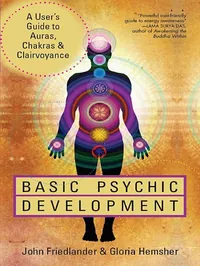
Basic Psychic Development

 72
72

Basic Psychic Development
Friedlander and Hemsher's Basic Psychic Development is a refreshingly direct guide. Unlike many texts that rely on grand pronouncements, this book grounds its instruction in actionable steps. The chapter on "Developing Your Intuition," which details exercises for discerning subtle energetic impressions, is particularly strong. It avoids hyperbole and instead focuses on the mechanics of perception. My primary critique is that the 2002 publication date means it doesn't engage with some later developments in consciousness studies or the digital-age impact on psychic practice. Despite this, the work provides a solid, no-nonsense foundation for anyone serious about exploring their psychic potential. It’s a competent manual for the aspiring sensitive.
📝 Description
72
### What It Is Basic Psychic Development offers a structured approach to understanding and cultivating extrasensory perception. It moves beyond theoretical discussion to provide practical exercises and clear explanations. The work is designed for individuals seeking to explore their innate psychic abilities in a systematic manner.
### Who It's For This book is intended for those new to psychic exploration or those who have had sporadic experiences they wish to understand better. It caters to the earnest student of the esoteric, aiming to provide foundational knowledge and actionable techniques for personal psychic growth.
### Historical Context Published in 2002, Basic Psychic Development emerged during a period of renewed interest in New Age and esoteric studies. It followed decades of popularization of psychic phenomena through media and various spiritual movements, seeking to offer a more disciplined framework compared to some of the more anecdotal or less structured approaches prevalent earlier in the late 20th century.
### Key Concepts The text introduces concepts such as energy fields, intuition, visualization, and astral projection. It emphasizes the importance of mental discipline, focus, and ethical considerations in the development of psychic faculties. The book presents these as learnable skills rather than innate gifts possessed by a select few.
💡 Why Read This Book?
• You will learn practical exercises for cultivating psychic awareness, specifically detailed in chapters like "Developing Your Intuition," offering a hands-on method for sensing subtle energies. • You will gain an understanding of the ethical framework surrounding psychic development, as presented by Friedlander and Hemsher, ensuring a responsible approach to personal growth. • You will be introduced to techniques for managing energy and focus, crucial elements for consistent psychic work, as explored in sections on visualization and mental discipline.
⭐ Reader Reviews
Honest opinions from readers who have explored this book.
❓ Frequently Asked Questions
When was Basic Psychic Development first published?
Basic Psychic Development was first published in 2002 by John Friedlander and Gloria Hemsher, offering a structured approach to psychic studies.
What core psychic abilities does the book cover?
The book covers fundamental psychic abilities such as intuition, visualization, energy sensing, and introduces concepts related to astral projection.
Is this book suitable for absolute beginners in psychic development?
Yes, the book is designed as a foundational text, providing clear explanations and practical exercises suitable for individuals new to exploring psychic phenomena.
Does the book discuss the ethical implications of psychic abilities?
Indeed, Friedlander and Hemsher emphasize the importance of ethical considerations and responsible use of psychic faculties throughout the text.
What is the general tone of Basic Psychic Development?
The tone is practical and instructional, focusing on systematic development rather than purely theoretical or anecdotal accounts of psychic experiences.
Who are the authors of Basic Psychic Development?
The authors are John Friedlander and Gloria Hemsher. The work was first published in 2002.
🔮 Key Themes & Symbolism
Intuitive Perception
The book meticulously details how to cultivate and trust intuitive impressions. It moves beyond simple 'gut feelings' to explore the mechanics of receiving subtle information, offering exercises to differentiate psychic signals from everyday thoughts. This theme is central to the book's promise of practical psychic growth, grounding esoteric concepts in tangible practice for the student.
Energy Management
A core component of the text is understanding and working with subtle energies. This involves learning to perceive, direct, and shield one's own energy field and that of others. The authors present energy work not as an abstract concept but as a practical skill, essential for psychic safety and effectiveness, as detailed in sections on visualization.
Mental Discipline
Friedlander and Hemsher stress that psychic development requires rigorous mental training. This includes focus, concentration, and the ability to control one's thoughts and emotions. The book outlines specific techniques designed to build this mental fortitude, presenting it as the bedrock upon which all other psychic abilities are built and maintained.
Ethical Development
The authors consistently address the moral responsibilities that accompany psychic ability. They advocate for using these gifts with integrity and for beneficial purposes. This ethical dimension is woven throughout the text, ensuring that the pursuit of psychic development is aligned with personal growth and service.
💬 Memorable Quotes
“Psychic ability is not a gift bestowed upon a select few, but a faculty that can be cultivated by anyone.”
— This statement challenges the notion of innate psychic talent, framing it instead as a learnable skill. It positions the book as a practical guide, accessible to all earnest students seeking to develop their extrasensory capacities.
“The ability to visualize clearly is fundamental to many forms of psychic work.”
— This highlights the importance of mental imagery in psychic practice. It suggests that the power of focused imagination is a key tool for manipulating and perceiving subtle energies or realities.
“Learn to distinguish between your own thoughts and psychic impressions.”
— This points to a common challenge in psychic development: discerning genuine intuitive input from ordinary mental chatter. It underscores the need for training and practice to develop this discriminatory faculty.
“Energy protection is as vital as energy development.”
— This emphasizes the necessity of safeguarding oneself when engaging with psychic phenomena. It suggests that awareness of energetic boundaries and defense mechanisms is crucial for safe practice.
“Meditation is the cornerstone of psychic training.”
— This asserts the foundational role of meditative practices in developing psychic abilities. It implies that stillness and inner focus are prerequisites for accessing and honing extrasensory perception.
🌙 Esoteric Significance
Tradition
While not explicitly aligning with a single esoteric lineage, *Basic Psychic Development* draws heavily from the practical, experiential branches of Western esotericism and New Age thought. It echoes principles found in modern occultism and spiritualist traditions that emphasize personal development and the cultivation of latent human faculties through specific techniques and mental discipline.
Symbolism
The book frequently employs the concept of the 'energy field' as a symbolic representation of the subtle body and its interactions. Visualization itself acts as a symbolic tool, allowing the practitioner to construct mental representations that interact with energetic realities. The 'aura' is another key symbolic motif, representing the energetic signature of an individual.
Modern Relevance
Contemporary practices in mindfulness, energy healing modalities like Reiki, and even certain aspects of transpersonal psychology can find echoes in Friedlander and Hemsher's work. The emphasis on visualization, focused intention, and energy awareness continues to inform modern approaches to personal growth and well-being, making its foundational principles relevant today.
👥 Who Should Read This Book
• Aspiring psychics seeking a foundational, step-by-step guide to developing their abilities, moving from theory to practical application. • Individuals interested in understanding the mechanics of intuition and subtle energy perception, wanting concrete exercises to explore these phenomena. • Students of consciousness and esoteric studies looking for a structured approach to psychic cultivation that emphasizes mental discipline and ethical practice.
📜 Historical Context
Published in 2002, John Friedlander and Gloria Hemsher's *Basic Psychic Development* emerged in a cultural landscape still influenced by the New Age movement's peak in the late 20th century. This period saw a broad public engagement with spirituality, parapsychology, and esoteric subjects, often fueled by popular media and accessible literature. The book offered a structured, almost curriculum-like approach, contrasting with some of the more anecdotal or purely experiential accounts prevalent in earlier decades. While not directly engaging with academic parapsychology or specific philosophical schools like Theosophy, it tapped into a widespread desire for practical self-improvement and exploration of consciousness. Its methodical presentation aimed to demystify psychic phenomena, making them seem accessible through disciplined practice, a common theme in self-help oriented esoteric literature of the era.
📔 Journal Prompts
Your initial impressions of the 'energy field' concept as presented in the text.
The effectiveness of specific visualization exercises for your personal psychic development.
Distinguishing between ordinary thoughts and potential psychic impressions during a guided meditation.
Ethical considerations for using psychic abilities in everyday interactions.
Reflecting on the role of mental discipline in your progress with the book's techniques.
🗂️ Glossary
Energy Field
The subtle energetic envelope surrounding a person or object, believed to carry information and influence physical and mental states. It's often associated with concepts like aura and prana.
Visualization
The practice of creating vivid mental images, used as a tool to focus intention, influence energy, or explore inner landscapes and psychic phenomena.
Intuition
Direct knowing or perception that bypasses rational thought processes, often experienced as gut feelings, inner insights, or subtle impressions.
Astral Projection
A term used in esoteric traditions to describe an out-of-body experience where the consciousness or 'astral body' is believed to leave the physical body and travel in a non-physical realm.
Aura
A luminous emanation or field of energy surrounding a living being, often believed to reflect physical, emotional, and spiritual states. It's a specific type of energy field.
Psychic Impressions
Subtle pieces of information or feelings perceived through extrasensory channels, distinct from ordinary sensory input or logical deduction.
Mental Discipline
The practice of training the mind to focus, control thoughts and emotions, and maintain concentration, considered essential for developing psychic abilities.