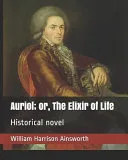
Auriol; Or, the Elixir of Life: Historical Novel
 82
82

Auriol; Or, the Elixir of Life: Historical Novel
William Harrison Ainsworth's *Auriol; Or, the Elixir of Life* is a curious departure from his more grounded historical novels, and for that, it holds a particular charm. The novel excels in its atmospheric depiction of a fantastical London, where the supernatural is not merely an embellishment but the very fabric of the plot. The ambition to explore the consequences of pursuing eternal life through alchemical means is palpable, particularly in the early serialization stages. However, the narrative occasionally falters under the weight of its own gothic aspirations, becoming somewhat convoluted as Auriol's quest progresses. A passage detailing the spectral encounters in a fog-laden alleyway, while evocative, exemplifies the book's strength in conjuring eerie sensations. While the novel is not Ainsworth at his most accessible, its willingness to engage with the darker, more speculative aspects of Victorian occultism makes it a compelling, if uneven, read.
📝 Description
82
### What It Is Auriol; Or, the Elixir of Life presents a gothic romance narrative, first serialized in 1844 under the title Revelations of London. Unlike many of William Harrison Ainsworth's historical chronicles, this work fully embraces a fantastical setting, allowing supernatural elements to flourish. The story follows the titular character, Auriol, and his pursuit of the legendary Elixir of Life, a quest that plunges him into the shadowy underbelly of London and beyond.
### Who It's For This novel appeals to readers of 19th-century gothic literature, aficionados of William Harrison Ainsworth's less conventional works, and those intrigued by early explorations of alchemical themes in fiction. It is particularly suited for individuals interested in how Victorian authors grappled with the supernatural and the philosophical implications of immortality within a fictional context.
### Historical Context Published in 1844, Auriol emerged during a period of intense interest in spiritualism, mesmerism, and the occult across Victorian England. Ainsworth, known for his historical romances like *Rookwood* and *Jack Sheppard*, here deviates into pure fantasy, a choice that permits a more unrestrained engagement with gothic tropes and the allure of forbidden knowledge. This era saw contemporaries like Edward Bulwer-Lytton exploring similar themes of occult power and hidden realities.
### Key Concepts The narrative revolves around the pursuit of the Elixir of Life, a potent symbol of humanity's eternal quest for immortality and transcendence. It also delves into themes of Faustian bargains, the corrupting influence of power, and the shadowy realms of London's hidden society. The supernatural pervades the story, blurring the lines between reality and illusion, life and death, and the mortal and the potentially immortal.
💡 Why Read This Book?
• Gain insight into Victorian-era gothic fantasy by exploring Ainsworth's 1844 serialized narrative, *Revelations of London*, which showcases a departure from his typical historical focus. • Understand the alchemical pursuit of the Elixir of Life as depicted in a 19th-century fictional context, examining its symbolic representation of immortality. • Experience the atmosphere of supernatural London as imagined by Ainsworth, noting how the narrative allows the fantastic to take 'comparatively free rein' to create a gothic romance.
⭐ Reader Reviews
Honest opinions from readers who have explored this book.
❓ Frequently Asked Questions
When was William Harrison Ainsworth's novel Auriol first published?
Auriol; Or, the Elixir of Life was first published in serial form in 1844, under the title Revelations of London, before its later compilation as a novel.
What is the primary theme of Auriol; Or, the Elixir of Life?
The primary theme is the pursuit of the Elixir of Life, exploring the supernatural, gothic romance, and the potential consequences of seeking immortality.
How does Auriol differ from Ainsworth's other historical novels?
Unlike his other works which are typically historical, Auriol is set in a fantasy realm, allowing supernatural elements to be central to the plot.
What does the Elixir of Life represent in the novel?
The Elixir of Life symbolizes humanity's deep-seated desire for immortality, eternal youth, and transcendence over mortal limitations.
Was Auriol originally published under a different title?
Yes, Auriol was first published in serial form in 1844 under the title Revelations of London.
What genre does Auriol fall into?
Auriol is best described as a gothic romance with strong elements of fantasy and the supernatural, set against a loosely historical backdrop.
🔮 Key Themes & Symbolism
The Elixir of Life
The central quest for the Elixir of Life drives the narrative, embodying the age-old human yearning for immortality. In Ainsworth's hands, this pursuit is not merely a philosophical exploration but a tangible goal with perilous consequences. The novel examines the potential corruption and moral decay that can accompany such an ambition, suggesting that the desire for eternal life might lead characters down dark, supernatural paths, blurring the lines between existence and damnation.
Supernatural London
Ainsworth transforms Victorian London into a stage for the uncanny and the spectral. The city's fog-laden streets, hidden alleys, and grand facades become infused with an eerie presence. This portrayal taps into the Victorian fascination with the unseen forces and spiritual phenomena of the era. The supernatural is not confined to ghosts but permeates the atmosphere, influencing events and characters, creating a gothic landscape where the mundane and the magical coexist uneasily.
Gothic Romance and Fantasy
Auriol marks a significant departure for Ainsworth, leaning fully into gothic romance and fantasy. The narrative embraces sensationalism, mystery, and the heightened emotions characteristic of the gothic tradition. The supernatural elements are given 'comparatively free rein,' allowing for explorations of dark pacts, spectral encounters, and the psychological impact of confronting the unknown. This genre blend creates a captivating, albeit sometimes melodramatic, exploration of obsession and its otherworldly repercussions.
Alchemical Pursuit
The novel engages with the mystique of alchemy, not just as a historical practice but as a symbol of forbidden knowledge and the quest for ultimate power. The pursuit of the Elixir is framed within an alchemical context, suggesting a hidden science and a secret path to transcendence. Ainsworth uses this framework to explore themes of transformation, both physical and spiritual, and the ethical dilemmas inherent in tampering with natural laws.
💬 Memorable Quotes
“The action is entirely couched as a fantasy, so that the supernatural element can take comparatively free rein.”
— This statement highlights Ainsworth's deliberate shift from historical accuracy to imaginative storytelling, allowing for a more unrestrained exploration of gothic and supernatural themes than his usual works.
“Auriol, written 1844, is slightly unusual in the Ainsworth repertoire.”
— This observation points to the distinct nature of *Auriol* within Ainsworth's oeuvre, marking it as an outlier due to its pronounced fantasy and supernatural elements compared to his more historically focused novels.
“The story is accordingly a thoroughly gothic romance.”
— This confirms the novel's genre classification, emphasizing its reliance on the conventions of gothic literature, including suspense, mystery, supernatural occurrences, and heightened emotional drama.
“It was first published in 1844 in serial form, under the title Revelations of London.”
— This factual detail provides specific publication history, noting the initial serialized format and alternative title, which offers context for its original reception and structure.
“The supernatural element (which occurs also, for instance, in his Guy Fawkes and his Windsor Castle) can take comparatively free rein.”
— This interpretation suggests that while supernatural themes appeared in other Ainsworth works, *Auriol* allows these elements a much more dominant and unfettered role in shaping the narrative.
🌙 Esoteric Significance
Tradition
While not explicitly tied to a single esoteric lineage like Hermeticism or Kabbalah, *Auriol* draws heavily on the alchemical tradition and broader Western esoteric concepts of immortality and hidden knowledge. It reflects a late-19th-century popularization of occult ideas, where ancient symbols and quests like the Elixir of Life were reinterpreted through a gothic lens, blending scientific curiosity with mystical yearning.
Symbolism
The Elixir of Life itself is the primary symbol, representing the ultimate alchemical goal of achieving immortality or eternal youth, a pursuit fraught with spiritual and moral peril. Characters like Auriol embody the obsessive seeker, willing to delve into dark pacts and supernatural realms. The spectral figures and uncanny events in the narrative symbolize the unseen forces and consequences that accompany such transgressive desires, serving as gothic manifestations of spiritual or karmic repercussions.
Modern Relevance
Contemporary interest in alchemy, esoteric quests, and gothic literature continues to find resonance in *Auriol*. Modern practitioners and scholars of Western esotericism may examine it as an example of how historical occult concepts were fictionalized and popularized. Its themes of forbidden knowledge and the dark side of immortality remain relevant in discussions about transhumanism and the ethical boundaries of scientific and spiritual advancement.
👥 Who Should Read This Book
• Readers interested in 19th-century gothic literature and fantasy, seeking examples beyond standard horror tropes. They will discover how Ainsworth adapted his style for a more speculative narrative. • Students of William Harrison Ainsworth's work who wish to explore his less conventional, fantasy-driven novel, *Auriol*, understanding its unique place in his bibliography. • Enthusiasts of esoteric themes, particularly alchemy and the pursuit of immortality, looking for fictional portrayals of these concepts from the Victorian era.
📜 Historical Context
William Harrison Ainsworth published *Auriol; Or, the Elixir of Life* in 1844, a period when Victorian England was deeply engrossed in spiritualism, mesmerism, and the occult. Ainsworth, already a popular author known for historical fiction like *Rookwood* (1836) and *Jack Sheppard* (1839), took a notable turn with *Auriol*, serializing it as *Revelations of London*. Unlike his meticulously researched historical narratives, this work fully embraced fantasy, allowing supernatural forces and gothic elements to dominate. This departure reflected a broader cultural fascination with the uncanny, evident in the works of contemporaries such as Edward Bulwer-Lytton, who also explored occult themes. The novel's unrestrained engagement with the supernatural was characteristic of a genre that thrived on mystery and the exploration of hidden realities, appealing to a public eager for tales that transcended the mundane.
📔 Journal Prompts
The pursuit of the Elixir of Life by Auriol: what drives this obsession?
Ainsworth's depiction of supernatural London: how does the city become a character?
The gothic romance elements: how do they serve the narrative's exploration of immortality?
Auriol's departure from historical fiction: what does this signal about Victorian literary trends?
Consider the consequences of seeking 'comparatively free rein' for the supernatural.
🗂️ Glossary
Elixir of Life
A legendary alchemical substance said to grant immortality, eternal youth, or the power to cure all diseases. In *Auriol*, it is the object of a perilous quest.
Gothic Romance
A literary genre characterized by mystery, horror, supernatural events, and heightened emotion, often set in ancient castles or atmospheric, decaying locations.
Supernatural Element
Aspects of a story that involve forces or beings beyond the known laws of nature, such as ghosts, magic, or spectral presences.
Serial Form
A method of publication where a novel is released in installments over time, typically in magazines or newspapers, as was common in the 19th century.
Alchemy
An ancient practice combining chemistry, metallurgy, astrology, and mysticism, often associated with the quest to transmute base metals into gold or discover the Elixir of Life.
Revelations of London
The original title under which *Auriol* was first published in serial form in 1844, suggesting a focus on uncovering hidden truths or secrets within the city.
Fantasy
A genre of fiction that typically involves magic, supernatural phenomena, and mythical creatures, often set in imaginary worlds or reimagined historical settings.