Atlantis
 71
71

Atlantis
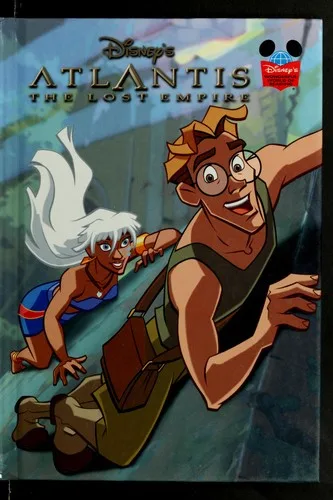
Disney's 2001 take on Atlantis attempts to translate Plato's ancient legend into a grand animated adventure. The visual design is undeniably a strength, crafting a breathtaking underwater city that feels both alien and familiar. However, the narrative, while engaging for its target audience, simplifies the philosophical underpinnings of the myth to a degree that might frustrate those seeking deeper esoteric connections. The character of Milo Thatch, while earnest, often serves as a straightforward audience surrogate rather than a complex explorer. The film’s interpretation of Atlantean technology, particularly the 'Heart of Atlantis' crystal, offers a compelling, albeit simplified, glimpse into a lost civilization's power source. Despite its narrative concessions, the film successfully brings a sense of wonder to the myth. It's an enjoyable, visually stunning exploration of a legendary place, even if it prioritizes spectacle over scholarly depth.
📝 Description
71
### What It Is Atlantis, published by Disney Enterprises in 2001, presents a visually rich narrative that, while ostensibly a children's animated film, touches upon themes of lost civilizations and ancient myths. The story centers on Milo Thatch, a linguist and cartographer who discovers a journal leading him to the legendary underwater city of Atlantis. This rendition offers a modern, accessible interpretation of a myth that has captivated imaginations for centuries, drawing from various historical and speculative accounts of a sophisticated, advanced society.
### Who It's For This work is geared towards younger audiences and families, but its exploration of myth and exploration may appeal to adults interested in how classic legends are adapted for new generations. It serves as an entry point for those curious about Atlantean lore, offering a narrative framework that simplifies complex ideas about ancient history and fantastical worlds. It’s for viewers who enjoy adventure stories with elements of discovery and wonder.
### Historical Context The concept of Atlantis has a long history, first appearing in Plato's dialogues, *Timaeus* and *Critias*, around 360 BCE. Plato described it as a powerful naval power that existed 9,000 years before his time, located on an island beyond the Pillars of Hercules, which ultimately sank into the sea. Over centuries, this philosophical allegory has been reinterpreted, often as a literal lost continent, inspiring countless theories and fictional accounts, notably in the late 19th and early 20th centuries with figures like Ignatius Donnelly and Madame Blavatsky.
### Key Concepts The narrative engages with the idea of a technologically advanced, yet spiritually grounded, ancient civilization. It explores themes of exploration and discovery, the power of language and ancient knowledge, and the concept of a hidden world. The film presents Atlantis as a place of advanced science and engineering, powered by a mystical crystal, existing in isolation from the rest of the world. The story also touches on themes of responsibility and the preservation of knowledge and culture.
💡 Why Read This Book?
• Learn about the visual interpretation of Atlantis as envisioned in 2001, focusing on its unique aesthetic and architectural style that blends ancient motifs with futuristic elements. • Understand how a modern narrative frames the myth of Atlantis, making concepts of lost civilizations and advanced ancient technology accessible through the character of Milo Thatch. • Explore the theme of a powerful, central energy source, the 'Heart of Atlantis' crystal, and its role in sustaining a hidden civilization, offering a simplified look at esoteric power concepts.
⭐ Reader Reviews
Honest opinions from readers who have explored this book.
❓ Frequently Asked Questions
When was the animated film Atlantis first released?
The animated film 'Atlantis: The Lost Empire' was first released by Disney Enterprises in 2001, bringing the legend of the lost continent to a new generation.
What is the primary source for the Atlantis legend?
The primary source for the Atlantis legend is the ancient Greek philosopher Plato, who described the civilization in his dialogues 'Timaeus' and 'Critias' around 360 BCE.
What kind of society is depicted in Disney's Atlantis?
Disney's Atlantis depicts a highly advanced civilization with sophisticated technology and architecture, powered by a large crystal known as the 'Heart of Atlantis'.
Who is the main protagonist who discovers Atlantis?
The main protagonist is Milo Thatch, a linguist and cartographer who deciphers an ancient journal and leads an expedition to find the lost city.
Does the film explore the philosophical aspects of Plato's Atlantis?
While inspired by Plato, the film primarily focuses on adventure and visual spectacle, simplifying the philosophical and political themes present in Plato's original dialogues.
What is the role of the 'Heart of Atlantis' in the story?
The 'Heart of Atlantis' is depicted as a massive crystal that serves as the power source for the entire city, enabling its advanced technology and maintaining its underwater environment.
🔮 Key Themes & Symbolism
The Lost Civilization Trope
The narrative taps into the enduring fascination with lost civilizations, presenting Atlantis as a place of advanced knowledge and unique culture that vanished from the surface world. This theme echoes across various esoteric traditions that posit ancient, highly developed societies predating recorded history. The film's depiction of Atlantean society, with its advanced engineering and societal structure, feeds into popular imagination about what such a civilization might have been like, often implying a fall from grace or a deliberate withdrawal from the world.
Ancient Technology and Power
Central to the story is the concept of advanced technology, particularly the 'Heart of Atlantis' crystal, which serves as the city's primary power source. This resonates with esoteric ideas about harnessing natural energies or crystals for immense power, a concept found in various occult traditions. The film visualizes this power as both a tool for creation and potentially destruction, mirroring historical and mythical accounts of potent, often dangerous, ancient artifacts.
Exploration and Discovery
The plot is driven by the spirit of exploration, embodied by Milo Thatch, whose linguistic skills unlock the path to the hidden city. This theme aligns with the historical drive in occultism and esoteric studies to uncover forgotten knowledge and hidden truths. The journey to Atlantis represents the quest for the unknown, the unraveling of ancient mysteries, and the potential for profound discovery that lies beyond the conventional understanding of the world.
Language as a Key
Milo's expertise in ancient languages is the crucial element that allows access to Atlantis. This highlights the esoteric principle that understanding ancient texts and symbols is fundamental to unlocking lost wisdom. The film emphasizes that linguistic keys are not merely tools for communication but are intrinsically linked to the history, culture, and very existence of a civilization, suggesting that language itself holds hidden powers and profound secrets.
💬 Memorable Quotes
“We're going to Atlantis!”
— This exclamation captures the core excitement and adventurous spirit of the narrative, signaling the culmination of the quest and the beginning of the fantastical exploration.
“The Atlanteans could communicate with the whales.”
— This line suggests a harmonious relationship between the Atlanteans and the natural world, hinting at a deeper spiritual connection or advanced biological understanding beyond human comprehension.
“The power source is failing.”
— This statement directly addresses the central conflict driven by the diminishing energy of the 'Heart of Atlantis,' highlighting the fragility of advanced civilizations and their reliance on potent, yet finite, resources.
“It's not a myth. It's a civilization.”
— This assertion by Milo Thatch underscores the film's premise: that Atlantis was a real, advanced society, transforming a legend into a tangible, discoverable reality within the story's context.
“The language is the key.”
— This paraphrased concept emphasizes the narrative's focus on linguistics as the primary means of unlocking the secrets of Atlantis, underscoring the importance of ancient knowledge and decipherment.
🌙 Esoteric Significance
Tradition
While not directly tied to a specific esoteric lineage like Hermeticism or Gnosticism, Disney's Atlantis draws upon the broader mythopoetic tradition that fuels much occult speculation. It echoes themes found in Theosophy, particularly Helena Blavatsky's concept of ancient root races and lost continents, albeit in a simplified, accessible manner. The film presents Atlantis as a civilization possessing profound knowledge and power, a common trope in esoteric lore that suggests forgotten epochs of human achievement.
Symbolism
The 'Heart of Atlantis,' a massive crystal, serves as a potent symbol of concentrated cosmic energy or spiritual power, a recurring motif in many esoteric traditions that associate crystals with healing, energy amplification, and psychic phenomena. The city's underwater location can symbolize the subconscious, the hidden depths of knowledge, or a realm shielded from ordinary perception, aligning with Gnostic ideas of hidden spiritual worlds or the collective unconscious.
Modern Relevance
Contemporary interest in lost civilizations and ancient advanced technologies continues to be fueled by popular media like this film. While not a direct source for modern occultists, it contributes to a cultural zeitgeist where the possibility of forgotten histories and powerful, ancient wisdom is readily entertained. Thinkers and creators exploring alternative histories, crystal energy, or advanced ancient civilizations in speculative fiction or popular science often find cultural touchstones in such narratives, influencing how these ideas are perceived and discussed.
👥 Who Should Read This Book
• Young adventurers and families seeking an engaging story that introduces the myth of Atlantis through vibrant animation and an exciting plot. • Aspiring linguists and history enthusiasts who appreciate narratives where deciphering ancient languages and uncovering forgotten knowledge are central to the quest. • Fans of speculative fiction and mythology who enjoy modern interpretations of classic legends, offering a visually spectacular take on a long-standing mystery.
📜 Historical Context
The release of Disney's Atlantis in 2001 occurred during a period of renewed popular interest in ancient mysteries and lost civilizations, partly fueled by figures like Erich von Däniken and various New Age interpretations of history. The Atlantis legend itself, originating with Plato's dialogues around 360 BCE, had been extensively mythologized throughout the 19th and 20th centuries. Ignatius Donnelly's 1882 book, *Atlantis: The Antediluvian World*, was particularly influential, presenting Atlantis as a literal continent and the origin of all human civilization, a view that contrasted sharply with mainstream archaeology and geology. By 2001, while academic discourse largely dismissed Atlantis as allegory, speculative fiction and popular culture continued to embrace it, with works like *Stargate* (1994) also exploring ancient astronaut theories. Disney's animated film offered a family-friendly, action-adventure take, distinct from the more overtly pseudoscientific or philosophical treatments, yet it still engaged with the core concepts of a technologically advanced, hidden society.
📔 Journal Prompts
The linguistic journey of Milo Thatch and the deciphering of Atlantean language.
The visual representation of Atlantis as an advanced, hidden civilization.
The symbolic meaning and function of the 'Heart of Atlantis' crystal.
The Atlanteans' relationship with their environment and advanced technology.
The narrative's exploration of exploration and the quest for lost knowledge.
🗂️ Glossary
Atlantis
A legendary island civilization, first described by Plato, often depicted as highly advanced before its mysterious disappearance beneath the sea.
Milo Thatch
The protagonist of the animated film, a linguist and cartographer who leads the expedition to discover Atlantis.
Heart of Atlantis
A massive crystal depicted as the primary power source for the Atlantean civilization, enabling its advanced technology and sustaining the city.
Atlantean Language
The ancient language spoken by the inhabitants of Atlantis, which Milo Thatch is able to decipher, serving as a key to finding the city.
Pillars of Hercules
In Plato's account, the strait marking the boundary of the known world, beyond which Atlantis was said to be located.
Crystal Power
The concept that crystals can store and emit immense energy, a central element of Atlantean technology in the film, echoing various esoteric beliefs.
Lost Civilization
A society or culture that has disappeared from historical record, often speculated to have possessed advanced knowledge or unique characteristics.