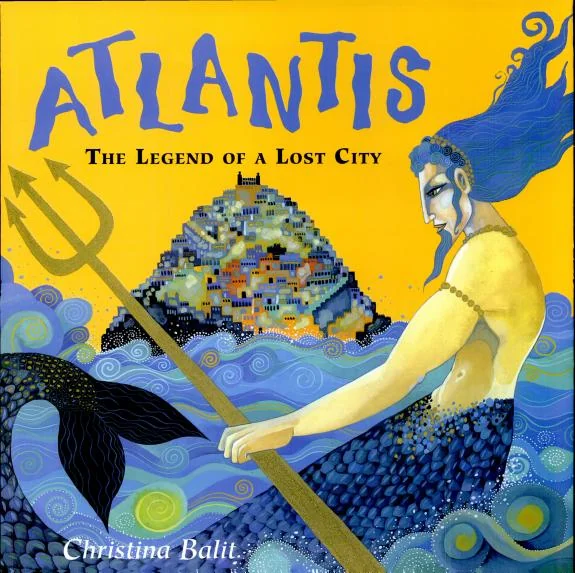
Atlantis
 82
82

Atlantis
Christina Balit's "Atlantis" offers a sober survey of a persistent legend, wisely sidestepping the more outlandish theories to focus on the textual roots and historical reception of the Atlantean myth. Its strength lies in its clear presentation of Plato's original accounts and the subsequent historical and philosophical discussions they inspired. The inclusion of a note on various explanations for the legend, while brief, is commendable for its attempt to ground the reader. However, the work occasionally feels more like a compilation than a critical analysis, particularly in its handling of later esoteric interpretations, which could have benefited from more rigorous examination. A passage discussing the influence of Helena Blavatsky's Theosophical interpretations, while present, feels somewhat cursory. Ultimately, "Atlantis" serves as a competent primer for those new to the subject, offering a structured overview without succumbing to the sensationalism that often surrounds the topic.
📝 Description
82
### The Enigma of Atlantis Christina Balit's "Atlantis" presents the enduring myth of a lost continent, a civilization shrouded in mystery and speculation. This work meticulously gathers the threads of the legend, tracing its origins and evolution through various historical accounts and interpretations. It functions not merely as a narrative retelling, but as an exploration of how the idea of Atlantis has permeated Western consciousness.
### For the Inquisitive Mind This book is designed for individuals fascinated by ancient civilizations, lost worlds, and the enduring power of myth. It appeals to those who question conventional historical narratives and seek to understand the deeper currents of human imagination. Readers interested in Plato's original dialogues, theosophical interpretations, or speculative archaeology will find fertile ground here.
### Echoes of Antiquity The legend of Atlantis first appears in Plato's dialogues, "Timaeus" and "Critias," around 360 BCE. Plato described it as a powerful naval empire located beyond the "Pillars of Hercules" that ultimately sank into the ocean after a failed invasion of Athens. Balit's work contextualizes this foundational narrative within the broader stream of Western thought, examining how subsequent generations have adapted, embellished, and reinterpreted Plato's account.
### Core Concepts Explored Central to the book is the concept of a highly advanced, utopian society that ultimately falls due to hubris or divine retribution. Balit examines the recurring motifs of advanced technology, spiritual enlightenment, and cataclysmic destruction associated with Atlantis. The text also considers the various theories proposed to explain the legend, from geographical misinterpretations to allegorical interpretations of Plato's philosophical intent.
💡 Why Read This Book?
• Understand the foundational Platonic texts describing Atlantis, distinguishing the original narrative from later embellishments, as presented in the initial sections of the book. • Explore how the concept of Atlantis has been adapted across different historical periods and philosophical movements, such as the Theosophical Society's engagement with the myth. • Gain insight into the various scholarly and speculative explanations for the legend, providing a framework for critical thinking about ancient mysteries.
⭐ Reader Reviews
Honest opinions from readers who have explored this book.
❓ Frequently Asked Questions
When was the legend of Atlantis first documented?
The earliest documented accounts of Atlantis appear in Plato's dialogues, "Timaeus" and "Critias," which were written around 360 BCE.
Who was Plato and why did he write about Atlantis?
Plato was an influential ancient Greek philosopher. He introduced the story of Atlantis in his dialogues to illustrate his philosophical ideas about ideal states and the dangers of imperial ambition.
What is the Pillars of Hercules mentioned in relation to Atlantis?
The Pillars of Hercules are understood to refer to the ancient name for the Strait of Gibraltar, the narrow body of water connecting the Atlantic Ocean to the Mediterranean Sea.
Does Christina Balit's book offer proof of Atlantis's existence?
No, Balit's "Atlantis" primarily recounts and analyzes the legend of the lost civilization, exploring its origins and interpretations rather than presenting definitive proof of its historical existence.
What is the primary historical source for the Atlantis myth?
The primary historical source for the Atlantis myth is the work of the ancient Greek philosopher Plato, specifically his dialogues Timaeus and Critias.
What are some common esoteric interpretations of Atlantis discussed?
The book touches upon various explanations, including those from esoteric traditions that view Atlantis as a civilization with advanced spiritual or technological knowledge, often linking it to concepts of spiritual evolution and cataclysm.
🔮 Key Themes & Symbolism
Platonic Origins
The narrative centers on the foundational accounts provided by Plato in his dialogues 'Timaeus' and 'Critias' around 360 BCE. Balit examines how Plato used the story of Atlantis, a powerful naval empire that predated Athens, as a vehicle to explore philosophical concepts such as ideal governance, divine retribution, and the cyclical nature of history. The text meticulously details Plato's description of Atlantean society, its geography, and its eventual catastrophic demise, establishing the bedrock upon which all subsequent interpretations are built.
The Great Cataclysm
A recurring theme is the cataclysmic destruction of Atlantis, typically depicted as a divine punishment for the civilization's moral decay or excessive pride. The book explores the various theories surrounding this event, from Plato's account of earthquakes and floods to later speculative ideas involving natural disasters or even advanced technological failures. This motif serves as a cautionary tale, reflecting anxieties about societal collapse and the potential consequences of unchecked ambition or technological hubris.
Esoteric and Theosophical Legacies
Beyond Plato, "Atlantis" acknowledges the significant influence of later esoteric traditions, particularly Theosophy, in shaping modern perceptions of the lost continent. Figures like Helena Blavatsky incorporated Atlantis into their cosmology as a highly advanced, ancient civilization that predated humanity as we know it, possessing profound spiritual and psychic powers. Balit's work touches on how these interpretations have contributed to Atlantis becoming a symbol of lost wisdom and a precursor to spiritual awakening.
Myth vs. History
The book navigates the complex relationship between myth and historical possibility. It presents the various attempts to locate Atlantis geographically, from the Atlantic Ocean to the Mediterranean and beyond, while also considering allegorical readings of Plato's narrative. By examining the enduring appeal of the Atlantis story, Balit underscores its function not necessarily as a factual historical record, but as a potent myth that reflects enduring human desires for origins, lost paradises, and profound knowledge.
💬 Memorable Quotes
“Plato described Atlantis as a naval power located beyond the Pillars of Hercules.”
— This foundational detail anchors the legend geographically, placing Atlantis in a specific, albeit debated, ancient context and establishing its identity as a formidable maritime force.
“The legend suggests Atlantis was destroyed by a cataclysm in a single day and night.”
— This dramatic end highlights the theme of divine judgment or natural disaster, emphasizing the sudden and absolute loss of a once-great civilization.
“The work discusses various explanations proposed for the Atlantis legend.”
— This indicates the book's approach: not to assert Atlantis's existence, but to survey the diverse interpretations and theories that have arisen around Plato's original narrative.
“Plato's dialogues "Timaeus" and "Critias" are the primary ancient sources.”
— This points to the philosophical and literary origins of the myth, grounding the discussion in specific historical texts rather than purely speculative accounts.
“Atlantis is often presented as a civilization of advanced knowledge and spiritual attainment.”
— This captures the idealized image of Atlantis prevalent in many retellings, portraying it as a lost golden age of wisdom and power.
🌙 Esoteric Significance
Tradition
While not strictly adhering to a single lineage, "Atlantis" engages with the broader Hermetic and Theosophical currents that have mythologized the lost continent. Within these traditions, Atlantis represents a pre-diluvian epoch of advanced spiritual and technological attainment, a golden age whose fall serves as a cosmic lesson. The work positions itself as an examination of this mythic archetype, exploring its persistence across cultures and its role in esoteric cosmologies as a symbol of lost paradises and ancestral wisdom.
Symbolism
Central symbols include the cataclysmic sinking of Atlantis, representing divine judgment, societal collapse, or the cyclical nature of cosmic epochs. The "Pillars of Hercules" serve as a symbolic threshold, marking a transition from the known world to a hidden, mysterious realm. The very idea of Atlantis functions as a potent symbol of lost perfection, a utopian ideal of advanced civilization that serves as both an aspiration and a warning against hubris.
Modern Relevance
Contemporary esoteric thinkers and practitioners continue to draw upon the Atlantis narrative. It remains a potent archetype in New Age spirituality, often invoked in discussions of ancient alien theories, past-life regressions, and earth mysteries. Schools of thought focused on ancient wisdom traditions or alternative histories frequently reference Atlantean motifs to posit a lineage of hidden knowledge stretching back to a primordial, enlightened era, influencing modern spiritual seeking and alternative worldviews.
👥 Who Should Read This Book
• Students of classical philosophy and history: Those interested in Plato's original writings and how his dialogues have influenced Western thought will find a clear presentation of the foundational texts. • Enthusiasts of ancient myths and legends: Individuals fascinated by stories of lost civilizations, sunken cities, and enduring mysteries will appreciate the exploration of the Atlantis narrative's evolution. • Researchers of esoteric traditions: Readers exploring the history of Theosophy, occultism, and New Age thought will find context for how Atlantis became a significant symbol in these movements.
📜 Historical Context
Published in May 2000, Christina Balit's "Atlantis" entered a landscape already saturated with speculation about the lost continent, a fascination amplified by figures like Ignatius Donnelly in the late 19th century and later by Theosophists such as Helena Blavatsky. The book's significance lies in its grounding of the myth within its primary ancient source: Plato's dialogues "Timaeus" and "Critias," written around 360 BCE. This places the narrative firmly within the context of Hellenistic philosophy, where Plato used Atlantis to explore his political and cosmological theories. Balit’s work contrasts with the more overtly mystical or pseudoscientific explorations prevalent in certain occult circles of the time. While the book doesn't engage deeply with specific academic debates, it implicitly situates itself against the backdrop of speculative archaeology and comparative mythology, movements gaining traction through scholars like Mircea Eliade, who explored the structure of myth and its role in human consciousness.
📔 Journal Prompts
The Platonic description of Atlantis's societal structure.
The cataclysmic end of Atlantis as depicted in various accounts.
The role of Atlantis in Theosophical cosmology.
The concept of the Pillars of Hercules in relation to Atlantis.
Interpretations of Atlantis as a symbol of lost wisdom.
🗂️ Glossary
Pillars of Hercules
An ancient name for the promontories on either side of the Strait of Gibraltar, marking the perceived boundary between the Mediterranean Sea and the Atlantic Ocean.
Timaeus
One of Plato's dialogues, featuring Critias recounting the story of Atlantis, purportedly passed down from the Egyptian priests through Solon.
Critias
A dialogue by Plato that continues the story of Atlantis, providing more detailed descriptions of its society, geography, and war with ancient Athens.
Cataclysm
A violent natural upheaval, such as a great flood or earthquake, often invoked in narratives of Atlantis's destruction.
Theosophy
A spiritual movement founded in the late 19th century, notably by Helena Blavatsky, which sought to synthesize Eastern and Western esoteric traditions and often incorporated concepts of ancient, highly evolved civilizations like Atlantis.
Hubris
Excessive pride or self-confidence, often seen in Greek tragedy as a fatal flaw that leads to downfall, a concept frequently applied to the Atlanteans.
Allegory
A story, poem, or picture that can be interpreted to reveal a hidden meaning, typically a moral or political one, as Plato's Atlantis is often considered.