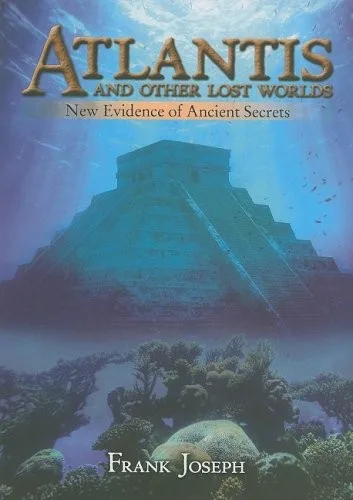
Atlantis and Other Lost Worlds
 71
71

Atlantis and Other Lost Worlds
Packages' *Atlantis and Other Lost Worlds* presents a sprawling survey of humanity's persistent dreams of lost continents. The strength of the compilation lies in its breadth, cataloging a dizzying array of theories from the quasi-academic to the purely fanciful. One particularly compelling section details the early 20th-century debates surrounding Lemuria, tracing its conceptual lineage from geological theories to occult lore. However, the work sometimes suffers from a lack of critical distance, presenting speculative accounts with a tone that occasionally blurs the line between historical inquiry and endorsement. The absence of a firm editorial voice means the reader must carefully sift through assertions. Ultimately, it functions as an extensive index of myth-making around forgotten lands, useful for its scope but requiring a discerning reader.
📝 Description
71
### What It Is
Atlantis and Other Lost Worlds by Packages is a compendium that examines a range of historical and mythical accounts of sunken continents and vanished civilizations. The work presents a compilation of theories and speculations that have arisen over centuries regarding these enigmatic places, often drawing from ancient texts, folklore, and early scientific hypotheses. It aims to catalogue the persistent human fascination with lost lands, exploring the narratives that have shaped our understanding of prehistory and forgotten epochs.
### Who It's For
This volume is suited for individuals interested in the history of esoteric thought, comparative mythology, and fringe historical theories. It appeals to those who enjoy exploring speculative accounts of lost civilizations and the cultural impact of such myths. Readers seeking a broad overview of various legends surrounding lost worlds, rather than a singular definitive argument, will find value here. It serves as a reference for those studying the genesis of popular myths about ancient origins.
### Historical Context
Packages' work, first published in 2000, enters a long tradition of speculative history and occult inquiry. It follows in the wake of figures like Ignatius Donnelly, whose 1882 book *Atlantis: The Antediluvian World* popularized the Atlantis myth for a modern audience. The late 20th century saw continued interest in ancient mysteries, influenced by figures like Helena Blavatsky and the Theosophical Society, who integrated Atlantis into their spiritual narratives. This book synthesizes many such threads, reflecting a period where pseudohistory and esoteric interpretations of ancient texts remained a significant cultural undercurrent.
### Key Concepts
The central concept is the exploration of "lost worlds" as recurring archetypes in human consciousness and historical speculation. This includes detailed examinations of the Atlantis myth, Lemuria, and other legendary continents. The book investigates the methodologies used by proponents of these theories, often highlighting their reliance on selective interpretations of archaeological findings and ancient scriptures. It also touches upon the psychological appeal of such narratives – the desire for a golden age or a forgotten, advanced past that offers a counterpoint to contemporary societal anxieties.
💡 Why Read This Book?
• Gain an overview of the Atlantis myth's evolution from Plato's dialogues to 20th-century esoteric interpretations, understanding its persistent cultural influence. • Explore the historical context of speculative geography, including the influence of figures like Ignatius Donnelly and his 1882 theories on Atlantis. • Understand the symbolic weight of "lost worlds" in human consciousness, as presented in the book's examination of archetypal narratives and forgotten golden ages.
⭐ Reader Reviews
Honest opinions from readers who have explored this book.
❓ Frequently Asked Questions
What is the primary focus of Atlantis and Other Lost Worlds?
The book primarily focuses on cataloging and exploring various historical, mythical, and speculative accounts of lost continents and vanished civilizations, most notably Atlantis.
Who was Packages in relation to this book?
Packages is the author credited with compiling and presenting the information in *Atlantis and Other Lost Worlds*. The work was first published in 2000.
Does the book present a single theory about Atlantis?
No, the book surveys a wide range of theories and legends surrounding Atlantis and other lost worlds, rather than advocating for one specific explanation.
What kind of sources does the book draw upon?
It draws upon ancient texts, folklore, historical speculation, esoteric writings, and early scientific hypotheses related to lost civilizations.
Is this book suitable for academic study?
While it provides a broad overview of the subject matter and its historical reception, it is more suited for general interest in esoteric thought and comparative mythology than rigorous academic research.
When was Atlantis and Other Lost Worlds first published?
The book *Atlantis and Other Lost Worlds* was first published in the year 2000.
🔮 Key Themes & Symbolism
The Atlantis Archetype
The enduring myth of Atlantis serves as the central pillar of this work. Packages traces its origins from Plato's philosophical dialogues, highlighting how the concept has been reinterpreted across centuries. It examines the transmutation of Atlantis from a cautionary tale into a purported historical reality, often linked to esoteric cosmologies and theories of ancient advanced civilizations. The theme explores why this particular lost world continues to capture the imagination, suggesting it fulfills a deep psychological need for a forgotten, perfect past.
Lemuria and Other Sunken Lands
Beyond Atlantis, the book delves into other legendary submerged continents such as Lemuria. This theme investigates the development of these myths, often originating in the late 19th and early 20th centuries, blending geological speculation with spiritualist ideas. It showcases how figures within occult traditions adopted and adapted these concepts, weaving them into grand narratives of global history and human evolution. The exploration of these parallel myths reveals a broader pattern of seeking lost origins and forgotten eras.
Speculative History and Esotericism
This theme addresses the methodology and appeal of speculative history, particularly when intersecting with esoteric philosophies. Packages examines how ancient texts are interpreted, archaeological evidence is selectively used, and pseudoscientific reasoning is employed to construct narratives of lost worlds. The work implicitly critiques or at least catalogues these approaches, demonstrating how esoteric traditions have historically used such concepts to support their own unique worldviews and historical timelines, often diverging significantly from mainstream scholarship.
The Psychology of Lost Worlds
The book touches upon the underlying human desire that fuels the fascination with lost worlds. This theme explores why societies are drawn to tales of advanced, utopian civilizations that vanished, often due to cataclysm. It suggests that these narratives serve as a counterpoint to perceived declines in modern society, offering a sense of historical depth and the possibility of lost knowledge or spiritual attainment. The persistent appeal of these myths speaks to fundamental aspects of human hope and anxiety about progress and origins.
💬 Memorable Quotes
“The idea of Atlantis persists not merely as a story, but as a template for a lost golden age.”
— This statement encapsulates the book's view that Atlantis represents more than a specific location; it functions as an archetype for humanity's longing for an ideal past, a lost perfection that continues to inspire myth and speculation.
“Lemuria emerged from geological possibility to spiritual certainty in the writings of occultists.”
— This highlights the transformation of a scientific hypothesis into a foundational element of esoteric belief systems, illustrating how fringe theories can be adopted and adapted within spiritual traditions.
“Ancient scriptures are often read through the lens of what we wish to find about our origins.”
— This points to the subjective nature of interpreting historical and religious texts when seeking evidence for lost civilizations, suggesting that confirmation bias plays a significant role in esoteric scholarship.
“The map of the lost world is often drawn more in the mind than on the earth.”
— This aphorism suggests that the concept of lost lands is fundamentally a product of imagination and psychological need, rather than purely historical or geographical fact.
“Each era reinterprets its lost antiquity according to its own anxieties and aspirations.”
— This implies that the enduring fascination with lost civilizations is tied to contemporary societal concerns, with each generation projecting its hopes and fears onto these mythical pasts.
🌙 Esoteric Significance
Tradition
This work engages primarily with the Western Esoteric Tradition, particularly its branches focused on speculative history and lost golden ages. It draws heavily from Theosophical ideas concerning root races and pre-diluvian civilizations, as well as earlier occult interpretations of myths. While not strictly Gnostic or Hermetic, it intersects with their perennial interest in hidden knowledge and ancient wisdom. The book synthesizes these disparate elements into a broad overview of how esoteric thought has constructed alternative historical narratives.
Symbolism
Key symbols include the sinking continent itself, representing lost perfection, cyclic destruction, and hidden knowledge. The trident, often associated with Poseidon and Atlantis, symbolizes dominion and elemental power. Lemuria's symbolism often relates to primal spiritual energies and an earlier, more innocent stage of human evolution. These symbols collectively evoke themes of primal origins, lost wisdom, and the cyclical nature of existence as understood within many esoteric frameworks.
Modern Relevance
Contemporary esoteric practitioners and speculative historians continue to draw inspiration from the narratives compiled in this book. It informs discussions within New Age spirituality, alternative archaeology circles, and even certain fringe historical research groups. Thinkers exploring archetypal psychology or the cultural impact of myths often reference these lost world theories as examples of enduring human narratives. The work remains a touchstone for those seeking to understand the roots of modern myth-making about ancient civilizations.
👥 Who Should Read This Book
• Enthusiasts of comparative mythology and ancient legends who wish to explore the origins and variations of stories about lost civilizations. • Students of esoteric history and occult traditions seeking to understand how concepts like Atlantis and Lemuria became integrated into spiritual worldviews. • Readers interested in the history of speculative thought and pseudohistory, examining how theories about forgotten eras have developed and persisted.
📜 Historical Context
Published in 2000, *Atlantis and Other Lost Worlds* arrived during a period of sustained popular interest in pseudohistory and esoteric interpretations of ancient civilizations. This followed decades influenced by the extensive writings of Helena Blavatsky and the Theosophical Society, which had integrated Atlantis and Lemuria into their complex spiritual cosmologies. The work stands in dialogue with the foundational 1882 text *Atlantis: The Antediluvian World* by Ignatius Donnelly, a key figure in popularizing the Atlantis myth for a modern, scientifically-minded audience. Packages' compilation synthesizes many of these speculative threads, reflecting a cultural landscape where fringe theories about ancient origins found a ready audience, often through popular media and dedicated publishers. This era also saw ongoing debates between mainstream archaeology and alternative historical theories, with proponents of lost continents often citing obscure texts or misinterpretations of scientific findings to bolster their claims.
📔 Journal Prompts
The recurring motif of the 'lost golden age' in these narratives.
The transformation of Plato's Atlantis into a historical certainty.
The symbolic meaning of sinking continents in esoteric thought.
The psychological appeal of forgotten, advanced civilizations.
Comparing the genesis of the Atlantis myth with that of Lemuria.
🗂️ Glossary
Atlantis
A legendary island civilization first described by Plato, often depicted as a technologically advanced, utopian society that was ultimately destroyed by a cataclysm and sank beneath the sea.
Lemuria
A hypothetical lost continent proposed in the 19th century, often placed in the Indian or Pacific Ocean, which became a prominent feature in Theosophical and occult literature as the homeland of an early human race.
Theosophy
A spiritual movement founded by Helena Blavatsky in the late 19th century, which sought to synthesize Eastern and Western mystical traditions and proposed complex theories about ancient civilizations and human evolution.
Esotericism
Belief systems and practices that focus on hidden knowledge, inner spiritual realization, and often incorporate mystical, magical, or occult elements, typically distinct from mainstream religious or scientific doctrines.
Pseudoscience
A claim, belief, or practice presented as scientific but lacking adherence to valid scientific methodology, based on flawed or unsubstantiated evidence, and often resistant to falsification.
Archetype
In mythology and psychology, a universally understood symbol, character, or pattern of circumstances that recurs across cultures and time, representing fundamental human experiences or concepts.
Cataclysm
A momentous, often violent, event regarded as bringing about great change, such as a natural disaster of immense proportions, often invoked in theories of lost civilizations.