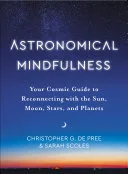
Astronomical Mindfulness
 80
80

Astronomical Mindfulness
Christopher G. de Pree and Sarah Scoles offer a refreshing perspective on mindfulness, anchoring it not in breath or body, but in the grand, observable movements of our solar system. The book's strength lies in its innovative premise: using the Sun, Moon, and planets as conduits for presence. The illustrated exercises are particularly well-executed, translating complex astronomical ideas into tangible practices. For instance, a section exploring the Moon's phases as a metaphor for personal cycles is both insightful and visually appealing. However, the work occasionally leans towards an overly simplistic interpretation of astronomical influence, sometimes bordering on astrological determinism without fully engaging with the scientific underpinnings. Despite this, the central thesis—that engaging with cosmic cycles can foster mindfulness—is compelling. It’s a solid exploration for those weary of standard mindfulness fare.
📝 Description
80
### What It Is Astronomical Mindfulness presents a unique synthesis of celestial observation and introspective practice. It leverages the architecture of our solar system, from the Sun's vital energy to the orbital paths of planets, as a framework for cultivating daily presence. The book offers illustrated exercises designed to connect readers with cosmic cycles, encouraging moments of pause and reflection amidst the demands of modern life. It aims to re-establish a sense of belonging within the vastness of the universe by grounding personal experience in astronomical realities.
### Who It's For This guide is intended for individuals seeking a practical, accessible path to mindfulness that moves beyond conventional techniques. It appeals to those with an interest in astronomy, astrology, or simply the natural world, who wish to deepen their understanding of the cosmos while simultaneously fostering inner calm. Readers looking for a structured approach to developing presence, who appreciate visually engaging content and a connection to ancient human practices of stargazing, will find value here.
### Historical Context Humanity's relationship with the stars spans millennia, from early cosmologies that explained creation and guided rituals to later uses in navigation and timekeeping. This book taps into that ancient lineage, suggesting that our ancestors' reliance on celestial cues fostered a natural awareness of our place in the universe. By reintroducing astronomical observation as a tool for mindfulness, it echoes a time before abstract thought dominated, when the visible cosmos directly informed human consciousness and community.
### Key Concepts The core of Astronomical Mindfulness lies in understanding celestial bodies not just as physical objects, but as potent symbols and regulators of earthly life. The book explores how the Sun's consistent energy, the Moon's phases, and the perceived movements of planets can serve as anchors for present-moment awareness. It posits that by aligning our internal rhythms with these external, predictable cycles, we can achieve a more profound sense of groundedness and perspective, mitigating feelings of disconnection or overwhelm.
💡 Why Read This Book?
• You will learn to use the predictable cycles of celestial bodies, such as the Moon's phases as detailed in the book's exercises, to structure moments of intentional pause, fostering a unique form of present-moment awareness. • You will gain a new perspective on the solar system by viewing planets and stars not just as astronomical objects but as anchors for mindfulness, inspired by the book's illustrated guides to planetary movements. • You will develop a practice of connecting with universal rhythms, drawing parallels between ancient human reliance on stars for navigation and modern needs for grounding, as explored through the book's historical context.
⭐ Reader Reviews
Honest opinions from readers who have explored this book.
❓ Frequently Asked Questions
What is the core philosophy behind Astronomical Mindfulness?
The book's philosophy centers on using the observable movements and symbolic significance of celestial bodies—Sun, Moon, planets—as a framework for cultivating present-moment awareness and a deeper connection to the universe.
Are the exercises in Astronomical Mindfulness difficult to follow?
No, the exercises are designed to be accessible and are accompanied by illustrations. They aim to translate astronomical concepts into simple, daily practices for mindfulness and reflection.
Does this book require prior knowledge of astronomy or astrology?
While prior knowledge is not strictly required, the book uses astronomical concepts as its foundation. It aims to deepen the reader's understanding of the solar system through its mindfulness practices.
How does Astronomical Mindfulness differ from traditional mindfulness techniques?
It distinguishes itself by externalizing the focus of mindfulness from internal states (like breath) to external, observable cosmic phenomena and cycles, linking personal presence to universal rhythms.
Who are the authors, Christopher G. de Pree and Sarah Scoles?
Christopher G. de Pree is known for his work in connecting science and spirituality, while Sarah Scoles is a science journalist, bringing a blend of conceptual depth and accessible reporting to the book.
When was Astronomical Mindfulness first published?
Astronomical Mindfulness was first published on January 4, 2022, making it a contemporary exploration of esoteric and mindfulness practices.
🔮 Key Themes & Symbolism
Cosmic Cycles as Anchors
The work posits that the predictable, cyclical nature of celestial bodies—the Sun's daily arc, the Moon's monthly phases, the planets' orbital paths—provides a stable framework for anchoring present-moment awareness. Unlike fleeting thoughts or sensations, these cosmic rhythms offer a consistent external reference point. The book illustrates how observing these cycles can help individuals synchronize their internal states with the universe, fostering a sense of order and belonging that transcends everyday anxieties. This connection is presented as a revival of ancient human practices that were deeply intertwined with celestial observation.
The Sun, Moon, and Planets as Tools
Beyond mere astronomical objects, the Sun, Moon, and planets are presented as active tools for introspection and presence. The Sun's consistent energy is linked to vitality and focus, the Moon's phases to personal cycles of change and reflection, and the perceived movements of planets to broader archetypal influences. Through guided exercises, readers are encouraged to engage with these celestial bodies symbolically, transforming passive observation into an active practice of self-discovery and connection to universal forces.
Ancient Wisdom for Modern Life
Astronomical Mindfulness draws a direct line from humanity's earliest engagement with the stars—for storytelling, navigation, and spiritual understanding—to contemporary needs for grounding and perspective. It argues that modern detachment from natural cycles has contributed to a sense of disconnection. By re-engaging with celestial observation, the book suggests we can reclaim an ancient form of awareness, fostering a renewed sense of place and purpose within the vast cosmic order, thereby enriching daily life.
Illustrated Mindfulness Practice
A significant aspect of the book is its integration of visual learning. The inclusion of numerous illustrations is not merely decorative but functional, serving to clarify astronomical concepts and guide the reader through practical exercises. These visuals make abstract ideas about celestial mechanics and their connection to mindfulness more concrete and accessible, supporting a hands-on approach to spiritual and psychological development that appeals to a visual learner.
💬 Memorable Quotes
“Thousands of years ago, when we humans lived together in communal caves, we told stories about the stars.”
— This highlights the ancient, narrative human connection to the cosmos, suggesting our earliest cultures found meaning and order by observing the night sky, a fundamental aspect of our shared history.
“When we later took to the seas, we used stellar positions to navigate and pinpoint our place in the world.”
— This emphasizes the practical, orienting power of celestial observation, illustrating how stars provided not just stories but also a tangible means of understanding one's location and purpose in the physical world.
“This unique, illustrated guide is filled with engaging exercises that deepen your knowledge of the solar system, help you take necessary pauses every day, and foster a renewed sense of presence in the universe.”
— This encapsulates the book's core promise: a blend of astronomical education, practical mindfulness techniques, and a broader aim of reconnecting the individual with the cosmic scale of existence.
“Using the power of the sun, moon, stars, and planets...”
— This phrase frames celestial bodies not as distant objects but as active forces or sources of energy that can be consciously engaged with for personal growth and awareness.
“...foster a renewed sense of presence in the universe.”
— This points to the ultimate goal of the practices offered: to help readers feel grounded and aware not just in their immediate surroundings, but within the grand context of the cosmos.
🌙 Esoteric Significance
Tradition
The work draws implicitly from Hermeticism and Neoplatonism, traditions that emphasize correspondence between the celestial (macrocosm) and the terrestrial (microcosm). It aligns with the Hermetic principle 'As above, so below,' using the structure and movements of the solar system as a model for inner human experience. While not overtly referencing specific Hermetic texts, it embodies the tradition's focus on universal laws and the divinization of nature through understanding its patterns. It departs from more complex astrological systems by focusing on mindfulness rather than predictive divination.
Symbolism
Key symbols include the Sun, representing consciousness, vitality, and the divine spark; the Moon, symbolizing the subconscious, intuition, and the ebb and flow of life; and the planets, often associated with archetypal energies or distinct facets of the psyche (e.g., Mercury for communication, Mars for action). The book likely uses their perceived movements and symbolic associations within exercises to encourage reflection on these themes within the reader's own life, translating celestial symbolism into personal meaning.
Modern Relevance
This work resonates with contemporary trends in ecopsychology and the growing interest in nature-based therapies. Thinkers and practitioners exploring embodied cognition and somatic practices might find value in its approach of grounding awareness in external, observable phenomena. It also appeals to a modern audience disillusioned with purely materialistic views of the universe, offering a way to find meaning and connection through accessible, observable celestial events, aligning with a renewed interest in holistic well-being.
👥 Who Should Read This Book
['• Individuals seeking secularized spiritual practices: Those who are drawn to mindfulness and self-improvement but prefer approaches grounded in observable natural phenomena over religious dogma.', '• Amateur astronomers and science enthusiasts: Readers with an existing interest in space and celestial mechanics who wish to deepen their personal connection to the cosmos beyond purely scientific understanding.', '• Practitioners of contemplative arts: Individuals looking for novel methods to enhance their meditation or reflection practices, seeking external anchors to cultivate presence and inner calm.']
📜 Historical Context
Published in 2022, *Astronomical Mindfulness* emerges within a contemporary resurgence of interest in esoteric practices and mindfulness, often seeking alternatives to secularized wellness trends. It taps into a long human tradition of celestial observation, which predates scientific astronomy and was deeply intertwined with early cosmology, mythology, and spiritual understanding. In ancient Greece, philosophers like Plato and Aristotle contemplated the celestial spheres, integrating astronomical order into their metaphysical systems. While this book doesn't delve into complex Hellenistic philosophy, it echoes the sentiment that cosmic order reflects a deeper reality. Its contemporary relevance lies in offering a tangible, visually supported method to reconnect with these ancient patterns. Unlike purely scientific astronomy, which focuses on empirical data, or some New Age interpretations that may lack rigor, this work attempts a grounded synthesis, drawing on the observable universe as a source for inner peace. Its reception is likely to appeal to those seeking a practice that feels both ancient and scientifically informed, bridging the gap between the empirical and the symbolic.
📔 Journal Prompts
Reflect on the Sun's consistent presence and its role in your daily energy.
Consider the Moon's current phase and how it mirrors your internal emotional landscape.
Map the perceived movement of a chosen planet over a week and its symbolic resonance for your actions.
Identify a moment of pause inspired by a celestial event, as described in the book's exercises.
How does understanding planetary orbits inform your perspective on time and patience?
🗂️ Glossary
Astronomical Mindfulness
A practice that uses the observation of celestial bodies and their cycles (Sun, Moon, planets) as a framework for cultivating present-moment awareness and a connection to the universe.
Celestial Cycles
The predictable, recurring patterns of movement and change observed in celestial objects, such as the Sun's daily path, the Moon's phases, and the orbital paths of planets.
Presence
A state of being fully attentive and aware of the current moment, without being preoccupied with the past or future. In this context, it is anchored by cosmic observation.
Microcosm and Macrocosm
The concept that the human individual (microcosm) reflects the structure and principles of the universe (macrocosm). This book links personal experience to cosmic phenomena.
Solar System Architecture
The arrangement and relationships between the Sun, planets, and other celestial bodies within our solar system, used here as a structural metaphor for mindfulness practice.
Stellar Positions
The apparent locations of stars and planets in the sky as observed from Earth, historically used for navigation, timekeeping, and spiritual understanding.
Cosmic Rhythms
The natural, recurring patterns and cycles inherent in the universe, such as day/night, seasons, and planetary orbits, which the book suggests can guide human awareness.