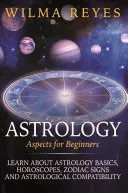
Astrology Aspects For Beginners
 81
81

Astrology Aspects For Beginners
Wilma Reyes' "Astrology Aspects For Beginners" offers a refreshingly straightforward introduction to a subject often shrouded in arcane jargon. The book's strength lies in its methodical breakdown of planetary aspects, presenting them as building blocks for understanding a natal chart. Reyes avoids overwhelming the novice, focusing on the fundamental interactions that shape astrological interpretation. However, the book’s dedication to simplicity occasionally leads to a lack of depth; for instance, while the concept of a square aspect is explained, its multifaceted implications across different planetary pairings are only briefly touched upon. A passage discussing the Sun-Moon square, which Reyes presents as indicative of internal tension, is a good example of the book's directness, though a more experienced astrologer might seek further nuances. Ultimately, Reyes provides a solid, if basic, foundation for aspiring astrological students.
📝 Description
81
### What It Is Astrology, as presented in Wilma Reyes' "Astrology Aspects For Beginners," is framed not as mere fortune-telling, but as a symbolic language detailing the celestial influences on earthly existence. The work posits that the positions and movements of the Sun, Moon, and planets at the moment of birth encode significant information about an individual's personality, relationships, and life path. It offers a structured approach to deciphering these celestial patterns.
### Who It's For This book is explicitly designed for those new to astrological study. It assumes no prior knowledge of planetary bodies, zodiac signs, or the complex mathematical calculations often associated with natal chart interpretation. Readers seeking a clear, accessible entry point into understanding how celestial configurations might correlate with human experience will find this a suitable starting point.
### Historical Context While "Astrology Aspects For Beginners" is a modern text, published in 2015, it engages with a tradition stretching back millennia. Ancient Babylonian priests, medieval European scholars, and Renaissance astrologers all sought to understand the cosmos as a reflection of earthly events. Reyes' work, in this lineage, attempts to demystify the practice for a contemporary audience, moving beyond the historical practices that influenced figures like Johannes Kepler, who himself engaged in astrological interpretation.
### Key Concepts The core of Reyes' approach lies in understanding 'aspects' – the geometric relationships between planets in a birth chart. These relationships, measured in degrees, are presented as indicators of how different planetary energies interact. The book guides readers through identifying and interpreting these connections, such as the harmonious influence of a trine or the dynamic tension of a square, as foundational to astrological analysis.
💡 Why Read This Book?
• Learn to interpret the angular relationships between planets, such as the harmonious 'trine,' as a method for understanding how distinct celestial energies interact within a birth chart, a core tenet of astrological analysis. • Understand the significance of the "square" aspect, as detailed in Wilma Reyes' work, to recognize potential areas of internal or external tension and challenge indicated by your natal chart. • Gain a foundational grasp of how celestial bodies like the Sun and Moon, and their geometric connections, were believed by ancient cultures and are still interpreted today to influence personality.
⭐ Reader Reviews
Honest opinions from readers who have explored this book.
❓ Frequently Asked Questions
What is the primary focus of "Astrology Aspects For Beginners"?
The book primarily focuses on explaining the geometric relationships, known as aspects, between planets in an astrological chart and how these connections influence an individual's personality and life events.
Who is the intended audience for this book?
This book is specifically written for beginners with little to no prior knowledge of astrology, offering a clear and accessible introduction to a complex subject.
When was "Astrology Aspects For Beginners" first published?
The book was first published on February 3, 2015, making it a contemporary guide to astrological principles.
What are some key concepts covered in the book?
Key concepts include understanding different types of aspects (like trines and squares), the meaning of planetary relationships, and how to interpret these in a natal chart.
Does the book require advanced mathematical skills to understand?
No, the book is designed for beginners and aims to demystify astrological concepts, avoiding overly technical or mathematical explanations.
What is the author's approach to astrology?
Wilma Reyes approaches astrology as a symbolic language that describes celestial influences on human lives, focusing on the interpretative aspect rather than predictive fortune-telling.
🔮 Key Themes & Symbolism
Planetary Aspects
The central theme is the interpretation of aspects, the angular relationships between celestial bodies in a natal chart. The book meticulously explains how these geometric connections—such as conjunctions, oppositions, squares, trines, and sextiles—represent the dynamic interplay of planetary energies. Reyes argues that understanding these aspects is crucial for deciphering the unique blueprint of an individual's psyche and life path, moving beyond simple planetary placements to reveal how different facets of the self interact.
Symbolic Language of the Cosmos
Reyes frames astrology as a symbolic language, where celestial bodies and their movements are not literal determinants but rather represent archetypal forces and influences. The work explores how the positions of the Sun, Moon, and planets at birth can be read as a cosmic narrative, offering insights into personality traits, relationship dynamics, and life challenges. This perspective aligns with esoteric traditions that view the universe as imbued with meaning and interconnectedness.
Individual Blueprint
A core concept is that the birth chart, particularly through its aspects, provides a unique blueprint for an individual's life. The book guides readers to see how these celestial configurations can illuminate predispositions, innate talents, and potential areas of conflict or ease. It emphasizes self-understanding through the lens of astrology, suggesting that awareness of one's astrological map can foster personal growth and acceptance.
Accessible Astrological Study
The book is built around the principle of making astrological study accessible to newcomers. It systematically breaks down complex ideas into digestible parts, focusing on clarity and practical application. This approach aims to demystify astrology, encouraging readers to engage with its principles without feeling intimidated by its historical complexity or perceived esoteric obscurity.
💬 Memorable Quotes
“The positions of the planets at birth are not destiny, but rather a map of potential.”
— This interpretation highlights the book's view of astrology as a tool for understanding innate potentials and tendencies, rather than a rigid prediction of future events. It emphasizes agency and the possibility of conscious engagement with one's astrological blueprint.
“Aspects reveal how different parts of yourself communicate with each other.”
— This concept frames astrological aspects as indicators of internal psychological dynamics. It suggests that the relationships between planets in a natal chart can illuminate how various personality facets interact, cooperate, or conflict within the individual.
“A square aspect often signifies a dynamic tension that requires conscious effort to resolve.”
— This paraphrased concept points to the book's explanation of challenging astrological configurations. It suggests that aspects like the square are not inherently negative but represent areas where growth and development are prompted through active engagement and problem-solving.
“The Moon's influence is deeply personal, tied to our emotional needs and subconscious responses.”
— This highlights the book's focus on the Moon as a key indicator of emotional nature and instinctive reactions. It underscores the personal and often subconscious impact of lunar placements and aspects in a natal chart.
“Learning astrology is like learning a new language, one that speaks of celestial influences.”
— This metaphor positions astrology as a system of communication. It suggests that mastering astrological principles involves understanding its lexicon and grammar to interpret the 'messages' conveyed by the stars and planets.
🌙 Esoteric Significance
Tradition
This work fits within the broad Hermetic and Neoplatonic currents that view the cosmos as a divinely ordered system reflecting spiritual truths. While not explicitly Kabbalistic or Theosophical, it echoes the Hermetic principle of 'As Above, So Below,' suggesting a correspondence between celestial patterns and earthly human experience. Reyes' approach prioritizes psychological interpretation, aligning with modern esoteric psychology that sees astrological symbols as archetypal representations of the human psyche.
Symbolism
The primary symbolism revolves around the geometric 'aspects' connecting planets. A 'trine,' for instance, symbolizes harmonious flow and inherent talent, representing ease of integration between the planetary energies involved. Conversely, a 'square' symbolizes dynamic tension and challenge, acting as a catalyst for growth and demanding conscious effort to bridge the energies of the planets it connects. These geometric relationships are seen as symbolic of how different psychological functions or life areas are integrated or in conflict.
Modern Relevance
Reyes' focus on accessible astrological education is highly relevant to contemporary digital learning environments. Thinkers in modern psychological astrology and self-help movements continue to draw on the foundational concepts of aspects for personal development. The work's emphasis on understanding one's 'blueprint' resonates with current trends in self-discovery and the search for meaning through symbolic systems, making it a practical entry point for many exploring esoteric philosophies today.
👥 Who Should Read This Book
• Absolute beginners to astrology seeking a clear, non-intimidating introduction to interpreting planetary relationships. • Individuals interested in psychological astrology and self-discovery who want to understand how celestial configurations might reflect inner dynamics. • Students of comparative esoteric studies looking for a foundational text on Western astrological principles and their symbolic language.
📜 Historical Context
Published in 2015, Wilma Reyes' "Astrology Aspects For Beginners" entered a landscape where astrological knowledge was increasingly accessible online, yet often fragmented. The work situates itself within the long tradition of Western astrology, a practice with roots in Babylonian astronomy and Hellenistic Egypt, which flourished through the Middle Ages and Renaissance. Figures like Ptolemy, whose Tetrabiblos laid foundational principles, and later Johannes Kepler, who attempted to reconcile astronomy and astrology, represent earlier attempts to codify celestial influences. Reyes’ book, however, diverges from the more complex, often mathematical, approaches of earlier eras, aiming for a simplified, beginner-friendly exposition. It emerged in an era where psychological astrology, popularized by figures like Dane Rudhyar in the 20th century, was influential, focusing on self-understanding rather than strict prediction, a trend Reyes’ work implicitly follows by emphasizing personal interpretation of aspects.
📔 Journal Prompts
Reflect on the Sun-Moon aspect described in the book and its potential manifestation in your daily life.
Consider the concept of a 'square' aspect and how it might represent a challenge you are currently facing.
Analyze the meaning of a 'trine' aspect as presented by Wilma Reyes in the context of your personal strengths.
How does the idea of the birth chart as a 'map of potential' influence your perspective on personal growth?
Explore the 'symbolic language of the cosmos' as it relates to a specific planet discussed in the text.
🗂️ Glossary
Aspect
The angular relationship between two or more planets or points in a birth chart, measured in degrees, indicating how their energies interact.
Natal Chart
A diagram representing the positions of the Sun, Moon, planets, and astrological aspects at the exact time and place of a person's birth.
Conjunction
An aspect where two planets are very close together in the chart (0-10 degrees), indicating a merging or intensification of their energies.
Opposition
An aspect where two planets are approximately 180 degrees apart, symbolizing a polarity or dynamic tension that requires balance.
Square
An aspect of approximately 90 degrees, representing tension, challenge, and the need for action and problem-solving.
Trine
An aspect of approximately 120 degrees, symbolizing harmony, ease, and the flow of energy between planets.
Sextile
An aspect of approximately 60 degrees, indicating opportunity, communication, and a harmonious yet less intense connection than a trine.