As If
 75
75

As If
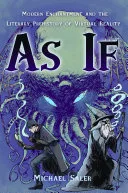
Michael Saler’s *As If* offers a compelling historical counterpoint to contemporary anxieties about digital escapism. By foregrounding the enduring human impulse to inhabit imagined worlds, Saler reframes activities like persistent world gaming and fan fiction not as novelties but as continuations of a tradition stretching back to the rise of Sherlock Holmes in the late 19th century. The work's strength lies in its meticulous historical tracing of this phenomenon, demonstrating how "virtual reality" and "as if" thinking are not recent inventions. A minor limitation might be the dense academic prose, which occasionally obscures the accessible core argument. However, the exploration of how Arthur Conan Doyle's creation enabled readers to "colonize imaginary worlds" provides a concrete example of Saler’s thesis in action. *As If* is an essential read for understanding our relationship with fiction.
📝 Description
75
### What It Is
Michael Saler's *As If* examines the pervasive human practice of engaging with imagined worlds, from the literary realms of Sherlock Holmes and Harry Potter to the persistent universes of online gaming. Far from being mere escapism, Saler argues that these engagements represent a long-standing cultural phenomenon where individuals explore reality through a provisional, "as if" lens.
### Who It's For
This work is for readers interested in the sociology of imagination, media studies, and the history of cultural engagement. It appeals to those who question the binary between reality and fantasy and seek to understand the deeper functions of imaginative participation in shaping individual and collective consciousness.
### Historical Context
The book traces this phenomenon back to the late nineteenth century, identifying Sherlock Holmes as a pivotal figure. The popularity of Holmes and his world fostered a new kind of reader engagement, one that involved not just passive consumption but active participation in constructing and debating the nature of these fictional realities, setting a precedent for future media.
### Key Concepts
Saler introduces the idea of "virtual reality" in a historical context, predating modern technology. The "as if" framework suggests that people engage with imagined worlds as if they were real, allowing for experimentation with identities, social structures, and philosophical ideas without direct real-world consequences. This provisional stance toward reality is presented not as delusion but as a vital mode of understanding and interacting with the world.
💡 Why Read This Book?
• Understand the historical roots of 'virtual reality' engagement, tracing its origins to the late 19th century and the cultural impact of Sherlock Holmes, revealing that our fascination with imagined worlds is not a new phenomenon. • Grasp the concept of "as if" thinking as a mode of engaging with reality, learning how it allows individuals to explore ideas and identities provisionally, offering a critical lens beyond simple escapism. • Recognize the social and intellectual functions of persistent world-building, as Saler illustrates how shared imaginative spaces, from early fan communities to modern online universes, have historically served as arenas for serious debate and identity formation.
⭐ Reader Reviews
Honest opinions from readers who have explored this book.
❓ Frequently Asked Questions
When was Michael Saler's 'As If' first published?
Michael Saler's *As If* was first published on January 9, 2012. The work explores the historical development of engaging with fictional universes.
What is the 'as if' concept in Michael Saler's book?
The 'as if' concept refers to the way individuals engage with imagined worlds provisionally, treating them as if they were real to explore ideas, identities, and social dynamics without direct real-world consequences.
How does Sherlock Holmes relate to the ideas in 'As If'?
Sherlock Holmes is presented as the world's first 'virtual reality' character. His popularity in the late 19th century marked a turning point where readers began to actively 'colonize' imaginary worlds, debating issues within them.
Is 'As If' about modern video games?
While the book discusses modern online universes, its primary focus is on the historical precedents for engaging with imagined worlds, arguing that these activities are deeply rooted in cultural practices predating contemporary digital technology.
What does Saler argue about escapism?
Saler argues against viewing engagement with imaginary worlds as mere escapism. He posits that these activities have historically served important social and intellectual functions, allowing for critical engagement with reality itself.
What historical period does 'As If' primarily focus on for the development of 'virtual reality' characters?
The book primarily focuses on the late nineteenth century, specifically highlighting the emergence of Sherlock Holmes as a key figure in establishing the concept of 'virtual reality' characters and reader engagement with fictional realms.
🔮 Key Themes & Symbolism
The Provisional Nature of Reality
Saler's central thesis revolves around the 'as if' framework, proposing that humans have long engaged with imagined realities provisionally. This means treating fictional worlds and characters as real for the purposes of exploration, debate, and identity formation. This is not a denial of objective reality but a method of interacting with it by stepping into simulated environments, whether literary or digital, to test ideas and understand complex issues without immediate consequence.
The Historical Evolution of Virtual Engagement
The work meticulously traces the lineage of what we now call virtual engagement back to the late nineteenth century. It identifies the phenomenon of readers 'colonizing' the world of Sherlock Holmes as a foundational moment. This historical perspective challenges the notion that immersive engagement with fictional realms is a product solely of modern technology, positioning it as a persistent cultural practice with deep historical roots.
Imagined Worlds as Sites of Social and Intellectual Exchange
Contrary to viewing engagement with fictional universes as solitary or escapist, Saler highlights their role as communal spaces for serious discussion and intellectual exchange. From early fan communities debating canonical details to contemporary online forums, these persistent imagined worlds have historically served as arenas where individuals can collectively explore social issues, ethical dilemmas, and philosophical questions, shaping both individual and collective understanding.
Challenging the Reality/Fantasy Dichotomy
The book fundamentally questions the strict separation between reality and fantasy. By demonstrating how individuals use imagined worlds to understand, critique, and even shape their perception of the 'real' world, Saler suggests a more fluid and integrated relationship. The 'as if' stance allows for a critical distance, enabling a more nuanced and often more productive engagement with complex phenomena than a purely essentialist view of reality.
💬 Memorable Quotes
“Sherlock Holmes became the world's first 'virtual reality' character.”
— This statement frames the immense popularity and immersive quality of Conan Doyle's detective stories in the late 19th century. It suggests that the character and his world created a simulated environment that audiences engaged with as if it were a tangible reality, foreshadowing modern virtual experiences.
“viewing reality in provisional, 'as if' terms rather than through essentialist terms.”
— This highlights the core concept of the book: that engaging with imagined worlds allows us to approach our own reality provisionally. Instead of seeing things in fixed, essential ways, we can adopt an 'as if' mindset, exploring possibilities and perspectives that challenge fixed notions.
“readers began to colonize imaginary worlds.”
— This evocative phrase describes the active, participatory way audiences began to engage with fictional universes. It suggests a sense of ownership and exploration, where readers didn't just consume stories but actively inhabited and reshaped the fictional spaces they encountered.
“Many people throughout the world 'inhabit' imaginary worlds communally and persistently.”
— This observation captures the widespread and enduring nature of engaging with fictional realms. It emphasizes both the shared, collective aspect of these experiences and their persistent presence in people's lives, moving beyond fleeting entertainment to sustained immersion.
“parsing Harry Potter and exploring online universes.”
— These examples serve as contemporary touchstones, illustrating the types of activities Saler analyzes. They represent the modern manifestations of a long-standing human impulse to engage deeply and communally with constructed fictional environments, from popular literature to digital worlds.
🌙 Esoteric Significance
Tradition
While not explicitly aligned with a single esoteric lineage, *As If* resonates with Gnostic and Hermetic traditions that explore the illusory nature of perceived reality and the power of consciousness to shape or transcend it. The concept of engaging with worlds 'as if' they were real mirrors the Gnostic idea of navigating the material world while holding awareness of a higher, truer reality. It also echoes Hermetic principles of correspondence and the mind's ability to influence or understand different planes of existence.
Symbolism
The book's core 'as if' concept can be viewed as symbolic of the magician's or adept's ability to suspend disbelief and enact will within a defined magical construct. The 'colonization' of imaginary worlds reflects the creation of inner sanctums or mental landscapes, spaces where principles can be tested and understanding cultivated. Characters like Sherlock Holmes, functioning as archetypes within these constructed realities, symbolize the potential for focused intellect and observation to unlock hidden truths, even within artifice.
Modern Relevance
In contemporary esoteric thought, *As If* provides a crucial framework for understanding the spiritual and psychological dimensions of digital existence and immersive media. It speaks to modern practices involving consciousness exploration, lucid dreaming, and even virtual reality therapies, suggesting that these are not entirely new but extensions of an ancient human capacity. Thinkers exploring transhumanism and the nature of simulated realities can draw on Saler's historical grounding to contextualize their work.
👥 Who Should Read This Book
• Students of Media Studies and Cultural History: Readers seeking to understand the historical trajectory of audience engagement with narrative and the evolution of 'virtual' experiences, from 19th-century literature to 21st-century digital platforms. • Philosophers and Sociologists of Perception: Individuals interested in how humans construct and interact with reality, particularly those examining the role of imagination, simulation, and collective belief systems in shaping social understanding. • Practitioners of Imaginative Disciplines: Those involved in creative writing, role-playing games, or any field that utilizes constructed realities for exploration, learning, or artistic expression, offering a theoretical basis for their practice.
📜 Historical Context
Published in 2012, Michael Saler's *As If* arrived at a moment when concerns about digital immersion and 'escapism' were reaching a fever pitch. The book offers a vital historical counter-narrative by anchoring these contemporary anxieties in a much older cultural tradition. Saler pinpoints the late nineteenth century, specifically the phenomenon of Sherlock Holmes, as a critical juncture. The widespread adoption and fan engagement with Holmes's world, as detailed by Saler, demonstrated an early form of 'virtual reality' engagement. This stood in contrast to prevailing essentialist views of reality and was contemporaneous with burgeoning fields like psychology and sociology, which were beginning to grapple with subjective experience and social construction. Saler's work implicitly engages with thinkers who explored the power of myth and narrative, offering a historical perspective that challenges simplistic interpretations of modern media consumption as a purely novel or detrimental development.
📔 Journal Prompts
The 'as if' framework for engaging with fictional worlds.
The concept of readers 'colonizing' imaginary worlds.
The historical precedent set by Sherlock Holmes's popularity.
Persistent communal inhabitation of online universes.
The distinction between essentialist and provisional views of reality.
🗂️ Glossary
As If
A conceptual framework describing the provisional engagement with imagined worlds, where individuals interact with fictional elements as if they were real for the purpose of exploration, understanding, or identity play.
Virtual Reality Character
A term used by Saler to describe fictional characters, like Sherlock Holmes, who became so immersive and widely engaged with that they created a sense of inhabiting a simulated reality for audiences.
Colonize Imaginary Worlds
An expression denoting the active and participatory way audiences engage with fictional universes, suggesting a process of inhabiting, exploring, and even shaping these created spaces.
Essentialist View
A perspective that perceives reality and its components as having fixed, inherent, and unchanging natures, as opposed to a provisional or constructed understanding.
Persistent Imagined Worlds
Fictional universes, whether literary or digital, that are continuously inhabited and engaged with by a community of users over extended periods, fostering a sense of ongoing reality.
Provisional Engagement
Interacting with a concept, idea, or world on a temporary or experimental basis, holding it 'as if' it were true without necessarily accepting it as absolute fact.
Virtual Reality (Historical)
Saler's historical concept referring to the immersive engagement with fictional characters and worlds that predates modern digital technology, exemplified by figures like Sherlock Holmes.