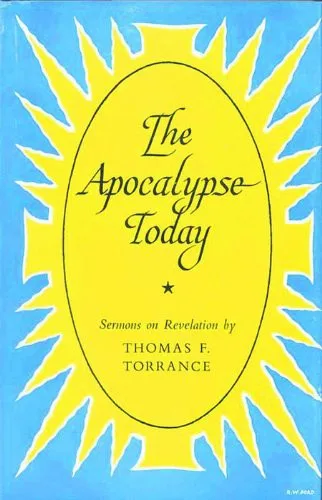
Apocalypse Today
 73
73

Apocalypse Today
Torrance's examination of Revelation in "Apocalypse Today" moves beyond sensationalist interpretations, focusing instead on the theological architecture of the text. His strength lies in meticulously dissecting the symbolic language, grounding the apocalyptic visions in their historical context and theological purpose. However, the dense prose and academic rigor might prove challenging for readers unfamiliar with theological jargon. The chapter discussing the "New Jerusalem" offers a particularly compelling analysis, reframing the eschatological hope not as a physical location but as a perfected covenant community, a powerful counterpoint to more materialistic readings. The book serves as a vital corrective, though its accessibility is limited. It is a scholarly but essential re-evaluation of biblical apocalypse.
📝 Description
73
Thomas F. Torrance published Apocalypse Today in 1961, analyzing Christian apocalyptic narratives.
Published in 1961, Thomas F. Torrance's Apocalypse Today offers a theological analysis of apocalyptic texts in the Christian Bible, focusing on books like Revelation. It is not a predictive work but rather an examination of the symbolic language and eschatological ideas biblical authors used. Torrance grapples with the complex imagery and theological foundations of these visions, seeking to clarify their significance for present-day faith.
The book is suited for theology students, biblical scholars, and those seriously studying Christian eschatology. Readers interested in how apocalyptic thought developed and has been interpreted within Christianity will find it especially useful. It assumes a basic familiarity with biblical texts and theological concepts, presenting a scholarly perspective.
Apocalypse Today appeared in the mid-20th century, a time when biblical eschatology was being rethought. Torrance's study engages with ongoing academic discussions on interpreting apocalyptic literature, drawing on the work of scholars like Albert Schweitzer and the broader theological climate of the post-war era. The book reflects a shift toward understanding the original historical and theological contexts of these scriptures, aiming to prevent anachronistic readings.
While not strictly an esoteric text in the Gnostic sense, Apocalypse Today engages with Christian eschatology, a field rich with symbolic interpretation and apocalyptic visions. Torrance's work falls within a tradition that seeks to understand divine revelation and historical unfolding through prophetic literature. His focus on the theological underpinnings and symbolic language connects to broader currents in Christian thought that interpret scripture allegorically and spiritually, aiming to discern God's activity in history and its ultimate culmination.
💡 Why Read This Book?
• Gain a theological understanding of Revelation's symbolic language, moving beyond literalistic interpretations as explored in Torrance's analysis of the "New Jerusalem" concept. • Appreciate the historical context of apocalyptic literature, understanding its original purpose and meaning as presented through Torrance's mid-20th-century scholarship. • Grasp the concept of divine sovereignty within historical progression, as Torrance argues for God's ultimate control over the unfolding of events.
⭐ Reader Reviews
Honest opinions from readers who have explored this book.
❓ Frequently Asked Questions
What is the primary focus of Thomas F. Torrance's "Apocalypse Today"?
The book's primary focus is a theological interpretation of biblical apocalyptic literature, particularly the Book of Revelation. It analyzes the symbolic language and eschatological frameworks to understand their meaning for Christian faith, rather than offering predictive prophecies.
When was "Apocalypse Today" first published?
Thomas F. Torrance's "Apocalypse Today" was first published in 1961, placing it within a mid-20th-century theological discourse.
Is "Apocalypse Today" a literal interpretation of end times prophecies?
No, the book explicitly argues against literalistic interpretations. Torrance emphasizes understanding apocalyptic visions as symbolic theological communication rooted in specific historical and biblical contexts.
Who would benefit most from reading "Apocalypse Today"?
Theology students, biblical scholars, and readers interested in Christian eschatology and the historical interpretation of Revelation would benefit most from this scholarly work.
What does Torrance say about the Book of Revelation?
Torrance explores the Book of Revelation as a theological document employing rich symbolism to convey divine truth. He focuses on understanding its message within its original setting and its implications for the faithful.
Does "Apocalypse Today" discuss contemporary events?
While it aims to provide insights relevant to contemporary faith, the book's primary method is historical and theological analysis of the biblical text itself, not direct commentary on current events.
🔮 Key Themes & Symbolism
Symbolic Nature of Apocalypse
Torrance argues that the imagery in Revelation, such as the "beast" or the "New Jerusalem," functions symbolically rather than literally. These symbols convey profound theological truths about God's sovereignty, the nature of evil, and the ultimate destiny of creation. The work stresses that a correct understanding requires deciphering this symbolic language within its original biblical and historical context, moving away from simplistic, predictive readings that often characterize popular eschatology.
Divine Sovereignty and History
A central theme is God's ultimate control over historical events, even amidst apparent chaos and suffering depicted in apocalyptic visions. Torrance posits that these narratives serve to assure believers of God's consistent plan and eventual triumph. The book examines how the authors of Revelation used this concept to offer hope and perseverance to persecuted communities, framing history as a stage for divine action leading to a predetermined, salvific conclusion.
Eschatological Hope as Covenant
Rather than focusing on a cataclysmic end-time event, Torrance reinterprets eschatological hope through the lens of covenant. The "New Jerusalem," for instance, is presented not merely as a future city but as the consummation of God's relationship with humanity – a perfected covenant community. This perspective shifts the focus from temporal prediction to the enduring reality of God's presence and redemptive purpose throughout all of history.
Theological Interpretation vs. Prediction
Torrance strongly advocates for viewing apocalyptic literature as primarily theological and pastoral, intended to inform faith and guide conduct, rather than as a precise timetable of future events. He critiques methods that prioritize prediction, arguing they often obscure the text's deeper spiritual and theological message. The work encourages readers to engage with Revelation as a testament to enduring biblical faith and God's overarching plan.
💬 Memorable Quotes
“The Apocalypse is not a programme for the future, but a theological interpretation of history.”
— This statement encapsulates Torrance's core argument, distinguishing his approach from predictive eschatology. It frames Revelation as a theological lens through which to understand God's action in the past, present, and future, emphasizing divine meaning over literal event sequencing.
“The symbolic language of Revelation must be understood within its original context.”
— This highlights the hermeneutical principle Torrance applies. He insists that symbols like the dragon or the Lamb are not arbitrary but carry specific theological weight derived from Old Testament usage and the first-century Christian understanding, vital for accurate interpretation.
“The New Jerusalem represents the perfected covenant community.”
— This interpretation reframes the final vision of Revelation. Instead of a literal city, Torrance suggests it symbolizes the ultimate fulfillment of God's relationship with His people, a spiritual and communal reality of divine presence and redemption.
“Apocalyptic literature serves a pastoral function for believers facing trial.”
— Torrance suggests that the visions in Revelation were intended to provide hope, assurance, and guidance to early Christians enduring persecution. The book's message is thus rooted in its ability to strengthen faith during difficult times.
“We must avoid reading our own presuppositions into the apocalyptic text.”
— This caution underscores Torrance's commitment to objective theological analysis. It warns against imposing modern anxieties or speculative theories onto the ancient text, advocating instead for an interpretation faithful to its original intent and context.
🌙 Esoteric Significance
Tradition
While primarily a work of systematic theology and biblical exegesis, "Apocalypse Today" touches upon themes often explored in esoteric traditions, particularly those concerned with eschatology and cosmic symbolism. Torrance's focus on the symbolic, allegorical, and deeply theological nature of apocalyptic visions can resonate with Gnostic or Hermetic interpretations that seek hidden meanings within sacred texts, though his methodology remains firmly within orthodox Christian scholarship.
Symbolism
The book delves into the potent symbolism of Revelation, such as the "New Jerusalem" and the "Lamb slain." The New Jerusalem, for Torrance, symbolizes not just a physical place but the perfected, redeemed community in communion with God, representing divine order and ultimate peace. The "Lamb slain" embodies Christ's redemptive sacrifice as the central act of cosmic history, a paradox of weakness revealing ultimate power and victory over sin and death.
Modern Relevance
Contemporary scholars and theologians interested in robust biblical hermeneutics and a nuanced understanding of eschatology continue to draw from Torrance's work. His emphasis on contextual interpretation and theological depth provides a valuable counterpoint to simplistic or predictive readings of Revelation. Thinkers focused on the pastoral application of scripture or those engaging in comparative studies of apocalyptic literature find his systematic approach foundational.
👥 Who Should Read This Book
• Theological students and biblical scholars seeking a rigorous, non-literal interpretation of Revelation, benefiting from Torrance's detailed exegesis. • Readers interested in the history of Christian eschatological thought, gaining insight into mid-20th-century debates and Torrance's contribution. • Those disillusioned with sensationalist or predictive approaches to the apocalypse, finding a grounded theological perspective on its meaning and purpose.
📜 Historical Context
Published in 1961, Thomas F. Torrance's "Apocalypse Today" emerged during a significant period of theological re-evaluation in the wake of World War II. Scholars were actively reassessing the nature and interpretation of biblical eschatology, moving away from the sensationalism that often characterized earlier popular treatments. Torrance's work engaged with this scholarly shift, informed by continental theologians and a growing emphasis on historical-critical methods applied to biblical texts. It stood in contrast to more literalistic or dispensationalist approaches prevalent in some circles. While specific reception events like major reviews or bans are not widely documented, the book contributed to a broader academic conversation about Revelation's meaning, alongside contemporaries who were also exploring the historical and theological dimensions of apocalyptic literature, such as Oscar Cullmann.
📔 Journal Prompts
The symbolic language of Revelation: how might its original context inform a modern understanding?
Reflect on the concept of divine sovereignty as presented in the book's interpretation of history.
Consider the "New Jerusalem" as a perfected covenant community: what implications does this have for present-day faith?
Analyze the pastoral function of apocalyptic visions for believers facing hardship, as discussed by Torrance.
Evaluate Torrance's distinction between theological interpretation and literal prediction in biblical prophecy.
🗂️ Glossary
Eschatology
The theological study of final things, including concepts such as death, judgment, the end of the world, and the ultimate destiny of humanity and the cosmos.
Apocalyptic Literature
A genre of prophetic writing that interprets divine visions, typically concerning the end of the world or a great cataclysm, often featuring symbolic language and cosmic conflicts.
Hermeneutics
The theory and methodology of interpretation, especially the interpretation of biblical texts, literary works, or language in general.
Symbolic Language
The use of symbols—objects, figures, or colors—to represent abstract ideas or qualities, common in religious and literary texts, particularly in Revelation.
New Jerusalem
A symbolic vision in the Book of Revelation representing the perfected, redeemed community of believers in ultimate communion with God, often interpreted theologically rather than literally.
Divine Sovereignty
The doctrine that God has absolute power and authority over all creation and history, a concept central to understanding apocalyptic narratives.
Covenant Community
A group of people bound together by a covenant, or solemn agreement, with God, reflecting a relationship of mutual commitment and divine promise.



![Collected Short Stories [51 stories]](/img/thumb/collected-short-stories-51-stories-roald-dahl-593005.webp)