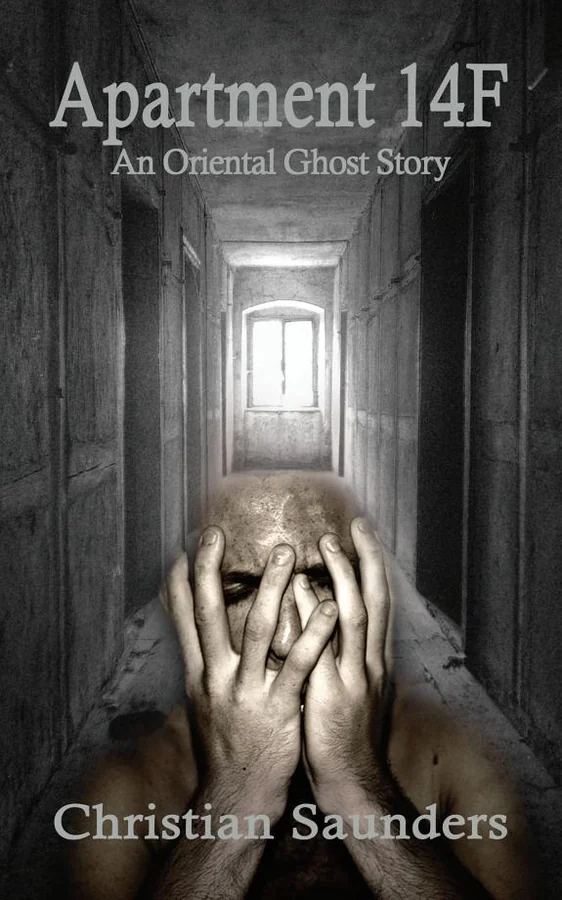
Apartment 14F
 78
78

Apartment 14F
Christian Saunders' Apartment 14F opens with a potent sense of disorientation, immediately establishing Beijing not as a tourist destination, but as a labyrinth of Jerry's inner turmoil. The author skillfully conjures an atmosphere where the city's unfamiliarity amplifies the protagonist's dread. One particularly effective passage details Jerry's fragmented memories bleeding into his waking hours, creating a palpable sense of encroaching madness. However, the narrative occasionally falters in its pacing, with certain dream sequences feeling repetitive, potentially diluting the overall tension. The central mystery, while compelling, could benefit from more explicit signposting of its esoteric underpinnings earlier in the text. Despite these minor structural quibbles, Apartment 14F offers a compelling exploration of how external environments can become mirrors for internal states, making it a noteworthy entry for those drawn to psychological suspense with a speculative edge.
📝 Description
78
### What It Is Apartment 14F presents a narrative that blurs the lines between psychological unease and supernatural intrusion. The story follows Jerry's arrival in Beijing, a city that quickly becomes a stage for unsettling experiences. His journey into this foreign landscape is marked by a series of disturbing nightmares and the recurrence of past events that cast a shadow over his immediate future.
### Who It's For This work is intended for readers who appreciate narratives that explore the darker aspects of the subconscious and the potential for external forces to influence personal destiny. It will appeal to those interested in psychological thrillers with a speculative or metaphysical bent, particularly those who enjoy settings that contribute to an atmosphere of dread and uncertainty.
### Historical Context Published in 2009, Apartment 14F emerged during a period where psychological horror and urban fantasy were gaining traction. The early 21st century saw a rise in literature that questioned the nature of reality and the human psyche, often drawing from global mythologies and psychological theories. Saunders' work can be seen in conversation with authors exploring similar themes of dislocation and existential dread in unfamiliar environments.
### Key Concepts The narrative hinges on the concept of precognition through dreams, the unsettling feeling of déjà vu, and the externalization of internal anxieties. Beijing itself functions as more than a backdrop; it becomes an active participant in Jerry's descent into a state of fear, where the familiar becomes alien and the past refuses to remain buried.
💡 Why Read This Book?
• Gain insight into how unfamiliar environments can amplify internal psychological states, as depicted through Jerry's experience in Beijing. • Explore the concept of precognitive nightmares and how past traumas can manifest in unsettling ways, a central theme introduced early in the narrative. • Understand the literary technique of using setting as an active force in a character's descent into unease, a method employed throughout Saunders' work.
⭐ Reader Reviews
Honest opinions from readers who have explored this book.
❓ Frequently Asked Questions
When was Apartment 14F first published?
Apartment 14F by Christian Saunders was first published in September 2009, positioning it within the early 21st-century landscape of psychological and speculative fiction.
What is the primary setting of Apartment 14F?
The primary setting of Apartment 14F is Beijing, China. The city serves not just as a backdrop but as an integral element contributing to the protagonist's sense of unease and disorientation.
What are the main themes explored in Apartment 14F?
The book explores themes of psychological horror, the blurring of reality and dreams, the impact of past events on the present, and the feeling of existential dread in an unfamiliar environment.
Who is the author of Apartment 14F?
The author of Apartment 14F is Christian Saunders. The work was initially released in 2009.
What kind of experience can readers expect from Apartment 14F?
Readers can expect a suspenseful narrative that focuses on psychological tension and the unsettling interplay between a character's mind and their surroundings, rather than overt supernatural events.
Does Apartment 14F involve elements of the occult?
While not overtly occult in a traditional sense, Apartment 14F delves into psychological states that border on the supernatural, exploring themes of premonition and the manifestation of internal anxieties in the external world.
🔮 Key Themes & Symbolism
Premonition and Memory
The narrative frequently employs the motif of dreams serving as a conduit for future events or repressed memories. Jerry's nightmares are not merely symbolic; they actively foreshadow and influence his waking reality in Beijing. This theme posits that the subconscious mind can perceive temporal disturbances, suggesting a non-linear experience of time. The unsettling recurrence of past incidents within his present experiences further blurs the line between what has been and what is to come, creating a pervasive sense of unease.
The Alienated Self in a Foreign Space
Beijing functions as more than a mere setting; it is a character in itself, amplifying Jerry's internal alienation. The unfamiliarity of the city, its customs, and its very atmosphere contribute to his psychological fragmentation. This theme explores how external displacement can trigger or exacerbate internal crises, leading to a profound sense of detachment from oneself and one's surroundings. The narrative suggests that foreignness can strip away familiar defenses, exposing deeper vulnerabilities.
The City as a Labyrinth
Saunders uses the urban landscape of Beijing to construct a psychological labyrinth for Jerry. Streets, buildings, and even the general ambiance of the city become conduits for his descent into fear and confusion. This concept draws on archetypal representations of cities as complex, often menacing, entities that can trap or disorient individuals. The apartment itself, '14F', serves as a focal point for this entrapment, a specific location where the external pressures converge.
Manifestation of Internal Dread
The book explores the idea that intense psychological states, particularly fear and anxiety rooted in past occurrences, can manifest in tangible or perceived external phenomena. Jerry's nightmares and growing unease are not confined to his mind; they seem to permeate his environment, making the city itself feel hostile. This theme touches upon the esoteric concept of thought-forms or the power of focused psychic energy to alter one's perceived reality.
💬 Memorable Quotes
“He arrived in Beijing expecting a new beginning, but found only echoes of what had already passed.”
— This quote encapsulates the central paradox of Jerry's journey. His anticipation of novelty is immediately subverted by the overwhelming presence of the past, suggesting a cyclical or inescapable nature to his personal narrative.
“The city's shadows seemed to lengthen not with the setting sun, but with the growing weight of his own memories.”
— This highlights the theme of the external environment mirroring internal states. The encroaching darkness of Beijing is directly linked to Jerry's psychological burden, personifying the city as an active participant in his distress.
“Sleep offered no escape; it merely rearranged the terrors into new, yet familiar, configurations.”
— This speaks to the inescapable nature of Jerry's psychological torment. Dreams, typically a refuge or a place for processing, become extensions of his waking anxieties, offering no true respite.
“Every corner turned felt like a step deeper into a maze from which there was no charted exit.”
— This emphasizes the labyrinthine quality of both the city and Jerry's mental state. The narrative structure mirrors his experience of being lost and trapped, with each development leading further into confusion.
“He saw in the faces of strangers a reflection of the dread he carried within.”
— This illustrates the profound alienation Jerry experiences. His internal state is so potent that he projects his own fears onto others, seeing confirmation of his internal turmoil in the external world.
🌙 Esoteric Significance
Tradition
Apartment 14F does not align strictly with a single established esoteric tradition like Hermeticism or Gnosticism. Instead, it draws upon a more generalized esoteric sensibility concerned with the power of the mind and the permeability of reality. It touches upon concepts found in psychological alchemy, where internal states are projected and transformed, and shares a thematic kinship with modern occultism's interest in the subconscious as a landscape for exploration and potential danger.
Symbolism
The 'Apartment 14F' itself functions as a symbol of confinement and the focal point of psychic disturbance. Beijing, as a sprawling, unfamiliar metropolis, symbolizes the overwhelming external world that mirrors and amplifies internal chaos. The recurring nightmares represent the subconscious attempting to process or warn of psychic disturbances, acting as symbolic messages from the deeper self.
Modern Relevance
Contemporary practitioners of lucid dreaming and those interested in Jungian psychology's exploration of archetypes and the shadow self might find resonance in Jerry's experiences. The book's depiction of how external environments can become charged with personal psychic energy is relevant to modern discussions on manifestation and the mind-body connection within self-help and esoteric circles.
👥 Who Should Read This Book
• Individuals interested in psychological thrillers that explore the darker aspects of the human psyche and the concept of precognition. • Readers who appreciate narratives where the setting plays a significant role in amplifying a character's internal turmoil and sense of dread. • Those seeking speculative fiction that examines the blurred lines between dreams, memory, and waking reality.
📜 Historical Context
Published in 2009, Christian Saunders' Apartment 14F arrived in a literary landscape increasingly interested in psychological suspense and the darker corners of urban experience. The early 21st century saw a surge in narratives that blurred genre lines, incorporating elements of horror, thriller, and metaphysical speculation. Authors like Haruki Murakami, with his surreal urban settings and introspective protagonists, were gaining international acclaim, creating an appetite for works that explored the subconscious within the framework of contemporary life. Saunders' focus on Beijing as a potent, disorienting backdrop aligns with a broader trend of using global cities as sites for existential exploration, moving beyond Western-centric narratives. While not directly engaging with a specific intellectual movement like Surrealism, the work taps into a zeitgeist that questioned objective reality and the stability of the individual psyche in an increasingly complex world. The reception of such works often highlighted their atmospheric qualities and their ability to evoke a sense of unease.
📔 Journal Prompts
Jerry's nightmares in Beijing: what recurring symbols or fears emerge?
The city as a mirror: how does the external environment reflect internal states?
The weight of past occurrences: how do echoes of the past influence present perception?
Apartment 14F as a locus of dread: what does this specific space represent?
Navigating unfamiliarity: how does Jerry's alienation manifest in his interactions?
🗂️ Glossary
Precognition
The supposed ability to perceive or know future events. In the context of Apartment 14F, this is often experienced through unsettling dreams.
Psychological Fragmentation
A state where an individual's sense of self or consciousness becomes broken or disjointed, often triggered by trauma or extreme stress.
Esoteric Sensibility
An approach to understanding reality that focuses on hidden meanings, inner experience, and non-rational forms of knowledge, often related to spiritual or mystical traditions.
Manifestation
In some esoteric beliefs, the process by which thoughts, beliefs, or psychic energy are believed to create or influence external reality.
Alienation
A feeling of estrangement or disconnection from oneself, others, or the surrounding environment, often exacerbated by unfamiliar surroundings.
Labyrinthine
Resembling a labyrinth; intricate and confusing. Used here to describe both the physical city and the character's mental state.
Existential Dread
A feeling of anxiety or apprehension arising from the contemplation of fundamental questions of existence, freedom, and meaning.
![Story of Dreams, Fate and Destiny [Zurich Lecture Series Edition]](/img/thumb/story-of-dreams-fate-and-destiny-zurich-lecture-series-edition-erel-shalit-518400.webp)