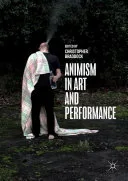
Animism in Art and Performance
 71
71

Animism in Art and Performance
Christopher Braddock’s "Animism in Art and Performance" offers a compelling, if at times dense, exploration of how artists engage with concepts of animacy. The strength of the collection lies in its rigorous engagement with indigenous scholarship, particularly Māori perspectives, and its critical examination of the binary between human and non-human entities. The section "Indigenous Animacies" provides particularly valuable insights into how artists like Terri Te Tau and Bridget Reweti, as mentioned in the original blurb, challenge Western ontological assumptions through their work. However, the collection's academic density might present a barrier for readers less familiar with postcolonial theory or performance studies. A more explicit discussion of the practical implications for artistic creation, beyond theoretical frameworks, would have enhanced its accessibility. The work ultimately serves as a vital academic contribution, pushing the discourse on animism into new artistic territories.
📝 Description
71
### What It Is
This collection examines the concept of 'animism' through the lens of visual, media, and performance art, drawing on both Māori indigenous scholarship and broader academic discourse. It confronts the persistent dualisms between people and things, and questions the attribution of 'animacy' to entities. The essays are organized into four thematic sections: Indigenous Animacies, Atmospheric Animations, Animacy Hierarchies, and Sensational Animisms.
### Who It's For
Scholars and practitioners of art history, performance studies, and cultural anthropology will find this volume particularly relevant. It is suited for those interested in postcolonial theory, indigenous epistemologies, and the philosophical underpinnings of art that challenge Western object/subject divides. Students grappling with concepts of consciousness and agency beyond the human will also benefit.
### Historical Context
Published in 2017, "Animism in Art and Performance" emerged during a period of intensified academic and artistic engagement with animistic perspectives, particularly in response to critiques of anthropocentrism and the limitations of Western philosophical frameworks. It engages with scholarship that re-evaluates indigenous worldviews and their relevance to contemporary art practices. The work directly addresses the scholarship around the term 'animism', a concept explored by thinkers like Philippe Descola and Eduardo Viveiros de Castro, though Braddock's collection focuses on its application within artistic production.
### Key Concepts
The book interrogates the very notion of 'animacy,' exploring how it is attributed and perceived in art. It moves beyond simple nature-spirit beliefs to examine how artists imbue objects, performances, and even environments with a sense of life or agency. The essays consider how this concept is understood within Māori cultural frameworks and how it is translated or reinterpreted in non-indigenous artistic contexts, creating a dialogue about differing ontological perspectives.
💡 Why Read This Book?
• Gain a nuanced understanding of 'animacy' as explored through visual and performance art, moving beyond simplistic notions of spirit belief, as seen in the section 'Atmospheric Animations.' • Discover how Māori indigenous scholarship informs contemporary art practices, offering alternative perspectives on personhood and objecthood as presented in 'Indigenous Animacies.' • Explore critical dialogues on the human/non-human binary in art, challenging Western philosophical assumptions through analyses of specific artists and concepts like 'Sensational Animisms.'
⭐ Reader Reviews
Honest opinions from readers who have explored this book.
❓ Frequently Asked Questions
What is the primary focus of 'Animism in Art and Performance'?
The book primarily focuses on how the concept of 'animism,' particularly as understood through Māori indigenous scholarship and broader academic discourse, is explored and manifested in visual, media, and performance art.
Who is Christopher Braddock?
Christopher Braddock is the editor of 'Animism in Art and Performance,' a collection of essays that first published on 2017-11-27, bringing together diverse scholarly perspectives on animism in art.
What are the main sections of the book?
The book is divided into four main sections: Indigenous Animacies, Atmospheric Animations, Animacy Hierarchies, and Sensational Animisms, each exploring different facets of animism in artistic contexts.
Does the book discuss specific artists?
Yes, the book discusses specific artists; for instance, Cassandra Barnett's essay addresses the work of artists Terri Te Tau and Bridget Reweti in relation to concepts of personhood and animacy.
What is 'animacy' as discussed in the book?
'Animacy,' in the context of the book, refers to the quality or state of being alive or possessing agency, and how this attribution is critically examined in relation to both human and non-human entities within art.
What kind of scholarship does the book engage with?
The book engages with both Māori indigenous scholarship and non-indigenous scholarship concerning the term 'animism,' examining dualisms of people and things, and the attribution of animacy.
🔮 Key Themes & Symbolism
Indigenous Animacies
This theme delves into how Māori indigenous perspectives inform understandings of animism within contemporary art. It examines how artists reclaim and re-articulate concepts of life, agency, and connection to the non-human world, often challenging colonial frameworks. The essays here explore how specific artworks by Māori artists embody or critique notions of animacy, offering a vital counterpoint to Western epistemologies and highlighting the living presence within objects and landscapes.
Atmospheric Animations
Focusing on the environmental and sensory aspects of animism, this section investigates how art creates or evokes a sense of pervasive life within spaces and atmospheres. It moves beyond discrete objects to consider the animating forces within landscapes, media, and ambient conditions. The essays explore how artists use performance, installation, and media to suggest a world imbued with non-human consciousness or vitality, blurring the lines between observer and observed.
Human-Thing Dualisms
A central concern of the collection is the deconstruction of the rigid Western philosophical divide between humans and 'things' (inanimate objects). The essays critically assess how art practices challenge this dualism by attributing agency, sentience, or spirit to objects, materials, and the environment. This exploration questions who or what is conventionally credited with 'animacy' and seeks to understand alternative ontologies where such distinctions are less pronounced or absent.
Sensational Animisms
This theme examines the embodied and sensory experience of animism in art and performance. It considers how artworks can evoke a visceral understanding of animacy, engaging the viewer's senses to perceive the world as alive and interconnected. The essays explore the performative aspects of this engagement, looking at how artists create experiences that heighten awareness of the vital forces present in the material world and beyond.
💬 Memorable Quotes
“The dualisms of people and things”
— This phrase encapsulates a core analytical tool of the book, questioning the fundamental Western philosophical separation between sentient subjects ('people') and inert objects ('things'), and proposing that art can challenge this perceived hierarchy.
“Who or what is credited with 'animacy'”
— This interrogative points to the book's critical stance on how life, agency, and consciousness are attributed. It suggests that 'animacy' is not an inherent quality but a designation, often influenced by cultural and philosophical biases, which art can interrogate.
“Indigenous Animacies”
— This section title signals a significant focus on non-Western, specifically Māori, epistemologies of the living world, emphasizing a distinct understanding of life and interconnectedness that informs artistic practice.
“Atmospheric Animations”
— This concept highlights how art can animate not just discrete objects but broader environments and sensory fields, suggesting a pervasive, less localized form of life or agency within spaces.
“Sensational Animisms”
— This theme draws attention to the embodied, felt experience of animism, suggesting that art can provoke a direct, sensory apprehension of the world's vitality, moving beyond purely intellectual understanding.
🌙 Esoteric Significance
Tradition
While not strictly aligned with a single Western esoteric lineage like Hermeticism or Theosophy, this work resonates with perennialist philosophies that explore universal life forces and interconnectedness. Its focus on indigenous epistemologies offers a bridge to shamanic traditions and earth-centered spiritualities, which often perceive a pervasive animating spirit within all of creation, challenging the rationalist, materialist underpinnings of modern Western thought.
Symbolism
The 'dualisms of people and things' serves as a primary symbolic motif, representing the Western imposition of hierarchy and separation. The concept of 'animacy' itself functions symbolically, pointing towards an underlying, often hidden, vitality or consciousness that permeates existence, challenging the notion of inert matter. The book implicitly uses artistic creations as symbolic conduits to these deeper, animating principles.
Modern Relevance
Contemporary artists and thinkers exploring ecological consciousness, posthumanism, and new materialisms draw heavily on the conceptual shifts advocated in this book. Practices that emphasize relational aesthetics, ecological art, and indigenous sovereignty movements find validation in its critique of anthropocentrism and its celebration of diverse ontologies. The work remains relevant for those seeking to understand how art can foster a more reciprocal relationship with the non-human world.
👥 Who Should Read This Book
• Art historians and curators interested in postcolonial theory and indigenous art practices, seeking to expand their understanding of ontological frameworks beyond Western paradigms. • Performance studies scholars and practitioners exploring embodiment, non-human agency, and the creation of immersive, sensory experiences in their work. • Cultural theorists and anthropologists examining the concept of animism, particularly its manifestations in contemporary creative disciplines and its dialogue with indigenous knowledge systems.
📜 Historical Context
Published in 2017, "Animism in Art and Performance" arrived at a time when academic and artistic circles were increasingly re-examining animistic philosophies, spurred by critiques of environmental degradation and the perceived limitations of Western anthropocentrism. The collection engages directly with scholarship on the term 'animism,' a concept explored by anthropologists like Philippe Descola and Eduardo Viveiros de Castro, though Braddock's work specifically targets its application within visual, media, and performance art. It emerged alongside a broader theoretical turn towards non-human agency and object-oriented ontology. The book's emphasis on indigenous scholarship, particularly Māori perspectives, provided a crucial counter-narrative to dominant Western discourse, situating these viewpoints not as historical relics but as vital contemporary frameworks for understanding art and the world.
📔 Journal Prompts
The dualisms of people and things in your own perception.
Attributing 'animacy' to a non-human entity in your environment.
How 'Indigenous Animacies' might inform your creative process.
Sensory experiences that suggest 'Atmospheric Animations'.
Reconsidering the hierarchy between animate and inanimate in art.
🗂️ Glossary
Animism
A belief system or worldview in which natural objects, phenomena, and the universe itself possess a spirit or soul, and are thus considered alive and animate.
Animacy
The quality or state of being alive or having agency; in the context of the book, it refers to how this quality is attributed, perceived, and challenged in art.
Dualism
A philosophical concept that divides reality into two fundamental, often opposing, categories, such as mind and body, or in this book's context, people and things.
Epistemology
The theory of knowledge, especially with regard to its methods, validity, and scope; how we know what we know.
Ontology
The philosophical study of being; the nature of existence, reality, and the fundamental categories of being.
Māori
The indigenous Polynesian people of New Zealand, whose culture, language, and traditions are distinct and deeply connected to the land and sea.
Postcolonial Theory
An academic discipline that analyzes the cultural legacy of colonialism and imperialism, focusing on the impact on former colonies and their peoples.