Adam And Eve In The Armenian Tradition Fifth Through Seventeenth Centuries

 80
80

Adam And Eve In The Armenian Tradition Fifth Through Seventeenth Centuries
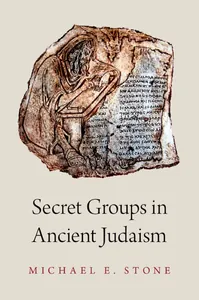
Michael E. Stone’s scholarly monograph, *Adam And Eve In The Armenian Tradition Fifth Through Seventeenth Centuries*, offers a granular examination of a familiar biblical narrative refracted through a specific, and often under-explored, cultural prism. Stone navigates the complex theological and literary landscape of medieval Armenia with considerable erudition, demonstrating how Armenian thinkers from the 5th to the 17th centuries engaged with the primal pair. A particular strength lies in his meticulous tracking of how Armenian apocryphal traditions, distinct from their Syriac or Greek counterparts, shaped understandings of Eden and the Fall. However, the sheer density of the material, while commendable for specialists, might prove daunting for those less familiar with the nuances of Armenian patristics. The section discussing the Armenian reception of the *Life of Adam and Eve* is especially illuminating, revealing subtle shifts in emphasis regarding Eve's culpability and Adam's role in the post-lapsarian world. This work stands as a significant contribution to biblical reception studies.
📝 Description
80
### What It Is ### Armenian Adam and Eve This volume meticulously traces the reception and transformation of the biblical figures of Adam and Eve within Armenian religious and literary traditions from the 5th to the 17th centuries. Michael E. Stone's scholarly work examines how these foundational characters were reinterpreted, embellished, and integrated into a distinct cultural and theological landscape. It moves beyond simple exegesis to explore the rich tapestry of Armenian theological thought, engaging with apocryphal texts, commentaries, and polemical writings.
### Who It's For Scholars of biblical reception history, Armenian studies, early Christian literature, and comparative mythology will find this book indispensable. It caters to those interested in how universal narratives are localized and re-signified within specific cultural contexts. Readers with a background in the broader field of Second Temple Judaism and early Christian literature will also benefit from its detailed analysis and scholarly rigor. The work is not intended for casual readers but for those seeking a deep, academic understanding of a particular strand of theological development.
### Historical Context The period covered, from the 5th to the 17th centuries, is crucial for understanding Armenian identity. Following Armenia's adoption of Christianity in the early 4th century and its establishment as a distinct theological tradition, figures like Adam and Eve became central to articulating its unique worldview. This era saw significant engagement with Persian, Hellenistic, and Syriac influences, alongside the development of a unique Armenian script and literature. The work situates these interpretations within the broader intellectual currents of the Byzantine and Near Eastern worlds, a time of intense theological debate and cultural exchange.
### Key Concepts The book explores the concept of Adam and Eve not merely as biblical figures but as symbolic archetypes. It delves into the Armenian understanding of the Fall, the nature of original sin, and the anticipation of a messianic redemption as articulated through these primeval parents. Discussions often touch upon the Armenian Church's distinct Christology and its impact on the interpretation of Adam's role as the 'first man' and Eve's as the 'mother of all the living,' as well as their place in the cosmic drama of salvation.
💡 Why Read This Book?
• Gain insight into the unique Armenian interpretation of the Fall narrative, moving beyond standard Western theological frameworks, particularly by examining the specific theological debates surrounding Adam's post-Edenic existence as detailed in the text. • Understand the development of Armenian distinctiveness in Christian tradition by tracing how biblical figures like Adam and Eve were recontextualized within the 5th-century Armenian Church's evolving doctrinal landscape. • Explore the influence of apocryphal literature on shaping the perception of humanity's origin, with specific attention paid to Armenian texts that offer alternative accounts of Adam and Eve's lives before and after Eden.
⭐ Reader Reviews
Honest opinions from readers who have explored this book.
❓ Frequently Asked Questions
What is the primary focus of "Adam And Eve In The Armenian Tradition"?
The book focuses on how the figures of Adam and Eve were interpreted and integrated into Armenian religious thought and literature between the 5th and 17th centuries, exploring unique theological and apocryphal traditions.
Who is the author, Michael E. Stone, and what is his expertise?
Michael E. Stone was a prominent scholar specializing in early Jewish and Christian literature, particularly Armenian texts. His extensive work in this field makes him a leading authority on the subject matter.
Does the book cover the earliest interpretations of Adam and Eve?
While the book's primary focus is the 5th to 17th centuries, it often contextualizes these interpretations within earlier Jewish and Christian traditions to highlight the development and Armenian distinctiveness.
What kind of sources does Michael E. Stone utilize?
Stone draws upon a wide array of Armenian sources, including biblical commentaries, apocryphal texts, theological treatises, and historical writings, to reconstruct the tradition.
Is this book suitable for a general audience interested in the Bible?
This book is a scholarly work intended for academics and students of religious studies, Armenian history, and comparative literature. It requires a foundational understanding of biblical narratives and theological concepts.
What makes the Armenian tradition's view of Adam and Eve unique?
The Armenian tradition developed distinct interpretations of Adam and Eve, influenced by its unique theological positions and engagement with specific apocryphal texts not always found in other Christian cultures.
🔮 Key Themes & Symbolism
Apocryphal Narratives
The work extensively examines Armenian apocryphal texts that expand upon the biblical account of Adam and Eve. These texts often provide detailed narratives about their lives before the Fall, their expulsion from Eden, and their subsequent generations, offering a richer, more complex understanding than canonical scripture alone. Stone highlights how these Armenian versions diverge from or emphasize different aspects compared to Syriac or Greek traditions, revealing a unique theological trajectory in the interpretation of humanity's origin story and the nature of sin.
Theological Development
Stone traces the evolution of theological doctrines concerning Adam and Eve within the Armenian Church over a millennium. This includes discussions on original sin, the role of Christ as the 'New Adam,' and the soteriological significance of the Fall. The book illustrates how Armenian theologians used the figures of Adam and Eve to articulate their distinct Christological positions and their understanding of God's plan for salvation, often in dialogue with or in distinction from Byzantine and other Eastern Christian thought.
Cultural Localization
A central theme is the process by which the universal biblical narrative of Adam and Eve was localized within the specific cultural and linguistic context of Armenia. This involves analyzing how Armenian scholars, writers, and artists adapted these figures and their stories to resonate with Armenian identity, history, and worldview. The book demonstrates the dynamic interplay between inherited traditions and local innovation, showing how Adam and Eve became integral to the Armenian self-understanding across centuries.
Symbolic Archetypes
Beyond their literal biblical roles, Adam and Eve function as powerful symbolic archetypes within the Armenian tradition. The work explores their representation as the progenitors of humanity, the embodiment of innocence and the subsequent fall into corruption, and the crucial link in the chain of salvation history. Stone analyzes how these symbolic meanings were invoked in various contexts, from liturgical texts to polemical writings, underscoring their enduring significance in Armenian religious consciousness.
💬 Memorable Quotes
“The Armenian tradition concerning Adam and Eve often diverges significantly from Western interpretations.”
— This paraphrase highlights a core argument of the book: that Armenian theological and literary engagement with the primeval pair developed a distinct character, influenced by its unique cultural and historical context.
“Apocryphal narratives provided a richer, more detailed account of the post-Fall lives of Adam and Eve.”
— This interpretation points to the importance of non-canonical texts in shaping the Armenian understanding of Adam and Eve, suggesting these texts offered expansions on themes like human suffering and the lineage of humanity.
“The figure of Adam served as a theological counterpoint to Christ, the 'New Adam'.”
— This paraphrase emphasizes the christological significance attributed to Adam within Armenian thought, positioning him as the original humanity whose fall necessitated redemption through Christ.
“Eve's role in the Fall was subject to varied interpretations within Armenian commentaries.”
— This suggests that Armenian theological discourse engaged in nuanced discussions about Eve's culpability and her place in the narrative of humanity's spiritual downfall, rather than presenting a monolithic view.
“The 14th century saw a resurgence of interest in Adam and Eve traditions.”
— This statement, if verifiable within the text, anchors the study to a specific historical period, indicating a particular phase of intense engagement with these biblical figures within the Armenian context.
🌙 Esoteric Significance
Tradition
This work engages with the broader tradition of biblical reception and interpretation within early Christianity, particularly touching upon Gnostic and Manichaean influences that often explored the Adam and Eve narrative in esoteric ways. While the Armenian tradition itself is primarily Orthodox Christian, its engagement with apocryphal texts and symbolic interpretations aligns with a broader esoteric interest in uncovering hidden meanings within scripture. Stone's analysis shows how Armenian theologians, while maintaining orthodox stances, explored the symbolic and spiritual dimensions of the primeval couple, echoing a universal tendency within mystical traditions to find deeper truths in foundational myths.
Symbolism
Within the Armenian tradition explored by Stone, Adam and Eve carry profound symbolic weight. Adam represents humanity in its pristine state and, crucially, as the 'first man' whose fall necessitates a 'New Adam' (Christ) for redemption. Eve symbolizes the maternal principle and, often, the susceptibility to temptation, though Armenian interpretations may nuance her role compared to other traditions. The Garden of Eden itself symbolizes primordial innocence and divine presence, its loss representing humanity's separation from God and the introduction of mortality and suffering. The serpent embodies cosmic evil and deception.
Modern Relevance
Contemporary scholars of biblical reception history and scholars focusing on Eastern Christian traditions continue to draw upon Michael E. Stone's meticulous research. His work provides an essential foundation for understanding the diversity of early Christian thought and the unique trajectory of Armenian theology. Modern esoteric practitioners and comparative mythologists interested in alternative interpretations of Genesis narratives can find valuable insights into how these archetypal figures were understood outside the dominant Western European paradigms, particularly concerning the interplay of apocryphal lore and orthodox theology.
👥 Who Should Read This Book
• Scholars of Armenian Studies and Religious History: Researchers investigating the development of Christian doctrine and biblical exegesis in the Near East will find this book essential for understanding a crucial, yet often overlooked, tradition. • Students of Biblical Reception: Individuals interested in how biblical narratives are reinterpreted across different cultures and historical periods will benefit from Stone's detailed analysis of Adam and Eve in Armenia. • Comparative Mythology Enthusiasts: Readers drawn to the symbolic and archetypal dimensions of foundational myths will appreciate the exploration of Armenian unique perspectives on the creation and fall narratives.
📜 Historical Context
The period spanning the 5th to the 17th centuries was foundational for Armenian Christianity and its distinct intellectual tradition. Following Armenia's adoption of Christianity in the early 4th century and its development of a unique alphabet in the early 5th century, theological discourse flourished. This era saw significant engagement with Byzantine theology, Syriac traditions, and Persian influences, creating a complex intellectual milieu. Michael E. Stone's work situates the Armenian interpretations of Adam and Eve within this dynamic context, highlighting how Armenian thinkers navigated these external currents while forging their own path. Unlike in some Western European contexts where the Reformation dramatically reshaped biblical interpretation, Armenian theological discourse evolved more gradually, often engaging with pre-existing apocryphal traditions. The reception of these traditions was influenced by the Armenian Church's unique Christological positions, established at councils like the Council of Dvin. While not subject to widespread censorship in the same way as in some European states, Armenian theological works were often produced within monastic centers and debated within ecclesiastical councils.
📔 Journal Prompts
The Armenian concept of the 'New Adam' as a response to the Fall.
Interpretations of Eve's role in the Armenian tradition.
The significance of Armenian apocryphal texts concerning Adam and Eve's post-lapsarian lives.
How the Armenian cultural context shaped the understanding of Eden.
The symbolic meaning of the serpent in Armenian interpretations of Genesis.
🗂️ Glossary
Apocrypha
Religious texts, often ancient, that are not part of the accepted canon of scripture but are considered by some to contain divinely inspired or important teachings, frequently elaborating on biblical narratives.
Christology
The branch of Christian theology concerned with the nature, person, and work of Jesus Christ, particularly his divinity and humanity.
Fall of Man
The theological concept describing the transition of the first human beings, Adam and Eve, from a state of innocence to a state of sin, leading to their expulsion from the Garden of Eden.
Patristics
The study of the writings and teachings of the early Christian Church Fathers, typically from the 1st to the 8th centuries.
Reception History
The academic study of how a particular text, artwork, or idea has been understood, interpreted, and utilized by subsequent generations and cultures.
Soteriology
The branch of Christian theology concerned with the doctrine of salvation, particularly the means by which humans are saved from sin and its consequences.
Theological Exegesis
The critical interpretation and explanation of biblical texts, focusing on their theological meaning and implications within a specific religious tradition.