A Midsummer Night's Dream

 83
83

A Midsummer Night's Dream
Shakespeare’s “A Midsummer Night’s Dream” presents an early, almost alchemical, exploration of romantic entanglement and the chaotic forces that shape it. The play’s brilliance lies not just in its verse, but in its intricate plotting, particularly the scenes set within the enchanted forest. The forest itself acts as a character, a liminal space where societal rules dissolve and primal desires manifest, often with bewildering consequences for the mortal lovers. A notable strength is the depiction of Bottom’s transformation into an ass, a potent symbol of ego dissolution and subconscious yearning. However, the sheer number of characters and intersecting plotlines, while masterfully handled, can sometimes make the narrative feel excessively convoluted for modern audiences. The play’s commentary on the nature of perception and illusion, particularly through the characters’ enchanted states, remains its most compelling aspect. It is a work that rewards careful attention to its symbolic undercurrents.
Verdict: A foundational text for understanding the theatrical representation of the subconscious.
📝 Description
83
First staged around 1595, William Shakespeare's A Midsummer Night's Dream explores the chaotic magic of love and illusion.
This play, written by William Shakespeare, is often classified as a comedy. However, its themes of enchantment, confused identities, and the blurred lines between waking and dreaming suggest a deeper look into the subconscious and the unseen world. The narrative weaves together stories of Athenian lovers, a group of amateur actors, and the fairy kingdom within an enchanted forest near Athens.
The play appeals to those interested in the overlap of folklore, psychology, and theatrical art. It resonates with readers who appreciate the symbolic language found in myths and fairy tales, and how these elements can mirror human desires, fears, and societal interactions. Students of literature, theatre, and comparative mythology will find its complex plot and rich characters rewarding. It offers an imaginative escape into a world where magic overrides logic.
Written in the late Elizabethan period, A Midsummer Night's Dream appeared when English theatre was vibrant but also regulated. The play's fantastical elements and its subtle critique of social structures were understood against a backdrop of growing interest in Renaissance humanism and classical myths, alongside continuing folk beliefs. Its lasting popularity indicates that its themes connected with the cultural imagination of its time and for generations afterward.
The play's enchanted wood functions as a liminal space, outside normal societal rules, where subconscious desires and primal instincts surface. This aligns with esoteric traditions that view such spaces as potent sites for transformation and revelation. The blurring of reality and dream, the influence of supernatural beings, and the irrationality of love all touch upon themes common in Renaissance occultism and folk magic, suggesting a world where the visible and invisible realms interact.
💡 Why Read This Book?
• Learn about the symbolic representation of the irrationality of love through the enchanted forest setting, a concept Shakespeare vividly illustrates. • Understand the power of illusion and dreams as forces shaping human perception, as seen in the characters' bewitched interactions. • Appreciate the dramatic device of the 'play within a play' (Pyramus and Thisbe), demonstrating Shakespeare's early engagement with metatheatre.
⭐ Reader Reviews
Honest opinions from readers who have explored this book.
❓ Frequently Asked Questions
When was 'A Midsummer Night's Dream' first performed?
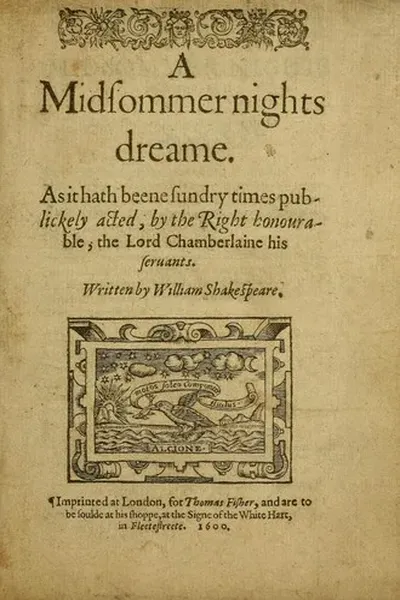
While the precise date is unknown, scholarly consensus places the first performance of 'A Midsummer Night's Dream' around 1595 or 1596, with its first publication occurring in quarto form in 1600.
What are the main themes explored in Shakespeare's 'A Midsummer Night's Dream'?
Key themes include the capricious nature of love, the boundary between reality and illusion, the contrast between the civilized world and the wildness of nature, and the role of imagination and dreams.
Who are the main groups of characters in the play?
The play features four main groups: the Athenian lovers (Hermia, Lysander, Helena, Demetrius), the Mechanicals or amateur actors (including Bottom), the fairy court (Oberon, Titania, Puck), and the Duke Theseus and Hippolyta.
What is the significance of the forest in 'A Midsummer Night's Dream'?
The forest serves as a magical, chaotic space outside the laws of Athens, where characters confront their desires and illusions, symbolizing a retreat from societal order into a realm of dreams and primal forces.
How does 'A Midsummer Night's Dream' relate to magic and the supernatural?
Magic is central, primarily through the actions of Puck and Oberon, who use enchantments to manipulate events and characters, blurring the lines between the natural and supernatural realms.
What is the role of Puck in the play?
Puck, or Robin Goodfellow, is Oberon's jester and a mischievous fairy. He is instrumental in causing much of the confusion and comedic mishaps among the lovers and the Mechanicals due to his enchantments.
🔮 Key Themes & Symbolism
The Arbitrary Nature of Love
Shakespeare masterfully dissects the often illogical and capricious nature of romantic affection. Through the Athenian lovers' rapid shifts in allegiance, driven by Puck's errant love potion, the play suggests that love is less a rational choice and more a potent, sometimes bewildering, enchantment. This mirrors esoteric traditions that view love and desire as powerful forces capable of both elevating and confounding the individual, often tied to lunar or elemental influences.
Illusion vs. Reality
The play constantly blurs the lines between what is real and what is imagined or dreamt. The enchanted forest, the fairies' magic, and the lovers' altered perceptions create a dreamlike state where the characters question their own experiences. This theme aligns with mystical philosophies that explore the illusory nature of the material world and the search for a higher, truer reality beyond sensory perception, often accessed through altered states of consciousness.
The Transformative Power of Nature
The forest setting is not merely a backdrop but a potent force for transformation. It represents a wild, untamed space that allows characters to shed societal constraints and confront their deeper selves. Bottom's metamorphosis into an ass is the most literal example, but all characters undergo a psychological shift. This appeals to nature-based spiritualities that see the natural world as a catalyst for personal growth and spiritual revelation.
The Fairy Realm as Archetype
The presence of Oberon, Titania, and Puck introduces the supernatural as an active agent in human affairs. This fairy realm can be interpreted as an archetypal representation of the collective unconscious or the elemental forces that influence human lives. Their interactions and interventions highlight the ancient belief in unseen powers that govern fate and human emotion, a concept central to many pre-Christian and folk magical traditions.
💬 Memorable Quotes
Direct passages from the work, attributed to the author.
“Lord, what fools these mortals be!”
— Spoken by Puck, this exclamation highlights the perceived irrationality and gullibility of humans when under the influence of strong emotions or external manipulation. It reflects a common esoteric perspective on humanity's susceptibility to illusion and the need for spiritual awareness to overcome such folly.
“And by my wand's strong art / Cannot that love be undone.”
— This refers to Titania's enchantment by Oberon's love potion. It illustrates the power of external magical forces to create artificial bonds and distort natural affections, a theme explored in various occult practices concerning the manipulation of will and emotion.
“Love looks not with the eyes, but with the mind.”
— This concept, spoken by Helena, suggests that true affection is based on an internal perception or judgment rather than mere physical appearance. It aligns with esoteric ideas that true sight transcends the physical senses, requiring inner vision or intuitive understanding.
“I have had a most rare vision. I have had a dream, past the wit of man to say what dream it was.”
— Bottom's description of his experience after being enchanted and seeing Titania. It speaks to the profound, ineffable nature of altered states of consciousness and the difficulty of translating such profound subjective experiences into rational language.
💡 Key Ideas
Editorial paraphrase of the work's core concepts — not direct quotes.
The course of true love never did run smooth.
This line captures the play's central premise regarding romantic relationships. It suggests that obstacles, misunderstandings, and external interference are inherent to love, rather than exceptional occurrences. This appeals to the idea that the path to genuine connection is often fraught with challenges that test commitment and understanding.
🌙 Esoteric Significance
Tradition
While not strictly adhering to a single esoteric lineage, 'A Midsummer Night's Dream' draws heavily from pre-Christian European folk traditions and the broader Hermetic concept of correspondence between the macrocosm and microcosm. Its depiction of fairies and nature spirits aligns with animistic beliefs and the Renaissance interest in Neoplatonic ideas about the spiritual hierarchy of the universe. The play's exploration of love's irrationality and the power of illusion can be seen through the lens of Gnostic ideas about the deceptive nature of the material world.
Symbolism
The enchanted forest serves as a potent symbol for the unconscious mind or a liminal space where societal constraints dissolve, allowing primal desires and archetypal forces to surface. Puck, the mischievous jester, embodies chaotic energy and the trickster archetype, often seen in shamanic traditions as a facilitator of transformation through disruption. Bottom's transformation into an ass symbolizes ego inflation and the subsequent humbling required for spiritual insight, a motif present in various mystical narratives about shedding the false self.
Modern Relevance
Contemporary practitioners of modern paganism and witchcraft often interpret the play's fairy realm and nature-centric magic as symbolic representations of elemental spirits and the power of the natural world. Psychologically oriented thinkers draw parallels between the characters' enchanted states and Jungian concepts of the collective unconscious and archetypal possession. The play continues to be studied for its nuanced portrayal of desire, perception, and the subjective experience of reality, resonating with fields exploring consciousness studies and altered states.
👥 Who Should Read This Book
• Students of comparative mythology and folklore seeking to understand the theatrical representation of pre-Christian European beliefs and fairy lore. • Readers interested in the psychological interpretation of literature, particularly concerning themes of illusion, dreams, and the unconscious mind. • Theatre practitioners and literary scholars analyzing the development of dramatic structure and symbolic language in the Elizabethan era.
📜 Historical Context
Emerging in the late 1590s, William Shakespeare's 'A Midsummer Night's Dream' graced the English stage during a vibrant period of theatrical innovation, yet one also marked by intellectual ferment and lingering superstition. The play reflects the era's fascination with classical mythology, evident in its framing narrative of Duke Theseus, while simultaneously engaging with popular folklore and beliefs in fairies and magic. This was a time when Renaissance humanism encouraged a rational worldview, yet folk magic and witchcraft remained prevalent concerns, occasionally leading to censorship or public apprehension. Contemporaries like Edmund Spenser were also combining elaborate allegories in works such as 'The Faerie Queene,' exploring similar themes of enchantment and chivalry. The play's enduring appeal suggests it tapped into a cultural fascination with the liminal spaces between order and chaos, reason and enchantment, a tension inherent in the Elizabethan psyche.
📔 Journal Prompts
The enchanted forest's disruption of Athenian order.
Puck's role as a catalyst for both chaos and resolution.
Bottom's transformation and its metaphorical implications.
The contrast between the lovers' perceived reality and objective events.
Titania's infatuation with Bottom, the ass.
🗂️ Glossary
Mechanicals
A group of amateur craftsmen (a weaver, a bellows-mender, a tinker, a joiner, a fitter, and a tailor) who attempt to perform a play for the Duke's wedding. They represent the common folk and provide comic relief through their earnest but inept theatrical endeavors.
Fairy
Supernatural beings inhabiting the forest, led by King Oberon and Queen Titania. They possess magical powers capable of influencing the mortal world, often with mischievous or capricious intent.
Love Potion
A magical substance, typically a flower's juice, used by Oberon and Puck to influence the romantic affections of characters, causing confusion and rapid shifts in allegiance among the lovers.
Liminal Space
A transitional or in-between state or place. In the play, the enchanted forest functions as a liminal space where the normal rules of society and reality are suspended, allowing for magical occurrences and psychological transformations.
Metamorphosis
A transformation or radical change in form or appearance. The most prominent example is Bottom's transformation into an ass, symbolizing a profound alteration of self.
Pyramus and Thisbe
The tragic love story performed by the Mechanicals. It serves as a play-within-a-play, mirroring the romantic entanglements of the main characters with a comedic, amateur interpretation.
Quarto
A book format where each printed sheet is folded twice to make four leaves (eight pages). 'A Midsummer Night's Dream' was first published in quarto form in 1600.
🔮 Readers Also Liked
Browse all →







More by William Shakespeare
All books →
![Works [37 plays, 5 poems, sonnets]](/img/thumb/works-37-plays-5-poems-sonnets-william-shakespeare.webp)

More Free Occult Philosophy Books
View all →