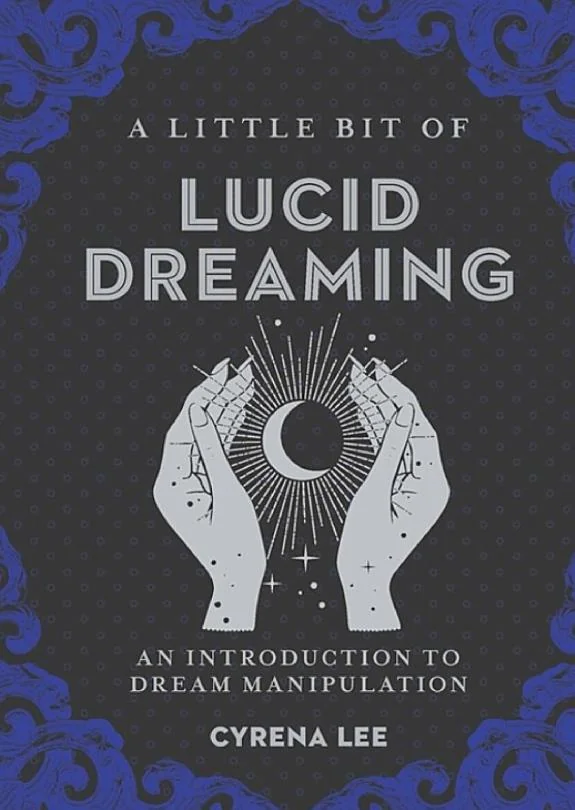
A Little Bit of Lucid Dreaming
 75
75

A Little Bit of Lucid Dreaming
Cyrena Lee's "A Little Bit of Lucid Dreaming" offers a straightforward, no-nonsense introduction to a practice that can often seem shrouded in mystery. The book’s strength lies in its clear, actionable steps, particularly its explanation of reality checks, which are crucial for triggering lucidity. Lee avoids overly esoteric jargon, making the subject accessible to newcomers. A notable section details how to differentiate between a true lucid dream and a vivid, yet uncontrolled, dream state. However, the brevity of the text means some deeper philosophical implications or more advanced techniques are only touched upon. For instance, the potential for psychological integration through lucid dreaming could be explored further. Despite this, the work provides a solid foundation for anyone wishing to explore their dream world with intention. It serves as a practical manual rather than a philosophical treatise, which is precisely its value for the intended audience.
📝 Description
75
### What It Is
A Little Bit of Lucid Dreaming introduces the fundamental practice of conscious dreaming, often termed "waking up" within the dream state. The core concept is the realization that one is dreaming while the dream is still in progress, allowing for a unique form of self-awareness and potential control over the dreamscape. This state is not merely about vivid dreams but about cognitive awareness within the subconscious theatre of the mind.
### Who It's For
This guide is suited for individuals curious about exploring their inner consciousness and the potential of their own minds. It appeals to those interested in psychology, self-discovery, and altered states of consciousness. Beginners seeking a clear entry point into dream exploration will find the accessible instructions particularly beneficial, as will experienced dreamers looking to refine their techniques.
### Historical Context
The practice of lucid dreaming has roots stretching back through history, with mentions appearing in ancient texts. The book situates this phenomenon not as a modern invention but as a recurring aspect of human consciousness studied across various cultures and eras. Understanding this historical lineage provides a framework for appreciating the depth and breadth of this practice.
### Key Concepts
Central to lucid dreaming is the ability to achieve a state of metacognition within a dream, recognizing the dream's illusory nature. Techniques often involve reality checks performed during waking life to build the habit, and dream recall exercises to improve memory of dream content. The book outlines methods to induce lucidity, such as MILD (Mnemonic Induction of Lucid Dreams) and WILD (Wake-Initiated Lucid Dreams), fostering an environment where consciousness can transition into the dream state while retaining awareness.
💡 Why Read This Book?
• Learn concrete methods like reality checks and dream recall, directly referencing techniques Cyrena Lee outlines in the "Key Concepts" section, to increase your chances of becoming aware within your dreams. • Understand the historical roots of lucid dreaming, as discussed in the "Historical Context" section, to appreciate how this practice has been recognized across different eras and cultures. • Gain practical instruction on inducing lucidity, including specific techniques such as MILD and WILD as detailed in the book, empowering you to consciously engage with your dream environment.
⭐ Reader Reviews
Honest opinions from readers who have explored this book.
❓ Frequently Asked Questions
What is the primary benefit of lucid dreaming according to Cyrena Lee?
The primary benefit highlighted is the ability to gain awareness within a dream, realizing it's a dream and potentially influencing its course. This allows for exploration of one's subconscious and imaginative capabilities.
When was 'A Little Bit of Lucid Dreaming' first published?
The book 'A Little Bit of Lucid Dreaming' by Cyrena Lee was first published on September 7, 2021.
Are there specific exercises recommended for lucid dreaming?
Yes, the book recommends specific exercises such as performing reality checks during waking hours and practicing dream recall to enhance awareness and memory of dream states.
What is the difference between lucid dreaming and regular dreaming?
In regular dreaming, you are an observer or participant without realizing the dream's nature. In lucid dreaming, you achieve self-awareness within the dream, understanding it's a product of your mind.
Can anyone learn to lucid dream?
The book suggests that with consistent practice and the application of its techniques, individuals can learn to achieve lucid dreams, emphasizing that it is a skill that can be developed.
Does the book cover the history of lucid dreaming?
Yes, the book touches upon the historical context of lucid dreaming, noting its presence and study across various ancient cultures and eras, framing it as a long-standing aspect of human consciousness.
🔮 Key Themes & Symbolism
Conscious Dream Awareness
The central theme is achieving metacognition within the dream state, a profound shift from passive dreaming to active awareness. This involves recognizing the dream's artificiality and the power of one's own consciousness. The book guides readers to cultivate this awareness through specific practices, enabling them to observe their subconscious narratives with clarity and potentially influence the dream's direction. It posits that this conscious engagement can unlock new perspectives on the self and the nature of reality.
Dream Control Techniques
This theme focuses on the practical application of lucid dreaming for intentional dream manipulation. It moves beyond mere recognition to the active shaping of the dream environment, narrative, and characters. The book details methods that empower the dreamer to fly, explore fantastic landscapes, or confront subconscious material. This aspect highlights lucid dreaming not just as an awareness practice but as a tool for creative exploration and psychological work within the dreamscape.
Historical and Cultural Roots
The work situates lucid dreaming within a broader historical and cultural context, tracing its recognition across ancient civilizations and philosophical traditions. This perspective counters the notion of lucid dreaming as a purely modern phenomenon. By acknowledging its long-standing presence in human experience, the book lends credibility and depth to the practice, suggesting a universal human capacity for conscious dreaming that transcends specific eras or disciplines.
Self-Exploration Through Dreams
Lucid dreaming is presented as a potent avenue for introspection and self-discovery. By becoming aware within a dream, individuals can engage directly with their subconscious mind, addressing fears, exploring desires, and gaining insights into their inner workings. The controlled environment of a lucid dream offers a safe space for this exploration, allowing for a unique form of psychological dialogue and personal growth that is not easily accessible through other means.
💬 Memorable Quotes
“Realizing you are dreaming is waking up inside your dream.”
— This concise statement encapsulates the essence of lucid dreaming. It highlights the shift from passive experience to active consciousness, where the dreamer becomes aware of their state of being while still immersed in the dream world.
“You can take control of your dream once you know it's a product of your imagination.”
— This quote emphasizes the empowerment that comes with lucidity. The understanding that the dreamscape is internally generated grants the dreamer the agency to direct or alter its course, transforming the experience from unpredictable to potentially manageable.
“Lucid dreaming involves waking up inside a dream.”
— This rephrasing of the core concept stresses the unique paradoxical state of being aware of dreaming while still in the act of dreaming. It's a direct and accessible definition for those new to the subject.
“The practice includes instructions on how to do it yourself.”
— This highlights the instructional nature of the book. It promises practical guidance and actionable steps, indicating that the content is designed to equip the reader with the necessary tools to cultivate lucid dreaming abilities.
“Everything you see before you is a product of your imagination and consciousness.”
— This statement underscores the subjective nature of the dream world. It serves as a foundational principle for achieving lucidity, reminding the dreamer that the externalized dream reality originates from their internal mental processes.
🌙 Esoteric Significance
Tradition
While not strictly adhering to a single esoteric lineage, "A Little Bit of Lucid Dreaming" draws from a tradition of consciousness exploration that intersects with Hermeticism and Gnosticism, both of which emphasize inner knowledge and the potential for expanded awareness. The practice of lucid dreaming can be seen as a modern iteration of seeking direct experience of higher or altered states of consciousness, a common goal in many esoteric paths. It departs from more ritualistic or purely philosophical approaches by offering a direct, experiential method accessible through personal practice.
Symbolism
The dreamscape itself is a primary symbol, representing the subconscious mind and the vast, untapped potential of consciousness. Specific symbols within a lucid dream, such as recurring figures or environments, are interpreted as direct manifestations of the dreamer's inner psyche. The act of recognizing a dream symbol as a product of one's own imagination is a key step in achieving lucidity, transforming the symbol from an external mystery into an internal key for self-understanding.
Modern Relevance
This work is highly relevant to contemporary practices in mindfulness, consciousness studies, and even therapeutic psychology. Thinkers and practitioners in fields like Jungian psychology, which emphasizes dream analysis, find lucid dreaming a powerful tool for direct engagement with the collective and personal unconscious. It also resonates with modern spiritual seekers exploring non-dual states of awareness and those interested in biofeedback and neurofeedback technologies that explore brainwave states akin to those experienced in lucid dreaming.
👥 Who Should Read This Book
• Aspiring dream explorers seeking a practical entry point into conscious dreaming, who will benefit from the clear instructions on reality checks and dream recall. • Individuals interested in psychology and self-discovery, looking for methods to understand their subconscious mind and unlock creative potential through dream manipulation. • Those curious about altered states of consciousness, who want to learn verifiable techniques to induce and control experiences beyond ordinary waking reality.
📜 Historical Context
Published in 2021, Cyrena Lee's "A Little Bit of Lucid Dreaming" entered a field with a long lineage, predating modern psychology’s formal study of dreams. Early explorations of consciousness and altered states can be found in ancient Greek philosophy, with figures like Aristotle contemplating dreams. The Theosophical movement in the late 19th and early 20th centuries, particularly through figures like Helena Blavatsky, also engaged with dream states and astral projection, though often within a more mystical framework. Lee’s work, by contrast, presents a more direct, practical guide to inducing and controlling lucid dreams, aligning with contemporary scientific interest in the subject, exemplified by researchers like Stephen LaBerge who pioneered scientific methods for studying lucid dreaming in the late 20th century. While not directly engaging with Blavatsky's specific doctrines, Lee’s book contributes to a broader modern resurgence of interest in the practical manipulation of consciousness, accessible to a wide audience.
📔 Journal Prompts
Reflect on the concept of 'waking up inside a dream' and what that realization might mean for your waking life.
Document three instances where you performed a reality check today and your observations.
Describe a recurring symbol from your dreams and how recognizing it as a product of your imagination might change its meaning.
Consider the techniques of MILD and WILD mentioned in the book and plan one to try tonight.
What personal desires or fears might be manifesting in your dream imagery, based on the book's exploration of the subconscious?
🗂️ Glossary
Lucid Dreaming
The state of becoming aware that one is dreaming while the dream is in progress, allowing for potential control over the dream's narrative and environment.
Reality Check
A technique performed during waking life to question one's reality, intended to build a habit that can then be triggered within a dream, leading to lucidity.
Dream Recall
The practice of remembering dreams upon waking. Improved dream recall is crucial for recognizing dream patterns and achieving lucidity.
MILD (Mnemonic Induction of Lucid Dreams)
A technique involving setting the intention to become lucid before sleep, often by repeating a phrase or visualizing oneself becoming aware in a dream.
WILD (Wake-Initiated Lucid Dreams)
A method where a dreamer maintains consciousness while falling asleep, transitioning directly from wakefulness into a lucid dream state.
Metacognition
Awareness or cognition of one's own thought processes. In lucid dreaming, it is the recognition that one is dreaming.
Subconscious Mind
The part of the mind of which we are not directly aware, but which influences our actions and feelings. Dreams are often seen as expressions of the subconscious.