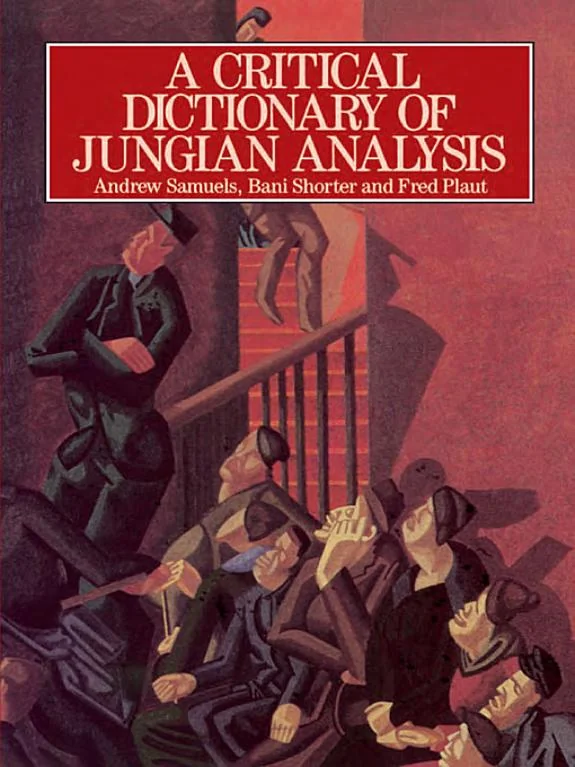
A critical dictionary of Jungian analysis
 83
83

A critical dictionary of Jungian analysis
Andrew Samuels' *A Critical Dictionary of Jungian Analysis* is an indispensable, albeit demanding, reference for anyone serious about Jungian psychology. Its strength lies in its comprehensive coverage and the critical lens through which it examines concepts. Samuels doesn't shy away from contentious interpretations or the evolution of Jung's ideas. For instance, his discussion of the 'anima' and 'animus' goes beyond simplistic definitions to explore their complex manifestations and critiques. However, the work's academic density can be a hurdle for those not already steeped in psychoanalytic discourse. The entries, while thorough, often assume a prior understanding of Jungian terminology, making it less accessible as a starting point. Despite this, its value as a scholarly resource for clarifying intricate theoretical pathways is undeniable. It serves as a vital companion for navigating the labyrinthine world of Jungian thought.
📝 Description
83
### What It Is Andrew Samuels' *A Critical Dictionary of Jungian Analysis*, first published in 1986, offers a scholarly exploration of the conceptual landscape shaped by Carl Jung's psychological theories. It functions not as a beginner's guide, but as a comprehensive lexicon for those already familiar with Jungian thought. The dictionary provides detailed entries on a wide array of terms, concepts, and figures central to psychoanalytic theory originating from or influenced by Jung. Its scope extends to the historical development and critical reception of these ideas.
### Who It's For This work is primarily intended for advanced students, academics, and practicing analysts engaged with Jungian psychology and its derivatives. It serves as an essential reference for researchers seeking precise definitions, historical context, and critical perspectives on Jungian terminology. Individuals involved in comparative psychoanalysis, depth psychology, or the history of psychology will find it particularly valuable for its thoroughness and academic rigor. It is not a casual introduction but a tool for serious study.
### Historical Context Published in 1986, Samuels' dictionary emerged during a period of intense academic scrutiny and re-evaluation of psychoanalytic theories, including those of Carl Jung. The post-Jungian landscape was marked by theoretical diversification, with figures like Jacques Lacan and Melanie Klein offering contrasting paradigms. Samuels' work sought to clarify and critically examine the core tenets of Jungian analysis, providing a stable reference point amidst evolving theoretical debates. Its appearance offered a much-needed systematization of a complex field.
### Key Concepts The dictionary meticulously defines concepts fundamental to Jungian thought. These include archetypes, the collective unconscious, individuation, and the shadow, each explored with attention to their theoretical lineage and practical implications in analysis. Samuels also addresses the works and ideas of key figures within and adjacent to the Jungian tradition, such as Alfred Adler and Sigmund Freud, placing Jung's contributions within a broader psychological discourse. The book emphasizes the analytical and theoretical underpinnings of these terms.
💡 Why Read This Book?
• Gain precise definitions of core Jungian concepts like 'archetypes' and the 'collective unconscious,' understanding their historical development and theoretical nuances as presented in the 1986 edition. • Appreciate the critical perspectives offered on Jungian theory, enabling a more nuanced understanding of its place within broader psychoanalytic discourse since its inception. • Master specific terminology crucial for engaging with advanced Jungian texts, equipping you to analyze complex ideas presented in works referencing figures like Alfred Adler or Sigmund Freud.
⭐ Reader Reviews
Honest opinions from readers who have explored this book.
❓ Frequently Asked Questions
When was Andrew Samuels' *A Critical Dictionary of Jungian Analysis* first published?
The book was first published in 1986, marking its emergence as a significant reference tool during a period of evolving psychoanalytic thought.
What is the primary audience for this dictionary?
It is primarily aimed at advanced students, academics, and practicing analysts deeply engaged with Jungian psychology and its theoretical underpinnings.
Does the book cover concepts beyond Carl Jung's own writings?
Yes, it explores figures and concepts within and adjacent to the Jungian tradition, including contemporaries like Alfred Adler and Sigmund Freud.
Is this book suitable for beginners in psychology?
No, its academic rigor and assumed prior knowledge make it more suitable for those with an existing foundation in psychoanalytic theory.
What is the main purpose of the 'critical' aspect in the title?
The 'critical' aspect signifies that the dictionary offers not just definitions but also examines the historical development, theoretical debates, and reception of Jungian concepts.
How does this dictionary help in understanding Jungian analysis?
It provides clear, detailed explanations and contextualizations of complex terms, aiding in the precise comprehension and application of Jungian analytical principles.
🔮 Key Themes & Symbolism
Archetypes and the Collective Unconscious
The dictionary offers detailed examinations of Jung's foundational concepts, particularly archetypes and the collective unconscious. Samuels elucidates how these primordial patterns, inherited psychic structures, manifest across cultures and throughout history in myths, symbols, and dreams. The work probes the esoteric implications of these universal motifs, viewing them not merely as psychological constructs but as conduits to deeper layers of human consciousness and potentially, to transpersonal realities. The entries explore the origins and evolution of these ideas within Jung's oeuvre and their subsequent interpretations.
Individuation as a Path
Central to Jungian psychology, the process of individuation is presented as the lifelong journey toward psychological wholeness. Samuels' dictionary defines this complex process, detailing its stages and the integration of various psychic components, including the integration of the shadow and the development of the Self. From an esoteric perspective, individuation can be seen as a form of alchemical transformation or spiritual awakening, where the individual seeks to realize their unique divine potential. The dictionary provides the necessary conceptual framework to understand this profound developmental path.
The Shadow and Its Integration
The concept of the 'shadow,' representing the disowned, repressed aspects of the personality, is thoroughly explored. Samuels' work emphasizes that confronting and integrating the shadow is a critical, often difficult, step in the individuation process. Esoterically, the shadow can be understood as the chthonic or darker forces within the psyche that must be acknowledged and harmonized rather than denied or projected. The dictionary provides a solid grounding for understanding the psychological and symbolic dimensions of this essential aspect of the self.
Jungian Concepts in Broader Discourse
Beyond core Jungian ideas, the dictionary places Jung's work in dialogue with other psychoanalytic and psychological traditions. It examines key figures like Freud and Adler, highlighting points of convergence and divergence. This comparative approach is vital for understanding Jungian analysis not in isolation, but as part of a larger intellectual movement grappling with the human psyche. For the esoteric scholar, this context helps situate Jungian thought within the broader currents of Western esotericism and depth psychology that emerged in the late 19th and early 20th centuries.
💬 Memorable Quotes
“The collective unconscious is the inherited psychic structure common to all humanity.”
— This highlights the universal, transpersonal nature of the unconscious, suggesting a shared psychic foundation from which individual consciousness emerges and to which it is connected.
“Individuation is the process of becoming a whole, unique person.”
— This paraphrases the core aim of Jungian psychology: the development of the individual's full potential through the integration of conscious and unconscious elements.
“The shadow contains repressed desires and instincts.”
— This captures the essence of the shadow as the repository of the aspects of ourselves we find unacceptable, yet which remain potent forces within us.
“Archetypes are universal patterns of experience and behavior.”
— This definition underscores the enduring, cross-cultural nature of these fundamental psychic structures that shape our perceptions and actions.
“The dictionary provides critical perspectives on Jungian terminology.”
— This reflects the book's function not just as a lexicon but as an analytical tool, offering nuanced interpretations and historical context for Jungian concepts.
🌙 Esoteric Significance
Tradition
Samuels' work sits within the broader tradition of depth psychology, which itself has deep roots in Western esotericism, particularly Hermeticism and Gnosticism, through figures like Carl Jung. While primarily an academic analysis of psychological theory, its focus on archetypes, the collective unconscious, and individuation inherently touches upon perennial philosophical and spiritual quests for self-knowledge and transcendence. The dictionary serves as a bridge, translating esoteric concepts into psychological language and vice versa, validating the psychological underpinnings of many esoteric traditions.
Symbolism
Key symbols like the 'Self' (often represented by mandalas or divine figures) and the 'shadow' are central. The Self, in Jungian terms, represents the ultimate goal of individuation—a state of wholeness and integration, echoing alchemical ideals of the philosopher's stone. The shadow, representing the darker, unacknowledged aspects of the psyche, connects to chthonic deities or daemonic forces in esoteric lore. The dictionary’s analysis provides a framework for understanding these symbols not as mere psychic projections, but as potent forces with spiritual implications.
Modern Relevance
Contemporary thinkers and practitioners in analytical psychology, transpersonal psychology, and even fields like ecopsychology and mythology studies continue to draw heavily on Samuels' critical lexicography. His work remains foundational for understanding the nuances of Jungian theory, which is increasingly being re-examined for its insights into ecological crises, spiritual seeking, and the complexities of modern identity. The dictionary provides the essential vocabulary for engaging with these evolving dialogues that bridge psychology and esoteric wisdom.
👥 Who Should Read This Book
• Students of Jungian psychology and depth psychology: Gain a precise understanding of core concepts like 'archetypes,' 'individuation,' and 'the collective unconscious,' essential for academic study and practice. • Researchers in comparative mythology and religion: Utilize the dictionary to trace the psychological underpinnings of myths and religious symbols, connecting them to Jungian theoretical frameworks. • Analysts and therapists in training: Develop a robust vocabulary and critical perspective on Jungian terminology, crucial for clinical application and theoretical integration.
📜 Historical Context
Andrew Samuels' *A Critical Dictionary of Jungian Analysis*, released in 1986, emerged during a fertile yet contested period in psychoanalytic and psychological thought. The late 20th century saw Jungian psychology grappling with its place amidst the ascendancy of ego psychology, object relations theory, and the growing influence of post-structuralist critiques. Figures like Jacques Lacan offered radically different interpretive frameworks for the unconscious. Samuels’ work aimed to consolidate and critically appraise the vast Jungian lexicon, providing a necessary anchor for scholars and practitioners. It was published in an era where Jung's ideas, while influential in certain academic and therapeutic circles, faced significant challenges from more empirically-driven or theoretically divergent schools. The dictionary's meticulous scholarship offered a counterpoint to more popular or simplified interpretations of Jung, grounding the field in its theoretical origins and evolution.
📔 Journal Prompts
The concept of the 'shadow' as detailed in the dictionary.
The process of individuation and its challenges.
Archetypal manifestations discussed in the text.
The role of the collective unconscious in contemporary life.
Samuels' critical perspective on Jungian analysis.
🗂️ Glossary
Archetype
Universal, inherited patterns of thought or imagery derived from the collective unconscious, manifesting in myths, dreams, and behaviors across cultures.
Collective Unconscious
A concept describing the part of the unconscious mind derived from ancestral memory and experience, common to all humankind.
Individuation
The lifelong psychological process of differentiation of the self, leading to the integration of the conscious and unconscious aspects of personality.
Shadow
The unconscious or repressed part of the personality, containing aspects that the conscious ego does not identify with.
Anima/Animus
The unconscious feminine aspect in men (anima) and the unconscious masculine aspect in women (animus), representing the contrasexual archetype.
Self
In Jungian psychology, the totality of the psyche, encompassing both conscious and unconscious elements; often symbolized by mandalas or divine figures.
Complex
An emotionally charged set of ideas or memories, often unconscious, that influences behavior and perception, typically centered around an archetype.