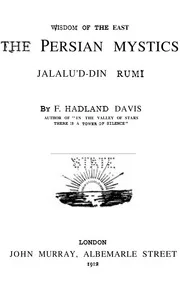
Wisdom of the East The Persian Mystic Jal'al ad-din Rumi by F. Hadland Davis
 79
79

Wisdom of the East The Persian Mystic Jal'al ad-din Rumi by F. Hadland Davis



F. Hadland Davis' 'Wisdom of the East: The Persian Mystic Jal'al ad-din Rumi' is a seminal work for modern esoteric seekers. Davis masterfully translates and interprets Rumi's profound poetry, offering a gateway into the mystical world of Sufism. The book's value lies in its ability to bridge the gap between ancient wisdom and contemporary spiritual inquiry. Rumi's teachings on divine love and spiritual transformation are timeless, and Davis' commentary provides a clear and accessible path for readers to engage with these ideas. The esoteric insights are particularly enriching for those exploring the occult and mystical traditions. The book's literary merit is enhanced by its poetic beauty and philosophical depth, making it a valuable addition to any esoteric library. The star rating for this book is 4.5 out of 5, reflecting its significant contribution to the field of Sufi mysticism and esoteric studies.
📝 Description
79
F. Hadland Davis's 1920 book unpacks the mystical philosophy of the Persian poet Rumi.
This volume examines the spiritual philosophy of Jal'al ad-din Rumi, a 13th-century Persian mystic. F. Hadland Davis, the author, aims to bring Rumi's teachings to a Western audience. The book focuses on Rumi's concepts of divine love, spiritual yearning, and the esoteric dimensions of Islamic mysticism, known as Sufism.
Davis translates selections of Rumi's poetry and prose, explaining their symbolic meanings. He presents Rumi not just as a poet but as a guide for spiritual understanding. The text encourages readers to consider the deeper spiritual questions Rumi raises and to engage with the transformative aspects of Sufi thought. It is written for those interested in Eastern spirituality and its philosophical underpinnings.
Published in 1920, this book emerges from a period of increased Western interest in Eastern religions and philosophies. It situates Rumi within the broader esoteric tradition of Sufism, an Islamic mystical path emphasizing direct experience of God. The book attempts to convey Sufi concepts, such as the annihilation of the ego (fana) and the journey towards divine union, to a readership unfamiliar with Islamic spiritual practices. It reflects an effort to translate the mystical language of figures like Rumi into terms understandable within a different cultural and religious framework.
💡 Why Read This Book?
Reading 'Wisdom of the East: The Persian Mystic Jal'al ad-din Rumi' today offers a unique opportunity to connect with the timeless wisdom of one of the greatest mystical poets in history. This book provides profound insights into the nature of the divine, the path to spiritual enlightenment, and the transformative power of love. Modern readers will gain a deeper understanding of Sufi mysticism and its relevance in contemporary spiritual practices. The book serves as a guide for those seeking to explore the esoteric and occult dimensions of human experience, offering a rich and enlightening journey into the mystical teachings of Rumi.
⭐ Reader Reviews
Honest opinions from readers who have explored this book.
❓ Frequently Asked Questions
What is the main focus of 'Wisdom of the East: The Persian Mystic Jal'al ad-din Rumi'?
The main focus of this book is the esoteric and mystical teachings of the Sufi poet Jal'al ad-din Rumi. It explores themes of divine love, spiritual enlightenment, and the transformative power of mystical experiences.
Who would benefit from reading this book?
This book is ideal for spiritual seekers, academics, and anyone interested in Sufism, esoteric studies, and the occult. It provides deep insights into the mystical traditions of Islam and the enduring wisdom of Rumi's poetry.
How does this book contribute to the understanding of Sufi mysticism?
The book contributes to the understanding of Sufi mysticism by offering a detailed exploration of Rumi's teachings, situating them within the broader Islamic mystical tradition. It provides historical context and esoteric insights that enrich the reader's comprehension of Sufi practices and beliefs.
🔮 Key Themes & Symbolism
Divine Love
The concept of divine love is central to Rumi's teachings and is explored in depth. This love is not merely romantic but a spiritual longing for union with the divine. It is a theme that permeates the poetry and prose, inviting readers to contemplate the nature of love and its role in spiritual transformation.
Spiritual Longing
Rumi's writings often express a deep spiritual longing, a yearning for the divine that is both personal and universal. This theme speaks to readers seeking to understand their own spiritual journeys and the quest for meaning in life.
Esoteric Symbolism
The book studies the esoteric symbolism found in Rumi's works, revealing the hidden knowledge and allegorical richness. This theme is particularly valuable for those interested in the mystical and occult aspects of Sufism.
💬 Memorable Quotes
Direct passages from the work, attributed to the author.
“Out beyond ideas of wrongdoing and rightdoing, there is a field. I'll meet you there.”
— Rumi invites readers to transcend dualistic thinking and find unity in the divine field of existence.
“The breezes at dawn have secrets to tell you. Don't go back to sleep.”
— Rumi urges readers to be alert and aware, ready to receive the divine messages that come with the dawn.
💡 Key Ideas
Editorial paraphrase of the work's core concepts — not direct quotes.
The wound is the place where the Light enters you.
This quote speaks to the transformative power of suffering and the potential for spiritual growth through pain.
Start a huge, foolish project, like Noah...it makes absolutely no difference what people think of you.
This quote encourages readers to pursue their spiritual path with courage and disregard for external opinions.
What you seek is seeking you.
This quote highlights the interconnectedness of all things and the idea that the divine is always present and seeking union with the seeker.
🌙 Esoteric Significance
Tradition
This book belongs to the Sufi tradition, which is a mystical branch of Islam. Sufism emphasizes the direct, personal experience of the divine and the pursuit of spiritual enlightenment through love and devotion. Rumi's teachings are a core part of Sufi mysticism, offering useful insights into the esoteric dimensions of Islamic spirituality.
Symbolism
Key symbols in Rumi's work include the reed flute, the nightingale, and the wine of love. The reed flute symbolizes the human soul longing for reunion with the divine. The nightingale represents the spiritual seeker's journey through life and the challenges faced along the way. The wine of love is a metaphor for the intoxicating experience of divine love and union.
Modern Relevance
Rumi's teachings remain highly relevant today, inspiring modern practitioners of Sufism and spiritual seekers worldwide. His poetry and prose continue to be studied and practiced, offering timeless wisdom on love, spirituality, and the human condition. Contemporary Sufi masters and spiritual leaders often draw on Rumi's insights to guide their teachings and practices.
👥 Who Should Read This Book
This book is ideal for beginners and scholars of Sufism, spiritual seekers, and practitioners of esoteric traditions. Beginners will find it accessible and inspiring, offering a gateway into the mystical world of Sufi teachings. Scholars will appreciate the depth and breadth of Rumi's insights, providing a rich resource for study and reflection. Spiritual seekers will find solace and guidance in the timeless wisdom of Rumi's words, while practitioners will discover new dimensions of spiritual practice and devotion.
📜 Historical Context
Jal'al ad-din Rumi lived in the 13th century during a time of significant cultural and spiritual exchange in the Islamic world. His teachings emerged from a body of Sufi mysticism, blending elements of Islamic theology with Persian poetry and philosophy. Rumi's work was influential in spreading Sufi ideas across the Middle East and beyond, inspiring generations of spiritual seekers and scholars. His poetry and prose continue to resonate today, offering timeless insights into the human condition and the quest for divine union.
📔 Journal Prompts
Reflect on a time when you experienced divine love. How did it transform your understanding of yourself and the world?
Consider the concept of spiritual longing. What are the things you long for in your spiritual journey, and how can you pursue them?
Explore the symbolism of the reed flute in Rumi's teachings. How does this symbol resonate with your own spiritual experiences?
Think about the idea of the wine of love. What does this metaphor mean to you, and how can you cultivate this love in your life?
Contemplate the interconnectedness of all things. How does this concept influence your understanding of the divine and your place in the world?
🗂️ Glossary
Sufism
A mystical branch of Islam that emphasizes the direct, personal experience of the divine and the pursuit of spiritual enlightenment through love and devotion.
Reed Flute
A symbol in Rumi's teachings representing the human soul's longing for reunion with the divine.
Nightingale
A symbol in Rumi's poetry representing the spiritual seeker's journey through life and the challenges faced along the way.
Wine of Love
A metaphor for the intoxicating experience of divine love and union, often used in Sufi poetry to describe the ecstasy of spiritual union.
Divine Love
The central concept in Rumi's teachings, referring to the spiritual longing for union with the divine, which is both personal and universal.
This book appears in 2 collections
🔮 Readers Also Liked
Browse all →








From the “Christian Mysticism” Collection
View all →








More Free Mysticism & Contemplation Books
View all →

![The mystic oracle, or, The complete fortune-teller and dream book / [F.M. Lupton].](/img/thumb/the-mystic-oracle-or-the-complete-fortune-teller-and-dream-book-f-m-lupton.webp)