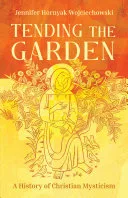
Tending the Garden
 71
71

Tending the Garden
Jennifer Hornyak Wojciechowski's Tending the Garden provides a much-needed bridge over the chasm of esoteric language that often separates modern readers from Christian mystical traditions. Rather than presenting a dry academic survey, the book adopts a sympathetic and clear-eyed approach, demystifying figures and concepts that can appear alien. Its strength lies in its consistent focus on the relatable human desire for divine connection, reframing the often-misunderstood mystics as individuals cultivating a personal relationship with God. The work particularly excels in its exposition of the concept of theosis, explaining its significance without resorting to overly technical jargon. A limitation, however, might be the breadth attempted; while striving for accessibility, some deeper theological nuances of figures like Eckhart might feel briefly touched upon rather than thoroughly explored. The passage discussing Teresa of Ávila’s “Interior Castle” as a metaphor for spiritual progress is particularly effective in illustrating the book's core aim. Ultimately, Tending the Garden succeeds as an inviting introduction to a profound spiritual path.
📝 Description
71
Jennifer Hornyak Wojciechowski's Tending the Garden demystifies Christian mysticism for the modern reader.
This book makes Christian mysticism accessible, moving beyond archaic language and complex theology. It focuses on the core aims of mystics: individuals seeking a direct, personal connection with God. The work clarifies that these spiritual seekers are not distant figures, but people engaged in a profound relationship with the divine.
Tending the Garden is for anyone curious about Christian contemplative traditions but intimidated by their perceived difficulty. It acts as an introduction to the historical and experiential aspects of Christian spirituality, going beyond mere dogma and ritual. Readers interested in personal spiritual growth, comparing different religious thought, or the history of Christian ideas will find this book helpful.
The book draws on a Christian mystical tradition with roots in figures like Pseudo-Dionysius the Areopagite from the 5th-6th centuries. It connects this lineage to later mystics such as Meister Eckhart and Teresa of Ávila, highlighting their shared pursuit of direct divine experience. Wojciechowski situates these historical figures and their allegorical language within a long-standing path of seeking immediate knowledge of God.
💡 Why Read This Book?
• Gain a grounded understanding of Christian mysticism, moving beyond sensationalized notions to grasp its core pursuit of a loving relationship with God, as exemplified by figures like Teresa of Ávila. • Explore the concept of "theosis" and its implications for spiritual development, learning how it represents a transformative union with the divine within the Eastern Christian tradition. • Discover practical approaches to contemplative prayer and spiritual growth, understanding how "tending the garden" of one's soul is a central metaphor for ongoing inner work.
⭐ Reader Reviews
Honest opinions from readers who have explored this book.
❓ Frequently Asked Questions
What historical figures are discussed in Tending the Garden?
The book explores the contributions of key Christian mystics, including figures like Pseudo-Dionysius the Areopagite, Meister Eckhart, Teresa of Ávila, and John of the Cross, placing their experiences within historical and theological contexts.
What is the "dark night of the soul" according to Tending the Garden?
Tending the Garden explains the "dark night of the soul" as a period of spiritual purification and desolation, a challenging but ultimately transformative phase on the mystical path, famously described by John of the Cross.
Is Tending the Garden suitable for beginners in Christian mysticism?
Yes, the book is specifically designed for readers new to Christian mysticism, aiming to demystify its language and concepts, making it accessible to those unfamiliar with esoteric Christian traditions.
What does the title "Tending the Garden" symbolize?
The title "Tending the Garden" serves as a metaphor for the cultivation of one's inner spiritual life, emphasizing the continuous effort and care required to nurture a personal relationship with God.
Does the book discuss Eastern Christian mystical traditions?
Yes, Tending the Garden touches upon concepts such as "theosis," a significant doctrine within Eastern Christian spirituality, illustrating the diversity of mystical expression within Christianity.
When was Tending the Garden first published?
Tending the Garden was first published on February 11, 2025, making it a contemporary exploration of ancient mystical themes.
🔮 Key Themes & Symbolism
Personal Divine Relationship
The central theme of Tending the Garden is the profound emphasis on cultivating a direct, personal, and loving relationship with God. This concept moves beyond institutional dogma to highlight the experiential core of Christian mysticism. The work illustrates how figures like Teresa of Ávila viewed prayer not as a duty, but as intimate conversation. By framing this pursuit as "tending a garden," the book underscores the ongoing, nurturing effort required for spiritual growth and connection.
Demystifying Mystical Language
A significant focus is placed on translating the often-obscure language and concepts associated with Christian mystics into accessible terms. The book addresses the perceived eccentricity of mystics, reframing their experiences as relatable human quests for the divine. It aims to peel back layers of jargon, revealing the underlying simplicity and universality of their spiritual journeys. This allows readers to approach figures like Meister Eckhart without intimidation, understanding their core messages.
Theosis and Spiritual Transformation
The work delves into the concept of "theosis," particularly within the Eastern Christian tradition, as a central aim of the mystical path. This doctrine, the idea of becoming united with God, is presented not as an abstract theological point but as the ultimate goal of spiritual cultivation. The book explains how this transformative process is understood as a union that enhances, rather than diminishes, the individual's being, reflecting the ultimate purpose of tending the inner spiritual landscape.
Contemplative Practice
Tending the Garden explores the practices that facilitate direct experience of the divine, with a particular emphasis on contemplative prayer. It elucidates how techniques like silent prayer and meditation are not mere exercises but pathways to deeper communion. The book positions these practices as essential tools for "tending the garden" of the soul, fostering an environment where divine presence can be experienced and cultivated over time.
💬 Memorable Quotes
“Mystics were, first and foremost, concerned with tending to a personal and loving relationship with God.”
— This core assertion reframes Christian mystics, moving them from the realm of the arcane to the universally relatable human desire for intimate connection with the divine, highlighting the personal aspect of faith.
“Once you peel back the layers of insider language, however, one begins to see a highly relatable group of people.”
— This interpretation emphasizes the book's goal of accessibility, suggesting that the perceived complexity of mystical writings is a barrier that can be overcome to reveal the common humanity and shared spiritual aspirations of these figures.
“Theosis: the concept of becoming united with God.”
— This definition clarifies a key esoteric concept within Christian mysticism, presenting it as a goal of spiritual development and union, central to understanding the transformative potential of the contemplative path.
“The "dark night of the soul" describes periods of spiritual desolation and purification.”
— This paraphrased concept explains a pivotal stage in the mystical journey, as described by John of the Cross, highlighting its challenging yet ultimately refining nature for the seeker's spiritual progress.
“Contemplative prayer is a pathway to deeper communion with the divine.”
— This interpretation underscores the practical aspect of mysticism, presenting contemplative prayer not just as a ritual, but as an active method for fostering a direct and profound connection with God.
🌙 Esoteric Significance
Tradition
This work falls within the broad tradition of Christian Esotericism, specifically focusing on its contemplative and mystical branches. It draws inspiration from the Neoplatonic influences found in early Christian mystics like Pseudo-Dionysius, and engages with the rich heritage of figures such as Meister Eckhart and Teresa of Ávila. While rooted in orthodox Christianity, it emphasizes the direct, experiential knowledge of God that often lies beyond purely dogmatic or rational understanding, aligning with the esoteric pursuit of hidden spiritual truths accessible through inner experience.
Symbolism
The title itself, "Tending the Garden," is a central metaphor, symbolizing the cultivation of the soul and the inner spiritual life. It evokes imagery of growth, nurturing, and careful attention required for developing a relationship with the divine. Another key symbolic concept explored is the "Interior Castle," as described by Teresa of Ávila, representing the soul's journey through various chambers toward its center, where God resides. This symbolizes the layered nature of spiritual development and the progressive stages of divine union.
Modern Relevance
In contemporary spiritual discourse, Tending the Garden speaks to a resurgence of interest in contemplative practices and the integration of mystical experience into everyday life. Thinkers and practitioners in fields like spiritual direction, mindfulness, and interfaith dialogue find resonance in its accessible approach to Christian mysticism. It offers a counterpoint to purely secularized self-help or materialistic worldviews, providing a framework for understanding the enduring human quest for transcendence within a specific, yet universally applicable, spiritual tradition.
👥 Who Should Read This Book
• Beginning students of Christian mysticism seeking a clear and unintimidating introduction to key figures, concepts, and practices. • Individuals interested in comparative religion who wish to understand the contemplative dimension of Christianity alongside other spiritual traditions. • Spiritual seekers looking to deepen their personal relationship with God through contemplative prayer and inner cultivation, regardless of their specific denominational background.
📜 Historical Context
Tending the Garden emerges from a long lineage of Christian contemplative practice, tracing its lineage back to early figures like Pseudo-Dionysius the Areopagite, whose mystical theology profoundly shaped Western thought. The book situates its exploration within the medieval and early modern periods, referencing key figures such as Meister Eckhart and Teresa of Ávila, whose writings on direct experience of God became foundational. These mystics operated within a Christianity increasingly defined by scholasticism and reform movements, often finding their experiential approach met with suspicion or even persecution. For instance, the Spanish Inquisition's scrutiny of figures like John of the Cross highlights the tension between institutional religious authority and individual mystical pursuits. The work implicitly engages with the ongoing dialogue between scholastic theology and mystical experience, demonstrating how these seemingly disparate paths often sought the same divine reality.
📔 Journal Prompts
Reflect on the metaphor of "tending the garden" in relation to your own spiritual development.
Consider how the concept of "theosis" challenges or expands your understanding of union with God.
Analyze the "dark night of the soul" as described by John of the Cross; how might such periods be reframed?
Explore the writings of Teresa of Ávila; what does her "Interior Castle" symbolize for your spiritual journey?
How can the "personal and loving relationship with God" described in the book be actively cultivated in daily life?
🗂️ Glossary
Theosis
A central doctrine in Eastern Orthodox Christianity, referring to the process or goal of becoming united with God, often translated as 'deification' or 'divinization'.
Dark Night of the Soul
A term popularized by St. John of the Cross, describing a period of spiritual struggle, purification, and apparent absence of God's presence on the path to deeper union.
Contemplative Prayer
A form of prayer focused on resting in God's presence, characterized by silence, stillness, and a direct, loving gaze toward the divine, rather than petition or discursive thought.
Interior Castle
A metaphor used by St. Teresa of Ávila to describe the soul as a castle with many rooms, representing the stages of spiritual progress and the journey toward union with God at its center.
Pseudo-Dionysius the Areopagite
A 5th or 6th-century writer whose works, attributed to Dionysius the Areopagite, were highly influential in developing Christian mystical theology, particularly regarding apophatic theology (via negativa).
Meister Eckhart
A 13th-14th century German theologian and mystic known for his profound and sometimes controversial teachings on the soul's direct union with God and the 'birth of God in the soul'.
Teresa of Ávila
A 16th-century Spanish Carmelite nun and mystic, a Doctor of the Church, renowned for her mystical experiences, writings on prayer, and the reform of the Carmelite Order.